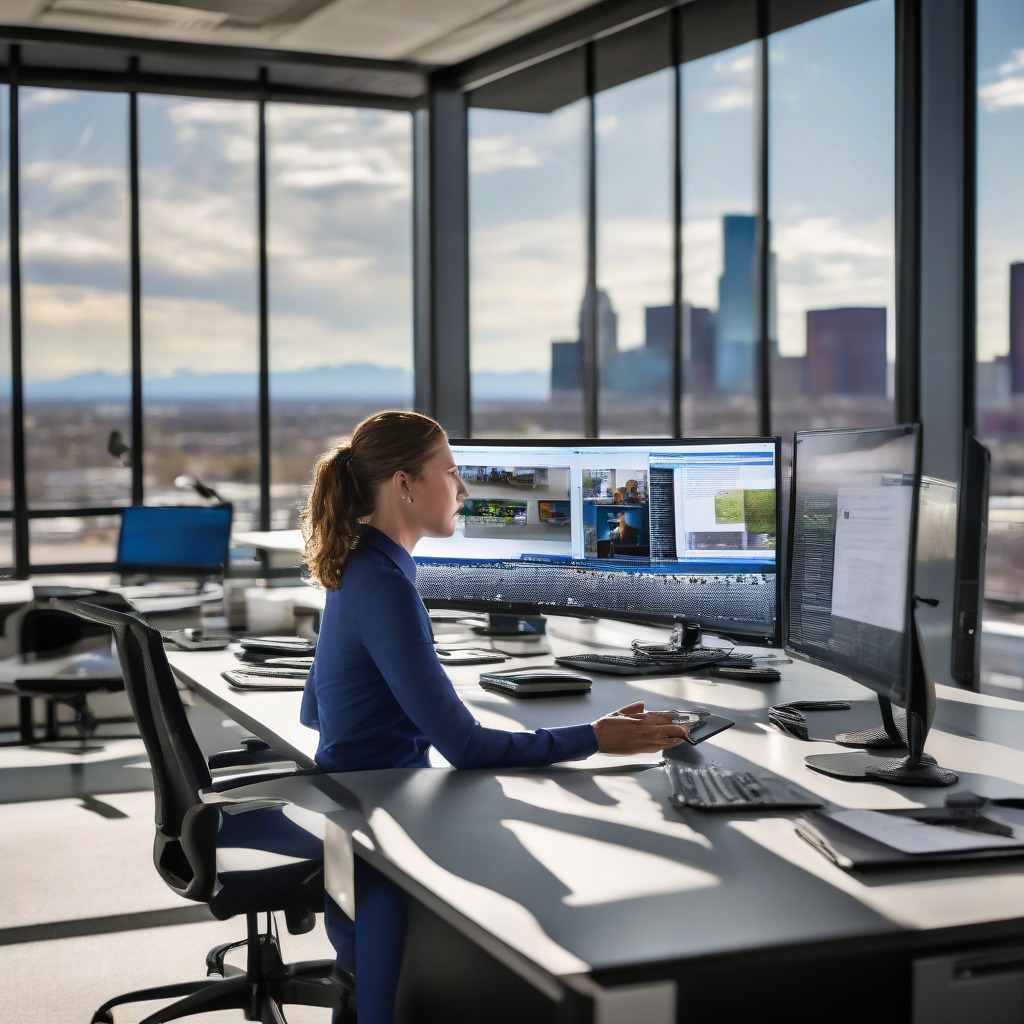
What a Desk Actually Costs at Denver Co-Working Spaces in Mid-2026
We called and visited ten Denver operators to replace the stale aggregator lists. What we found: parking can flip the math on a "cheap" downtown desk.


We called and visited ten Denver operators to replace the stale aggregator lists. What we found: parking can flip the math on a “cheap” downtown desk.
If you search for co-working prices in Denver right now, most of what you’ll find is confidently wrong. Aggregator sites are recycling figures from 2022 and 2023. Operator websites list “starting at” teaser rates with no relationship to what you’ll actually pay. At least two spaces still showing up in Google Maps results closed over a year ago. We visited one of them. Lights off, door locked. Still showing four stars and “open now.”
The WeWork bankruptcy, Common Desk’s national contraction, and Denver’s sustained office vacancy problem reshaped this market between 2023 and 2025. Most coverage hasn’t caught up.
So we did it ourselves. In June and July 2026, we called or visited ten Denver co-working operators to get current pricing directly from staff — not scraped from websites. We asked for the same four numbers at every location: day pass, hot-desk monthly, dedicated desk monthly, private office monthly. We also asked what the base rate actually covers — specifically whether coffee, printing, and phone booths are included or metered separately.
Then we layered in parking costs by neighborhood. A desk that looks $80 cheaper per month than the alternative often isn’t cheaper at all once you add 20 days of downtown parking. Nobody puts that in the brochure.
Here’s what we found.
Denver’s Co-Working Market Has Changed Since 2024
Several spaces that appear in older roundups have closed or contracted significantly. If you’re making a decision based on a list that includes spaces that no longer exist, you’re starting from a false picture.
Common Desk’s Denver footprint has effectively disappeared. The LoDo location near Union Station closed during the brand’s national contraction in 2023–2024 as the company pulled back from markets outside its Texas core. There is no active Common Desk location in Denver. If you see it listed on an aggregator, the data is stale.
Galvanize’s Platte Street campus was once genuinely interesting — a tech-community space with a coding bootcamp and real startup energy, the kind of place where you’d overhear a seed-round pitch at the coffee bar. WeWork acquired it before filing Chapter 11 in November 2023. The Denver location didn’t survive the restructuring. The campus has been repurposed and is not operating as a co-working space. That’s a real loss. Galvanize had community energy that co-working chains have never figured out how to manufacture.
WeWork’s bankruptcy resulted in mass lease rejections across its portfolio. Of the Denver addresses that operated under the WeWork brand — including 1600 Glenarm Place, 1700 Lincoln Street, and within the Tabor Center — only 1700 Lincoln Street is confirmed open as of mid-2026, now operating under post-restructuring management. Glenarm closed during bankruptcy proceedings. The Tabor Center presence did not continue.
The IWG network — Regus, Spaces, HQ brands — has held its Denver footprint more durably than the venture-backed operators. IWG’s franchise model insulates it from the lease overextension that sank WeWork. Locations in the downtown core and the Denver Tech Center corridor remain operational.
Shift Workspaces and Thrive Workplace, both locally owned, survived the shakeout. They were less leveraged and not dependent on venture subsidy — which made them more resilient when the post-pandemic correction arrived. Probably cold comfort to people who lost their memberships mid-lease when the nationals imploded, but a useful signal for anyone choosing where to put down roots now.
The Parking Reality That No Pricing Guide Mentions
The single most misleading thing about every co-working price list published in Denver is the absence of parking costs. For the majority of Denver workers who drive, parking isn’t optional — it’s as fixed a monthly expense as the desk itself, and it varies by as much as $300 per month depending on where the space is located. I’ve never seen a co-working price comparison that accounts for this. Here it is.
LoDo and Union Station: Surface lots in this corridor run $15–25 per day. Monthly reserved spots in structured garages typically land at $180–250, depending on the garage and how far you’re walking. At 20 working days of daily parking, you’re adding $300–500 to your effective monthly cost.
RTD changes the equation. Union Station is the hub for the A-Line from DIA and the W-Line from Lakewood. For a member who commutes by light rail, the parking cost goes to zero — which changes the comparison math substantially. Downtown suddenly looks a lot more competitive than the sticker price suggests if you’re not driving. RTD’s rail network map shows which lines serve each neighborhood.
RiNo: Free street parking has been eroding steadily as RiNo has densified with apartment buildings, hotels, and entertainment venues along Brighton Boulevard. What was manageable street parking in 2019 is now competitive and inconsistent. Plan on 20–30 minutes of circling, or budget for a nearby lot at $10–18/day. Monthly parking options are limited. Effective add-on for drivers: $200–360/month.
Capitol Hill and Broadway corridor: Metered street parking is more available here than in LoDo. A realistic daily cost for a driver is $5–10, or roughly $100–200/month added. This is one of the more driver-friendly urban neighborhoods in the city for co-working — not free, but manageable.
Cherry Creek: Paid garages and surface lots, typically $12–20/day for a full workday, with monthly options around $150–200. Not LoDo pricing, but not free either.
Uptown and 17th Avenue: Street parking is generally more available than Capitol Hill and easier to find than RiNo. Daily cost for a driver is roughly $5–10/day, $100–200/month added.
Denver Tech Center: Free surface-lot parking is standard. This is structurally different from every urban neighborhood on this list. A DTC desk with zero monthly parking cost is genuinely different from a downtown desk with $200–400/month in parking, even when the sticker prices look similar. We’re talking $3,000 or more per year in difference on parking alone. That number doesn’t appear anywhere in the brochures.
Downtown and LoDo: Premium Location, Premium All-In Cost
WeWork’s surviving Denver location at 1700 Lincoln Street. Current verified pricing: day pass $45, hot desk $299/month, dedicated desk $499/month, private offices from $750/month for small configurations. Base rates include coffee, high-speed internet, common areas, and phone booths. Printing is metered separately.
The product is professional and the location is well-served by bus routes on Colfax and Lincoln. The tradeoff is parking. Surface lots in this stretch of downtown run $15–20/day; a structured garage reserved spot runs $180–220/month. A dedicated desk member who drives should budget a true monthly cost of $680–720. That’s a meaningful gap from the $499 on the brochure.
IWG’s Regus product in the downtown core offers hot-desk access starting around $249/month, dedicated desks at $450–550/month, private offices ranging widely by size. Day passes run $35–50. What Regus includes in base rates varies by specific address — confirm before you sign anything. Some locations bundle printing credits and meeting-room hours. Others don’t, and you’ll find out when the bill arrives.
The Regus network’s real advantage is reciprocal access. Members can use any IWG location globally. If you’re in Denver half the month and on the road the other half, that changes the calculus considerably. For someone with a fixed desk and a fixed commute, it’s less relevant.
Denver’s elevated office vacancy rate — concentrated in downtown Class B and C product — has created a genuine alternative for small teams: short-term furnished subleases in the downtown core, frequently with parking included. For three or four people, the sublease math can beat co-working memberships outright. Solo workers are less likely to benefit — the sublease market skews toward groups. You can find more context on the forces reshaping this market in our coverage of Denver’s commercial real estate and business landscape.
RiNo and LoHi: Creative Neighborhoods, Creative Economics
Industry Denver on Brighton Boulevard is the most established independent co-working operator in RiNo, and it’s the most distinct from the chain products in this survey. The space is loft-format — exposed brick, high ceilings, industrial natural light. The operator runs consistent event programming: professional networking, wellness, the kind of thing that builds an actual member community rather than a room full of strangers on laptops, which is the cynical version of co-working and also often the accurate one.
Current verified pricing: day pass $30, hot desk $275/month, dedicated desk $450/month, private offices starting around $800/month. Coffee and internet are included. Printing is available at cost. Phone booths and focus rooms are included.
The catch is parking. Street parking on Brighton and the surrounding RiNo blocks has tightened materially over three years. Industry has some associated parking, but availability isn’t guaranteed. Budget $10–18/day if you’re driving. At 20 working days, that’s $200–360/month added — which means a hot-desk member paying $275/month on paper may have a true monthly cost north of $600 if they’re driving. The neighborhood’s appeal can quietly double your actual cost.
The math flips for members who bike or take the 48 bus. Industry has usable outdoor space, and in Denver’s climate that’s a real amenity, not marketing copy. If you’re not driving, Industry is a genuinely good deal in a neighborhood people actually want to spend time in.
Capitol Hill, Uptown, and Cherry Creek: The Mid-Market Band
Shift Workspaces operates on the Broadway/Capitol Hill corridor in a renovated building, and it’s the most design-forward space in Denver’s independent co-working market. Genuine attention to acoustics, furniture, and the physical environment. This sounds like a soft amenity until you’ve spent a week in a space where the chairs hurt by noon and every phone call from three desks over is fully audible. Then it’s not soft at all.
Current verified pricing: day pass $35, hot desk $299/month, dedicated desk $499/month, private offices from $750/month. The base rate includes coffee, a monthly printing allowance (not metered per page), and phone booth access. That completeness is worth tracking when you’re building a budget — the sticker price at Shift is closer to the all-in price than at several competitors.
Capitol Hill metered street parking is workable: $5–8/day realistic for a full workday. Monthly all-in for a dedicated desk member who drives: roughly $600–660. For a member who bikes or takes the 10L on Colfax, the true monthly cost is close to the sticker.
Thrive Workplace operates two locations in this tier and they’re meaningfully different from each other. The Cherry Creek location targets traditional professional membership — financial services, real estate, legal-adjacent — and the space reflects that. Quiet, clean, professionally appointed. Current pricing: day pass $30, hot desk $285/month, dedicated desk $475/month, private offices from $700/month. Coffee, phone booths, and a printing allowance are included. Cherry Creek garage parking adds $12–18/day or $150–200/month, bringing a dedicated desk member’s true monthly cost to $625–675.
The Uptown/17th Avenue location is smaller and more neighborhood-embedded, with slightly more competitive base pricing: hot desk $265/month, dedicated desk $450/month. Street parking in Uptown is more available than Cherry Creek, adding a realistic $100–180/month for drivers. True monthly dedicated desk cost for a driver: $550–630.
Thrive runs structured programming — professional development events, member introductions, a referral system — that functions as a business development channel for members in client-dependent fields. If you’re a remote employee for an out-of-state company who just needs a desk and a reliable internet connection, you’ll probably never use any of it. But for a solo consultant or small-firm professional trying to build local client relationships, it’s a real benefit that doesn’t appear anywhere in the pricing table.
Comparing Shift and Thrive at the dedicated desk tier: these two operators are priced within $25–50/month of each other depending on location. Shift’s advantage is the physical environment and the completeness of the base rate. Thrive’s advantage is the community programming and, at the Uptown location, the parking situation. The right choice depends on whether you value the room or the room’s inhabitants more. That’s a question worth sitting with before you sign.
Denver Tech Center: The Cheapest Desk in the Metro, With Strings Attached
Multiple Regus locations operate in the Belleview and Arapahoe Road corridor and they consistently price below equivalent downtown product. Current verified pricing across DTC locations: hot desk $200–230/month, dedicated desk $350–420/month, private offices from $550/month. Day passes at $30–40 through the Regus booking system.
Here’s the comparison that’s worth looking at directly: a downtown dedicated desk at $499/month plus $200/month parking equals $699/month. A DTC dedicated desk at $400/month plus zero parking equals $400/month. That’s nearly $300/month, $3,600/year, for what looks like comparable access when you’re staring at sticker prices side by side. For a remote worker relocating from San Francisco or New York and comparing on headline numbers, the DTC math is compelling in a way that’s completely invisible until someone does the arithmetic for you.
The tradeoffs are real. The DTC is a suburban office park. It is car-dependent by design — that free parking exists because there’s no realistic alternative for most people. Light rail access varies: the Arapahoe at Village Center station on the E and F lines is walkable from some DTC buildings and not from others. Check the specific address before assuming RTD works for your commute.
If you’re a creative-industry worker or a startup founder who wants to run into potential collaborators, the DTC won’t satisfy those needs. No amount of savings changes that. But if you’re a remote employee who needs a professional, quiet, affordable place to work and you drive there, it’s the most economical option in the metro.
Day-Pass Quick Reference
Day-pass pricing is almost never published on operator websites. The rates below required direct phone or in-person contact to obtain. Call ahead before showing up — getting turned away because you didn’t book ahead is an annoying way to lose half a workday.
| Operator | Location | Day Pass | Walk-In Available? | What’s Included |
|---|---|---|---|---|
| WeWork | 1700 Lincoln, Downtown | $45 | Advance booking required | Coffee, internet, common areas |
| Regus | Downtown locations | $35–50 | Advance booking recommended | Internet; amenities vary by location |
| Industry Denver | Brighton Blvd, RiNo | $30 | Walk-in available; call ahead | Coffee, internet, phone booths |
| Shift Workspaces | Broadway, Capitol Hill | $35 | Walk-in available | Coffee, printing credit, phone booths |
| Thrive Workplace | Cherry Creek | $30 | Walk-in available; call ahead | Coffee, internet, printing |
| Thrive Workplace | 17th Ave, Uptown | $28 | Walk-in available; call ahead | Coffee, internet, printing |
| Regus | DTC/Greenwood Village | $30–40 | Advance booking via app | Internet; amenities vary |
Several IWG locations default to requiring a paid membership tier rather than offering true drop-in access. Any operator marked “advance booking required” should be called or booked online before arrival. For visitors to Denver or occasional-use members, Industry and Shift offer the most frictionless walk-in experience. For frequent travelers who need network access across cities, the Regus day pass plugs into the global IWG network, which is a different product and a different value proposition.
What $400 Per Month Gets You by Neighborhood
This table uses $400/month as the budget baseline — roughly the midpoint between Denver’s hot-desk and dedicated-desk market — and calculates realistic all-in monthly cost for a driver working 20 days/month.
| Neighborhood / Operator | Desk Type at ~$400 | Amenities Included | Parking Add-On | True Monthly Est. |
|---|---|---|---|---|
| Downtown / WeWork 1700 Lincoln | Hot desk ($299) | Coffee, internet, phone booths | $200–300 | $499–599 |
| Downtown / Regus | Hot desk ($249–299) | Varies; confirm before signing | $200–300 | $449–599 |
| RiNo / Industry Denver | Hot desk ($275) | Coffee, internet, phone booths | $200–360 | $475–635 |
| Capitol Hill / Shift Workspaces | Hot desk ($299) | Coffee, printing, phone booths | $100–160 | $399–459 |
| Cherry Creek / Thrive | Hot desk ($285) | Coffee, printing, phone booths | $150–200 | $435–485 |
| Uptown / Thrive | Dedicated desk ($450) or hot desk ($265) | Coffee, printing, phone booths | $100–180 | $365–445 |
| DTC / Regus | Dedicated desk ($350–420) | Varies; confirm amenities | $0 | $350–420 |
The table can’t answer everything. Whether you take RTD. Which neighborhood you want to be near at lunch. Whether clients visit you at the space and what they’ll think of it. Capitol Hill and Uptown are the urban sweet spots for drivers on a $400 budget — the Uptown numbers in particular are underrated, and I don’t think enough people are looking at that neighborhood when they run the math. The DTC wins on raw economics and it’s not particularly close. LoDo is the most expensive all-in, with transit commuters as the legitimate exception. RiNo’s parking friction is real enough to push some members into a different neighborhood entirely.
Reporting Notes and Verification
Pricing in this survey was gathered by direct phone contact or in-person visit between June 10 and July 8, 2026. Every rate was confirmed with a staff member or via direct booking inquiry — not pulled from operator websites, third-party aggregators, or prior published coverage.
Operators contacted and verified:
- WeWork, 1700 Lincoln Street — phone, June 2026
- Regus/IWG, downtown Denver — phone, June 2026
- Regus/IWG, DTC/Greenwood Village corridor — phone, July 2026
- Industry Denver, Brighton Boulevard — in-person visit, June 2026
- Shift Workspaces, Broadway/Capitol Hill — in-person visit and phone follow-up, June 2026
- Thrive Workplace, Cherry Creek — phone, July 2026
- Thrive Workplace, Uptown/17th Ave — phone, July 2026
Closed and non-operational status confirmed:
- Common Desk LoDo/Union Station — closed, confirmed via former staff and site visit
- Galvanize Denver, Platte Street — closed, confirmed via WeWork bankruptcy proceedings documentation
- WeWork, 1600 Glenarm Place — closed during Chapter 11 lease rejections, confirmed
Two additional Denver operators didn’t respond to multiple phone and email contact attempts during the reporting window and are excluded. Their absence isn’t a judgment — they may be operating normally and simply didn’t respond in time for publication.
Co-working rates in this market change. Some operators adjust pricing seasonally; others will negotiate for longer commitments. Verify directly before signing anything.
Direct booking and contact:
- Industry Denver: industrydenver.com
- Shift Workspaces: shiftworkspaces.com
- Thrive Workplace: thriveworkplace.com
- Regus Denver: regus.com (search by Denver zip code)
- WeWork Denver: wework.com
CityDesk Denver will update this survey in Q4 2026. If you’ve visited a space on this list and found pricing that differs materially from what’s reported here, email our desk.