How to Get a Food Truck Permit in Denver This Summer
From your DEH inspection to your commissary agreement, here's the sequence with current fees and timelines.

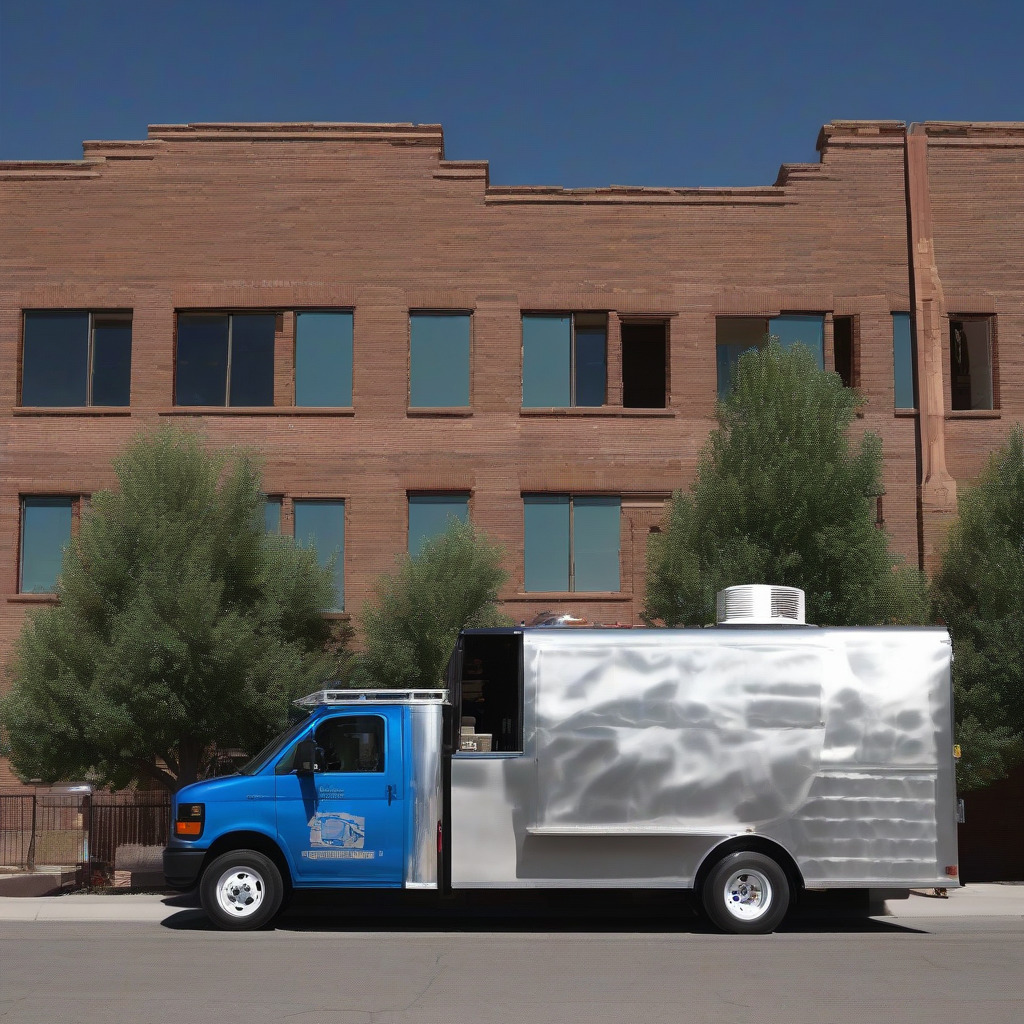
From your DEH inspection to your commissary agreement, here’s the sequence with current fees and timelines.
Getting a food truck licensed in Denver means dealing with at least four city and state agencies, none of which talk to each other, and none of which will tell you about the others’ requirements. You need a signed commissary agreement before you can even schedule your health inspection. Budget a minimum of eight weeks on a fast track — longer if you start in spring, when every other aspiring operator has exactly the same idea.
Operators who understood the full sequence before they started moved through it in roughly two months. Those who didn’t found themselves circling back to correct paperwork while their truck sat idle. That’s an expensive way to learn a lesson that’s entirely avoidable.
This guide covers the process as it stands in 2026, built from permit requirements published by Denver Excise and Licenses and Denver Environmental Health. Read it before you touch a single form.
The Full Permit Stack Denver Requires
Before you legally sell a taco or a cortado out of a food truck in Denver, you need to hold four things simultaneously:
- A Mobile Food Establishment (MFE) License issued by Denver Excise and Licenses
- A passed pre-licensing inspection from Denver Environmental Health (DEH)
- A Colorado state sales tax license from the Colorado Department of Revenue
- A Denver city sales tax license from Denver’s Department of Finance
Depending on where you operate, you may also need a Denver Public Works right-of-way permit, a Denver Parks and Recreation mobile food vendor permit, or both. Those come later. But the four above are non-negotiable. You can’t operate legally without all of them, and they don’t arrive at the same time.
Each has its own application, its own fee, and its own processing queue. The mistake most new operators make is treating this as a linear checklist — knock out step one, move to step two. It isn’t. DEH won’t inspect your truck until you have a commissary agreement. Excise and Licenses won’t issue your MFE license until DEH clears you. The sequence matters more than any individual step.
Step 1: Form Your Business Entity and Get Your Sales Tax Licenses
Before you submit anything to the city, you need a legal business entity. Most food truck operators in Denver form a single-member or multi-member LLC. Register with the Colorado Secretary of State at sos.state.co.us. The standard LLC filing fee is $50. You’ll get a certificate of good standing, which you’ll need downstream.
Once your entity is formed, apply for your Colorado state sales tax license through the Colorado Department of Revenue at colorado.gov/revenue. The license is free and typically issues within a few business days.
Here’s where a lot of new operators get tripped up: Denver has its own separate city sales tax license, administered by the Department of Finance, and it is not the same thing as your state license. The application goes through Denver’s eBiz Tax portal. The fee is nominal — currently somewhere in the $0–$50 range — but confirm it before you apply. It’s an easy step to skip, and skipping it is the kind of compliance problem that surfaces during a routine inspection when you least want the surprise.
Get both sales tax licenses resolved before you go to DEH. The Finance department will want to see your entity registration.
Step 2: Lock In a Commissary Kitchen Before You Apply to DEH
This is the step that stalls more first-time operators than any other.
Denver Environmental Health will not process your inspection application until you submit a signed commissary agreement with a DEH-licensed commissary kitchen. A commissary is a licensed commercial kitchen where your truck bases its operations: storage, prep, cleaning, restocking. You can’t use a home kitchen. You can’t use a friend’s restaurant after hours unless that restaurant holds formal commissary status and has a signed agreement on file with DEH — which most don’t.
A valid commissary agreement must include the commissary name and address, its DEH license number, the specific services provided (dry storage, refrigerated storage, prep space, water fill, grey water disposal), hours and days of access, and signatures from both parties. DEH inspectors have rejected agreements missing the license number or with vague language about waste disposal. Get it right the first time, because resubmitting costs you weeks.
DEH maintains an approved commissary list you can request by contacting their Food Safety program directly. That list reflects current licensing status. Don’t rely on a blog post from 2023 — commissaries lose their DEH status and the internet doesn’t update automatically. Kitchen Network Denver, along the Brighton Blvd corridor in RiNo, comes up constantly in conversations with Denver operators. They’re familiar with DEH’s documentation requirements, which matters when you’re trying to get your agreement formatted correctly on the first pass.
Some brick-and-mortar restaurants around Capitol Hill also hold commissary licenses and rent off-hours access. Call DEH for the full current list.
Budget $400–$900 a month as a realistic commissary baseline, depending on storage needs and access hours. That number repeats every month you operate, profitable or not. It’s not a startup cost that goes away. Build it into your projections from day one.
Don’t start the commissary search after you’ve submitted your DEH application. Find your commissary, sign your agreement, and have the paperwork in hand before you log into the DEH portal.
Step 3: Submit Your DEH Application and Schedule Your Inspection
With a signed commissary agreement and your business entity documented, you’re ready to apply to Denver Environmental Health for your pre-licensing inspection.
The application goes through Denver’s online permitting portal. You’ll upload your commissary agreement, your menu, your equipment list (make and model for all cooking, refrigeration, and food-holding equipment), and your food safety certification. ServSafe or an equivalent Colorado DPHE-approved course is required. The pre-licensing inspection fee ran approximately $200–$280 as of 2024; confirm the current figure with DEH before submitting.
Once your application is complete and your fee paid, DEH schedules the physical truck inspection. In winter, scheduling typically runs one to two weeks out. From May through August, the summer backlog can push that to three to six weeks from submission. If your truck has corrections — and a meaningful share of first-time applicants do — add another one to two weeks for re-inspection.
If you want to be operational by Memorial Day weekend, your complete DEH application needs to be in by early March. April is a gamble. Showing up in May hoping to be vending by June is not a plan.
The DEH inspection backlog is the one delay in this entire process you cannot negotiate, hustle, or call your way out of. You’re subject to someone else’s scheduling capacity, and it gets worse every spring as the industry grows. The operators who consistently get through cleanly started in January or February, had their commissary agreement signed before submitting, and had a truck that was fully built and compliant before the inspection date. Not “mostly done.” Done.
Step 4: Apply for Your Mobile Food Establishment License Through Excise and Licenses
Once DEH issues your clearance letter, you take that to Denver Excise and Licenses to apply for your Mobile Food Establishment License — the city-issued license that formally authorizes you to operate.
The MFE application goes through Denver’s eLicense portal at excise.denvergov.org. You’ll upload your DEH clearance letter, commissary agreement, business entity documentation, sales tax license numbers, and vehicle registration for the truck. The annual fee was approximately $100–$150 as of 2024; confirm the current 2026 fee directly with Excise and Licenses at 720-865-2900. Processing runs about one to two weeks for a complete application.
One question that comes up often: do Denver food trucks need a Retail Food Establishment License too? For a standard truck preparing and selling food directly to consumers, the MFE License is sufficient. But if your operation includes any fixed-location retail component, DEH and Excise and Licenses may classify it differently. If there’s any hybrid element to what you’re doing, call DEH’s Food Safety division before you apply and ask directly. Don’t guess.
Step 5: Know Where You Can Legally Operate
Having your MFE license does not mean you can park anywhere in Denver and start selling. This surprises new operators more than it should.
Private property is the simplest situation. If a business owner invites your truck onto their lot, you need written permission from the property owner and your MFE license covers you — no additional city permit required, as long as you’re not on city right-of-way. This is why brewery lots in RiNo and office parks in the Denver Tech Center work reasonably well for food trucks: the property owner controls the space, and the permitting burden is light.
City right-of-way catches people. If your truck is parked on a public street, in a city parking space, or on a sidewalk — even temporarily — you’re in Denver Public Works jurisdiction and you need a Right-of-Way Permit. Contact Public Works directly for current fees; this information changes and isn’t reliably accurate in third-party guides. Operating in the right-of-way without this permit gets enforced, particularly along the 16th Street Mall corridor, LoDo, and RiNo.
Denver Parks is its own process entirely. Operating in City Park, Cheesman, Wash Park, Civic Center, or any other city parks property requires a Denver Parks and Recreation Mobile Food Vendor Permit, issued through a competitive lottery administered by Denver Parks and Recreation. The application window typically opens in February — confirm the 2026 window and current fee directly with Denver Parks. Competition for the high-traffic spots is real. Don’t count on getting Civic Center Park in your first year.
Events are their own situation. When you’re hired as a vendor at a permitted event, the organizer’s master permit covers the event footprint — not your individual licenses. You still need your own MFE license and DEH clearance. Some large city-property events also require individual vendors to register and submit their own documentation. Confirm in writing what the organizer holds and what you’re still responsible for. Every time.
On neighborhoods: RiNo is the most accessible entry point for most new operators — private-lot arrangements at breweries along Brighton Blvd are common and negotiable. LoDo has more foot traffic but tighter right-of-way restrictions and more active code enforcement; it rewards experience over ambition. Civic Center Park is high-visibility but lottery-dependent, and you’ll likely need a backup plan your first season. DTC and the southeast suburbs involve corporate campus arrangements negotiated directly with building management — a slower sales process, but the lunch volumes can be substantial if you get in.
Among the small business and entrepreneurship topics in our business & professional coverage, the permitting sequence for mobile food operations generates more reader questions than almost any other subject.
Full Cost Table for Year One
The fee ranges below reflect 2024 published figures or estimates from Denver agency sources. Confirm current 2026 fees directly with each agency before you budget.
One-time startup costs:
| Item | Fee |
|---|---|
| Colorado LLC formation (Secretary of State) | $50 |
| Colorado state sales tax license | Free |
| Denver city sales tax license | $0–$50 (confirm current fee) |
| DEH pre-licensing inspection fee | ~$200–$280 (2024 range; confirm 2026 fee) |
| Mobile Food Establishment License (annual, first year) | ~$100–$150 (2024 range; confirm 2026 fee) |
Recurring annual costs:
| Item | Annual Cost |
|---|---|
| MFE License renewal | ~$100–$150 (confirm current fee) |
| DEH renewal inspection | ~$200–$280 (confirm current fee) |
| Denver city sales tax license renewal | $0–$50 (estimated) |
| Denver Parks vendor permit (if applicable) | Confirm with Denver Parks & Recreation |
| Public Works ROW permit (if applicable, per permit) | Confirm with Denver Public Works |
Recurring monthly costs:
| Item | Monthly Range |
|---|---|
| Commissary kitchen membership | $400–$900/month |
The commissary line is the number that actually changes your operating math. At $400–$900 a month, you’re looking at $4,800–$10,800 a year before you’ve paid for food, fuel, labor, insurance, or your truck payment. A single-operator setup needs to be generating real revenue from month one. The commissary cost doesn’t compress with time. It just shows up every month.
Realistic Timeline from Entity Formation to First Legal Sale
The sequence below reflects realistic elapsed time starting in peak season (April–July). Starting in October through January can compress the DEH step by two to four weeks — a meaningful difference that’s worth planning around if you have any flexibility.
| Step | Action | Estimated Duration | Cumulative Elapsed Time |
|---|---|---|---|
| 1 | Form LLC, register with CO Secretary of State | 3–7 days | Week 1 |
| 2 | Obtain CO state sales tax license | 3–5 business days | Week 1–2 |
| 3 | Obtain Denver city sales tax license | 3–5 business days | Week 2 |
| 4 | Find and sign commissary agreement | 1–3 weeks | Week 2–5 |
| 5 | Obtain ServSafe certification (if not already held) | 1–2 weeks (course + exam) | Week 3–5 |
| 6 | Submit DEH application with all documentation | 1–2 days (submission) | Week 5–6 |
| 7 | Wait for DEH inspection scheduling (peak season) | 3–6 weeks | Week 8–12 |
| 8 | DEH physical inspection | 1 day | Week 8–12 |
| 9 | Corrections and re-inspection (if needed) | 1–2 weeks | Week 9–14 |
| 10 | Apply for MFE License through Excise and Licenses | 1–2 weeks | Week 10–14 |
| Total | First legal sale possible | 8–14 weeks from start |
Denver Agency Contact Sheet
Keep this somewhere accessible. Calling the wrong agency wastes more time than you’d expect — each one will politely redirect you, and none of them are fast to answer.
Denver Excise and Licenses
- Phone: 720-865-2900
- Website: excise.denvergov.org
- Mobile Food Establishment License application, renewals, license status
Denver Environmental Health — Food Safety Program
- Website: denvergov.org/health
- Pre-licensing inspection, approved commissary list, food safety certification requirements, re-inspections
Denver Department of Finance — Treasury Division
- Website: denvergov.org/finance (eBiz Tax portal)
- Denver city sales tax license application and renewal
Colorado Department of Revenue
- Website: colorado.gov/revenue
- Colorado state sales tax license
Denver Public Works — Right-of-Way Services
- Website: denvergov.org/publicworks
- ROW permits for street and right-of-way vending
Denver Parks and Recreation — Special Events and Permitting
- Website: denvergov.org/parks
- Mobile food vendor permit lottery for city parks locations
Denver Food Truck Association
- Contact via social media (search Denver Food Truck Association)
- Not a city agency. A peer operator network with practical intelligence on commissary options, event leads, and the kind of permit questions agency websites simply won’t answer. Connect with them before you start, not after you’re stuck.
The permit process is manageable. What makes it hard isn’t the paperwork — it’s that nobody hands you the full sequence at the beginning. The commissary requirement, the separate Denver city sales tax license, the right-of-way permit, the DEH summer backlog: none of it is hidden, but none of it is prominently advertised either. Start in winter if you can. Lock your commissary before you go to DEH. And stop thinking of commissary costs as a startup expense — they’re overhead, and they start the month you sign.