What Is the Real Cost of Leasing a Commissary Kitchen in Denver for Food Entrepreneurs
For food truck operators, caterers, and cottage food producers, the sticker price is only the beginning. Here's what Denver-licensed facilities actually charge and what the Department of Environmen…

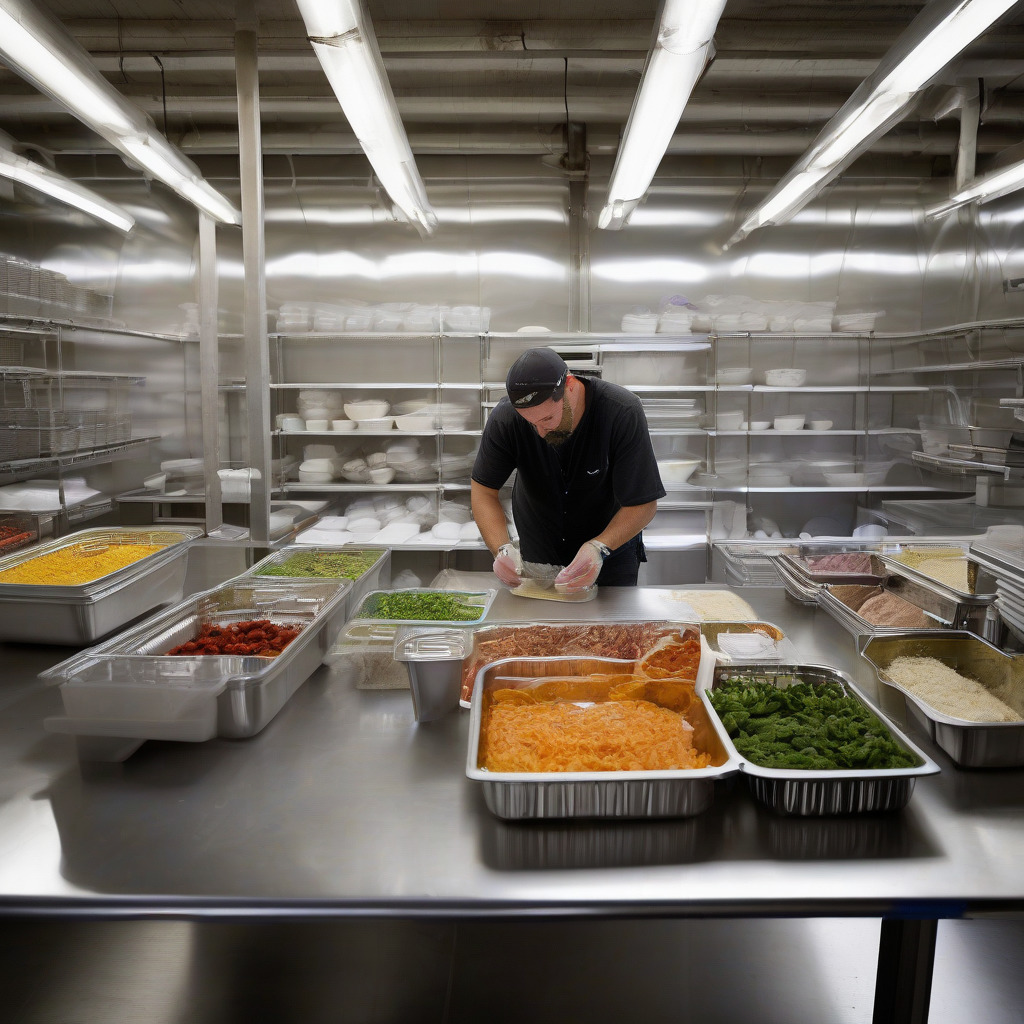
For food truck operators, caterers, and cottage food producers, the sticker price is only the beginning. Here’s what Denver-licensed facilities actually charge and what the Department of Environmental Health requires before you can legally operate.
Finding accurate, current commissary kitchen pricing in Denver requires actual phone calls. No single city database lists rates, facilities open and close without public announcement, and the post-COVID conversion of restaurant space into ghost kitchens reshuffled the market in ways that many “guides” written in 2021 never caught up to. Seasonal demand makes this harder: every January through March, mobile vendor license applications surge as operators prepare for summer, and the better-equipped commissaries fill their available blocks fast.
This piece covers what commissary space actually costs in this market, what the law requires, where the fees hide, and what to watch for in a commissary agreement before you sign one. It’s written for food truck operators, caterers, and cottage food producers who need licensed production space before Denver Environmental Health will approve their mobile vendor license. If you’ve been operating on assumptions rather than verified information, some of what follows may be uncomfortable.
Denver’s Legal Baseline — When You Actually Need a Commissary
Start here, because the most expensive mistake a new food entrepreneur makes is assuming they can sort this out after launch. I’ve heard this story enough times that it no longer surprises me, which doesn’t make it less painful to watch.
Denver Environmental Health requires a signed commissary agreement with a DEH-licensed facility for all mobile food vendors and food carts. That agreement must be submitted with the initial mobile vendor license application and must remain current at annual renewal. Mobile vendor licenses expire December 31, and a lapsed commissary agreement is grounds for license denial when you try to renew in the October–December window.
Two misconceptions consistently trip up new applicants. First: a home kitchen does not qualify. Colorado’s Cottage Food Act does allow limited production of non-potentially-hazardous foods from home for direct-to-consumer sale—think jams, baked goods, candy—but that exemption doesn’t extend to mobile operations or wholesale. If you’re running a food truck, operating a food cart, or selling to restaurants and markets, you need a licensed commercial facility. No exceptions.
Second: not every permitted restaurant will satisfy DEH. The restaurant must hold an active commissary license specifically, not merely a food service establishment license. Those are distinct licenses in Denver’s regulatory framework. A restaurateur who offers to let you use their kitchen without checking their own license status could leave you holding a DEH application that gets kicked back — and that offer, however generous, doesn’t protect you from the consequences.
The regulatory structure is layered. The Colorado Department of Public Health and Environment sets the state baseline standards for commissary operations; Denver DEH adds local licensing requirements on top. When you’re vetting a facility, both layers matter. For current DEH contact information and the current mobile vendor license application and commissary agreement form, go directly to denvergov.org. Pull the current version from the site rather than relying on a copy another operator hands you, since form requirements do get updated.
What Denver Commissary Kitchens Actually Charge
The Denver commissary market breaks into four functional tiers. Rates below reflect the estimated market range; call facilities directly to confirm current pricing, as websites are routinely out of date. Seriously — the website that says $18/hour may not have been touched since 2022.
Entry-level, pay-as-you-go hourly: $15–$22 per hour. This structure suits cottage food producers scaling up, early-stage caterers doing one or two events per month, and operators still testing their concept before committing to a monthly block. At the lower end of this range, expect shared equipment and limited storage allocation. Facilities offering this model in the Denver market include community-oriented shared kitchens that operate on a cooperative or nonprofit model. Some in the Westwood and Globeville areas specifically serve food entrepreneurs who need flexible access without a large upfront commitment.
Mid-tier monthly membership with block hours: $350–$600 per month. This is the most common structure for working food truck operators. A typical package in this range includes kitchen time per month, designated dry storage, and access to the facility’s standard commercial equipment. Some facilities in the RiNo corridor and along the Brighton Boulevard industrial stretch fall in this tier. The monthly fee typically covers base access; storage, refrigeration, and peak-hour slots are often additional charges — which is where a lot of operators get surprised. More on that below.
Heavy-use, dedicated access: $800–$1,500 per month. Multi-unit food truck operations, established caterers handling corporate accounts, and meal-prep businesses doing high daily volume need this level of access. At this tier you’re typically paying for priority scheduling, larger dedicated storage allocation, and sometimes a reserved prep station. A handful of purpose-built commissary facilities in the Denver metro operate at this level, including some ghost kitchen conversions in the River North area. Wait times are shorter because price filters the applicant pool, but the facilities are more likely to have formal contract requirements and longer minimum commitment periods.
Informal restaurant sublease: $10–$18 per hour. This arrangement is common and, when done correctly, legal — but it requires verification. The restaurant must appear on DEH’s active commissary license list, which you can request directly from DEH or search at denvergov.org. This model is particularly prevalent in Baker, Five Points, Westwood, and the Morrison Road corridor, where established restaurant operators have excess kitchen capacity during off-peak hours. The rate is the lowest available in the market, which is why experienced operators use it. It’s also the arrangement that goes sideways most often when someone skips the verification step.
Demand for commissary space at mid-tier facilities in RiNo and near the Cherry Creek farmers market area runs ahead of supply in the January–April window. Several facilities are accepting waitlist deposits — typically $50 to $200, refundable if you’re not placed — while others maintain informal lists without a deposit. Ask explicitly whether a waitlist deposit holds your spot in queue or simply registers interest. Those are very different things.
The Fees the Hourly Rate Doesn’t Show
The gap between the listed rate and the actual first-year cost surprises most new operators, often by thousands of dollars. These aren’t hidden in fine print exactly — they’re just not in the number that gets quoted over the phone.
Security deposits run one to two months of the membership fee upfront, held against damage or unpaid time. On a $500/month membership, that’s $500–$1,000 before you’ve used the kitchen once.
Dry storage is sometimes included in monthly memberships; refrigerated and frozen storage almost never are. Storage fees are priced separately by type and are among the most commonly missed costs in first-year budgeting. Confirm the specific storage fees for each type before signing.
The 5 a.m. to 10 a.m. prep window is prime time for food truck operators, and busier facilities charge for it. Peak-hour surcharges apply during this window at most high-demand commissaries. Read the rate schedule carefully — any operator who’s rolled in at 5:30 for early prep and later found an unexpected line item on their invoice knows exactly what I’m talking about.
Exit cleaning fees per session range from $25 to $75 at facilities that require operators to leave the space in a specific condition. Some facilities apply this automatically; others assess it after inspection. Read the cleaning policy before assuming your own cleanup is sufficient.
Insurance requirements are non-negotiable at virtually every licensed commissary in the Denver market. Facilities require $1 million to $2 million in general liability coverage, and they require the facility to be named as an additional insured on your policy. Verify specific policy costs and endorsement requirements with your own insurance broker — this is not a generic requirement, and each facility has specific language they require in your policy.
A straightforward way to see how these costs add up: take the hourly rate and apply it to your realistic monthly hours, then add refrigerated storage fees, any applicable peak-hour surcharges, and exit cleaning charges. Run that math against the headline monthly figure before you sign. The difference is consistently larger than operators expect, and spotting it before commitment saves months of frustration.
Where Denver’s Commissary Kitchens Are — and Why It Matters
Geography is a practical variable, not just an address preference.
RiNo and the Brighton Boulevard corridor host the highest concentration of purpose-built commissary and ghost kitchen facilities in the city. The industrial-to-creative zoning in this area accommodates commercial food production, and the I-70/I-25 interchange proximity is operationally significant for food truck operators covering the full metro. If you’re running multiple stops across Denver, Lakewood, and Aurora on a given day, a commissary near that interchange cuts deadhead miles and time significantly — which is real money over the course of a season. Several of the better-equipped facilities operate in this area with dedicated equipment for specific cuisines. A facility near RiNo Broadway, for instance, has two convection ovens and climate control for tempering chocolate, serving high-volume bakers.
Globeville and Elyria-Swansea offer lower commercial rents than RiNo and have a legacy food-industry base — meat processing, wholesale distribution — that makes food production a normal land use. The area hosts a growing number of Latino food entrepreneurs, and commissary access has been documented as a specific barrier to business formalization in this community. Some facilities here operate with explicit support for first-generation entrepreneurs, including flexible payment structures and bilingual staff. A facility in this area might cost less than an equivalent RiNo operation, and the flexibility on contract terms is often genuinely higher. Worth the drive if you’re comparing options.
The Morrison Road corridor in Westwood has an active food truck scene and is the area where informal restaurant sublease arrangements are most common. Several established restaurants along this stretch hold active commissary licenses and have historically offered off-hours kitchen access to food truck operators in the neighborhood. If you’re embedded in that community, the network exists — but you need to verify the commissary license status before you rely on any specific arrangement. The network is real; the assumption that everyone in it has checked their paperwork is not always warranted.
Proximity to farmers markets is a real operational factor. Denver’s major markets — Cherry Creek Farmers Market, City Park Farmers Market, and Capitol Hill People’s Fair market — run May through October and represent the revenue backbone for many cottage food producers and prepared food vendors. Commissaries within 20–30 minutes of these locations matter during the production-heavy summer season, when operators may be running early-morning prep before a 7 a.m. market setup. Distance between your commissary and your first sale location directly affects your profit margin on smaller production runs. This sounds obvious until you’re driving from Commerce City to Cherry Creek at 6 a.m. and reconsidering every decision you’ve made.
The Restaurant Sublease Option — Legal But Fragile
Subleasing prep time from a brick-and-mortar restaurant that holds a DEH commissary license is how a significant portion of Denver’s experienced food truck operators handle this cost. Done correctly, it’s legitimate. Done carelessly, it creates exposure that can end your operating season.
The verification step is mandatory: the restaurant must appear on DEH’s active commissary license list. You can obtain this list by calling Denver DEH directly or by checking denvergov.org. Do not take the restaurant owner’s word for it. License status changes. A restaurant can let its commissary license lapse, have it suspended after an inspection, or simply never have held one while genuinely believing it qualified. A mobile vendor operator on Morrison Road found this out the hard way in 2019 when the restaurant she subleased from had allowed its commissary endorsement to lapse three months prior. When DEH pulled her file at annual renewal, the agreement was invalid. If DEH pulls your commissary agreement file and the facility isn’t licensed, your mobile vendor license is at risk. That’s not a gray area.
Beyond verification, understand the specific risks this arrangement carries that a formal commissary avoids. DEH does not inspect the sublease arrangement itself. Formal commissary agreements are reviewed at licensing; informal sublease terms are not audited. If the arrangement doesn’t match what’s on paper with DEH, that’s your risk.
Insurance gaps are common. The restaurant’s general liability policy almost certainly does not cover your operations in their kitchen. Your own policy needs to explicitly cover the location. If the restaurant hasn’t agreed to be named as additional insured on your policy — or if you haven’t verified their coverage extends to sublease tenants — an equipment failure, fire, or contamination event during your prep time creates a coverage gap that your insurer can deny.
The arrangement can collapse without warning. A restaurant’s circumstances — lease loss, ownership change, license issue, a sudden need for their own off-hours kitchen capacity — can leave you without a valid commissary agreement in the middle of a license year. Your mobile vendor license doesn’t become invalid the day the agreement ends, but your next renewal will be denied if you can’t produce a current agreement.
Finding a new commissary mid-season, when waitlists are full, is genuinely difficult. One caterer in the Westwood area lost her commissary when the restaurant was sold to a new operator who wanted the off-hours kitchen access for his own catering operation. She had three weeks to find an alternative before her farmers market season started. She found one — but it cost her more, was farther from her market routes, and required a three-month minimum commitment she hadn’t planned on.
What the DEH Commissary Agreement Form Actually Requires
The commissary agreement is a specific document with specific required elements. Applications get kicked back more often than DEH would prefer because operators submit incomplete or incorrectly executed versions. This is fixable if you know what to look for.
Required on the form: the commissary facility’s legal name and active DEH license number; the specific days and hours during which the mobile vendor has authorized access; allocated storage space broken out by type (dry, refrigerated, and frozen must each be identified separately, not listed generically as “storage”); confirmation of cleaning and sanitation access; and the signature of the commissary’s licensed owner or operator.
Common rejection triggers include storage listed as “TBD” or described without specifying type; access hours on the agreement that don’t match the vendor’s actual stated production schedule; and agreements that reference a facility by trade name when DEH’s license is held under a different legal entity name. A caterer who submitted an agreement three years ago that listed the facility as “The Kitchen Collective” but whose DEH license reads “TCP Holdings LLC” will get that application kicked back. Get the current form directly from denvergov.org or from DEH’s Public Health Inspections Division. Forms do get updated; a version from a prior year may be missing a required field — and no, the reviewer won’t call to tell you why before denying the application.
The annual renewal window runs October through December. If your commissary agreement has changed — you moved facilities, the restaurant you were subleasing from closed, your access hours changed — you need an updated agreement in place before you file renewal. A lapsed or mismatched agreement at renewal means license denial.
The March Crunch — Waitlists and When to Start Looking
The commissary search timeline is one of the most practically useful things this piece can tell you: start earlier than feels necessary.
Mobile vendor license applications to Denver DEH spike January through March as operators prepare for summer season openings and farmers market launches. Commissary waitlists at the better-equipped facilities lengthen accordingly. Facilities that have open slots in November can be running significant waitlists by February. If your target launch is May 1, your commissary search needs to start in November or December of the prior year. Waiting until April to start calling commissaries means you’re in line behind 30 operators who planned ahead — and they did plan ahead, which is why you’re not finding availability.
Before paying a waitlist holding deposit, ask these questions: Does the deposit hold a specific queue position, or does it just register interest? Is it fully refundable if you’re not placed? What’s the facility’s current wait time estimate, and how did that estimate compare to actual placement for recent applicants? What triggers movement off the waitlist — is it based on departure of current members, or does the facility expand capacity periodically? A facility that tells you “3–4 week wait” should be able to tell you how many people are ahead of you and what the actual average placement time was last year. If they can’t answer that, treat the estimate as a guess.
Two local resources serve Denver food entrepreneurs specifically and are worth a call if you’re hitting barriers. Mi Casa Resource Center (Westwood neighborhood, Denver) works extensively with food entrepreneurs in the Westwood community and has connections to commissary access resources, including referrals and, in some cases, subsidy programs for qualifying operators. Their small business development programming specifically addresses commissary barriers for first-generation Latino food entrepreneurs. The Denver Office of Economic Development has historically offered technical assistance to food entrepreneurs through its small business programs, which is documented in our business & professional coverage. The programming changes; call or check the current website to confirm what’s available in the current fiscal year. I’d verify both before building them into a plan.
What to Look For in a Commissary Agreement Before You Sign
Price is one variable. These are the others that determine whether a commissary actually works for your business.
Equipment specificity matters. Does the agreement specify which equipment you have access to? A commercial range, a six-burner, a proof box, specific mixers — these matter for caterers and bakers. Denver’s altitude (5,280 feet, with many operators working from facilities actually higher) creates real production challenges for bread and pastry operations. Yeast activity accelerates, proofing times shorten, and baked goods behave differently than they would at sea level. If altitude-sensitive production is part of your business, confirm the commissary has the specific equipment — convection ovens, adjustable proof boxes — that your recipes require. “Full commercial kitchen” is not a sufficient description for this purpose.
A baker who assumed a commissary had adequate convection capacity ended up with over-browning issues that cost her two months and three market seasons to diagnose and fix. It sounds like a small thing until you’ve lost a summer of farmers market revenue tracing a problem back to equipment you never properly vetted.
Minimum monthly hour commitments are another point of negotiation. Some facilities require a minimum number of hours per month regardless of use. A low hourly rate can become expensive in practice if you’re paying for hours you’re not using. Run the math both ways — what you’ll actually use versus what the minimum requires.
Cancellation terms matter too. How much notice does the agreement require before termination? What happens to your security deposit if you cancel before the minimum term? A 30-day notice requirement can be reasonable; a 90-day or locked-in year-long term is something to consider carefully if you’re early-stage and still testing your model.
Ask directly when the facility was last inspected and whether there are any open violations. An operator whose commissary is cited for violations — or worse, has its license suspended — creates immediate risk for every tenant’s own license. This is not an intrusive question; a well-run facility will answer it straightforwardly. You can also request DEH inspection records by calling the Public Health Inspections Division directly. If a facility gets defensive about this question, that’s worth noting.
The commissary operator’s general liability policy should cover the facility itself — equipment failure, contamination events, structural issues. Ask whether their coverage extends any protection to tenant operators, and get your own broker to review the answer. Don’t assume your policy covers you for consequences that originate with facility equipment. A fire in the facility’s hood system that damages food in your tenant’s storage is a facility liability issue, not yours.
Access flexibility determines how you’ll actually operate. Does the agreement give you specific time slots, or can you book any available block? What’s the advance booking requirement? How far out can you reserve? For operators whose catering schedule shifts week to week, rigid block assignments can be as limiting as a waitlist. A food truck operator who needs to prep based on event bookings needs a facility willing to book space 2–3 weeks out, not a facility that locks in schedules a month in advance and calls that flexibility.
The Denver commissary kitchen market rewards operators who do their homework before they need a facility — not when the license application is due in two weeks and the farmers market season is eight weeks out. The compliance piece is binary: you have a valid commissary agreement with a DEH-licensed facility or you don’t operate legally. The cost piece is more nuanced, and the nuance is almost entirely in the fees, terms, and equipment access that don’t appear in the headline rate. Both pieces deserve this level of attention before you sign anything. The operators who’ve been doing this for several seasons will tell you the same thing, usually after describing a mistake they made once and never made again.
All facility names, rates, and DEH form details should be verified against primary sources before relying on them for your own application. Pull the current DEH commissary agreement form and current mobile vendor license fee schedule directly from denvergov.org, and confirm rates by direct facility contact before budgeting.