Which Denver Neighborhoods Are Getting the Most New Apartments and What Renters Should Do Right Now
Buildings that broke ground in 2023 and 2024 are hitting the market in RiNo, Sun Valley, and Five Points this summer. Here's a neighborhood-by-neighborhood breakdown of where the supply is, what co…

Buildings that broke ground in 2023 and 2024 are hitting the market in RiNo, Sun Valley, and Five Points this summer. Here’s a neighborhood-by-neighborhood breakdown of where the supply is, what concessions are actually on the table, and how long the window stays open.
There’s a short window opening in Denver’s rental market this summer, and most renters don’t know it exists.
Between June and August 2026, a large share of the multifamily construction that started during Denver’s 2021–2023 building surge is receiving Certificates of Occupancy and beginning lease-up — the industry term for the sprint a new building runs to fill its units before lenders get nervous. Lease-up teams carry explicit concession budgets, vacancy targets, and hard deadlines. Right now, in several Denver submarkets, multiple large buildings are running that sprint at the same time, competing for the same pool of renters while the clock ticks toward a winter market that goes quiet.
Vacancy in the metro is running 7–9%, the softest in years. Landlords in the highest-supply corridors are offering concessions that were unheard-of during 2021–2022. Four to eight weeks free on a 12-month lease. Waived application fees. Free parking. In some cases, waived security deposits. It’s concentrated — most intensely in RiNo, Five Points, and Sun Valley right now, spilling into Cole, Curtis Park, and the Sloan’s Lake corridor through market pressure — and it will shrink as buildings hit their occupancy targets, probably by late fall.
This guide is built from Denver Community Planning and Development permit data, cross-referenced against AAMD quarterly vacancy reporting and CBRE’s Denver multifamily submarket pipeline. It’s organized for renters, not investors.
How We Reported This and What You Should Verify
The project pipeline data here was pulled from Denver Community Planning and Development’s public permit portal at denvergov.org/permits. We filtered for multifamily building permits with projected or issued Certificates of Occupancy in the June–August 2026 window, then cross-referenced that against the Apartment Association of Metro Denver’s quarterly rental housing journal and CBRE’s Denver multifamily pipeline reports.
Where unit counts and CO dates were confirmed across multiple sources, they appear as stated figures. Where only one source had a number — often the case with smaller projects — those figures are flagged. Asking rents are drawn from Apartments.com, Zillow, and directly from property websites as of spring 2026; treat them as current snapshots, not guarantees.
One distinction runs through the whole guide: ground-up new construction versus gut renovations marketed as new product. The negotiating math differs between them, and that’s covered in Section 6. When a project is described here as “new construction,” it means a building with a new structure — not a rehabilitated property regardless of how the marketing presents it.
RiNo and Globeville: The Deepest Pipeline, the Most Aggressive Deals
The River North Art District and its immediate northern neighbor, Globeville, have the most concentrated multifamily delivery cluster in Denver this summer. RiNo sits between I-70 to the north and I-25 to the west, with the 38th Avenue and Brighton Boulevard corridor running through it. Several large podium-style projects — typically five to seven stories wrapping structured parking — are all chasing the same renter simultaneously. That’s the direct cause of what’s happening with concessions here.
You can verify the current project roster yourself at denvergov.org/permits by filtering for multifamily new construction permits with projected Certificate of Occupancy dates in Q2–Q3 2026.
When you walk into a new RiNo building, you’re entering a buyer’s market in the truest sense. Lease-up teams know exactly what the building on the next block is offering. If Brighton is at six weeks free, Walnut is under pressure to match or beat it. Enjoy this while it lasts — it won’t.
Six weeks free on a 12-month lease cuts your effective monthly cost by about 11.5%. On a $2,100 face rent, you’re actually paying closer to $1,859. If a landlord won’t move on face rent, the full concession still changes what you actually pay. That’s real money.
Globeville, directly north along the Valley Highway corridor, is caught in the same supply wave. Asking rents there run below RiNo comparables for similar product. The tradeoffs are real — proximity to the I-25 interchange, ongoing industrial uses on adjacent parcels, limited walkable retail — but for renters who want to be near RiNo without paying RiNo rates, Globeville is worth including in your search. Don’t skip it just because it’s not getting the lifestyle-blog treatment. Our reporting on what it costs to operate in RiNo right now and who has been priced out shows how commercial rent pressure in the district connects to the residential dynamics playing out this summer.
Five Points and Sun Valley Require Different Approaches
Both neighborhoods are seeing new supply this summer, but the negotiating environment in each is structurally different. Treating them the same will cost you time.
Five Points
The Five Points pipeline concentrates in two corridors: the area around the 38th & Blake RTD commuter rail station and Welton Street running through the historic heart of the neighborhood. Proximity to Denver Health, Coors Field, and the 38th & Blake station has kept rental demand in this submarket steady. Check the CPD permit portal for current delivery timelines; some projects in this corridor have experienced schedule movement.
The market-rate buildings in Five Points are fully negotiable and operate under the same lease-up pressure as RiNo. Concessions run in the same range — four to six weeks free, waived fees, parking incentives.
One thing I don’t think should be buried: Five Points is a neighborhood that has experienced sustained displacement pressure from the same development wave that’s now delivering these units. Market-rate and luxury apartment buildings near Welton and the Blake station have contributed to the displacement of longtime Black residents and small businesses that defined the neighborhood’s cultural identity for generations. Renters benefiting from this supply surge should understand the context. That doesn’t mean don’t negotiate — you should — but the full picture is part of the story.
Sun Valley
Sun Valley is different, and if you don’t sort this out before visiting buildings, you’ll waste a trip. The major supply event here is the Denver Housing Authority’s multi-phase Sun Valley redevelopment, replacing public housing with a mixed-income community over a multi-year horizon. Units delivering this summer include both deeply affordable income-restricted apartments and market-rate units within that mixed-income development. Sun Valley sits west of Decatur, adjacent to Empower Field at Mile High.
The income-restricted units are not negotiable. The rate is set by AMI formula, you have to qualify by income to lease them, and there may be waitlists. The framework in this guide doesn’t apply to them.
The market-rate component is legitimately negotiable. But the DHA-affiliated management structure means the authorization chain for concessions can be less flexible than a purely private operator — more patience and escalation may be required. Confirm before you visit which Sun Valley buildings are market-rate and who’s managing them.
Cole, Curtis Park, and Sloan’s Lake Are Soft Even Without New Supply
This is the part most coverage misses. Vacancy pressure in RiNo and Five Points doesn’t stay inside those neighborhood boundaries. It spreads into adjacent areas through a simple mechanism: renters comparison-shop, and landlords know it.
A renter searching for a two-bedroom in Cole or Curtis Park today is also looking at two-bedrooms in RiNo. They might get six weeks free on a brand-new unit for the same money. Landlords in Cole and Curtis Park are not competing for a theoretical renter; they’re competing for a specific person who sent applications to three buildings and is deciding this week.
The result is that vacancy in Cole, Curtis Park, and the Sloan’s Lake and Edgewater corridor has softened even though those neighborhoods have minimal new supply of their own. Sloan’s Lake and Edgewater have real demand drivers — Sloan’s Lake Park, the Edgewater Public Market — but those same landlords know what they’re competing against.
In these spillover neighborhoods, landlords tend toward informal flexibility over formal concessions. Waiving a month-to-month penalty, throwing in parking that would normally be an add-on, holding a unit a few extra days without requiring a deposit — none of these are a headline-grabbing free-rent offer, but they add up. Cite specific competing buildings and specific offers. That’s not a bluff; it’s market information, and it works.
How to Tell Whether a Building Is New Construction or a Gut Renovation
New construction lease-up teams have explicit concession budgets and are authorized to offer specific incentives. A local operator running a renovated building has informal flexibility — they can make deals a large REIT can’t — but they don’t have a structured six-weeks-free offer sitting in a spreadsheet waiting for you to ask.
Start at denvergov.org/permits and search by address. A building permit issued in 2022–2024 for new construction at that address, with a CO in 2026, is ground-up. A permit from the same era filed as “interior remodel” or “change of occupancy” on a structure with a much older permit history is a renovation.
Then check the Denver County Assessor’s property search at denvergov.org/assessor, which shows a “year built” field for every parcel. A 2025 or 2026 year built is consistent with new construction. A 1962 year built with a fresh lobby is a renovation, however extensively it was redone.
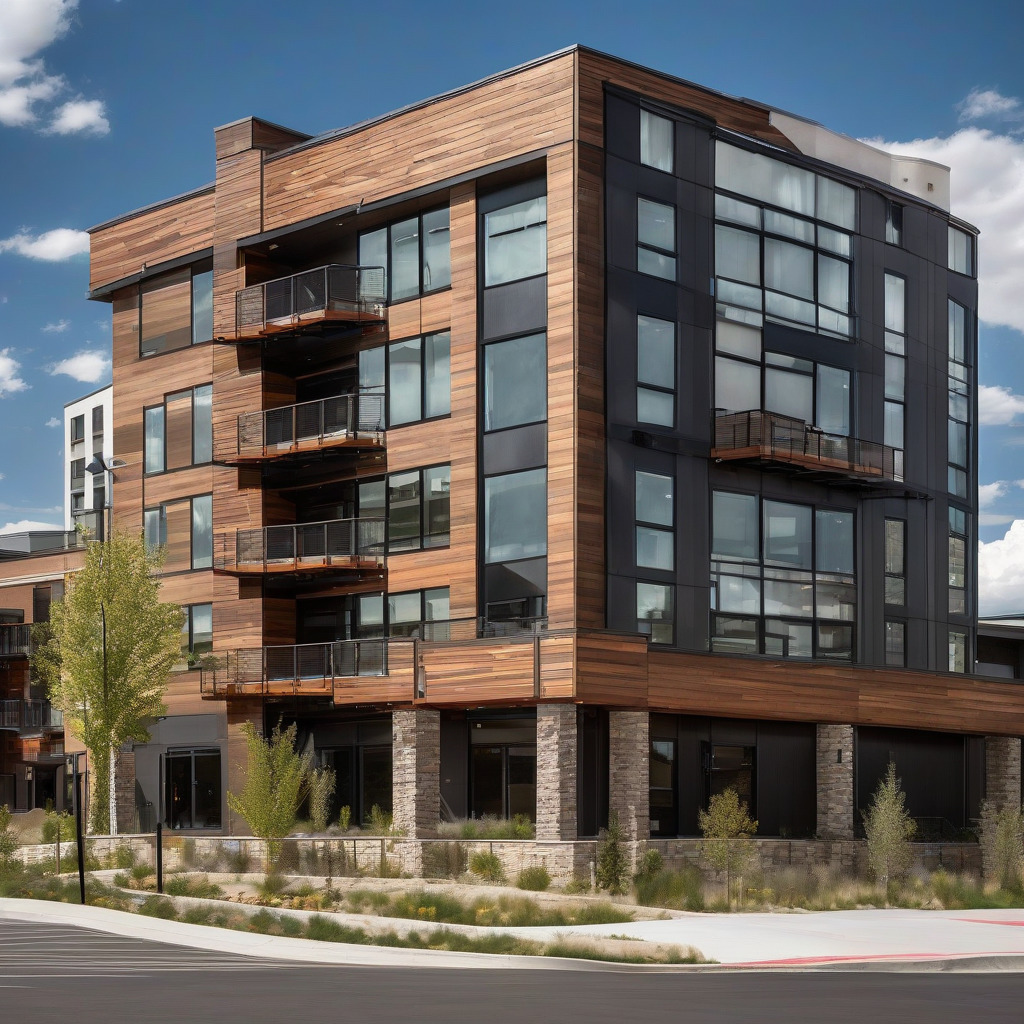
Look at the building itself. Podium-style construction — concrete or masonry ground floor, wood-frame upper floors, structured parking integrated into the base — is the signature form of contemporary Denver multifamily and is almost always new. LEED certification plaques near the entrance indicate new construction or major renovation. Pre-war window configurations — double-hung wood windows, irregular spacing, masonry lintels — tell you a building predates modern construction regardless of what the lobby looks like. New construction in Denver is also required to include cooling; older stock famously is not, so in-unit AC is a consistent marker of genuinely new or recently gut-renovated buildings. If the leasing agent can’t tell you definitively when the building was constructed, write that down.
What Concessions Are Actually on the Table and How to Ask
The standard concession menu for new construction lease-up in the highest-supply submarkets right now:
Free rent runs four to eight weeks on a 12-month lease. Four to six weeks is what most buildings advertise; eight weeks is possible on units that have sat more than 30 days and requires pushing. Application fees are frequently waived outright or credited at signing — always ask, because the answer is almost always yes. Security deposits are typically one month’s rent; some buildings are moving toward security deposit alternatives, a small monthly fee in lieu of a lump sum. Where parking is an add-on, free parking for the first 12 months shows up as a line item rather than a face-rent reduction. Move-in fees and admin fees are often waived — ask specifically, because these get listed like they’re fixed when they’re not.
The phrase that matters is “net effective rent,” not face rent. When a building offers six weeks free on a $2,000 apartment, the net effective rent is approximately $1,769 over the 12-month term. Landlords advertise face rent because it looks better on the listing. You want net effective rent because it tells you what you actually pay. Using that phrase signals you know the market, and it changes the tone of the conversation immediately — leasing agents shift out of script mode fast when they realize they’re not talking to someone who’ll just take whatever’s posted.
Among the larger management companies active in new Denver multifamily right now: Greystar, AIMCO/Apartment Income REIT (Denver-headquartered), Griffis Residential, RedPeak Properties, and Westfield. Authorization for concessions varies by company and property. The leasing agent at the front desk probably can’t offer more than what’s on the current incentive sheet. Ask to speak with the community manager if the listed offer isn’t working.
Buildings under 90% occupied that received their CO within the last six months are the most likely to deal aggressively. You can’t ask a building directly for their occupancy number, but you can look. A half-empty parking structure on a Tuesday morning, an unused rooftop, amenity spaces that look like they’ve never had a party — these are signals a building hasn’t hit its lease-up target and knows it. Trust what you see.
The Renewal Script for Renters Who Are Not Moving
Most renters in or near these neighborhoods just accept whatever renewal number shows up in their email. That’s a mistake right now.
In a 7–9% vacancy market with aggressive concessions on brand-new product, a renewing tenant means guaranteed occupancy, no turnover costs, no repair or cleaning between tenants, no leasing commission. That’s worth real money to your landlord. The question is whether they’ll share it.
Here’s a specific script:
“I’ve been looking at [building name] at [address] and they’re offering [X weeks free] on a 12-month lease, which works out to an effective monthly rent of [net effective figure]. I’d like to stay — we both avoid the hassle of a turnover, and I’m a reliable tenant. But I need my effective cost to be competitive with what’s on the market. Can you match that, or get closer to it?”
Have the specific building and specific offer ready. Vague claims that other places are cheaper are easy to dismiss. A named property with a documented offer is not. Do this in writing — email, not text — so there’s a record. Raise it well before your renewal deadline; waiting until the last month shrinks your options if the answer is no.
On the legal landscape: Colorado doesn’t have statewide just-cause eviction protection, which means a landlord can decline to renew without giving a reason. Some renters worry negotiating will prompt non-renewal. That risk exists but is overstated in a soft market — a landlord facing a vacant unit in a high-supply submarket has strong financial incentives to keep a paying tenant in good standing. And if your landlord declines both the negotiation and the renewal, your position is actually better than average. You’re entering a market with genuine oversupply in your target neighborhoods, and you have the tools to use it. If you’re navigating that scenario with a roommate or considering a subletting arrangement as a backup, how Denver’s roommate and subletting market works when leases turn over in late summer lays out your practical options.
Neighborhood Quick-Reference Table
| Neighborhood | New Supply Situation | Vacancy Pressure | Concession Likelihood |
|---|---|---|---|
| RiNo | High — multiple large podium projects delivering summer 2026 (verify at denvergov.org/permits) | High | Very High |
| Globeville | Moderate — mix of new construction and industrial conversion (verify via CPD) | High | High |
| Five Points (market-rate) | Moderate to High — 38th & Blake and Welton corridors; some project timelines unconfirmed | High | High |
| Sun Valley (market-rate units only) | Moderate — DHA mixed-income redevelopment; AMI-restricted units not negotiable | Moderate | Moderate |
| Cole | Minimal new supply | Spillover | Moderate |
| Curtis Park | Minimal new supply | Spillover | Moderate |
| Sloan’s Lake/Edgewater | Minimal new supply | Spillover | Moderate |
Vacancy pressure and concession likelihood are assessments based on known pipeline density and market conditions as of spring 2026. Verify current project-level data via the Denver CPD permit portal. Spillover vacancy pressure means softness driven by competing supply in adjacent neighborhoods rather than local pipeline.
How to Track This Yourself After We Publish
The concession environment will shift as buildings hit their targets. Here’s how to stay current, and this is the kind of neighborhood-level tracking we aim to provide in our moving & real estate coverage.
The CPD permit portal at denvergov.org/permits lets you filter by permit type (Building — New Construction or Building — Multifamily), search by address or neighborhood, and sort by recent activity. Filter for permits with a status change to “Certificate of Occupancy Issued” and you’ll see which buildings just went live. The first 90 days after a CO is the highest-leverage window — that’s when lease-up pressure is most acute and concession budgets are fullest.
The Apartment Association of Metro Denver publishes vacancy and rent trend data by submarket quarterly. It’s the most granular neighborhood-level rental data publicly available for Denver. Watch submarket-level vacancy numbers: anything above 8% in a submarket means the concession environment is still running.
CBRE releases Denver multifamily market reports quarterly with pipeline tracking by submarket. These are investor-facing documents but are often available to the public through CBRE’s website or through local media covering the commercial market. The pipeline reports will show how much of the summer delivery wave has been absorbed and whether fall concessions remain warranted.
This window is real and it has a clock. Buildings that deliver this summer and hit occupancy will pull back concession budgets faster than you’d expect — that’s how the math works. If you’re planning to move or renew in a covered neighborhood, act before Denver’s rental market goes quiet in November. By then, the buildings that made deals in August will have stopped making them.
CityDesk Denver covers local business and economic news for residents of the Denver metro area. Pipeline data used in this report was drawn from Denver Community Planning and Development’s public permit portal, the Apartment Association of Metro Denver’s quarterly rental housing journal, and CBRE Denver submarket reports. Readers who find discrepancies in project-level data are encouraged to contact us.
For more local coverage, explore our Moving & Real Estate section.