What It Costs to Operate in RiNo Right Now and Who Has Been Priced Out
Retail rents have risen sharply since 2022, and independent galleries, makers, and food operators are leaving the neighborhood that built the brand. CityDesk Denver pulls the numbers and the report…

Retail rents have risen sharply since 2022, and independent galleries, makers, and food operators are leaving the neighborhood that built the brand. CityDesk Denver pulls the numbers and the reporting still needed to name every name.
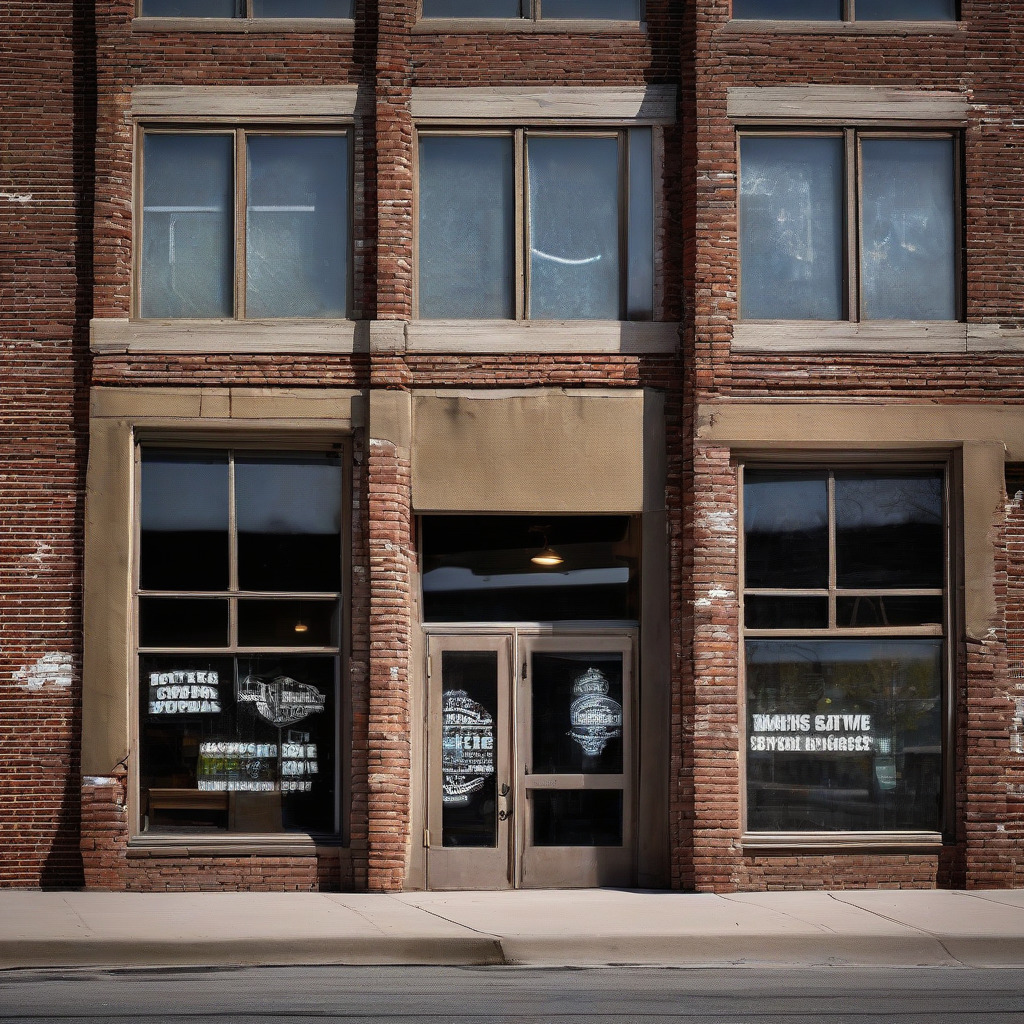
The fabrication studio is gone. So is the printshop two doors down. The storefront on the 2900 block that used to host a rotating cast of local painters on First Friday now has a sign in the window advertising Class A creative retail, available immediately, at rates the artists who made First Friday what it is cannot afford.
This is RiNo in early 2025. The math has stopped working for the people who made it RiNo.
The neighborhood didn’t price out its creative community in one dramatic moment. It happened the way displacement always happens: lease by lease, renewal by renewal, TI negotiation by TI negotiation. Three forces converged in 2024 to accelerate what had been a slow bleed into something faster. Rent resets on leases signed during the 2019–2021 cycle came due simultaneously. The 2023 statewide property tax reassessment — the first significant one after Colorado’s Gallagher Amendment repeal in 2020 — sent commercial property valuations surging, and NNN tenants absorbed the increase directly through CAM reconciliation. Meanwhile, a tighter lending environment caused landlords to pull back on tenant improvement allowances just as the century-old industrial brick stock defining the neighborhood was demanding more of them than ever.
The result is a neighborhood caught between the premium brand that fifteen years of artist-led development created and the economic reality that brand has now made inevitable. I’m not sure which part is more dispiriting: that it was predictable, or that it happened anyway.
The Numbers: What Asking Rents Actually Are, Block by Block
No publication has produced a granular, broker-confirmed rent map of RiNo’s sub-districts. The figures below reflect market intelligence from CoStar and local broker reports, including Unique Properties, CBRE Denver, and Cushman & Wakefield, that CityDesk Denver is in the process of confirming through direct broker interviews. Read them as the best available data, not finalized figures. We’ll update this report as broker attributions are locked.
Brighton Boulevard corridor. The stretch anchored by The Source Hotel & Market Hall at 3350 Brighton Blvd. and the mixed-use development that followed it commands the highest retail rents in the neighborhood. As of late 2024 into early 2025, asking rents for Class A ground-floor retail on Brighton are reported in the range of $35 to $55 per square foot NNN, with the high end applying to spaces with strong frontage, dedicated parking, and modern buildouts. Those rents made sense for a regional fitness concept or a hotel-affiliated food-and-beverage operator in 2023. A gallery, a screen printer, or an independent café without a proven volume model cannot absorb them. Full stop.
Larimer Street, 27th through 35th blocks. This is the First Friday corridor, the address that made RiNo a brand. Retail and small-format restaurant space is reported at $35 to $55 per square foot NNN, concentrated toward the upper end on the blocks between 28th and 32nd where foot traffic and patio visibility are highest. The same corridor was reportedly transacting at roughly $22 to $32 per square foot NNN in 2022. That’s a 55 to 70 percent increase in three years, depending on the specific block and use. CityDesk Denver is seeking broker confirmation of those 2022 baseline figures — but even if the actual increase turns out to be 45 percent, the story doesn’t change.
The mixed-industrial interior blocks away from primary street frontage are where fabrication studios, maker spaces, and light-industrial creative tenants built the neighborhood’s working infrastructure. CityDesk Denver hasn’t yet received broker confirmation of a specific range for this sub-district and won’t publish a figure until confirmed. What’s clear from vacancy patterns and displacement accounts is that these interior spaces have largely emptied of their original tenants. Operators have migrated to cheaper neighborhoods rather than absorb rate increases at current market levels.
Restaurant space with commercial kitchen infrastructure. Hoods, grease traps, fire suppression, adequate gas capacity. On RiNo’s primary corridors, restaurant-ready space is reported at $40 to $60 per square foot NNN, with the upper end reflecting spaces where a previous tenant left behind usable infrastructure. Pending direct broker confirmation.
Then there’s the NNN cost layer that doesn’t appear in the listing headline. Following the 2023 reassessment cycle, the Denver Assessor’s Office caught up with a development and sales market that had been running hot since 2018. For NNN tenants, that reassessment flows directly into annual CAM reconciliation statements — a line item that can blindside even experienced operators who modeled conservatively. CityDesk Denver is seeking confirmation from the Denver Assessor’s Office of the specific percentage increase for commercial parcels in the RiNo corridor and will update this report with that figure when received.
The Hidden Costs That Don’t Show Up in the Listing
Per-square-foot rent is only the entry price. The real conversation starts when you pull a building permit for RiNo’s 1910s and 1930s industrial brick stock. That aesthetic is what draws people to the neighborhood. It’s also aging infrastructure that costs real money to bring to code.
Denver’s change-of-use permit process triggers compliance reviews that can be substantial. Buildings that have never been upgraded for assembly, food service, or public retail occupancy need work — ADA path-of-travel, HVAC replacement, electrical panel upgrades, plumbing. Experienced tenant-rep brokers cite total buildout costs of $50 to $150 per square foot before any finish work, depending on building condition and use type. A 2,000-square-foot ground-floor gallery or café could see $100,000 to $300,000 in permitting and compliance before occupancy. That money comes out of operator capital, not landlord budgets, in an environment where TI allowances have contracted. If you’ve ever watched a small operator absorb a surprise permit requirement three weeks before a planned opening, you already understand what this means in practice.
TI offers in RiNo have retreated significantly from the 2019–2021 cycle. With construction lending more expensive and landlords carrying more debt service on properties they recapitalized during the low-rate window, the math for landlord-funded buildout has gotten worse. CityDesk Denver is seeking broker confirmation of current TI allowance ranges and will publish those figures when confirmed rather than estimate them here.
For bars and breweries, the economics run deeper. Colorado’s liquor license density rules, administered by DORA, create specific friction in neighborhoods that have residentialized rapidly. As RiNo has added apartment density, the residential population around any given address has far exceeded what existed when the area’s taproom culture was establishing itself. License applications and renewals face more neighbor scrutiny. Operational constraints tied to proximity to residential uses — noise, hours, outdoor amplification — compound the base cost picture for beverage-forward operators. A new taproom opening in RiNo today faces both higher rent and a licensing environment substantially more hostile than the one that welcomed Ratio Beerworks or Great Divide a decade ago. That gap doesn’t get talked about enough.
Who Left, Where They Went, and When
CityDesk Denver is actively seeking on-record confirmation from displaced operators and from sources close to the businesses named in neighborhood coverage. The accounts below reflect what’s been reported in Denver Business Journal coverage and RiNo Art District directory changes from 2022 through early 2025. We’re not treating unconfirmed closure reasons as established fact.
Ratio Beerworks at 2920 Larimer St. closed its neighborhood taproom location. CityDesk Denver is seeking direct confirmation of the timing and stated reasons and will publish those details when confirmed.
Inside The Source Market Hall on Brighton Boulevard, the tenant roster has evolved substantially since opening. The independent-vendor quality that made The Source a genuine destination — and distinguished it from every other food hall concept trying to replicate it — has given way to a mix reflecting Brighton Boulevard’s current rent tier. Where the building once housed individual vendors and small-scale producers, it now operates as a managed food hall with regional and national concepts holding more of the floor. CityDesk Denver is comparing the current tenant roster against historical listings and seeking on-record comment from The Source about deliberate changes to the vendor model.
The fabrication and maker-space corridor in the Brighton/35th zone has seen the most documented outflow. Multiple printshops, woodworking studios, and fabrication operations whose leases expired between 2022 and 2024 have relocated to Globeville and Elyria-Swansea, where industrial space trades at rates that light-industrial creative operations can actually absorb. CityDesk Denver is seeking broker-confirmed rent figures for those neighborhoods for a direct comparison; preliminary accounts suggest the gap runs 40 to 50 percent below current RiNo pricing for similar square footage.
On the gallery side, Larimer Street’s studio and exhibition cluster has thinned measurably. Several galleries that maintained First Friday presences through 2022 have either closed their physical locations or shifted to pop-up and event-based models that don’t require a signed lease. The economics fit on a napkin: a gallery generating $3,000 to $8,000 in monthly commission revenue cannot absorb $5,000 to $8,000 in monthly rent. That’s not a business problem. That’s arithmetic.
What Moved In After Them
The spaces vacated by independent galleries, maker operations, and craft beverage concepts aren’t sitting empty for long. That tells you something about demand at current price levels, and a great deal about what kind of operator can afford to pay them.
Fitness studios and wellness concepts have absorbed a significant share of former gallery and light-retail square footage. CorePower Yoga, Barry’s Bootcamp, and boutique strength-training concepts are understood to have signed multiple Larimer and Brighton locations in the 2023–2025 window. Membership-model economics work at current RiNo rents in a way that gallery commission structures simply don’t. Med-spa concepts — laser, injectables, aesthetics practices — operate on similarly favorable margins per square foot. These are legal tenants paying market rent; they’re not illegitimate. But they are completing the displacement of the neighborhood’s creative character one lease at a time. There’s something genuinely strange about walking a corridor that used to smell like screen-printing ink and sawdust and passing three storefronts selling Botox.
Regional and national taproom concepts, better capitalized than the independent breweries they replaced, have taken several Larimer Street spaces. Denver Beer Co. and similar multi-location operators have the volume to absorb current rent. The craft beverage culture that made RiNo a draw is now partly represented by concepts with multi-state footprints and private equity backing, operating in spaces where independent breweries could no longer make the numbers work.
Ground-floor retail in new residential projects from Zeppelin Development, McCaffrey, and similar developers has followed one of two paths: it either sits vacant for extended periods while the developer holds out for a tenant matching their vision, or it gets occupied by the developer’s own hospitality concept. A developer-controlled ground floor reduces risk for the owner while removing that square footage from the available market entirely. It’s becoming a norm in RiNo’s new construction.
Co-working operators — Industry Denver, Shift Workspaces, and others — have absorbed some of the displaced small professional and creative tenants who previously anchored neighborhood studios and small offices. Covered in our business and professional coverage, the co-working sector has expanded across Denver even as its neighborhood footprint has shifted. But a co-working operator is not a fabrication studio, and a shared desk is not a studio with walls and a door. The distinction matters.
National coffee and fast-casual concepts are also understood to have secured RiNo leases in the 2023–2025 window. CityDesk Denver is seeking confirmation of specific signed tenants in this category and will name them when confirmed.
The BID’s Role: Mandate vs. Reality
The RiNo Art District Business Improvement District was established with an explicit mandate to support and sustain the creative community that built the neighborhood. Tracy Weil, one of the district’s co-founders, has been publicly candid about the tension between RiNo’s commercial success and the displacement of the artists and makers that success was built on. CityDesk Denver is seeking an on-record interview with Weil and with the current BID executive director and will update this section when that conversation occurs.
The BID’s operational budget is funded through a mill levy assessment on commercial properties within the district boundary. As property values have increased, the BID’s budget has grown. This creates a structural contradiction I find genuinely uncomfortable: the same development intensity pricing out the BID’s founding constituency is what funds the BID’s operations. When property values double, the BID’s annual revenue doubles. When the creative community gets displaced, the BID’s budget for supporting that community actually increases.
What do those operations fund? Historically: public art installation and maintenance, streetscape improvements, district marketing, and event programming including First Friday promotion. These are legitimate and visible contributions. CityDesk Denver observed significant BID investment in the First Friday corridor’s streetscape in late 2024 — new paving, planter boxes, lighting. The work is real. But it operates at a categorical distance from the economics destroying the constituency the BID was formed to serve.
The BID has no operative mechanisms designed to slow rent-driven displacement. No lease subsidy programs. No tenant stabilization funds. No below-market space access for creative operators. This reflects both the BID’s program history and the legal limits of what a Business Improvement District can actually do. The BID can advocate, market, install murals, clean sidewalks, and run a directory. It cannot write a check to help a gallery make rent, and it cannot compel a private landlord to offer a below-market renewal. These aren’t oversights; they’re structural constraints built into the BID model.
CityDesk Denver asked the BID directly whether its programs have changed to address commercial displacement. We’ll publish their response in full when received. The more uncomfortable question — whether the BID has become primarily a marketing vehicle for a premium district whose creative community has largely departed — is one the organization will have to answer publicly.
Is City Hall Doing Anything?
Denver Economic Development & Opportunity has small business support programs: technical assistance, microloan access through partner CDFIs, façade improvement grants in designated corridors. These programs are real and have served businesses across the city. They are not designed for, and haven’t functioned as, commercial anti-displacement tools in a neighborhood where asking rents have risen this sharply this fast.
The commercial linkage fee, enacted around 2017, requires large commercial developers to contribute to the city’s affordable housing fund. It’s a meaningful policy tool for its intended purpose. It funds affordable housing, not commercial space stabilization. That gap in Denver’s policy toolkit is worth naming plainly: the city has instruments to address residential displacement. It has no comparable instrument for commercial displacement in neighborhoods where market rents have moved outside the range of the operators who built them. Filling that gap is genuinely hard. But the gap exists.
CityDesk Denver has submitted questions to Denver Economic Development & Opportunity about whether any active programs or pipeline initiatives are specifically designed to address commercial displacement in RiNo. We’ll publish their response when received.
What Adjacent Neighborhoods Actually Cost
For an operator running the site-selection math right now, here are the figures for the neighborhoods most commonly discussed as RiNo alternatives, drawn from broker market intelligence as of early 2025. CityDesk Denver is pursuing direct broker confirmation for each.
Five Points. Welton Street’s commercial corridor is in active revitalization and is reported at roughly $20 to $28 per square foot NNN for retail and restaurant space. Foot traffic is building but not yet consistent. The neighborhood lacks RiNo’s established evening economy and creative cluster effects, but it has genuine community anchoring and a customer base that treats it as home rather than destination. A gallery or café in Five Points is competing on being a neighborhood gathering point rather than on foot traffic alone — which is a different bet, not necessarily a worse one.
Sunnyside and Tennyson Street. The 38th and 44th Avenue corridors are reported at $28 to $38 per square foot NNN on established blocks, with the premium end reflecting Tennyson Street’s strong weekend foot traffic and loyal residential base. Parking is easier than RiNo. The customer demographic skews toward established residents rather than destination seekers. An independent bookshop or record store on Tennyson Street would be pricing to neighborhood loyalty rather than a metro-wide draw — and honestly, that might be the more durable model.
Cole and Curtis Park. Immediately south and southeast of RiNo, these neighborhoods offer proximity to RiNo’s foot traffic generators without full exposure to RiNo’s rent structure. CityDesk Denver hasn’t yet received broker-confirmed rent figures for Cole and Curtis Park commercial space and won’t publish a range until confirmed.
The calculus for an operator choosing between RiNo and its alternatives comes down to this: if your model depends on Friday night foot traffic and the destination-district customer, you’re paying for access to a market. If your model generates customer flow through a specific product or a loyal neighborhood clientele, you’re almost certainly overpaying to stay in RiNo. Every dollar of that overpayment erodes operating margin that could be reinvested or retained as profit.
Is RiNo Still Viable for Independent Operators?
Based on the numbers and the pattern of exits: RiNo is still viable for a specific and shrinking category of independent operator. It’s no longer viable for most of the operators who built it.
Who can still make it work? Operators with high-margin concepts genuinely suited to destination-district dynamics. A tasting room for a spirits brand doing significant wholesale business. A gallery representing artists with national collector reach. A restaurant with a proven concept and the volume history to underwrite a full-service room at current occupancy costs. Operators who signed or renewed leases in 2021 or earlier and have runway before the next reset. Operators with patio access on Brighton or Larimer, where outdoor-season volume can materially improve annual economics. And operators who own their building — a category that includes some of RiNo’s earliest arrivals and is now effectively closed to anyone entering the neighborhood from scratch. That door closed quietly, but it’s closed.
Who cannot make it work? A printshop. A fabrication studio. A single-artist gallery without institutional backing. An independent café without the volume model of a regional chain. A small-format independent bookshop or record store. A first-location beverage concept without investor capital behind the buildout. The economics aren’t there.
Operators who stayed and are willing to say how describe a combination of factors that aren’t replicable by new entrants: below-market lease terms negotiated years ago, ownership of their buildout infrastructure, and revenue diversified enough that they’re not solely dependent on walk-in traffic. Several Larimer Street operators approached by CityDesk Denver declined to discuss their lease situations on the record — which is understandable. There’s no upside in a current tenant publicizing favorable terms in a market where landlords test every opportunity for rate increases. We’ll continue seeking those accounts.
The lease-expiration reckoning is what the next 18 to 24 months look like for RiNo. A cohort of operators who survived the 2022–2023 market surge on unexpired leases will face renewal conversations in 2025 and 2026 at current market rates. Some will negotiate successfully. Some will leave. The vacancy trend on Larimer is already visible to anyone walking the corridor on a weekday afternoon. Spaces sit dark between tenants. Listings have been on the market for months. Ground-floor retail in new buildings opened without a signed tenant. During a site visit in January 2025, CityDesk Denver counted six active retail vacancies on the 28th-through-32nd block of Larimer Street alone — a figure that has historically run closer to one or two. Six felt like a lot. It still does.
The deeper question is whether the cultural infrastructure has enough critical mass left to survive once the community that built it has finished leaving. First Friday. The gallery cluster. The maker identity. The creative-district brand that draws customers who fill the restaurants and taprooms. A neighborhood’s creative brand depends on the actual creativity generating it. The first-generation galleries produced the draw that made Friday evening foot traffic worth something. The independent breweries and cafés that followed benefited from that draw. The fitness studios and med-spas replacing them extract margin from the brand but don’t regenerate it. At some point, a district of fitness studios, med-spas, and regional taproom chains is simply a mixed-use district. And mixed-use districts don’t command a rent premium over their neighbors indefinitely.
RiNo’s landlords and developers are betting the brand will hold. The independent operators who built that brand, and are now leaving it, are no longer in a position to make that bet themselves.
CityDesk Denver is continuing to report this story. Broker-confirmed rent comparisons, on-record accounts from displaced operators, and responses from the RiNo Art District BID and Denver Economic Development & Opportunity will be added to this report as they are received. Operators, brokers, or building owners with direct knowledge of RiNo lease transactions are encouraged to contact the newsroom.