What Colorado Green Chile Is and Where Denver Does It Best
Colorado's signature dish isn't New Mexico's. Here's how to tell the difference, why the pepper source matters, and which Denver restaurants are doing it right.

Colorado’s signature dish isn’t New Mexico’s. Here’s how to tell the difference, why the pepper source matters, and which Denver restaurants are doing it right.
Colorado green chile is one of those things Denver residents treat as self-evident and outsiders routinely misread. It’s not a sauce. It’s not a condiment. It’s not a lighter version of whatever you ate in Santa Fe or Albuquerque.
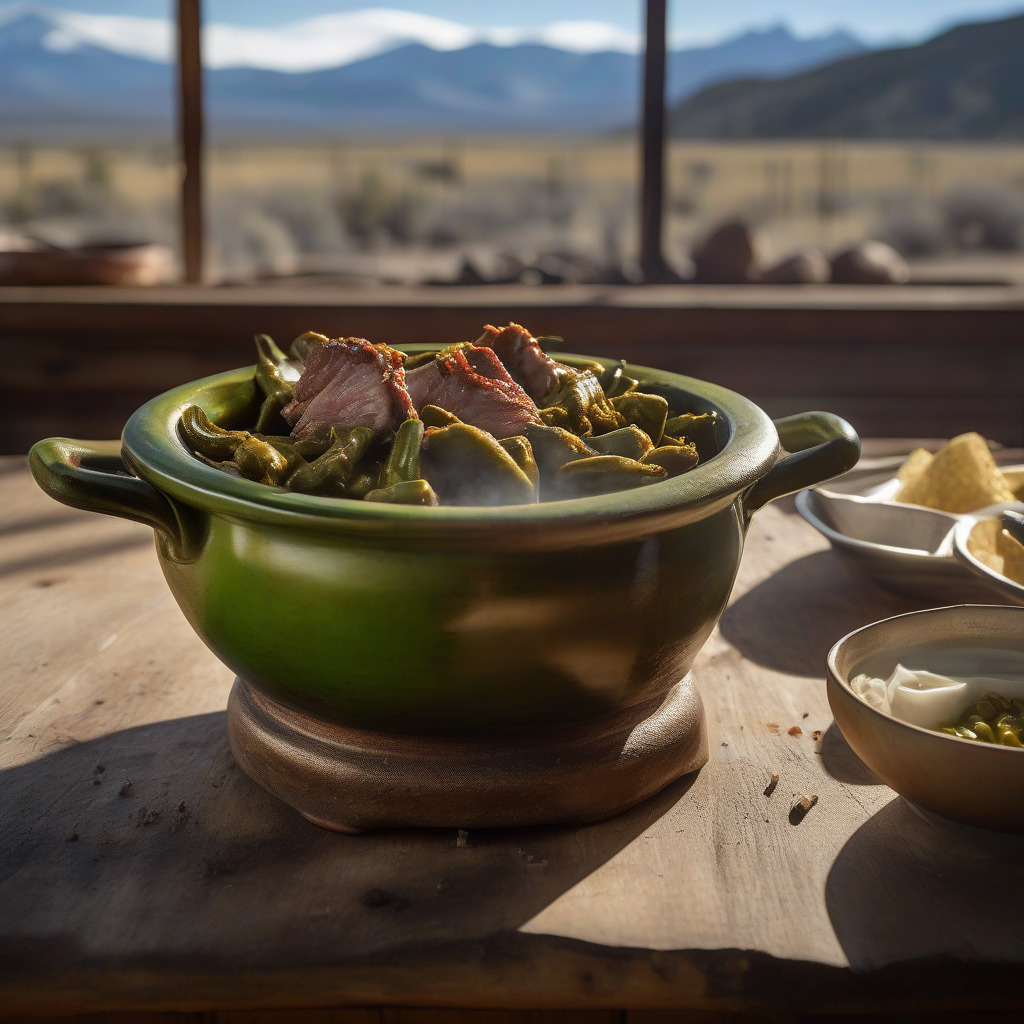
It’s a pork-chunk stew. Thick, smoky, built around roasted green chiles and braised meat. It works as a standalone bowl, a smothering agent for burritos and eggs, and a year-round civic institution that Denver’s Mexican-American community has been preparing and refining for generations. If you’ve just moved here, or if you’ve lived here for years and never really stopped to think about what you’re actually eating, this is the piece you need.
Colorado vs. New Mexico: Two Dishes That Share a Name
The confusion between Colorado and New Mexico green chile is understandable, and also wrong. Both traditions honor the roasted green chile pepper. That’s roughly where the overlap ends.
New Mexico green chile — whether you’re ordering it in Albuquerque, Hatch, or Española — is sauce-forward. It runs thinner, the roasted pepper is the star, and the dish often arrives as a pourable topping over eggs, enchiladas, or a breakfast plate. Pork is sometimes present, but it’s not structural. The “Christmas” plates famous in New Mexico — half red, half green chile — are a way of layering two distinct sauces over a single dish. It’s beautiful, and it’s New Mexico’s.
Colorado green chile is a stew. The pork shoulder gets braised low and slow until it breaks into substantial chunks — not shredded, not ground, not dissolved into the liquid. The roasted chiles are part of the body of the dish, not a topping applied at the end. The consistency is thick enough to hold on a chip or cling to a burrito without running off the plate. Many Colorado kitchens thicken with a roux or with flour worked into the pork drippings; others rely on reduction alone.
You can eat it with a spoon out of a bowl at noon and ladle it over an egg-and-potato breakfast burrito at 6:30 in the morning. It does both without compromise.
Tex-Mex green chile is different still — typically thinner, more cumin-forward, sometimes made with ground beef or no meat at all, used primarily as a dipping sauce or enchilada topper. It bears almost no relationship to either Colorado or New Mexico tradition. Chain Tex-Mex restaurants in Denver market “Colorado green chile” on their menus as a geographic claim, not a culinary one, and the distinction deserves to be clear.
The Pepper Question: Pueblo, Hatch, and the Budget Third Option
Where the chile comes from matters more than most diners realize. Fewer restaurants are honest about sourcing than you’d want.
Pueblo chile is grown in the Arkansas River Valley in southern Colorado, primarily around the city of Pueblo. The most common cultivated varieties are Mosco and Mirasol — both characterized by thinner walls than their New Mexican counterparts, a medium heat that builds gradually rather than hitting immediately, and a sweetness that Pueblo growers describe as almost fruity. The flavor is more delicate and more complex than Hatch, which makes it well-suited to a long-braised preparation where the pepper’s character has time to develop. The Pueblo Chile Growers Association has been pursuing protected designation of origin status for the variety. The principle is simple: where something is grown shapes what it tastes like, and that distinction deserves protection.
Hatch chile comes from New Mexico’s Hatch Valley and is, by any measure, the more commercially available option. Meatier walls, a broader heat range, easier to source in volume — which is why many Denver restaurants use it even when their menus imply a Pueblo origin. Hatch is not an inferior product. It produces excellent green chile. But it’s not Pueblo chile, and substituting one for the other while marketing Colorado identity is mislabeling that serious diners deserve to know about.
Anaheim is the third option. Grown widely across California and the Southwest, cheap, available in commercial quantities, lacking the depth of either Pueblo or Hatch. It shows up in shortcuts — in hotels, in airports, in places where cost controls the kitchen more than anything else. When you eat thin, vaguely green, vaguely spicy chile at a restaurant that should know better, there’s a reasonable chance Anaheim is involved.
Many Denver kitchens blend Pueblo and Hatch, particularly off-season, and some switch between the two without updating their marketing. You can ask, and you should.
Harvest Season and the Freezer Question
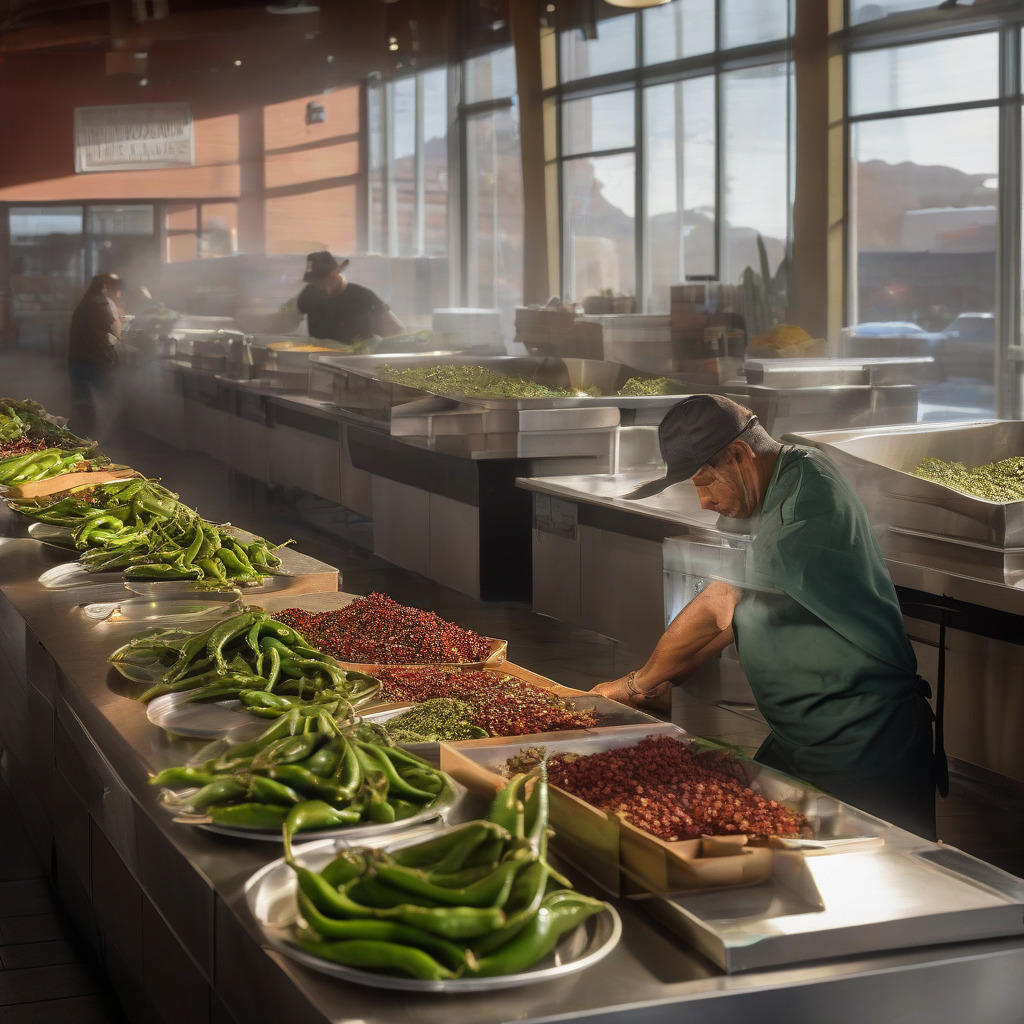
The Pueblo chile roasting season runs from late August through October. I’d argue it’s the single most important sourcing event on the Denver culinary calendar, and most people who live here treat it as pleasant seasonal backdrop — the smell of roasting chiles in grocery-store parking lots, the wire-mesh drums turning over propane flames at King Soopers and independent markets around the city. Which is lovely. But that’s not just atmosphere. It’s the supply chain moment that determines what your green chile tastes like in February.
Kitchens that take sourcing seriously buy large quantities of fresh-roasted Pueblo chile during the harvest window and freeze it in-house for use throughout the year. Labor-intensive, requires storage capacity, but it’s the only way to serve anything approaching genuine Pueblo chile after October. The alternative — and it is common — is to switch to commercially processed Hatch or Anaheim supply once the fresh season ends. Some restaurants do this transparently. Many do not.
The question to ask in January is straightforward: is your green chile made from frozen in-house stock from this year’s harvest, or is it sourced commercially? A kitchen confident in its sourcing will answer without hesitation. A long pause or a deflection tells you something on its own. This isn’t an obscure demand to make of a taqueria. It’s the same question you’d ask a fish restaurant about whether their catch is fresh or previously frozen.
How Denver Actually Eats It
Green chile in Denver is not primarily a dinner food. It’s a breakfast food — which is itself a meaningful statement about where it sits in the rhythm of daily life here.
At Santiago’s, across its many Denver-area locations, the breakfast burrito is the core business model. Eggs, potato, your choice of meat, smothered in green chile. The drive-through opens early, the price is low, and the volume is enormous. Santiago’s green chile isn’t the most complex version in the city, but it has introduced more Denver residents to the concept than any other single operation. That’s not a small thing.
By midday, green chile moves onto enchiladas, tamales, and lunch burritos. The “smothered” preparation means the chile goes over the top of the item, often with cheese melted on top of that — thick and substantial, contributing protein and texture rather than just moisture and color.
At dinner, green chile can top a longer list of things: sopapillas stuffed with meat and cheese, enchiladas in more formal plating, a bowl of posole served alongside. The most serious statement of intent is the bowl. Ordering green chile in a bowl with a stack of flour tortillas is the equivalent of ordering a bowl of chili in Kansas City — the dish asking to be evaluated on its own terms, without the mediation of eggs or rice or a burrito wrapper. A kitchen’s bowl tells you everything: the consistency, the pork quality, the chile depth, the seasoning. Order the bowl if you want to know what a restaurant actually believes about its own cooking.
Where to Order It in Denver
This is a reported survey, not a ranking. Each kitchen is here for a specific reason. As part of our food & hospitality coverage, we verify sourcing claims directly with restaurants when possible.
Hours change, prices drift, and kitchen sourcing decisions shift seasonally. Verify before you go. Specific pepper sources require direct confirmation from each restaurant.
Duran’s Cocina, at 1218 W. Colfax Ave., is the benchmark. Cash only, been operating in roughly the same fashion for decades, green chile that represents the Colorado pork-stew tradition in something close to canonical form. Thick. Pork-chunk-heavy. The bowl arrives looking like it means business. The clientele at breakfast runs from construction workers to city officials — the kind of cross-section that only accumulates when a place has genuinely earned its reputation over time, not through press coverage. Bring cash. They mean it.
Santiago’s is a cultural institution as much as a restaurant. The green chile here is produced at volume — consistent, reasonably spiced, priced to make it accessible at a drive-through window at 7 a.m. on a Tuesday. For many Denverites, this is what green chile tastes like, because it was the first version they ever had. That’s not a criticism. It’s context. Santiago’s pork-based preparation is designed to coat a burrito without overpowering it, and it does that job reliably across dozens of locations. Verify current pricing at your location.
El Taco de Mexico, on Santa Fe Drive in Lincoln Park, is chronically underrated on lists that default to better-known names. Small, cash only, located in the corridor where Denver’s green chile culture is geographically concentrated. It’s consistently cited by local diners and food forums as one of the more authentic renditions in the city, and the kitchen’s rhythm is calibrated for morning and midday traffic. Don’t show up at 8 p.m. expecting full service.
Chubby’s, at 1231 W. 38th Ave., owns the late-night territory. The smothered burrito is the representative dish — large, overstuffed, under a substantial pour of green chile and melted cheese. It’s not subtle, and it doesn’t try to be. Chubby’s is built for the post-midnight crowd, and the green chile is calibrated for that context: bold enough to register after a long night, thick enough to function as the main event rather than a topping. Multiple Denver locations exist; verify which are currently operating before making a trip.
La Loma, at 2527 W. 26th Ave. in Jefferson Park, is a sit-down restaurant with a full bar and presentations designed for an actual dinner out. It works well as an introduction to Colorado green chile for visitors who want a proper restaurant setting, or for a meal where the full scope of the cuisine — the tamales, the posole, the sopapillas — is part of the experience. It’s the most expensive option on this list by a significant margin, and it’s calibrated for that. Verify current menu pricing directly.
The Geography of Denver Green Chile
The Federal Boulevard corridor, running roughly from Alameda Avenue north to 38th, is the spine of Denver’s green chile geography. This is not a coincidence of restaurant clustering. It reflects where Denver’s Mexican-American community established itself over decades — where family-owned taquerias have operated across generations, where the supply chains connecting restaurants to local pepper vendors run shortest and deepest.
The Santa Fe Drive and Lincoln Park cluster is an adjacent geography with significant overlap. El Taco de Mexico sits here, along with several taquerias and lunch counters that rarely appear on broader food media lists but maintain loyal neighborhood followings. What these neighborhoods share is institutional stability — restaurants that aren’t new, communities that aren’t transient, green chile knowledge that runs deep and rarely gets documented by outlets chasing newer operations or higher-profile openings.
West Colfax is Duran’s territory. More broadly, it’s a corridor where Denver’s older neighborhood fabric has preserved restaurant institutions that other parts of the city lost to turnover or rising rents.
Westwood and Harvey Park, further southwest, contain some of the most authentic and least-covered green chile cooking in Denver. These are working-class neighborhoods with long-established Mexican-American populations and taquerias that cook for the neighborhood rather than a broader dining audience. They don’t market themselves aggressively. They don’t need to. Identifying specific operations by name in this geography requires on-the-ground reporting rather than list-checking, and any serious green chile guide owes those neighborhoods that effort — including this one.
The same is true of Aurora’s Havana Street corridor, which Denver-centric food coverage systematically undercounts. Havana Street hosts a dense concentration of Mexican and Central American restaurants that receive a fraction of the coverage they deserve. Aurora’s food geography isn’t Denver’s afterthought. It’s its own substantial story, and mapping green chile in this city fully requires accounting for the fact that much of the most serious cooking happens outside Denver city limits entirely.
What to Skip and What to Watch Out For
DIA green chile is an airport product. It’s edible, it won’t harm you, and it tells you almost nothing about what Denver’s green chile tradition actually is. If it’s your first experience of the dish, recalibrate once you’re in the city.
Casa Bonita, at 6715 W. Colfax Ave. in Lakewood, has generated significant attention since reopening under new ownership. I’ll say this plainly: Casa Bonita is a genuine piece of Denver cultural history — and I mean that as someone who spent childhood Saturday afternoons watching cliff divers while eating sopapillas with honey. The reopening has been real news, and the restaurant matters for reasons that go beyond what’s on the plate. But it should be understood as a destination for the Casa Bonita experience — the cliff divers, Black Bart’s cave, the specific Colorado childhood nostalgia of the whole enterprise — not as a culinary standard for green chile. Verify current kitchen quality through current reporting before visiting specifically to eat.
Chain Tex-Mex restaurants that label their products “Colorado-style green chile” are marketing a geographic identity, not demonstrating membership in the tradition. The tells are usually obvious: thin consistency, ground beef or no meat, flat pepper character with no roasted depth. Fine food on its own terms. Not what this piece is describing.
How to Ask the Right Questions When You Order
Ask whether the chile is Pueblo or Hatch. If the server knows, you’ve learned something about kitchen transparency. If they don’t know but go ask, you’ve learned something different — the restaurant cares enough to find out. A confident wrong answer (“it’s Colorado chile”) is the most useful response of all.
Ask whether it’s fresh-roasted and frozen in-house from the harvest season, or commercial supply. In August or September, the question is largely moot. In January or March, the answer separates kitchens that planned ahead from those that took the easy option.
Ask whether the pork is braised shoulder or ground. Braised shoulder chunks are what the Colorado tradition calls for. Ground pork produces different texture, different fat distribution, a different stew. Both are technically pork-based. Only one is traditional.
Ask if you can get a bowl — as a standalone dish with tortillas or sopapillas. A kitchen that serves green chile in bowl form understands that the chile is the meal, not the garnish. That understanding usually shows up in the preparation. A restaurant confident enough in its product to serve it unadorned in a bowl is telling you something about what it thinks it’s made.
Denver’s green chile is a specific thing with a specific history, a specific geography, and sourcing decisions that determine whether what ends up in front of you is the real version or a reasonable approximation. The difference is worth knowing. And it’s absolutely worth asking about.