Which Denver Food Halls Are Actually Worth Visiting in Fall 2026
The top Google results still read like 2023 press releases. Here's what has actually changed, and what it means before patio season closes.

The top Google results still read like 2023 press releases. Here’s what has actually changed, and what it means before patio season closes.
On a Tuesday evening in late September, the rooftop at Avanti Food & Beverage was running at roughly 60 percent capacity. Not packed. Not dead. The crowd leaned heavily toward Jefferson Park residents who had walked over. Patio heaters were running by 7:30 p.m. On the floors below, some stalls were operating. At least two were dark. The rooftop bar, as it has been since opening, was holding the room together.
That specific scene is more useful than anything currently ranking for “Denver food halls.” Most results summarize conditions from 2023 or earlier, present every hall as thriving, and treat vendor rosters as fixed objects rather than the churning, economically stressed reality they’ve become. Before the last warm evenings close out October and the holiday calendar absorbs your dining plans entirely, here’s the status check you actually need.
Why Fall 2026 Is the Right Moment to Reassess
Denver’s food hall boom crested in the early 2020s on a specific thesis: small operators could share infrastructure costs, split the overhead of a liquor license and front-of-house staffing, and reach customers they couldn’t afford to attract alone. The math worked when rents were lower, when customers were spending freely after pandemic restrictions lifted, and when the operational complexity of running a 200-square-foot kitchen hadn’t yet collided with post-2023 inflation in food costs.
That math has gotten much harder. Small operators already working on thin margins now face simultaneous pressure from higher ingredient costs, elevated wholesale prices on proteins, and customers who are more cautious about discretionary spending than they were in 2022. When a food hall vendor has a bad month, there’s often no cushion. When a hall loses an anchor tenant — the stall that drove traffic, anchored a corner of the floor plan, carried the social media presence — the ripple effect on neighboring vendors is real and underreported. I’ve watched this play out at more than one hall in the last eighteen months. It moves faster than you’d expect. The broader forces driving closures across our food & hospitality coverage point to the same structural pressures hitting halls and standalone restaurants alike.
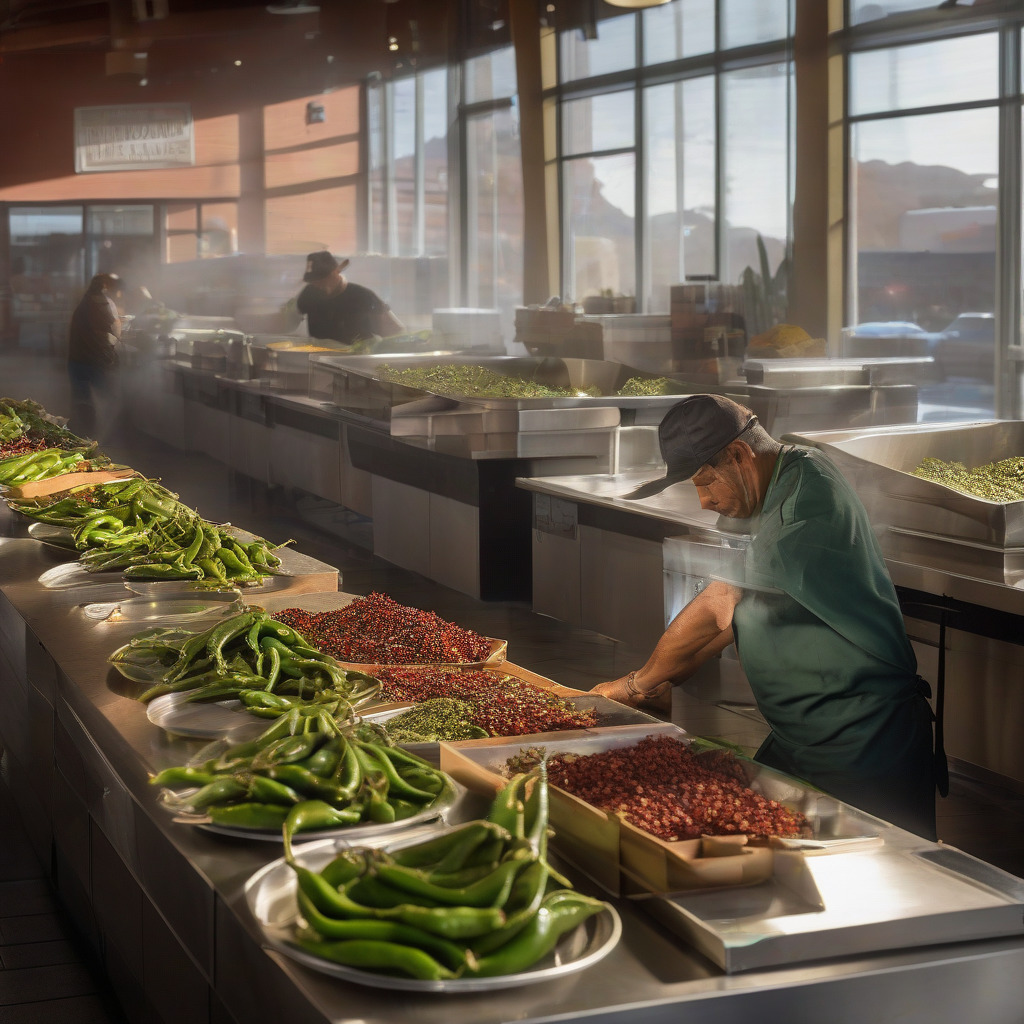
September also adds a specific Denver wrinkle worth knowing about: green chile harvest season. Hatch chiles from New Mexico arrive in Colorado markets in August and early September. Pueblo chiles, grown in the Arkansas River valley, peak from late August through October. For vendors with any Southwestern or New Mexican cooking in their repertoire, this is the moment when seasonal specials actually mean something — a roasted green chile sauce on a breakfast burrito, a pozole built from chiles that were in the ground two weeks ago. No national outlet covers this. Pay attention to which halls have harvest specials on the board.
Avanti Food & Beverage: Still Worth the Trip, With Caveats
Avanti, the converted shipping container building at 3200 Pecos St. in Jefferson Park, is still the most architecturally interesting food hall in Denver. That’s not a small thing. The rooftop bar — strung-light-lit, open-air, with downtown visible to the east — has anchored this hall since day one, and it still earns the visit. Patio heaters deploy in late September. Bar staff confirmed they run through October as weather warrants. The enclosed bar area is genuinely warm when temperatures drop.
The vendor roster requires honest accounting. Avanti’s model relies on intentional rotation — vendors sign short leases, the lineup changes every 12 to 24 months. On a Tuesday evening visit, multiple stalls on the ground floor and second level were dark, with no “coming soon” signage visible. Avanti’s management didn’t respond to an inquiry about vacancies before publication. Check their Instagram before you go. The hall doesn’t publicize departures, and what was operating in the spring may not be operating now.
Of the vendor types that have historically anchored Avanti — tacos, ramen, rotating global concepts — the strongest current draws tend to be whoever’s running Southwestern or Mexican-adjacent menus during chile season. Ask when you arrive which vendors have harvest specials. The window runs through October.
Parking in Jefferson Park has gotten more competitive since the neighborhood’s residential density increased. Street parking on Pecos and surrounding blocks is metered until 10 p.m. and legitimately hard to find by 6:30 on a weeknight. Budget extra time, or take a rideshare.
Come for the atmosphere. The food is supporting cast, and the experience is noticeably thinner when stalls are dark. If the rooftop is your destination and you’re going with a group that can anchor at the bar, Avanti earns the trip. For a solo or couple dinner focused purely on food, confirm the vendor roster first.
Denver Milk Market: A Hall Under Strain
Denver Milk Market, the 32,000-square-foot hall at 1800 Wazee St. in LoDo, opened in 2019 with 16 concepts developed by Larimer Associates — a full-service bar, a bakery, a butcher counter, a raw bar, a coffee concept, and more, all within walking distance of Union Station. In 2019 it felt genuinely exciting. By 2026, it feels like a lot of square footage to keep filled.
On a Wednesday night visit — no Coors Field game, no major convention in town — the Milk Market felt significantly underoccupied for its footprint. Multiple stalls were dark or running only for weekends and events. You need a density of diners to make 32,000 square feet feel alive. That density wasn’t there on a non-event weeknight, and it showed. A well-made dish in a visibly half-empty hall doesn’t carry the same power. The operating stalls aren’t the problem. The hall’s scale is working against itself.
The one real counterargument is transit access. Union Station is three blocks west. Amtrak, light rail, and multiple bus lines drop you close to the front door. If you’re arriving from the airport on the A Line, Denver Milk Market is far and away the most accessible hall in the city. That matters if you’re already in the neighborhood.
But it’s not a standalone dinner destination right now. It works best as an add-on to a LoDo evening — pre-game for Coors Field, a stop after a show, a fallback if you’re already near Union Station. Before visiting, check which stalls are currently operating. The weeknight roster is meaningfully smaller than the hall’s marketing suggests, and there’s no public timeline for when that changes.
Zeppelin Station and Broadway Market: The Lower-Profile Pair
Zeppelin Station, the food hall component at 3501 Wazee St. in RiNo, is built into Zeppelin Development’s mixed-use building. Call ahead before making a trip — the roster has turned over and the hall’s identity has been complicated by the broader building’s uneven post-pandemic occupancy. The international street-food concept that anchored the ground floor has seen turnover. Confirm what’s operating before you go.
What’s distinguished Zeppelin historically is a genuine focus on global vendors: Vietnamese, Ethiopian, and Latin concepts at various points. It’s not a tourist hall. The RiNo location draws residents from Five Points, Cole, and the growing RiNo residential base, plus the art-gallery and event-venue crowd on weekends. Parking on Wazee and 35th Street is easier than Jefferson Park or LoDo. The nearest RTD stop is the 38th & Blake commuter rail station, roughly a five-minute walk.
Zeppelin is worth it if you’re already in RiNo. It’s not worth a cross-city trip on its own. Anyone curious about what it now costs to operate a concept in that neighborhood will find the commercial rent pressures in RiNo context useful for understanding why vendor rosters keep shifting.
Broadway Market, at 26 Broadway in Baker, is a different situation entirely. Smaller footprint. And here’s the thing: the economics for vendors are somewhat more forgiving at this scale, and it shows. On a Tuesday evening visit, stalls were actively operating with no visibly dark or abandoned spaces. The crowd was locals grabbing dinner — not visitors looking for an experience — and you could feel that in the room. Multiple bus routes run directly on Broadway, making it accessible without a car.
Broadway Market has shown the healthiest vendor occupancy among the four halls, the most neighborhood-integrated foot traffic, and the most accessible pricing. If you haven’t been since 2024, it’s worth reassessing. It’s the most underrated option here, and it’s not particularly close.
What the Struggling Halls Reveal About Denver’s Food Hall Economics
The pattern across Denver’s halls — anchor-tenant departures, dark stalls, reduced weeknight hours — isn’t random bad luck. It reflects real strain on small food operators that has been building since 2023 and hasn’t resolved.
Food hall rent structures typically layer a base rent per square foot over a percentage of gross revenue. Operators pay more as they succeed and face fixed costs even when business is slow. Combined with ingredient inflation and two-person labor costs, margins that were already thin have become unworkable for some operators. The concept works best at smaller scale — Broadway Market and Zeppelin’s remaining core — and struggles when a large hall requires full occupancy to generate the energy that justifies its own overhead. I don’t know how you solve that without dramatically renegotiating rents or filling those stalls back in, and neither happens on a fast timeline.
The green chile economy is a small counterpoint worth noting. Vendors who’ve built seasonal buying relationships with Pueblo and Hatch chile growers — locking in quantities at harvest — have a genuine margin advantage in September and October. Ask at any hall with Southwestern-leaning vendors what they’re doing with chile season. The answer tells you something about how invested the operator is in actually being here.
Price Ranges: What to Budget
Estimates drawn from venue-by-venue visits. A full meal means one entrée, one non-alcoholic drink, one side.
| Hall | Estimated Entrée Range | Estimated Full Meal | Neighborhood Comparable |
|---|---|---|---|
| Avanti F&B | $12–$18 | $22–$30 | Jefferson Park sit-down: $18–$28 entrée |
| Denver Milk Market | $15–$22 | $28–$40 | LoDo comparable: $20–$35 entrée |
| Zeppelin Station | $10–$16 | $18–$26 | RiNo fast-casual: $14–$22 |
| Broadway Market | $11–$17 | $19–$28 | Baker neighborhood: $14–$22 |
Broadway Market and Zeppelin Station offer the clearest price advantage over their neighborhood alternatives. Avanti is roughly comparable to Jefferson Park sit-down restaurants — the rooftop premium is real but specific to the atmosphere. Denver Milk Market is the weakest value: not dramatically expensive, but not meaningfully cheaper than LoDo standalone restaurants, and you absorb the hall’s underoccupancy as an experience cost on top of the tab.
One consistent caveat: adding alcohol shifts the calculus at every hall. The ones that look most affordable on food often make up margin on beverage. Budget accordingly.
Fall 2026 Picks
Best weeknight dinner, solo or couple: Broadway Market. The smaller footprint means the hall feels appropriately alive even on a Tuesday. You can try two or three stalls without walking through empty space. Bus access on Broadway is excellent. Street parking is metered — check current hours before you arrive.
Best weekend group outing: Avanti. The vendor roster isn’t what it was, but the rooftop infrastructure is unmatched. Multiple bar stations, heaters running through October, enough square footage for a party of eight or ten to split stalls and converge at the bar — that’s the food hall use case the format was designed for. Confirm the current vendor lineup before arrival. Budget around $35–40 per person with drinks on a weekend.
Zeppelin for the specific occasion. If you’re in RiNo already — gallery, show, meeting someone who lives in Five Points — Zeppelin’s vendor core is underappreciated. Make it your default if you’re already on that side of the city. Call ahead to confirm hours.
Deprioritize: Denver Milk Market as a destination. The operating stalls aren’t the problem. The hall’s scale and current occupancy create an experience that undermines the food. Until the roster fills back in — and there’s no public timeline — it belongs in the “add-on to LoDo plans” category, not the “let’s go there” column.
On green chile season. September through October is peak Pueblo and Hatch chile season in Colorado. Any vendor running harvest specials right now — green chile on a burrito, a roasted chile sauce, a posole — is worth seeking out. Ask at each hall what current vendors are doing with the season. The window closes by late October.
Logistics
Confirm hours directly with each hall before visiting. Many vendors set their own hours independently of the hall’s posted schedule, and hours shift seasonally. Each hall’s Instagram account is typically the most current source for vendor changes and closures.
Avanti Food & Beverage — 3200 Pecos St., Jefferson Park Parking: On-street metered parking on Pecos and surrounding blocks. Competitive by 6:30 p.m. on weeknights — budget extra time or rideshare. Transit: RTD bus serves the neighborhood; no direct light rail. Patio/heaters: Rooftop patio open with propane heaters deployed as of late September; enclosed bar area when temperatures drop.
Denver Milk Market — 1800 Wazee St., LoDo Parking: Garage parking on nearby Wazee and Wynkoop blocks; street parking competitive. Confirm any venue validation before arrival. Transit: Union Station is three blocks west — RTD light rail, A Line to the airport, Amtrak, and multiple bus routes. Best transit access of any hall in the city. Patio/heaters: Small exterior seating on the Wazee side; limited heater coverage. Interior is the primary option as it gets cold.
Zeppelin Station — 3501 Wazee St., RiNo Parking: Street parking on Wazee and 35th generally easier than Jefferson Park or LoDo. Transit: 38th & Blake commuter rail station (A Line) is roughly a five-minute walk; multiple bus routes on Brighton Blvd. Patio/heaters: Covered outdoor seating adjacent to the hall. Call ahead to confirm the hall is operating and get current hours before making the trip.
Broadway Market — 26 Broadway, Baker Parking: Broadway street parking is metered; side streets offer additional options. Check current meter hours. Transit: Multiple bus routes directly on Broadway. No direct light rail. Patio/heaters: Street-facing patio along Broadway with a partial covered area; heaters available in the covered section.
You’ve got roughly five or six good outdoor-dining weeks left before Denver evenings become genuinely cold — call it through late October, depending on whether the mountains decide to push an early front down. The halls worth your time are the ones where the vendor roster and the physical experience are still aligned. Broadway Market and Avanti, for different reasons, make that case. Zeppelin earns a look if you’re already in RiNo. Denver Milk Market deserves honesty rather than the promotional copy that still dominates the search results: it’s a hall working through a rough patch, and going in with accurate expectations beats showing up to 32,000 square feet that are substantially empty on a Wednesday night.
The green chile is in season. The patio heaters are running. Use both while you can.