Are Denver Hotel Restaurants Worth Eating at or Are They Built for Tourists
Denver's independent restaurant scene does not give hotel kitchens the benefit of the doubt — and honestly, why would it? When Alex Seidel's Mercantile Dining & Provision sits inside Union Station …

Denver’s independent restaurant scene does not give hotel kitchens the benefit of the doubt — and honestly, why would it? When Alex Seidel’s Mercantile Dining & Provision sits inside Union Station and Kelly Whitaker’s Basta has reset the standard for wood-fired cooking in Boulder and neighboring Denver conversations, when Caroline Glover’s Annette in Aurora is collecting James Beard recognition — the baseline for what “good food in this city” means keeps moving. It’s set by people who built their reputations entirely outside the hotel system. That context makes the question of whether Denver hotel restaurants are actually worth your money a real one. Not reflexive tourist-trap skepticism. A genuine editorial question with real dollar stakes for anyone deciding where to spend serious money in a city that now has better options per square mile than it did a decade ago.
Denver’s hotel construction boom in RiNo and LoDo since roughly 2018 added a significant number of new food-and-beverage entrants — The Ramble, The Source Hotel, The Maven, several Marriott and Hilton-flag properties near the Convention Center. Most of them haven’t accumulated enough of a track record for travelers or residents to sort out. This piece tries to do that sorting across six properties using four criteria: who actually runs the kitchen, whether sourcing claims hold up beyond the press release, what comparable meals cost at named independent restaurants within a few blocks, and whether Denver residents actually eat there when hotel occupancy isn’t driving them in.
How We’re Grading These Restaurants
Kitchen leadership means a named local chef with a documented independent track record. Not a corporate F&B director hired to execute a hotel brand’s national concept. A hotel restaurant led by a chef who built something outside the hotel system is structurally different from one run by a regional hospitality group’s culinary vice president. A chef with skin in the game operates differently than a regional manager protecting a corporate standard. You can feel it in the food, and you can definitely feel it in the service.
Sourcing specificity requires named Colorado ranch and farm partners on the menu or in verifiable documentation. Not “locally inspired” or “Colorado-sourced where available” — language that sounds like a commitment but isn’t. The Kitchen at Union Station has published named farm partner lists. The Brown Palace has documented rooftop hives. Those claims are checkable. “Sourced from regional purveyors” is marketing language. When a menu says Aspen Ridge beef or Colorado Natural Beef, you can verify that. When it says local, you can’t.
Price gap asks what the same quality meal costs at a named independent within three to five blocks. This is the most practically useful metric for a Denver resident deciding whether to walk past a hotel entrance or into it. The honest answer almost always involves some premium for the hotel’s real estate and operational overhead. Whether that premium is proportional — that’s the real question, and food media doesn’t ask it often enough.
Local patronage asks whether the bar or dining room draws neighborhood regulars and functions on a slow Tuesday in January. Does it exist primarily to capture guests who don’t want to figure out where else to go, or has it built actual community traction? A restaurant with real community traction operates with different incentives than one optimized for captive audiences. You feel the difference in service consistency.
One Denver-specific variable most competing coverage ignores: the city sits at 5,280 feet, and altitude meaningfully affects how alcohol metabolizes, how baked goods behave, and how sauces reduce. Hotel kitchens transplanting a sea-level concept without adjusting are playing with a real disadvantage. Some do it well. Some serve a cocktail at 10 p.m. that would have been fine in Chicago and isn’t — and nobody on staff seems to know why.
The Gold Standard: Guard and Grace at The Art Hotel
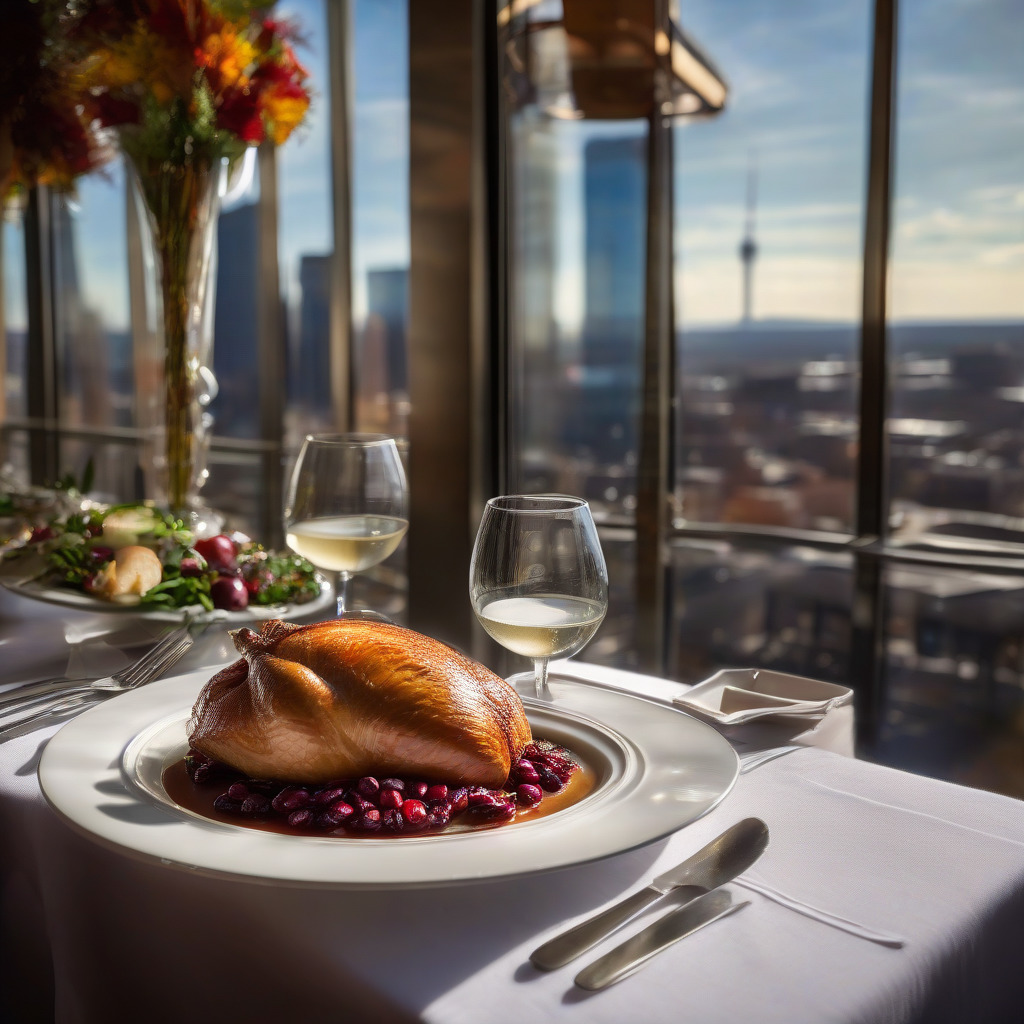
Guard and Grace, Troy Guard’s steakhouse inside The Art Hotel at 1201 Broadway in the Golden Triangle, makes the clearest affirmative case in Denver. Guard is the chef behind TAG Restaurant Group — Los Chingones, Zeal, and several other Denver-rooted concepts — which means he built an independent culinary reputation well before the hotel relationship existed. Guard and Grace is not a hotel restaurant that happens to have a named chef attached. It’s a chef-driven concept that happens to occupy a hotel space, and that distinction shapes everything from menu specificity to how mistakes get handled at the pass.
The menu runs toward prime beef and high-end protein, with sourcing relationships that predate the hotel context and carry through TAG’s broader supplier network. Benchmark Guard and Grace against its direct competitors — Elway’s or STK Denver near Larimer Square — and the price gap is modest enough that the chef-driven provenance becomes a real differentiator. Elway’s leans on name recognition and reliable execution. STK is a national chain concept: competent, standardized. Guard and Grace is the only one of the three where the chef’s personal culinary identity actually lives in the room. That matters more and more the further we get from the days when those three were basically Denver’s steakhouse options.
The Art Hotel itself adds a useful layer. Its Phaidon-curated art collection makes it a legitimate cultural destination in the Golden Triangle, a neighborhood that also houses the Denver Art Museum and the Clyfford Still Museum. People are there because they chose to be in that neighborhood, not because their Marriott Bonvoy points made the decision for them. That environmental context shapes the entire experience. You’re not dining in a hotel that happens to have a restaurant. You’re dining in a restaurant that happens to be inside a hotel.
Current menu pricing should be confirmed against the live Guard and Grace menu; Denver restaurant prices moved meaningfully upward in 2022–2024.
Credible Through Structure: Bistro Vendôme and Death & Co
Bistro Vendôme operates within the Oxford Hotel at 1600 17th Street — Denver’s oldest operating hotel, opened 1891, which I always find slightly astonishing given how much of LoDo got demolished and rebuilt around it — as a leased-in concept with meaningful culinary independence from the hotel’s management structure. The French bistro is well-executed. The 17th Street patio remains one of the more pleasant outdoor dining spots in LoDo for about five months of the year. On a random Tuesday evening, the room draws a mix of neighborhood regulars and hotel guests rather than one or the other, which tells you more about a restaurant’s real standing than any review aggregator. Ownership structure requires verification before publication; the operator relationship has shifted and matters to this argument.
Death & Co at The Ramble Hotel in RiNo represents a different mechanism entirely. This is a nationally credentialed bar brand anchoring a hotel, not the reverse. Death & Co is the draw. The original Death & Co in Manhattan set the standard for the modern American cocktail bar and has since expanded to Los Angeles and Denver. The Ramble Hotel exists in the same building; the relationship does not run the other direction. When you’re choosing between Death & Co and Williams & Graham in LoHi, you’re not evaluating a hotel bar against an independent bar. You’re evaluating two independently conceived cocktail programs that happen to have different real estate anchors. Pricing benchmarks almost identically between them. What you’re choosing is atmosphere and program emphasis — not a meaningful quality or value difference. Current Death & Co cocktail pricing should be confirmed before citing specific figures.
The distinction between both properties is the same: neither depends on hotel occupancy to fill the room. Bistro Vendôme functions on a slow weeknight in February. Death & Co has a line on Saturdays regardless of what The Ramble’s occupancy rate looks like. Independence from hotel fill is the clearest signal that a restaurant has achieved something real — clearer than any press release.
What “Colorado-Sourced” Actually Means on a February Menu
This is where hotel restaurant marketing most frequently diverges from operational reality, and where Denver residents deserve more scrutiny than food media typically provides. I’ve seen “locally inspired” on a menu in February next to a vegetable that couldn’t have come from within 800 miles of here. So let’s be specific.
The Kitchen American Bistro at Union Station has the most verifiable sourcing claim in this comparison set. The Kitchen — Boulder-founded, now operating at Denver Union Station — has published named farm partner lists and maintained documented relationships with Colorado agricultural producers. Those claims are checkable. Ask a server which farms supplied the vegetables on the current menu, and a meaningful answer is possible, not just “we work with local farms.” That level of specificity creates accountability that extends beyond the marketing department. It’s a claim someone actually has to defend operationally, night after night.
The Brown Palace approaches sourcing differently and, to its credit, more honestly. The hotel’s rooftop beehives and hydroponic herb garden are real, documented, and modestly scaled. That last adjective is the key point. The Brown Palace does not claim its rooftop garden supplies the kitchen at scale. It presents the program for what it is — a contribution of specificity, not a cover story for a broadly conventional supply chain. The kitchen uses the honey. The herbs appear in actual dishes. Small but verifiable, and the hotel presents them accurately rather than inflating their role. In an industry full of “farm-to-table” claims that evaporate under questioning, that restraint is rarer than it should be.
The generic claim problem applies most acutely to properties that describe their menus as “Colorado-inspired” or “locally sourced where possible” without naming a single purveyor. Named relationships versus regional aspiration. One is checkable. One isn’t.
The seasonal reality compounds the skepticism. Denver’s outdoor growing season runs roughly May through October — last frost around late April, first frost around late September. A hotel restaurant claiming “local produce” in February is sourcing from a very short list of Colorado winter options (root vegetables, storage crops, greenhouse greens) or importing product from out of state and calling it local by creative geographic definition. Summer sourcing claims are easier to honor and easier to verify. Winter ones deserve proportionally more scrutiny. Ask the question. See what happens. For a deeper look at these issues, our food & hospitality coverage tracks which Denver restaurants make sourcing claims that hold up through the off-season.
What You’re Actually Paying Versus Walking a Few Blocks
The price comparison is most useful as a use-case tool rather than an absolute verdict. Hotel restaurants charge hotel prices. The question is whether the premium is defensible.
Brunch is where hotel restaurants most consistently lose the value argument. Ellyngton’s at the Brown Palace has historically priced its Sunday brunch in the $75–$95 per person range — verify current pricing, as Brown Palace operations have shifted post-pandemic. At that price point, the competition is Snooze A.M. Eatery ($15–$22 per person at multiple Denver locations including LoDo), Denver ChopHouse ($30–$45), or Mercantile Dining & Provision’s morning service inside Union Station. Ellyngton’s offers a genuinely historic room and an ambitious spread. Whether the premium over Mercantile is worth it depends entirely on how much the 1892 atrium matters to you on a given Sunday morning. I think that’s actually the right way to frame the decision — the room is the product, not the food — and most people sitting down at Ellyngton’s haven’t made that trade-off consciously. Make it consciously and you’ll leave happier.
Cocktail pricing at hotel bars and at the city’s best independent programs overlaps more than most people assume. Williams & Graham in LoHi sits at the lower end of that shared range. Death & Co runs toward the higher end. The case against hotel cocktails is rarely about price; it’s about the difference between a bar staff with genuine investment in what they’re making and a standardized corporate program where nobody with decision-making authority is actually standing behind the bar. That difference shows up in the drink quality even when the menu looks similar at a glance.
Steak entrees at Guard and Grace run comparable to Elway’s and below STK Denver’s ceiling. The premium over a Larimer Square independent is small enough that the chef-driven distinction makes it defensible, assuming a great meal is the actual point.
Convention Center proximity changes the calculus for properties near 700 14th Street. Hotels in that zone operate partly as captive-audience F&B operations — guests arrive from a conference, they’re tired, they eat where they’re standing. That dynamic affects both pricing confidence and kitchen consistency. A Convention Center-adjacent hotel restaurant during a major conference week is a different operation than the same restaurant on a quiet Tuesday. Worth knowing before you commit to a specific evening.
Rooftop Bars: Where Locals Actually Drink
Death & Co at The Ramble qualifies on both cocktail credibility and neighborhood integration. On any given weekend, the room mixes neighborhood residents with travelers, and the bar operates with that assumption built into its program. That’s why it works.
The Source Hotel rooftop at 3330 Brighton Boulevard sits atop the property that contains The Source Market Hall — a legitimate local food-and-beverage space with independent vendors. The rooftop benefits from that connection to the broader complex, which functions as a neighborhood destination on its own terms. Views of the mountains on clear evenings are a real amenity, not a marketing claim. The rooftop works because the market below it works, and that relationship between a hotel and its surrounding commercial environment is something more hotel developers should pay attention to. Verify current operator status for the rooftop food-and-beverage program before recommending specifically.
The Maven’s Poka Gallagher rooftop at 1850 Wazee is modest in scale but neighborhood-used. Two blocks from Coors Field, it functions as a pre- and post-game gathering point for locals who live and work in the Ballpark neighborhood. The Maven is Sage Hospitality-managed — more on that below — which means the Denver-local ownership thread is real. The rooftop isn’t making anyone’s best-cocktail-bar list. But it draws regulars who aren’t hotel guests, which is the actual bar for this criterion. There’s a difference between a rooftop bar that’s trying to build community and one that’s just extracting value from proximity to a stadium.
What to skip: the generic rooftop bars along the 16th Street Mall corridor. Elevated prices, corporate cocktail menus, no local ownership or culinary identity, views that are mostly other buildings. They’re convenient if you’re already there. They’re not worth a trip, and you’ll know it the moment you look at the menu.
A practical note: Colorado permits hotel bars to serve until 2 a.m., but outdoor rooftop service requires separate municipal permits, and capacity and seasonal hours vary significantly. Confirm before making a rooftop bar the destination for an evening.
The Sage Hospitality Thread Most Coverage Misses
One piece of context that competing coverage consistently ignores: Sage Hospitality is headquartered at 1560 Blake Street in Denver and manages the Brown Palace, the Maven, and other local properties. Several hotels that read as generic chain operations are actually controlled by a Denver-based company with local decision-making on F&B programming.
That distinction matters when you’re thinking about where your spending lands. A Sage-managed property is not equivalent to a Hilton’s templated restaurant concept run by a remote hospitality group with no accountability to Denver’s food culture. Sage is local. It attends the same industry conversations that independent operators attend, hires from the same culinary talent pool, and lives with the consequences when a restaurant fails. The property stays. The brand reputation stays local. The next F&B decision is informed by whether the last one worked.
That doesn’t make every Sage property kitchen-credible. The Maven’s Kachina Cantina has had notable kitchen turnover worth verifying before recommending it. But the distinction matters for anyone who cares about keeping money in the local economy. “Hotel versus independent” is too blunt an instrument. Sage-managed hotel restaurant versus absentee national chain restaurant inside a hotel is a real and consequential difference. I’d rather see that conversation happen more often in Denver food coverage.
A Practical Matching Guide by Occasion
Business dinner with out-of-town clients who want Denver authenticity: Guard and Grace at The Art Hotel. Local chef, real track record, a room with cultural context in the Golden Triangle art district, a menu that reflects an actual Denver culinary identity rather than a national steakhouse template. The expense-account price point is defensible because you’re solving multiple problems at once.
Drinks-only evening with real cocktail standards: Death & Co at The Ramble. The program is the program. Nationally credentialed, locally embedded, priced comparably to the city’s best independent cocktail bars. No asterisks, no adjusted expectations because it’s in a hotel. Treat it as a serious cocktail bar — because it is one.
Weekend brunch where atmosphere matters as much as food: Ellyngton’s at the Brown Palace, but go in with honest pricing expectations and a clear-eyed understanding that you’re buying the room, not the best eggs in the city. The 1892 atrium is a genuine experience — the kind of room that makes you understand why the building is still standing when everything around it got torn down. Make the trade-off consciously.
Local weeknight dinner near the ballpark: The Maven’s Kachina Cantina, contingent on kitchen verification. The program has been inconsistent. If the kitchen is right, it’s a solid neighborhood option. If it’s in transition, Larimer Street is five minutes away. Spend two minutes on your phone before you leave the house.
Visiting family who want to understand Denver’s food scene: The Kitchen at Union Station for the hotel-restaurant experience — verifiable sourcing, competent execution, good room — with Mercantile Dining & Provision in the same building as the independent benchmark. Let them see both. Union Station is a useful lab for exactly this kind of side-by-side evaluation.
Convention attendee eating near the Convention Center: Walk. Independent restaurants within a few blocks return more value than eating in a hotel optimized for conference volume. Five minutes finding an actual good restaurant beats eating passively in whatever’s attached to your room. You’d think this would be obvious. Somehow it isn’t.
Here’s the honest summary: Denver has a handful of hotel restaurants worth choosing on their own merits and a larger number that exist because their guests are too tired to leave. The tells are consistent — no named chef, no named farm, a dining room that empties when the conference ends. Guard and Grace clears the bar because Troy Guard actually has something at stake. Death & Co clears it because the hotel was always incidental to the concept. Bistro Vendôme clears it because the 17th Street patio fills up whether or not anyone’s sleeping upstairs. The Brown Palace is a genuine institution priced like one, which is either worth it or isn’t depending on your appetite for historic rooms and honest self-assessment about what you’re actually paying for. Most Convention Center-adjacent properties don’t clear any of these bars, and the menus know it even if the marketing doesn’t say so. In a city with Mercantile and Williams & Graham and Annette setting the standard, the hotel restaurants worth your money are the ones that could hold their own in that company. Not many can. The ones that can are genuinely worth knowing about.