Where to Eat Ethiopian Food in Denver and What to Order First
Denver has a functioning Ethiopian restaurant scene built by real families from a real diaspora community, and almost no local food coverage has ever treated it seriously. This guide fixes that.

Denver has a functioning Ethiopian restaurant scene built by real families from a real diaspora community, and almost no local food coverage has ever treated it seriously. This guide fixes that.
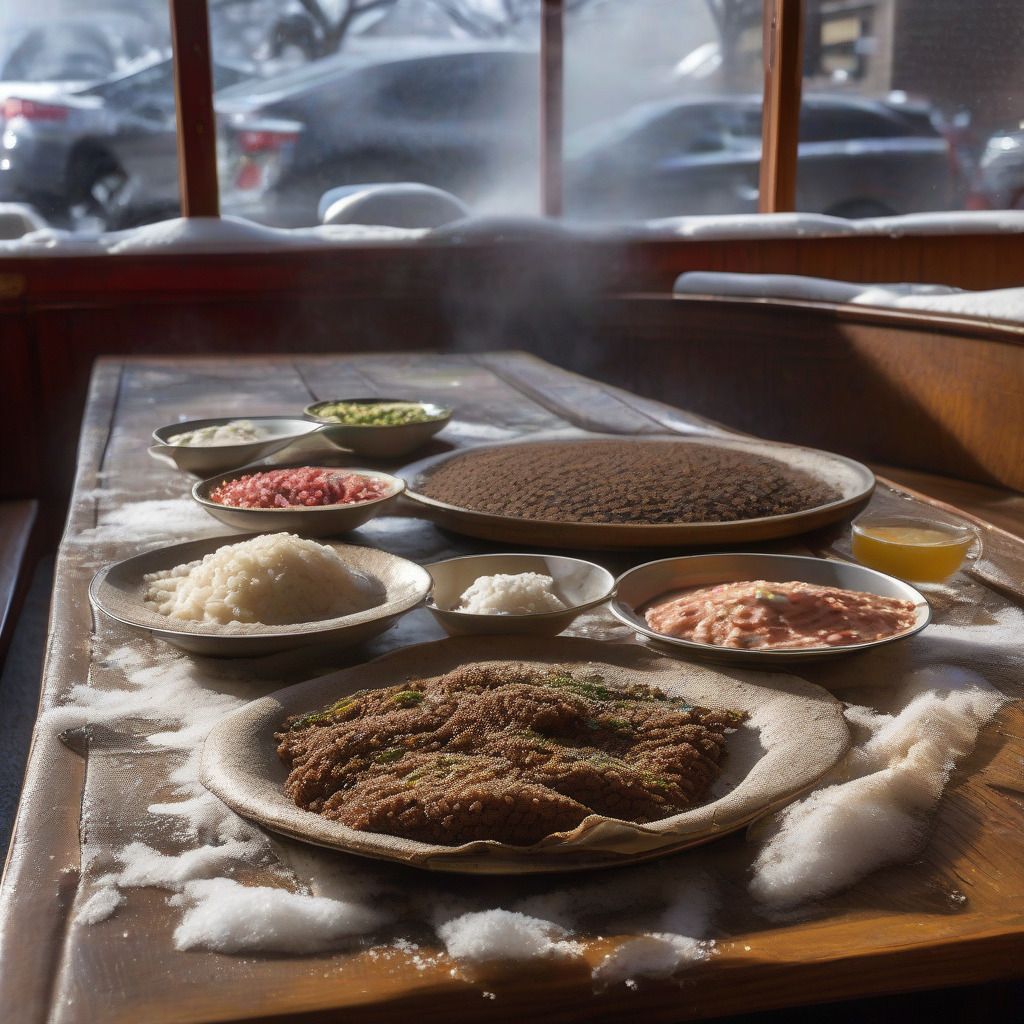
Walk into any of the handful of Ethiopian restaurants along East Colfax or in Capitol Hill on a weekday evening. You’ll find something that doesn’t fit neatly into the city’s trendier dining narrative: enormous communal platters lined with fermented injera, small ceramic cups of spiced tea, and tables of families eating from the same plate. The smell of berbere—that deep, brick-red spice blend of chili, fenugreek, black cardamom, and a dozen other components—drifts out from kitchens that have been operating quietly for years. These aren’t pop-up concepts or chef-driven interpretations. They are immigrant-owned neighborhood restaurants that have served Denver’s East African community since the early 2000s, largely without national attention. That last part genuinely bothers me, and it’s part of why this piece exists.
What follows is a full reported guide: where the restaurants are, who runs them, what the food costs, what to order if you’ve never been, and one specific quality marker—whether each kitchen makes its injera from scratch—that separates the genuinely distinguished operations from the rest.
Where Denver’s Ethiopian Restaurants Are, and Why They’re There
The geography of Ethiopian food in Denver isn’t random. It follows the geography of the East African diaspora itself, which settled primarily along the East Colfax corridor and in the surrounding neighborhoods stretching east toward Aurora.
East Colfax has been Denver’s immigrant business corridor for decades, hosting Vietnamese grocery stores, Mexican bakeries, Somali-owned cafes, and African hair salons. Low commercial rents, bus access, and proximity to affordable housing made it a natural anchor for immigrant entrepreneurs, including several Ethiopian families who opened restaurants there in the late 1990s and early 2000s. Drive east from downtown on Colfax and you’ll pass the first cluster around York Street before the boulevard continues toward Aurora.
Capitol Hill, just south, adds walkability and a slightly younger dining demographic. The neighborhood’s density and its mix of renters and longtime residents has supported at least one long-running Ethiopian operation. Commercial rents are higher than on East Colfax, which shapes which operations can actually sustain themselves there.
Aurora’s Havana Street corridor deserves particular attention from metro readers who reflexively dismiss anything east of the city limits—and you know who you are. Aurora has one of the largest East African populations in Colorado. The Havana Street area, running roughly between East Alameda and East Mississippi Avenues, has Ethiopian grocery stores, Somali restaurants, East African clothing shops, and several restaurants serving both the diaspora community and the broader Aurora dining public. These are not novelty outposts. They are the core of the community. Metro Denver diners who want to understand Ethiopian food in this region should make the drive. The 15-minute trip from central Denver is not the obstacle some people treat it as.
The Restaurants: Owners, Addresses, and What Distinguishes Each One
Lalibela Ethiopian Restaurant 2616 E. Colfax Ave., Denver
Lalibela has operated for more than two decades along East Colfax. It’s named for the sacred rock-hewn churches in northern Ethiopia—a UNESCO World Heritage site and one of the holiest locations in Ethiopian Orthodox Christianity. The restaurant was established by the Girma family. The dining room is modest and unfussy: low lighting, traditional woven baskets on the walls, tables set with the circular mesob baskets used for communal service. Entrées run roughly $16–$22 for a combination platter. Lunch is lower.
The kitchen makes its injera in-house from teff flour, which matters—more on that below. The sourness, the spongy texture, the gray-brown color are all noticeably truer here than at operations that purchase injera from an outside supplier. The combination platter is the correct entry point for first-timers: a large circle of injera topped with neat mounds of various wats and sautéed dishes, meat and vegetarian both. Lalibela works particularly well for groups. There’s something about a big shared platter that tends to loosen up even the most reserved dinner companions. The communal format scales naturally for four or more. Parking on East Colfax takes a little patience but isn’t bad. The restaurant is also served by the Route 15 bus. Reservations are accepted for larger parties; walk-ins are generally fine.
Queen of Sheba Ethiopian Restaurant 7225 E. Colfax Ave., Denver
Further east on Colfax, closer to the Aurora city line, Queen of Sheba draws a mix of diaspora regulars and east-side neighborhood diners. The owner, Mekdes Haile, came to Denver from Addis Ababa in the mid-2000s and opened the restaurant after working for several years in the local restaurant industry. The name references Makeda—a figure of significant national and religious importance whose story circulates through Ethiopian culture with a weight that’s easy for outsiders to underestimate.
The kitchen is particularly strong on vegetarian dishes. The misir wat (red lentil stew spiced with berbere) and shiro (ground chickpea powder simmered into a savory, almost creamy stew) are among the best versions in Denver—I’d argue the shiro alone justifies a visit. Prices run slightly lower than at Lalibela, $13–$19, which reflects the neighborhood’s different rent environment. Injera here is sourced externally rather than made in-house. It’s serviceable but noticeably less complex than a kitchen-fermented version. The dining room is quieter and better suited to a weeknight dinner for two or three than to a large party. Reservations aren’t required but are appreciated on weekends.
Desta Ethiopian Kitchen 3200 Colfax Ave., Denver (near Colfax and Milwaukee, Capitol Hill side)
Desta is Denver’s most approachable Ethiopian restaurant in terms of atmosphere and that’s not faint praise—approachability is hard to manufacture and easy to get wrong. It has cultivated a strong following among Capitol Hill residents, younger diners, and Ethiopian food newcomers. The owner, Tigist Desta, opened the restaurant in 2014 after years in the broader Denver food service industry. Her approach is notably welcoming toward non-Ethiopian diners: the menu includes English-language explanations of dishes, and the staff is patient with questions. If you’ve ever stood at a menu board with no idea what to order and felt too embarrassed to ask, you’ll understand why that’s worth mentioning. The space feels like a neighborhood restaurant rather than a destination, which lowers the psychological barrier to entry in ways a design budget can’t replicate.
The kitchen makes injera in-house, though the teff flour is blended with other grains. The result is slightly lighter and less assertively sour than a pure-teff preparation—which, for first-timers, can actually be an easier entry point. The doro wat—a long-simmered chicken stew in a rich berbere and niter kibbeh sauce, served with a hard-boiled egg as is traditional—is the kitchen’s strongest meat dish. Desta also has a full bar with a liquor license, making it the best option on this list if your group wants cocktails or wine with the meal. Prices run $15–$23. Seating fills up on weekend evenings. Street parking in Capitol Hill is the expected challenge; budget extra time on a Friday or you’ll be circling. The Route 10 and Route 12 buses serve the area. Reservations are accepted and recommended for weekends.
Ras Kassa’s Ethiopian Restaurant 4823 Havana St., Aurora
Ras Kassa’s is the Aurora operation that metro Denver diners most consistently underestimate, and that’s partly on the Denver food press for never writing about it. Located in the Havana Street corridor in a commercial strip that also houses East African grocery stores and hair salons, the restaurant is owned by Kassa Tekle, who has operated it for roughly fifteen years. He’s well-known to regulars, deeply connected to the local Ethiopian and Eritrean community, and largely invisible to the Denver food press. Talking to Tekle about the business is genuinely educational. He speaks about the food not as a menu to optimize but as a set of preparations from home, made the way they’re supposed to be made. You hear it in the food.
The kitchen makes its injera entirely from teff, fermented in-house over 72 hours. The result is the most authentically textured injera in the metro area—darker, more porous, with a sharper fermented tang that functions both as utensil and as a genuine flavor component of the meal. The tibs (sautéed meat with onion, jalapeño, and clarified butter) are excellent. The kitfo—lightly spiced beef tartare or lightly cooked minced beef, one of Ethiopia’s most prized restaurant preparations—is available and properly executed, which is not something every Denver-area Ethiopian kitchen can claim. Prices are $13–$20. The dining room is unpretentious. This is not the place for a romantic dinner, but it’s the right place for anyone who wants to understand what the food actually tastes like when a kitchen is cooking for its own community. Parking is easy; there’s a surface lot. Walk-ins only.
The Injera Question
Injera is not bread in the way a baguette or a roll is bread. It is simultaneously the plate, the utensil, and a core flavor component of the entire meal—a fact that takes most first-timers a moment to fully absorb. Made from teff—an ancient grain cultivated in the Ethiopian highlands, high in iron and calcium, and naturally gluten-free—injera is prepared by fermenting a teff-flour batter for two to three days before cooking it on a large clay plate into a wide, spongy, slightly sour flatbread. The fermentation produces the characteristic tang that offsets the richness of the stews piled on top.
When a kitchen makes injera in-house from teff flour, the result has a specific texture: porous enough to absorb stew, sturdy enough to scoop, and flavorful enough to eat on its own. When injera is purchased from a commercial supplier—a practical choice, since daily injera production is labor-intensive and requires significant space—the product is often made from a teff-wheat blend or with a shorter fermentation cycle. It’s still injera, and it’s still good, but it’s noticeably different: lighter in color, less sour, more neutral. The difference is similar to the gap between fermented sourdough and sandwich bread, except the variable is fermentation depth rather than artisanal intent.
For Denver readers who care about this: Lalibela and Ras Kassa’s make their injera entirely from teff with full fermentation. Desta makes injera in-house with a teff-grain blend. Queen of Sheba sources externally. This is not a judgment on overall quality—Queen of Sheba’s vegetarian stews are genuinely excellent—but it’s useful information for diners who want to know what they’re eating.
First-Timer’s Ordering Guide
Start with a combination platter. Every Ethiopian restaurant in Denver offers one, it’s the correct entry move, and it eliminates the decision paralysis that comes with an unfamiliar menu. What arrives is a large circle of injera—typically 18 to 24 inches across—lined with portioned mounds of different dishes, meat-based and vegetarian both. You eat from the platter communally, tearing pieces of the surrounding injera to scoop up each preparation.
Doro wat is the national dish: chicken drumstick and a hard-boiled egg slow-cooked in a deeply spiced berbere and niter kibbeh sauce. Rich, aromatic, moderately to heavily spiced. Start here if you eat meat.
Tibs is sautéed meat—usually lamb or beef—with onion, jalapeño, rosemary, and clarified butter. Less saucy and more direct than a wat. Serious diners use it as a benchmark because it reveals a kitchen’s butchery and timing.
Kitfo is minced lean beef seasoned with mitmita (a dry chile blend) and niter kibbeh, served lightly cooked or fully raw. It is one of the most prized dishes in Ethiopian cuisine. Order it if you eat beef and are comfortable with the preparation; ask the kitchen to clarify their default.
Misir wat is red lentils cooked with berbere and aromatics until deeply flavored. One of the cuisine’s best dishes regardless of whether you eat meat, and a reliable standard by which to judge a kitchen’s touch with spice.
Shiro is ground chickpea or broad bean flour cooked into a smooth, savory stew with onion and spiced butter. It sounds humble. Order it anyway.
Gomen is collard greens cooked with garlic and ginger. It resets your palate between heavier preparations. The simplicity—greens, aromatics, fat—is exactly the point.
Tikel gomen is cabbage and carrots with turmeric and ginger. Mild, slightly sweet, underrated.
How to eat: Tear a piece of injera from the edge of the platter and use it to scoop or pinch a portion of whichever dish you’re eating. Use your right hand—this is both practical and customary. The injera is your utensil. Eat at a relaxed pace; the communal format isn’t rushed. If someone offers you a bite directly from their fingers—a gesture called gursha—it’s an expression of affection or welcome.
Vegetarian and Vegan Dining
Ethiopian cuisine is structurally one of the best options for vegetarian and vegan diners in Denver, and this is not an accident. The Ethiopian Orthodox Church prescribes fasting—which in practice means abstaining from all meat and animal products—on approximately 180 days per year. For the roughly half of Ethiopia’s population that observes these fasts, this has meant centuries of culinary development around vegan preparations. The vegan dishes here are fully realized, with real depth. This isn’t a cuisine that added a vegetarian section as an afterthought.
Every Ethiopian restaurant in Denver offers a ye-tsom or fasting menu, often labeled as “vegetarian combination.” Key dishes: misir wat, shiro, gomen, tikel gomen, and fosolia (green beans with carrots). Most vegetarian preparations are moderately rather than heavily spiced, which makes them a good entry point for diners uncertain about heat. A vegetarian combination platter at any of these restaurants is a legitimate full meal—something Denver’s vegetarian dining community has been slow to discover, which is their loss.
Teff-based injera is naturally gluten-free. Some operations use a teff-wheat blend. Diners with celiac disease should confirm the specific preparation with the kitchen before ordering.
Drinks, Reservations, and Logistics
Liquor licenses: Desta is the only restaurant here with a full bar. Lalibela and Queen of Sheba are BYOB with no corkage fee, and bringing wine or beer is common practice among regular clientele. Ras Kassa’s does not serve alcohol and is not BYOB.
Tej and Ethiopian beer: Tej—Ethiopian honey wine, mildly sweet with a honeyed fermentation character—is available at Desta and occasionally at Lalibela. St. George beer, Ethiopia’s most widely exported lager, appears intermittently; confirm availability when you call. Habesha beer is rarer in Denver but worth asking about.
Reservations: Desta takes reservations and recommends them for weekend evenings. Lalibela accepts reservations for parties of four or more. Queen of Sheba and Ras Kassa’s are walk-in only. On a weeknight, none of these restaurants will leave a small group waiting long. Show up at Desta on a Saturday without a reservation and you’re gambling.
Large groups: Lalibela is the best-organized option for large parties or private events. The communal format scales naturally to eight, ten, twelve diners, and the kitchen can prepare large combination platters to match. Call ahead to arrange it.
Parking: Capitol Hill is Capitol Hill. Street parking near Desta on weekend evenings is genuinely difficult; budget time or take the bus. East Colfax restaurants are more forgiving. Ras Kassa’s in Aurora has a surface lot. No friction at all, which is its own small luxury.
The Community Behind the Restaurants
Denver and Aurora’s East African community sustains its own cultural infrastructure: Ethiopian Orthodox congregations in Aurora, grocery stores stocking teff flour, injera, berbere paste, and imported goods. The restaurants are embedded in this, not separate from it. On a Friday or Saturday evening at Lalibela or Ras Kassa’s, you’ll notice regulars greeting each other across the dining room and staff moving with the ease of people who’ve been doing this work together for years. It’s a different atmosphere than most Denver restaurants, and it’s worth paying attention to.
The names these restaurants carry aren’t arbitrary. Lalibela is one of the holiest places in Ethiopian Christianity—a city whose twelfth-century rock-hewn churches were believed to have been built with divine assistance. Naming a restaurant after it is a cultural statement, a way of carrying something sacred into a commercial space on East Colfax. Queen of Sheba invokes Makeda, whose biblical visit to Solomon is one of the founding narratives of Ethiopian national identity. Her union with Solomon is said to have begun the Solomonic royal dynasty. Desta means “joy” in Amharic—a common given name with straightforward emotional resonance. Ras Kassa carries historical weight too: Ras is roughly equivalent to Duke or Prince, and the name Kassa has royal associations, including Emperor Tewodros II, born Kassa Hailu.
Two things worth knowing as a Denver diner. The Ethiopian coffee ceremony—green beans roasted over coals, ground by hand, brewed in a clay jebena and served in small cups—is offered at some restaurants here, usually post-meal. It is not a tourist performance; it’s a daily ritual in Ethiopian households, as social as it is practical. Ask whether a restaurant offers it. Not all will for non-community diners, but some will for a table that expresses genuine interest. Express genuine interest.
Enkutatash, the Ethiopian New Year, falls in September—September 11 or 12 on the Gregorian calendar, because Ethiopia follows the Ge’ez calendar, which runs roughly seven to eight years behind. It is one of the most significant celebrations in the Ethiopian community calendar. Denver’s Ethiopian restaurants typically mark it with special menus or community events. If you want to experience the cuisine and the community at the same time, put it on your calendar.
Quick-Reference Comparison Table
| Restaurant | Neighborhood | Price Per Person | Best For | Injera | Reservations |
|---|---|---|---|---|---|
| Lalibela | East Colfax, Denver | $16–$22 | Groups, families, community dining | In-house, pure teff | Accepted for 4+ |
| Queen of Sheba | East Colfax (far east), Denver | $13–$19 | Vegetarian dishes, weeknight dinner | Sourced externally | Not required; appreciated weekends |
| Desta Ethiopian Kitchen | Capitol Hill, Denver | $15–$23 | Date night, first-timers, full bar | In-house, teff-grain blend | Recommended for weekends |
| Ras Kassa’s | Havana St., Aurora | $13–$20 | Serious diners, kitfo, authentic injera | In-house, pure teff, 72-hr ferment | Walk-in only |
Denver’s Ethiopian restaurant scene is small enough that you can visit every restaurant on this list in a month and large enough to sustain real differences between them. If you’re eating Ethiopian food for the first time, start at Desta—the staff will orient you and the bar takes the pressure off. If you want the best injera in the metro area, drive to Ras Kassa’s in Aurora. “Worth the drive to Aurora” is not something I say casually. If you want a communal dinner for a group, Lalibela on East Colfax has been doing it for two decades. The food is here. It has been here for years, documented alongside Denver’s broader immigrant-owned dining economy in our food & hospitality coverage. You just haven’t had a map until now.