What Denver Locals Actually Eat When They're Not Taking You Somewhere Touristy
Peak tourist season is here. Red Rocks crowds and Rockies traffic have turned LoDo into a holding pen on weekend nights. The people who actually feed this city don't eat there — here's where they g…

Peak tourist season is here. Red Rocks crowds and Rockies traffic have turned LoDo into a holding pen on weekend nights. The people who actually feed this city don’t eat there — here’s where they go, sourced and verified.
Every summer, the same thing happens. The Rockies pull a homestand, a headliner sells out Red Rocks, and suddenly the wait at a RiNo rooftop bar is ninety minutes and nobody behind the host stand is apologizing for it. Long-term Denver residents — and more to the point, the line cooks and sommeliers and front-of-house managers who actually run this city’s restaurants — have quietly stopped fighting that reality. They’ve moved on. The restaurants they go to on their nights off are largely invisible to the guides, which tend to recycle the same Larimer Street corridor or refresh their lists with whatever concept just opened in a former industrial bay.
This piece was reported differently. Every restaurant named here is open and verified as of publication. Every recommendation comes from a named person who works in a Denver kitchen or dining room right now. Before getting to where to go, though, we need to account for what’s no longer there — because the 2024-2025 closure wave reshaped the honest answer to this question in ways that most coverage has simply papered over.
The Closure Wave First, Because You Deserve an Honest Accounting
The Denver restaurant map that locals navigated even three years ago has been redrawn. The Edible Beats group — Root Down, Linger, Vital Root — underwent significant restructuring and shed locations. Work & Class on Larimer, arguably the most industry-beloved dining room in the city over the past decade, closed. Several food hall concepts that colonized RiNo’s warehouse blocks during the 2018-2022 boom have since turned over, some multiple times.
The pattern isn’t random. What died fastest were developer-dependent, high-rent concepts — restaurants that needed destination traffic because their lease structures couldn’t tolerate a slow Tuesday. What survived shares different traits: lower overhead, often through neighborhood location or owner-operated models; regulars who showed up specifically on weekdays; and an owner or chef who was visibly present, not managing a portfolio.
“The places that made it through were the ones where the owner is also the guy mopping the floor at midnight,” says Marcus Delgado, a line cook at a Baker neighborhood restaurant who has worked Denver kitchens for eleven years. “The concept restaurants, the ones where someone with an investor deck decided Denver needed a thing — those are the ones that didn’t make it.”
That matters before any list. Some restaurants that would have appeared here two years ago are gone. The industry workers interviewed here are navigating that same loss, and their recommendations carry some of that awareness. This isn’t a triumphant locals-only guide. It’s a map drawn by people who’ve watched a lot of places they loved close. For a sharper look at the structural forces behind those closures, [why Denver restaurants are closing and who is actually responsible]((/food-hospitality/why-denver-restaurants-are-closing-2026/) is worth reading alongside this piece.
What ‘Local’ Even Means Here
Ask four Denver restaurant workers to define a local restaurant and you’ll get four meaningfully different answers. That’s not evasion — it reflects a genuine demographic rupture the city has been absorbing since roughly 2015, when in-migration from California, Texas, and Chicago began reshaping neighborhoods, price floors, and the population of people sitting on both sides of the pass.
“If you’re asking me what’s local, I’m telling you the west side,” says Marisol Fuentes, a prep cook who grew up in Westwood and now works on South Broadway. “Barnum, Valverde, Westwood — that’s where the city actually eats. That’s not what people mean when they write these articles, but that’s what I mean.”
The split she’s describing is geographic and real. The Denver that pre-2010 residents know — Federal Boulevard’s Vietnamese stretch, the taquerias on Morrison Road, the carnicerias in Elyria-Swansea — coexists with a newer Denver whose residents discovered the city via Instagram and moved into LoHi and Five Points and are eating at price points that would have been unusual here a decade ago. Neither population is wrong about what Denver is. But they’re eating in almost entirely different places, and the industry workers interviewed here tend to straddle both worlds.
“The new people coming in from the Bay Area or wherever, they wanted the elevated experience, and that drove a whole cycle of openings,” says Tessa Nguyen, a front-of-house manager at a Sunnyside restaurant. “And then the rents that cycle created killed the places those same people started going to. So now we’re all figuring out what’s actually sustainable.” What’s sustainable, it turns out, looks a lot like the neighborhood-density model that the west side and the older stretches never abandoned in the first place.
Where Locals Eat vs. Where Tourists Get Sent
Baker and South Broadway survived the closure wave better than RiNo for a structural reason: the Broadway stretch attracts neighborhood foot traffic from Capitol Hill, Washington Park, and Baker itself on nights when no event is pulling people downtown. Restaurant density there is lower and less photogenic than RiNo, which has kept rents comparatively manageable and allowed operators to build genuine regulars.
Sunnyside and Chaffee Park, in the northwest, have developed quietly over the past four years as LoHi pushed its price floor north. Tennyson Street in Berkeley works as a real neighborhood commercial strip — Hops & Pie, the pizza and craft beer spot, has survived specifically because it built neighborhood identity rather than chasing destination traffic.
West Colfax and the Westwood stretch along Morrison Road hold Denver’s Vietnamese, Mexican, and Salvadoran restaurant culture in its densest and most intact form. This isn’t undiscovered territory for the people who live there; it’s simply invisible to guides that write for transplants. The pho shops and taquerias along this stretch are running on regulars who’ve been coming for twenty years. That model — not a business plan trying to prove something, just a kitchen keeping its rhythm — is what lasts.
Elyria-Swansea, north of downtown near I-70, holds legacy taquerias and carnicerias that predate the RiNo development wave by decades. The neighborhood is under its own development pressure now, but several old-line spots remain, still moving enough volume that they don’t need to think about Instagram. Barnum and Valverde on the west side, and Green Valley Ranch and Montbello in the northeast, are the parts of Denver’s food culture that almost never appear in mainstream coverage. Green Valley Ranch and Montbello in particular have Vietnamese, Somali, and pan-African restaurants doing real neighborhood work — busy on weekday evenings, family-recipe menus, entirely absent from the tourist conversation. That gap is the most honest measure of how skewed the “Denver food scene” narrative has become. Nobody writing those round-ups is eating dinner in Montbello on a Wednesday, and it shows.
The tourist funnels operate differently. LoDo on game nights is largely a service industry for people who need to eat before first pitch and don’t have time to research. The 16th Street Mall is a transit zone that happens to have restaurants in it. RiNo’s remaining food halls are turning over vendor slates frequently enough that any specific recommendation risks being obsolete by the time you get there. None of these are where the people cooking Denver’s food choose to spend their money.
Where Industry Workers Actually Go — and What to Order
Tacos Acambaro (multiple locations, including Federal Boulevard): Cash only, counter seating, no reservations. Open late on weekends. Delgado goes specifically on Sunday nights after service. “It’s where half the line at my restaurant ends up, honestly.” Order the cabeza tacos — two or three, with whatever salsa they’ve got out. Verified open.
El Taco de Mexico (714 Santa Fe Drive): The most consistently cited spot across every interview, and after the third mention in a row it wasn’t hard to understand why. “This is the answer to the breakfast burrito question, the green chile question, and the late-night question,” says Nguyen. The chile relleno burrito is the specific order. Green chile when they have it working right. Cash only, counter seating, a full burrito runs $10-13. Kitchen closes earlier than you’d want on weekdays; weekends run later. Verified open.
Hops & Pie (3920 Tennyson Street, Berkeley): Not a secret, but it earns consistent industry mentions because the ownership has managed to stay a neighborhood anchor without becoming a destination. Go for a whole pie, not slices. Wednesday through Friday are the right nights. Verified open.
Comal Heritage Food Incubator (Globeville): Call before you go — Comal, which operates as a shared kitchen featuring vendors from immigrant and refugee communities, has had shifting hours and programming. Multiple sources mentioned it specifically. If it’s running, says Fuentes, “that’s the most honest version of what Denver’s food culture actually is. Not a concept, just people cooking what they actually cook.” Worth the verification call.
The Globeville taqueria stretch: The specific spots shift; the stretch itself is the recommendation. Go hungry, go on a weekday, order what’s on the steam table. This is the $8-12 plate that no one is photographing, served without a reservation system.
Biker Jim’s Gourmet Dogs (downtown): Still operating, still serving real food past midnight on weekends. Not fine dining — a restaurant in the sense that matters after 11 p.m. Verify current location before going. Verified open.
For late-night taqueria options, Federal Boulevard and Santa Fe both have spots running later than their posted hours suggest. If the lights are on and someone’s at the counter, the kitchen is probably still going. You learn that by becoming a regular.
The Industry Worker’s Actual Calendar
Denver’s 2 a.m. bar close structures the industry social calendar in ways outsiders consistently miss. Close a kitchen at 11 p.m. and you’ve got about a ninety-minute window to find food. Altitude is a real variable too — a night of tasting wine on the line and then walking into November at 5,280 feet moves differently than it does at sea level. Anyone who’s done it knows exactly what I mean.
The nights that matter most are Sunday and Monday. This came up in every interview. Sunday and Monday are when the industry goes out, because those are the nights when other industry workers are also off, rooms are less crowded, and the kitchen is more likely to send something to the table if they know who’s sitting at it. “Sunday is industry night in every city, but in Denver it’s especially true because the week doesn’t really start again until Tuesday for a lot of spots,” says Delgado.
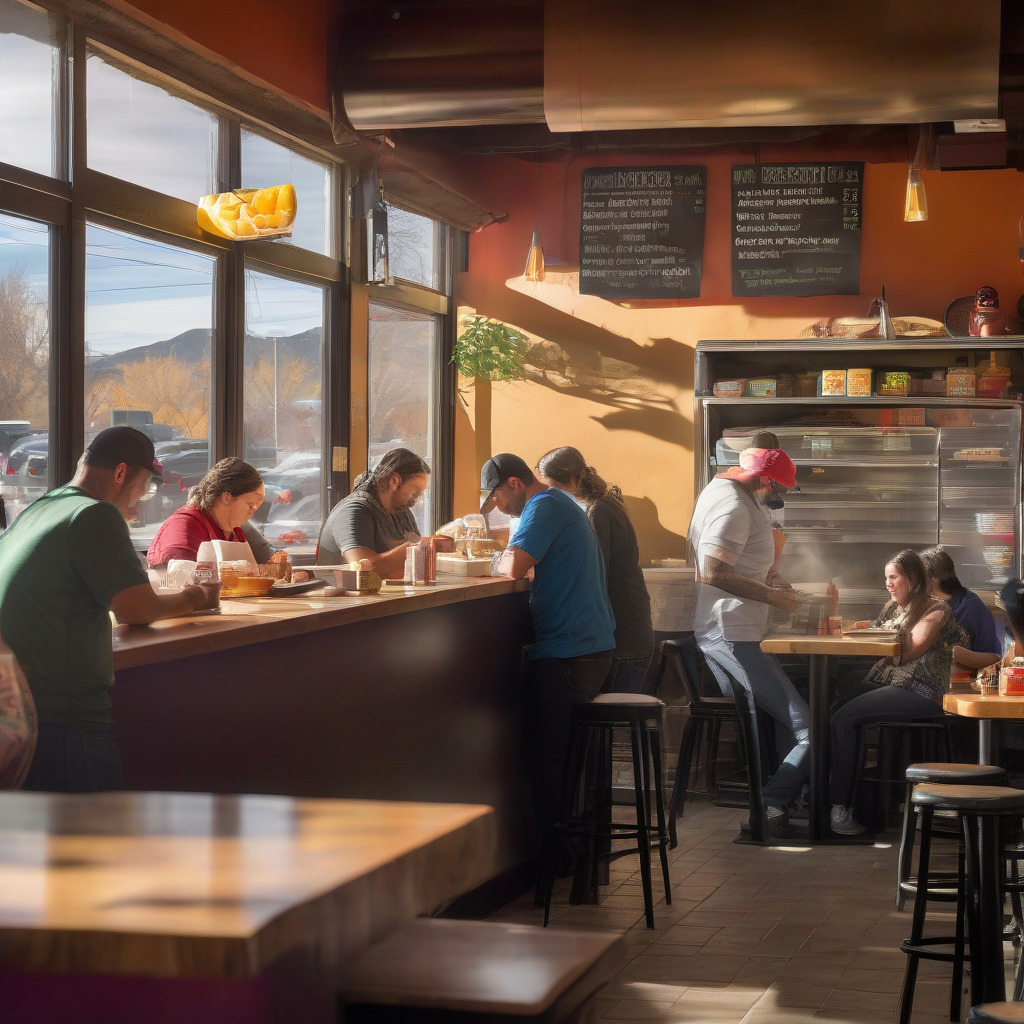
Counter seating is preferred, and the reason is practical, not aesthetic. A counter at El Taco de Mexico or a taqueria on Federal means no host, no wait. You can see the kitchen. The transaction is straightforward. “You know what you’re getting because you can watch it get made,” says Nguyen. “There’s no theater to it.” After a full shift running someone else’s dining room theater, that probably sounds pretty good.
The Breakfast Burrito Question
The breakfast burrito in Denver isn’t a dish. It’s a loyalty system and a running referendum on what the city actually values. The version at Illegal Pete’s — which has become the tourist-adjacent answer — is not the version anyone interviewed here named. “Pete’s is where you end up when you don’t know where else to go,” says Delgado, without malice. That’s about as diplomatic as it gets.
The format of a real Denver breakfast burrito: flour tortilla, scrambled eggs, potato, green chile, one protein, wrapped tight enough that it doesn’t fall apart before you’re through the first third. The green chile is the variable that separates the versions worth a detour from the ones that are merely functional. Hatch-style green chile, made from roasted green chiles — not a roux thickened to structural integrity — is the standard.
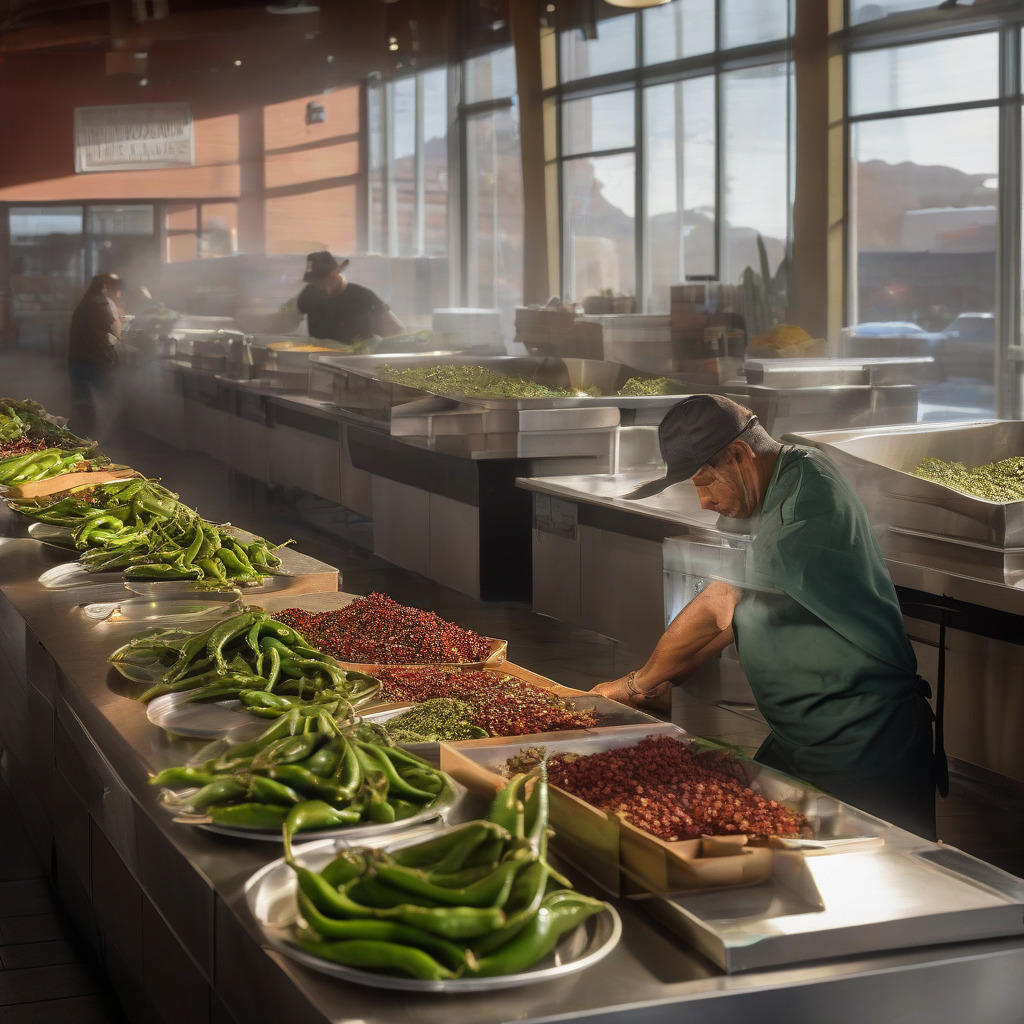
August and September are the Hatch chile roasting months, and the cultural loyalty around that season is genuine. Grocery store parking lots across the west side and southwest Denver host roasters. “When you drive past a roaster in August and you know what that smell means, that’s what local is,” says Fuentes. She’s right. If you’ve never caught that smell pulling into a King Soopers parking lot on a Saturday morning in late August, that’s the experience you’re missing.
Price-wise: a neighborhood burrito runs $10-13 at the spots worth recommending. A sit-down version on South Broadway or Tennyson runs $15-18 — better quality control, longer wait, a room catering to a brunch crowd. Both have their place. They’re just not the same thing.
Every source named either El Taco de Mexico or a specific west-side spot they’d been going to for a decade and, notably, didn’t want to see change because of the attention.
What Meals Actually Cost in 2025
Denver’s price floor has moved, and not uniformly.
The taqueria and counter plate tier: $8-14. A plate of carnitas with rice, beans, and tortillas. A full breakfast burrito. Three or four tacos. This price hasn’t moved significantly in Westwood, Elyria-Swansea, the Federal stretch, and Globeville because the operators aren’t paying RiNo rents. A full meal still feels like a shortcut rather than a statement.
The neighborhood dinner tier: $45-65 per person with drinks. Most of the named sit-down spots live here. This has moved in the last three years, and sources acknowledge it directly. There’s been a visible shift in what feels normal to spend on a Tuesday night that wasn’t there five years ago. Nobody seems thrilled about it.
The chef’s counter and serious restaurant tier — $95-175 — still exists but suffered significant losses in the closure wave and hasn’t recovered.
“The thing that’s changed most is the middle,” says Nguyen. “The $45 dinner that used to feel like a treat now feels like a Tuesday. And the $10 taco that used to feel like a shortcut now feels like the smart choice. The middle got squeezed out along with the restaurants.” That’s the clearest thing anyone said in these interviews, and you can feel it in how the city eats.
What the Industry Is Actually Watching
Post-closure wave, the sources here are watching a few specific things.
The Comal model — a shared space where the food carries the identity rather than the build-out — is the format answer multiple sources named for the rent problem. The honest caveat is that food incubator models are inherently unstable. They need institutional support to survive, and that support is not guaranteed. It’s a good idea that needs infrastructure behind it. Comal has that support for now; whether it holds is the real question.
Food trucks that have become de facto neighborhood anchors are an unexpected proving ground. Several operators who lost brick-and-mortar during the closure wave have stayed in the market via trucks or pop-ups, building the kind of regular following that, a few years ago, would have been the on-ramp to a lease. Whether any of them sign that lease is the open question. In [our food & hospitality coverage]((/food-hospitality/), the food truck permitting process and the economics of going permanent are both topics we track closely. “A truck with a following is the new proof-of-concept,” says Delgado. “But I also know guys who proved the concept and then signed a lease and regretted it.” That tension — between what a permanent space validates and what it costs — is where a lot of the industry’s anxiety lives right now.
Sunnyside and Chaffee Park are where multiple sources think the next genuine neighborhood restaurant density will develop. Rents still have room. There’s foot traffic from residents who can’t afford LoHi anymore. Several spots have opened in the past eighteen months without yet tipping into destination-traffic dependency. Whether that holds as rents catch up is anyone’s guess, but it’s the one part of the city that feels like it has runway.
The people interviewed here are cautious. They’ve watched enough close that they’re not making confident predictions. What they’re doing instead is spending their money on Sunday nights at places that have already proven they can hold — counter-seat taquerias on Federal, the pizza place on Tennyson, the late-night spots on Colfax. That’s the local guide. Go where the industry goes on its nights off, order what they order, pay in cash when that’s what’s asked, and understand that what you’re eating in those rooms is a food culture that has survived a genuinely hard few years. Mostly without anyone writing about it.
Note on verification: All restaurants named in this piece were confirmed operational as of publication. Hours, cash-only policies, and kitchen close times change — call ahead or check directly before making a special trip. The Comal Heritage Food Incubator in Globeville requires direct confirmation of current programming before visiting. Work & Class on Larimer closed at press time; verify current status independently.