How Denver Small Claims Court Actually Works
If you paid a contractor a deposit and the work never happened, or your landlord kept your security deposit without sending an itemized deduction list, you have a legal remedy that doesn't require …

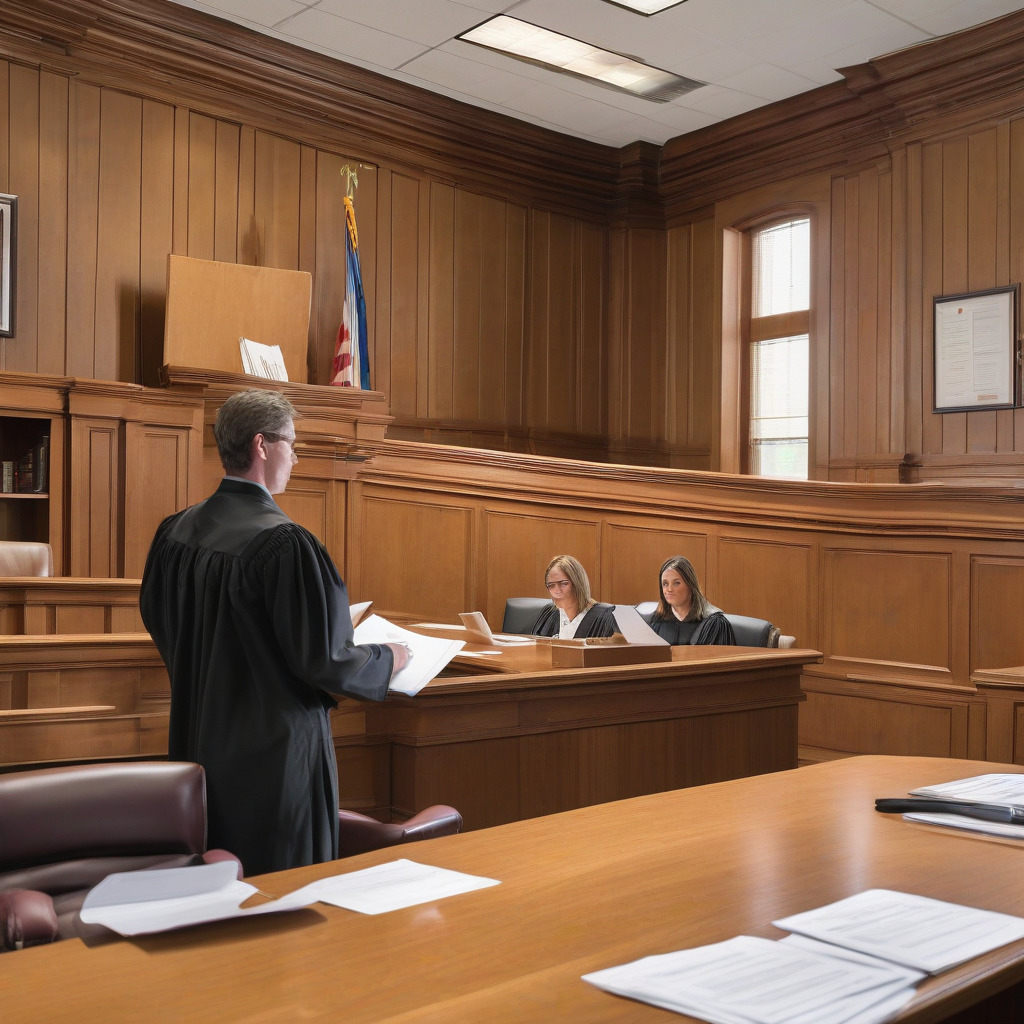
If you paid a contractor a deposit and the work never happened, or your landlord kept your security deposit without sending an itemized deduction list, you have a legal remedy that doesn’t require a lawyer and costs less than $100 to start. What you probably don’t have is a clear explanation of how the process actually unfolds once you walk through the doors at Lindsey-Flanigan.
This guide covers it in sequence, with specifics grounded in Denver County Court procedure and Colorado statute.
What Small Claims Court Is For and What the $7,500 Cap Means in Practice
Colorado small claims court is governed by C.R.S. § 13-6-403, which sets the maximum claim at $7,500. That number covers the overwhelming majority of disputes Denver residents actually face — which is precisely the point.
Security deposit cases make up a huge share of the docket. Under C.R.S. § 38-12-103, landlords must return a deposit or send an itemized deduction list within 30 days of lease termination — 60 days if the lease allows for it. If the deadline passed and you received nothing, you have a claim. It’s one of the cleaner violations to prove: either the landlord sent the list on time or they didn’t.
Contractor disputes are equally consistent — homeowners who paid deposits to roofers and remodelers and never saw a crew return file these steadily. Sub-$7,500 property damage is routine: a neighbor’s tree on your fence, a contractor who cracked your driveway, vehicle damage in a private lot. Unpaid freelance invoices, single-month rent disputes, and car accident property damage under the cap round out the caseload.
One clarification worth making upfront: small claims court does not handle evictions. Plenty of people show up at the small claims window with an eviction question. The answer is always the same — wrong window. That’s a separate county court track entirely.
Before You File, Do These Three Things
Filing first and organizing second is a mistake. The work you do before walking into the clerk’s window determines whether your case is winnable.
Have a specific dollar amount. “I want what I’m owed” is not a claim. “I paid a $2,400 deposit for roof replacement; the contractor completed no work and has not responded to two written requests for refund” is a claim. Get precise.
Identify the defendant correctly. This trips up more plaintiffs than almost anything else. You need their full legal name — not a nickname, not an informal trade name if the registered business name is different — and a current address where they can actually be served. For businesses, look up the registered agent on the Colorado Secretary of State’s website. It’s free and takes two minutes. If you serve the wrong name or a bad address, service fails, the clock resets, and you lose weeks. It happens more than you’d think.
Send a demand letter first. Before filing, send one by certified mail, return receipt requested. State what you’re owed, why, and that you intend to file in small claims court by a specific date if you’re not paid. Keep the certified mail receipt and the green return card — both become evidence. Sometimes this produces payment without a hearing. Not always, but enough that it’s worth doing. And judges notice when a plaintiff made a good-faith attempt before involving the court.
Where to Go, What It Costs, and What Form to Bring
Denver County Court is at the Lindsey-Flanigan Courthouse, 520 W. Colfax Ave., Denver, CO 80204. The complex runs between Colfax and Elati Street. The surface lot off Elati is your best parking option; street parking on Colfax is metered and competitive during business hours. RTD buses run the Colfax corridor and stop within a block — worth considering on crowded morning hearing days when the lot fills.
Before you go, call the clerk’s office at 720-865-8301 or check the Denver County Court website to confirm which entrance handles the small claims window. The building’s layout can be confusing. Plan 10 to 15 minutes for security screening.
Filing fees are tiered. Current figures run roughly $31 for claims under $500 and $55 for claims up to $7,500, but confirm those with the clerk — fees get adjusted. The fee is non-refundable. If you settle the day before the hearing, you don’t get it back.
The form you need is JDF 250 — the Notice, Claim and Summons to Appear for Trial. It’s available at the clerk’s window and on the Colorado Judicial Branch website at courts.state.co.us. Fill it out before you arrive. The clerk’s window is not a quiet workspace.
E-filing status for small claims cases can be checked at icces.co.gov. In-person at the clerk’s window remains the reliable option.
Service of Process Is Your Job, Not the Court’s
First-time filers consistently expect the court to notify the other party. It doesn’t work that way.
After you file, serving the defendant is on you. If done incorrectly, the hearing gets postponed — and that delay can stretch into months.
The clerk’s office can send service by certified mail on your behalf. It’s the cheapest option, but if the other party is evasive, delivery may fail and you’ll be rescheduling. If someone already has your deposit money and isn’t returning your calls, don’t count on them rushing to sign for certified letters. The Denver Sheriff’s Department will personally serve the defendant — call to confirm the current rate, but it’s been running roughly $40 to $60 per defendant. For anyone likely to dodge mail service, this is the right call. A process server is another option at a similar cost, provided they’re over 18 and not a party to the case.
Colorado requires service at least 15 days before the scheduled hearing date. Miss that window and the hearing gets continued. Verify the exact deadline at courts.state.co.us or with the clerk before you schedule anything.
The Wait Between Filing and Your Hearing
Expect four to eight weeks before your hearing date, based on Denver’s typical docket load. Call the clerk at 720-865-8301 to ask about current wait times before you build a timeline around that estimate.
If you file in October or November, your hearing may land in the compressed holiday court schedule, when judges are managing heavy backlogs against fewer available days. If you have flexibility on timing, file earlier.
One rule that consistently surprises business owners: if a business is the plaintiff, an officer or employee must appear at the hearing. Colorado law prohibits attorney representation for either party at the small claims stage. The owner or a designated employee has to show up in person. No exceptions.
What to Bring on the Day of Your Hearing
The courtroom is not the place to organize your evidence. Bring everything in order, with three copies of each document — one for the judge, one for the defendant, one for yourself.
For contractor disputes: the signed contract or written scope of work (if you have only texts or emails, print and organize them chronologically); proof of deposit payment — check, bank statement, Venmo or Zelle transaction with date and amount visible; photos of incomplete or substandard work with timestamps intact; all written communications about the job in chronological order; and estimates from other contractors showing what completion will actually cost. That last item establishes your damages when the original contractor won’t return the deposit.
For security deposit disputes: the full lease, move-in and move-out inspection records (signed if possible), photos from both with timestamps, your written demand letter, the certified mail receipt showing it was sent and delivered, and the landlord’s itemized deduction list if one was provided. If none was provided within the statutory window, that is itself a violation of C.R.S. § 38-12-103. Say so explicitly — don’t assume the judge will infer it. Denver tenants navigating landlord disputes may also find what Denver tenants can do when their landlord refuses to fix air conditioning useful context for understanding their broader rights under the same county court system.
For all cases: valid government-issued ID, your case number, the summons, proof of service, and bank statements showing the specific transactions at issue. Bring a single-page plain-language summary of your claim with the dollar amount clearly stated at the top. These judges are moving through a lot of cases that morning. Make it easy for them.
If you’re bringing a witness, they must appear in person. Affidavits are generally not accepted in Colorado small claims court. If your neighbor watched the contractor’s crew leave without finishing the job, your neighbor needs to be in that courtroom.
What the Hearing Actually Looks Like
The small claims courtroom at Lindsey-Flanigan is not Perry Mason. It’s a proceeding that typically runs 10 to 20 minutes, often one of a dozen the judge is handling that morning. Informal in tone — but not casual. Treat it like a professional meeting where the other person has authority to decide against you.
When your case is called, stand and present your claim clearly. Address the judge as “Your Honor.” State your claim amount, state the basis for it, and walk through your evidence in chronological order without editorializing. The judge may interrupt with questions. Answer directly. Don’t volunteer a narrative about every grievance in the relationship. The judge wants to know what was owed, what wasn’t paid, and what documentation supports it.
If the defendant was properly served and doesn’t show, the judge will enter a default judgment in your favor. Don’t show up unprepared on that basis. Judges routinely ask the plaintiff to summarize the claim and present key documents even when the defendant is a no-show. A default judgment is a legal finding — not a payment — and the defendant can file a motion to vacate it within a set period after entry. If that motion is granted, you’re back to a new hearing date.
If the defendant filed a counterclaim before the hearing, you are now also a defendant. Prepare to respond to their allegations in addition to presenting your own case. Read the counterclaim carefully when it arrives and organize your rebuttal the same way you organized your original case.
How to Actually Collect If You Win
This is the section most small claims guides skip. It’s the most important one.
A judgment is a legal finding, not a payment. The court does not collect for you. Collection is a separate process that can take longer than the case itself — sometimes much longer. Knowing this before you file affects whether filing makes sense at all.
Wage garnishment. If you know where the defendant is employed, file for a Writ of Garnishment using the JDF 84 form series through the Denver County Court clerk. The writ is served by the Denver Sheriff on the employer, who withholds a portion of wages and remits it to the court. Colorado caps garnishment at the lesser of 25% of disposable earnings or the amount by which weekly disposable earnings exceed 40 times the federal minimum wage. Slow but steady — and it works when the debtor has regular employment.
Bank levy. If you know the defendant’s bank, serve a writ of garnishment on the institution. The bank freezes funds up to the judgment amount and remits them to the court. The practical challenge is knowing where they bank. If you’ve written them checks before, look at which institution cleared them.
Judgment lien. File a certified copy of your judgment with the Denver County Clerk and Recorder at 1437 Bannock St. You create a lien against any real property the defendant owns in Denver County. Liens last six years and are renewable. It won’t produce cash immediately, but the defendant cannot sell or refinance a Denver property without satisfying your judgment. If the contractor who took your deposit owns a home in Denver, do this the day after your judgment is entered.
Judgment debtor examination. Underused and highly effective. It’s a court-ordered proceeding that compels the judgment debtor to appear and disclose their assets, bank accounts, and employment under oath. If you have a judgment and no idea where to find the debtor’s assets, a judgment debtor examination gives you a road map. Ask the clerk’s office how to initiate one.
The honest caveat: Colorado exempts certain assets from collection. The homestead exemption protects equity in a primary residence up to a threshold adjusted periodically. Retirement accounts and certain personal property are also protected. Winning your case does not guarantee collecting from a defendant who has no collectible assets. Know that before you file.
Where to Get Help Before You File
Colorado Legal Services (coloradolegalservices.org) provides free legal help to income-qualifying Denver residents and periodically offers small claims guidance clinics. If your case is straightforward, their resources can help you sharpen your claim before filing.
The Denver Bar Association Lawyer Referral Service (303-831-8000) can connect you with an attorney for a low-cost consultation. Lawyers can’t represent you at the small claims hearing, but a session before you file can identify weaknesses in your evidence and make sure your damages calculation is correct. For any case involving a business entity, multiple parties, or penalties and multipliers, this is a good moment to review our legal & finance coverage for additional context on Colorado-specific rules — and an hour with an attorney who’s seen these cases is money well spent.
Quick-Reference Sidebar
| Claim cap | $7,500 (C.R.S. § 13-6-403) — verify for recent legislative changes |
| Filing fee (under $500) | Approximately $31 — confirm with clerk before filing |
| Filing fee (up to $7,500) | Approximately $55 — confirm with clerk before filing |
| Courthouse | Lindsey-Flanigan Courthouse, 520 W. Colfax Ave., Denver, CO 80204 |
| Parking | Surface lot off Elati Street; RTD bus routes serve the Colfax corridor |
| Clerk’s window hours | Confirm at 720-865-8301 — hours subject to change |
| Clerk phone | 720-865-8301 |
| Required form | JDF 250 (clerk’s window or courts.state.co.us) |
| Colorado Legal Services | coloradolegalservices.org |
| Denver Bar Referral Service | 303-831-8000 |
| Service deadline | At least 15 days before hearing — verify exact requirement |
| Typical wait for hearing | 4–8 weeks after filing (call clerk to confirm current backlog) |
| Judgment lien filing | Denver County Clerk and Recorder, 1437 Bannock St. |
| Lien duration | 6 years, renewable |
Filing fees, the claim cap, e-filing availability, courthouse hours, service deadlines, and the default judgment vacatur window are all subject to change. Before you file, call the Denver County Court clerk’s office at 720-865-8301 or check courts.state.co.us. This article reflects procedures and figures current as of publication; CityDesk Denver will update this guide as court rules and fee schedules change.