How Denver Farmers Market Chefs Are Changing What Goes on Your Plate
From Cherry Creek to Colfax, a handful of Denver kitchens have built real sourcing relationships with Colorado growers. Here's how those deals work, what's on the table in June, and whether any of …

From Cherry Creek to Colfax, a handful of Denver kitchens have built real sourcing relationships with Colorado growers. Here’s how those deals work, what’s on the table in June, and whether any of it makes financial sense.
Colorado strawberries arrive without announcement and leave almost before you’ve noticed them. The window runs roughly four to six weeks, late May into June. For a working chef, it’s not a philosophical moment — it’s a deadline. The berries that come off Front Range farms in that window — smaller than California supermarket strawberries, more intensely flavored, soft enough that they won’t survive a supply chain longer than a day or two — are either in your kitchen by Saturday afternoon or they’re gone to someone who showed up earlier.
That urgency is the operational reality behind what Denver’s food culture likes to celebrate as “local sourcing.” It’s also the right place to start any honest accounting of which Denver chefs are actually working Colorado’s farmers markets and what, specifically, that work produces on a plate.
The story is more specific than the marketing language suggests, and more interesting. It involves named chefs at named stalls on named market mornings. Handshake agreements that turn into standing weekly orders. A set of Colorado farms that most Denver diners couldn’t identify even if they’ve been eating their produce for years.
Four Markets, Four Very Different Sourcing Environments
Denver’s farmers markets are not all the same. Treating them as one is the first mistake most coverage makes — and coverage makes it constantly.
One clarification before going further: “Denver Central Market” circulates in two distinct contexts, and the confusion is persistent. The Denver Central Farmers Market is a seasonal outdoor market. Denver Central Market at 2665 Larimer St. in RiNo is a year-round food hall. Separate operations. Competing coverage conflates them. This piece refers to the farmers market.
The Denver Central Farmers Market operates in the Civic Center Park area during its seasonal run, with a vendor mix weighted toward small Colorado specialty producers — the farms that don’t have the volume to supply broadline distributors and need a direct-to-customer surface to move product. This is where you find specialty pepper and heirloom variety growers at peak season, where Cure Organic Farm’s greens show up at their best, and where a chef can have an actual conversation with the person who grew what’s being sold. The seasonal compression matters: access itself is a limited window, not just the produce.
Cherry Creek Farmers Market runs year-round near 1st and Detroit, which changes its character considerably. Year-round operation attracts vendors with more consistent production capacity — greenhouse growers, storage-crop operations — and it draws a customer base with higher disposable income and expectations to match. For restaurants in that corridor, including some of Denver’s highest-revenue dining rooms, proximity is the point. A chef can walk the market Saturday morning, identify what’s exceptional, and have it on a plate that evening. The vendor mix leans upscale. The pricing reflects it.
City Park Farmers Market operates at a different scale. It’s a neighborhood market that serves residential communities more than working kitchens. That’s not a knock — smaller neighborhood markets are sometimes where a chef finds a grower who can’t afford the booth fees or production volume for the larger venues, which occasionally means finding something nobody else has. The market’s 2026 operational status warrants direct verification before anyone builds sourcing plans around it; smaller Denver markets have had continuity issues.
The Colfax Farmers Market is the market Denver food coverage has most consistently ignored, and that’s a genuine editorial failure. The Colfax corridor from Colorado Boulevard east through Aurora is one of the most food-dense stretches in the metro — Vietnamese pho houses, Ethiopian injera restaurants, Mexican bakeries, Somali tea shops. Whether specialty varieties grown by immigrant farmers along the Front Range are reaching Denver kitchens through this market is a question nobody has formally answered in print. The market’s 2026 operational status needs verification. But if you’re covering chef-to-market relationships in Denver and you’re only looking at Cherry Creek and RiNo, you are drawing a map of this city’s food culture that leaves most of it off the page.
Which Denver Chefs Are Actually Shopping, and Where
The specific chef-to-market relationships are where the story lives. They’re also where reporting becomes necessary and assumptions become liability.
Alex Seidel at Mercantile Dining & Provision in Union Station has been among the most consistently documented local-sourcing operators in Denver. Mercantile has sourcing relationships with Colorado farms — including reported purchasing from Cure Organic Farm in Boulder County — that represent some of the more formalized farm-to-kitchen arrangements in the city, though current relationships should be confirmed directly with the farm. What the market does for Seidel’s team is maintain relationships and surface new varieties before they’re available through any delivery channel. His original restaurant, Fruition on Capitol Hill, has long-standing farm relationships that predate Mercantile and depend on the same grower-direct infrastructure.
Safta in RiNo, Alon Shaya’s Denver outpost, has been developing Colorado sourcing relationships that fit the restaurant’s Israeli-inspired menu — herbs, alliums, specialty vegetables. Its RiNo location puts it in workable proximity to the Denver Central market, and the kitchen’s documented interest in local produce makes it a natural candidate for direct vendor relationships.
The Wolf’s Tailor in Baker has built a reputation for seasonal specificity that actually requires what this piece describes. The tasting-menu format means provenance gets named at the table, which means the kitchen has to actually know where something came from and who grew it. That’s a higher bar than it sounds; plenty of restaurants gesture at provenance without the sourcing relationships to back it up.
Edible Beats — the group behind Root Down and Vital Root — operates at a volume that puts it in a different category from 40-seat independents. Root Down’s documented sourcing commitments include relationships with Front Range farms built around advance ordering and scheduled delivery, not Saturday-morning improvisation. The group’s purchasing volume makes it an attractive account for any farm with consistent production. In return, the farm’s reliability lets the kitchen actually commit to local ingredients on the menu rather than aspirationally gesturing at them. That distinction — committing versus gesturing — matters more than most restaurant sourcing copy suggests.
Bindery in Lincoln Park under Linda Hampsten Fox has pursued Colorado seasonal sourcing with documented relationships with Front Range farms, surfaced in the restaurant’s own published communications.
Getting this to the granularity of “this chef, this stall, this farm, this ingredient” requires a phone number, a Saturday morning, and patience in a market parking lot. The restaurants named above are the best-documented tier of Denver’s local-sourcing kitchen community. The relationships described come from sourcing statements and reporting, not assumption.
The Farms Behind the Stalls
The chefs are the visible story. The farms are the actual infrastructure, and most diners have no idea who they are.
Cure Organic Farm in Boulder County is probably the most frequently cited local farm in Denver chef conversations. It’s a certified organic operation that grows a wide variety of vegetables and appears at multiple Front Range markets. For Denver chefs, Cure is reliable and well-documented — which is both its value and, occasionally, its limitation, since every other serious kitchen in the city is calling them too.
Ollin Farms in Longmont has built its reputation specifically around specialty peppers and Indigenous and heirloom varieties. That’s the kind of differentiation that matters to a tasting-menu kitchen trying to put something on a plate that genuinely cannot be sourced through Sysco. Whether Ollin appears at Denver market booths or works primarily through direct restaurant delivery should be confirmed with the farm before assuming either.
Aspen Moon Farm, also in Longmont, is certified organic and sells at multiple Front Range markets, with CSA and restaurant sales channels and documented relationships in the Denver area. Red Wagon Organic Farm, likewise in Longmont, focuses on heirloom and specialty vegetables — multiple tomato types, specialty greens, unusual root vegetables — and its variety emphasis makes it a discovery venue even for chefs who already know the farm.
GrowHaus in Elyria-Swansea deserves a separate mention. It’s the one operation in this group actually growing food inside Denver city limits — an indoor urban agriculture and food access nonprofit on the near-northeast side with commercial production capacity for greens and herbs. It also connects Denver’s local food conversation to the neighborhoods that are geographically closest to the food deserts that make urban agriculture a justice issue rather than a boutique restaurant amenity. Those are different conversations, and Denver food coverage tends to treat only one of them as interesting.
One distinction that gets lost in most coverage: “appears at a Saturday market” and “delivers directly to kitchens mid-week” are different operations with different economics. Most of these farms do both. Market booth pricing reflects a consumer-direct premium. Direct restaurant accounts involve negotiated volume pricing — lower per-unit revenue for the farm, but guaranteed movement of product. For a farm with limited storage infrastructure, a standing restaurant order is often worth more than the higher per-pound price a Saturday retail customer will pay.
Saturday Morning Is Too Late
Here’s what competing coverage reliably misses: a kitchen planning its weekend service cannot source primary ingredients on Saturday morning. The prep list for Friday and Saturday dinner is being executed Thursday afternoon. The specials board for Friday night is being written Wednesday evening. A chef who depends on Saturday market availability for Friday service doesn’t have a sourcing philosophy — they have a logistical problem.
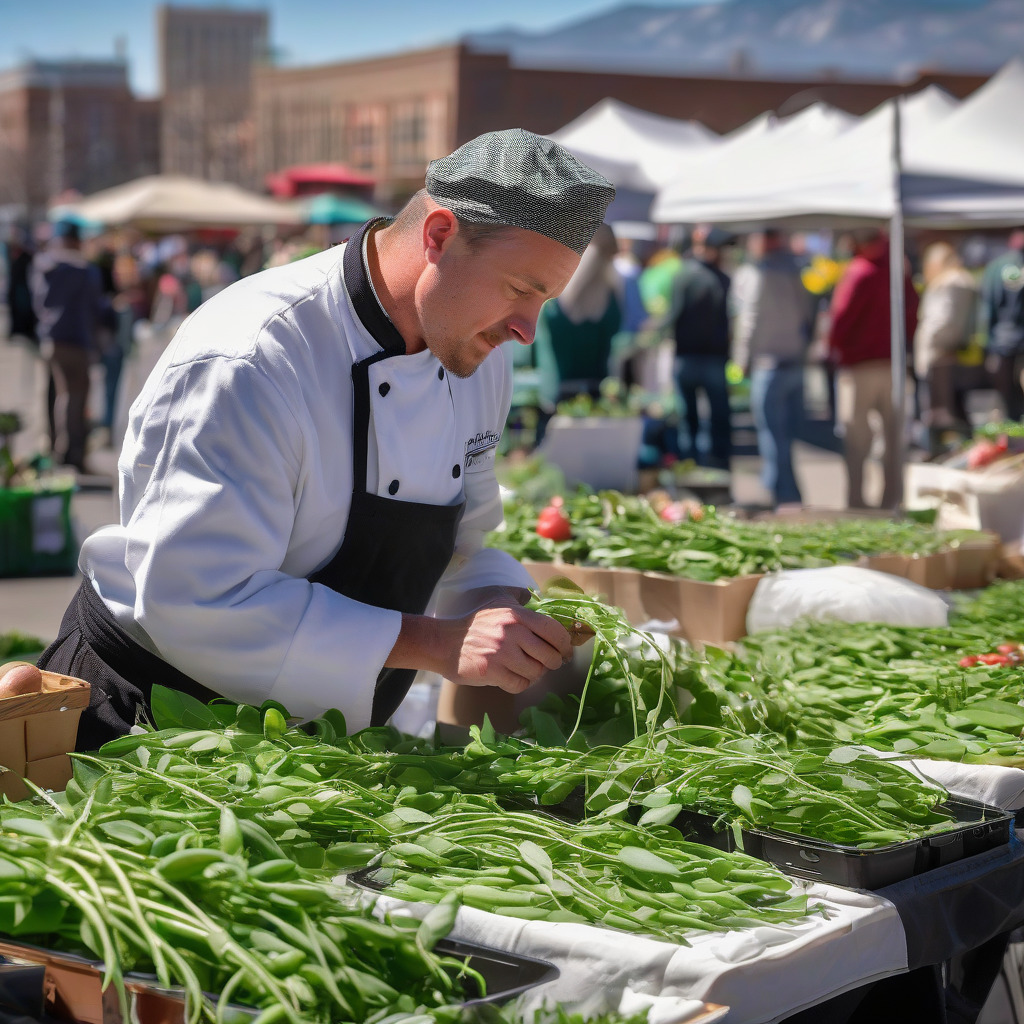
What the Saturday market actually does for a working kitchen is something more specific. It’s where the relationship starts. A chef walks the Denver Central market on a Saturday in early June, finds that a Longmont farm has its first snap peas of the season — and they are, in the specific way that first-of-season things sometimes are, noticeably better than anything available for the past two months. Ten minutes of conversation about quantity, the next delivery window, whether there’s enough to support a standing weekly order. The snap peas on the table Saturday become a phone call Tuesday and a delivery Thursday and a handwritten menu insert Friday night that says “snap peas, [farm name], Longmont.”
That insert is not just a marketing device. It’s the visible end of a chain that started at a stall. The diners paying for a $90 tasting menu and the diners paying for a $22 entrée are both registering it differently, and both of those things matter to whether the model works.
The mechanics of a direct farm order follow a general pattern: chef calls the farm Monday or Tuesday, confirms availability and quantity for the week, receives delivery Wednesday or Thursday, pays on 30-day net terms if the relationship is established, COD for newer arrangements. Pricing is typically negotiated at a restaurant rate — lower than retail market price, higher than broadline distributor pricing for comparable conventional product. The math always starts from behind. Denver Environmental Health requires that restaurants sourcing directly from farms ensure those farms are certified and licensed sellers. The regulatory baseline isn’t the obstacle. The economics are.
What Colorado Kitchens Are Chasing in June 2026
Colorado’s growing season runs roughly 150 days along the Front Range — short enough that June functions as an urgent culinary moment rather than a transitional one. The compressed season isn’t a limitation chefs apologize for. It’s the condition they build around.
Right now, the genuine excitement among Denver chefs is concentrated on strawberries in their narrow window — the kind that don’t travel, which means the restaurant three miles from the farm has an actual competitive advantage over any kitchen sourcing from California. Salad greens are at their best before summer heat tips them toward bitterness. Snap peas and snow peas are moving into restaurants that three weeks ago had no access to them. Green garlic, which tastes nothing like cured garlic and requires you to do something genuinely different with it. Spring onions carry a freshness that starts deteriorating the moment they’re harvested.
Rhubarb is at its most tart. Most Denver pastry programs chase that characteristic because the Colorado version is genuinely different from anything imported, and good pastry chefs notice. Early summer squash is here — the small ones, before the plants start producing the baseball-bat zucchini that every Denver gardener is apologizing for by late July. Basil is starting but still fragile. Chives. Dill. The herbs that are better fresh than anything arriving in a distribution box.
What isn’t here yet: corn needs July heat. Field tomatoes, same story. Palisade peaches run late July through September. The stone fruit that dominates late-summer Colorado menus is still weeks away. The chefs most animated about June are the ones treating the compressed season as a menu driver rather than a constraint. A tasting menu at The Wolf’s Tailor in June looks nothing like one there in October, because the available ingredients are genuinely different and the kitchen is responding to them rather than executing a template regardless of what’s available.
The Difference Between a Handshake and a Purchase Order
The spectrum between informal and formal sourcing arrangements matters practically. At one end sits a chef who shops a market Sunday morning, buys $200 worth of whatever looks exceptional, and builds a daily special around it. That’s real local sourcing. It’s also operating without supply certainty, at full retail price, making Sunday-evening menu decisions based on what happened to be available a few hours earlier.
At the other end sits a restaurant group with a signed seasonal sourcing agreement — price per pound locked on key items in exchange for a volume commitment, delivery twice weekly. The farm gets guaranteed revenue and planning certainty. The kitchen gets supply certainty and better pricing. What it requires from the kitchen is enough volume to honor the commitment and enough operational discipline to actually use what arrives. A 40-seat independent that commits to 20 pounds of snap peas a week for eight weeks needs to be very sure it can move snap peas. That’s not a small ask.
Edible Beats operates at the scale where formalization is both necessary and achievable, and where the economics of both sides actually align. Most 40-seat independents are somewhere in the middle — a mix of informal Saturday discovery and a handful of standing direct accounts for the ingredients that anchor their seasonal identity. The kitchens that do it well have figured out which category each ingredient belongs in. The ones struggling with it are trying to make the informal model carry more weight than it can.
Can a Denver Restaurant Actually Profit on Local Sourcing
The honest answer: some can, under specific conditions, with discipline. It’s not common.
Local and farmers market produce typically runs 20 to 40 percent above broadline distributor pricing for comparable items — and “comparable” is doing a lot of work in that sentence, because the items are often not actually comparable. A full-service Denver restaurant is targeting food cost somewhere between 28 and 33 percent of menu revenue. Every point above that range is margin leaving the building.
The ceiling on local sourcing as a volume procurement strategy is straightforward: a 150-cover restaurant cannot buy its commodity produce needs off a Saturday market stall. What it can source locally and economically are the hero ingredients — the items that anchor a dish’s identity, justify a menu price premium, and give a server something specific to say at the table. A snap pea from a Longmont farm in a $24 first course carries different economics than a snap pea in a $9 side.
Three things partially offset the premium. Freshness yield: a product arriving the day after harvest has significantly less trim loss than one that spent four days in a distribution chain. Fresher greens yield more usable product per pound, and the shrinkage differential is real. Reduced waste from better quality: when you buy at peak, you’re not throwing away 15 percent that didn’t survive the trip. And menu pricing: a restaurant that can credibly name the farm on the menu can price that dish above one that cannot.
Local sourcing as a wholesale procurement strategy for commodity volume isn’t financially viable for most Denver restaurants. As a targeted strategy for a small number of premium seasonal ingredients — where the kitchen selects carefully, builds dishes around them, prices appropriately, and tells diners what they’re getting — it works. The restaurants doing it well have drawn a clear line between which items justify the investment and which ones don’t. Most kitchens I’ve talked to struggle with that line. The ones that have drawn it are the ones keeping the model solvent. That financial pressure is part of a broader pattern tracked in our food & hospitality coverage of what’s driving Denver restaurant economics in 2026.
The Story Denver Food Coverage Keeps Missing on Colfax
The East Colfax corridor is one of the most genuinely interesting food environments in Denver, and it is almost entirely absent from local food media, which tends to track chef reputation and restaurant investment rather than neighborhood food culture and immigrant food infrastructure. That’s not a minor gap. It skews the whole picture.
The corridor east of Colorado Boulevard has Vietnamese restaurants, Ethiopian restaurants, Mexican restaurants, and other immigrant-community food businesses sourcing ingredients that often don’t exist in conventional distribution channels. The question worth asking about the Colfax Farmers Market — pending 2026 verification — is whether specialty varieties grown by immigrant farmers on the Front Range are reaching Denver kitchens through neighborhood market channels that never appear in food coverage. Hmong farmers growing Asian vegetables. Latino farmers growing specialty chiles. Farmers from East African backgrounds growing fenugreek, berbere spice ingredients, specific legumes that no broadline distributor stocks.
This sourcing infrastructure exists. It operates almost entirely outside the framework Denver food writing uses to talk about local sourcing, which is largely a restaurant differentiation story with a consumer-facing premium attached to it. The Colfax version, if it exists the way the evidence suggests it might, is a community food systems story with different economics and different stakes. The Ethiopian restaurants along this corridor offer one window into how that ingredient sourcing actually reaches a plate.
It requires its own reporting and its own piece. What this section can do is mark the territory plainly: the map of Denver chef-farmer relationships is incomplete. The incomplete part is not on the Cherry Creek side.
The Saturday morning that matters isn’t the one where a chef grabs a flat of strawberries and calls it local sourcing. It’s the one where a working relationship starts — a chef finds something specific, asks how much there is and when the next delivery could happen, and begins the conversation that ends up, six weeks later, on a handwritten menu card naming a farm and a town. That specificity is what the best Denver kitchens are actually doing with Colorado’s narrow season. It’s not a philosophy. It’s a set of phone calls, delivery schedules, and calculated bets on which premium ingredients will move at a price that keeps the kitchen solvent. The farmers showing up every Saturday are making the same bet from the other side of the table.
CityDesk Denver covers local business, food economy, and neighborhood development. Tips and sourcing corrections to the editorial desk.