How Denver's Restaurant Labor Shortage Is Reshaping Hours and Menus
Three years after the pandemic staffing collapse, Denver kitchens are still cutting hours, shrinking menus, and paying wages that strain already-thin margins. Here's what's actually happening, neig…

Three years after the pandemic staffing collapse, Denver kitchens are still cutting hours, shrinking menus, and paying wages that strain already-thin margins. Here’s what’s actually happening, neighborhood by neighborhood.
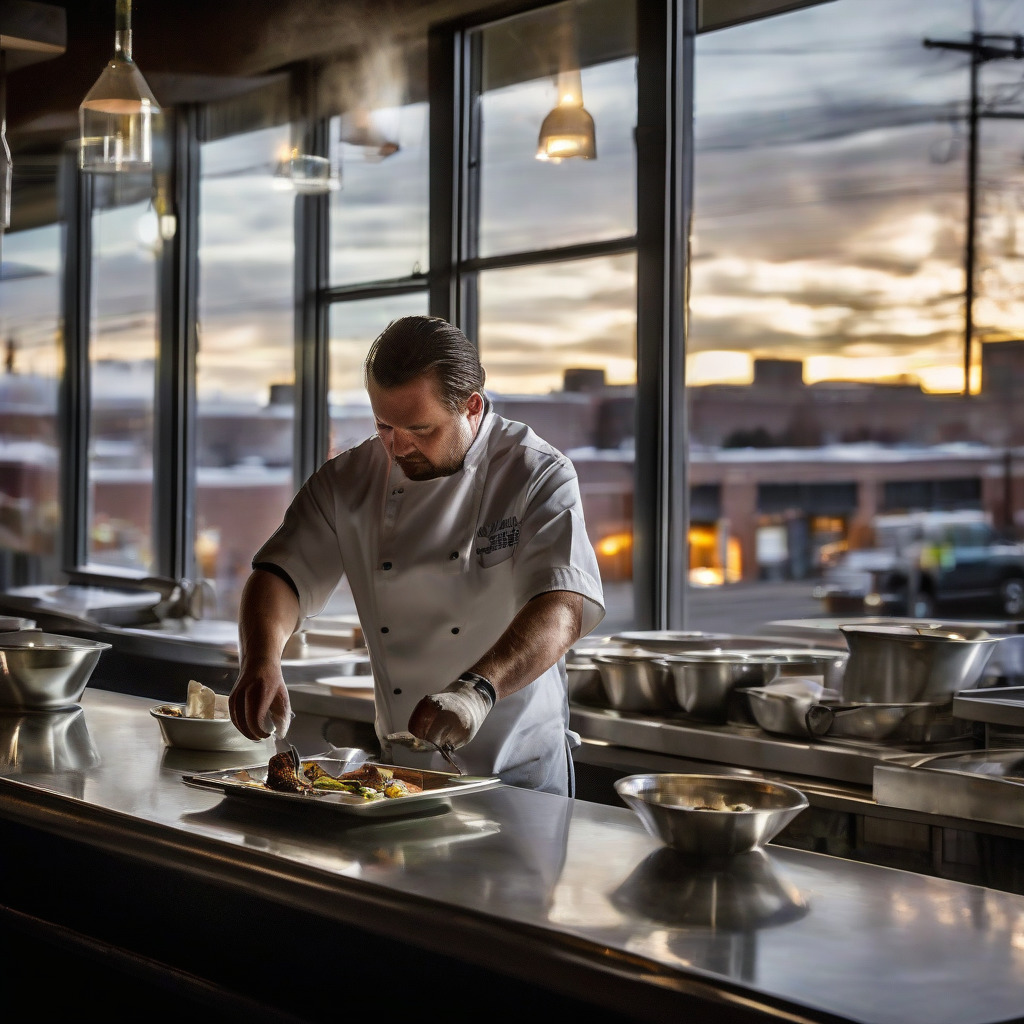
On a Tuesday evening in late spring, the dining room at a busy RiNo full-service restaurant is doing solid business. Maybe two-thirds full. A steady pour at the bar. The kitchen firing with purpose. What you don’t see is the midweek lunch service that no longer exists, or the back patio running at half its former capacity on weeknights because there aren’t enough hands to run it properly. What Denver operators say publicly, and more say privately, is that the staffing math just doesn’t close the way it used to.
That reduced version of operating — fewer hours, compressed menus, selective service periods — has become standard across Denver’s independent restaurant sector. If you’ve noticed that your neighborhood spot closed on Mondays, cut its lunch program, or dropped half the dishes that used to anchor its menu, you’re not imagining things. You’re watching what happens when a labor market breaks during a crisis and doesn’t fully come back.
The Numbers Behind the Anecdote
Denver’s restaurant employment hasn’t returned to pre-pandemic levels in any sustained way. Data from the Colorado Department of Labor and Employment for the Denver-Aurora MSA, covering NAICS 722 (food services and drinking places), shows the sector has recovered its raw job count on paper. That figure masks significant churn, part-time substitution for full-time positions, and hour compression that reduces effective labor available to individual restaurants.
The problem now isn’t the acute collapse of 2021 and 2022. It’s a ceiling. A structural reduction in the number of qualified kitchen workers available in the Denver labor pool at any given time limits how many restaurants can operate full schedules simultaneously. Operators describe this as a chronic condition they don’t expect to resolve. That distinction matters, because chronic conditions don’t get emergency responses. They just slowly reshape what’s possible.
What Denver Kitchens Are Actually Paying
Line cook wages at Denver full-service restaurants currently run between $19 and $24 per hour for experienced cooks. Sous chef salaries range from roughly $55,000 to $70,000 annually depending on the operation. These figures come from active job postings on industry platforms and Colorado Restaurant Association data.
Denver’s local minimum wage for 2026 tracks above Colorado’s statewide floor of $14.81 per hour — the Denver figure is in the $18.29–$18.81 range based on prior-year trajectory. When experienced cooks start at $19 and the minimum wage is pushing $18.50, there’s almost no room left to hire and train entry-level staff. That arithmetic is genuinely brutal.
Colorado operates without a tip credit, which changes the labor cost equation in ways that still catch out-of-state operators off guard. Tipped workers here earn the full minimum wage as their base, plus whatever gratuity they receive — not the $2.13 federal subminimum wage that applies in most states. An experienced server at a busy Denver full-service restaurant might clear $25 to $40 per hour in total compensation. For restaurants, this means server labor is significantly more expensive than the national norm even before you count payroll taxes, and it creates a quiet incentive to shift toward higher-check models that need fewer servers per dollar of revenue.
Workers who’ve left the industry cite unpredictable scheduling, no guaranteed hours, physical demands that don’t scale well with age, and the sense that wages don’t produce financial stability given Denver’s cost of living. A prep cook earning $21 an hour without benefits faces the same rent and grocery bills as everyone else in the city. That’s not a complaint unique to the restaurant industry, but it’s the calculation that’s been draining the labor pipeline. It’s hard to argue with.
How the Shortage Is Reshaping When and What Denver Restaurants Operate
The cuts follow a consistent pattern across Denver’s independents.
Lunch daypart elimination is probably the most economically significant change and the most underreported. Restaurants in LoDo and the CBD that historically drew a midday crowd from downtown office workers have disproportionately killed lunch service — some temporarily in 2021 and 2022, many permanently since. The reason is simple: lunch requires a fully staffed kitchen for a two-hour window that generates insufficient revenue when downtown office occupancy remains well below pre-pandemic norms. A restaurant that used to serve 200 lunches on a Tuesday now sees 60. The staffing math no longer works, even with a reduced crew.
Monday closures have become industry shorthand for triage. Operating six days instead of seven lets a smaller core team run more efficiently, gives kitchen staff a genuine rest day, and cuts the number of positions you need to fill. If your usual Monday dinner spot is dark, that’s almost always a deliberate conservation decision, not a slow-business problem. It also signals something about the operator’s confidence. If Monday service were profitable enough, it would happen.
Patio underutilization during Denver’s peak outdoor season — May through October — is a specific and costly form of the problem. Denver restaurants depend on those months to cross-subsidize leaner winter operations. A patio running at half capacity because there aren’t enough servers or food runners to cover it properly is leaving real money on the table at exactly the wrong time. On a July Saturday, a restaurant turning away patio customers because it doesn’t have the bodies to serve them is forfeiting revenue that was already factored into the lease signed twelve months earlier.
Menu contraction has reshaped what Denver diners can actually order. A kitchen running three cooks on a Saturday night can execute 28 dishes. It cannot execute 52. The result: restaurants that once offered twelve appetizers and sixteen entrees now have eight and ten, and the appetizer section leans toward items that can be fired by the cook already handling sauces and proteins. The menu shrank to match available staffing, not customer appetite.
A Neighborhood Map of the Pressure
The shortage doesn’t affect Denver’s restaurant geography uniformly, and the differences are worth understanding.
RiNo runs the densest concentration of independent full-service restaurants in Denver, which creates a specific competitive problem: operators poach from each other constantly. A cook can walk two blocks for a dollar-an-hour raise and a different schedule. That churn keeps River North kitchens in a perpetual low-grade state of flux, with experienced staff cycling among independents faster than any single operator can build a stable core team. The restaurants that survive this are the ones willing to pay top of market and offer something beyond wages — better scheduling, genuine advancement, or a kitchen culture worth staying for. That last part is harder to quantify, but operators who have it will tell you it’s not nothing.
LoDo operates on an event-driven boom-and-bust rhythm tied to Ball Arena concerts, Coors Field games, and the convention calendar. Restaurants there build for peak capacity and struggle to staff efficiently on slow weekdays. The lunch daypart problem is sharpest here, where downtown office workers have dispersed and no consistent midday customer base exists to justify keeping a kitchen staffed.
Capitol Hill and South Broadway have the least pricing power and the most cost pressure. Restaurants in those neighborhoods serve price-sensitive regulars, can’t raise menu prices as aggressively, and compete for kitchen staff against better-capitalized operations in wealthier parts of the city. A South Broadway restaurant running on 4–5% net margin has less room to cut service hours and stay viable than a Cherry Creek operation that can charge $38 for an entrée and have people pay it without much complaint. That gap isn’t subtle, and it explains why you see more Monday closures and abbreviated menus south of downtown than north of it.
Cherry Creek functions differently. Higher check averages give operators room to pay competitive wages and still function. This isn’t immunity — it’s the financial capacity to outbid the competition when necessary. Cherry Creek restaurants have largely maintained fuller hours and more complete menus. You notice this disparity partly because the math allows it.
Tennyson Street illustrates a vulnerability that affects Denver’s smaller neighborhood corridors more broadly: the owner-operated, single-location restaurant where the chef-owner is also working the line. When that person gets sick, has a family emergency, or simply burns out, there’s no management bench, no cross-trained backup, no one to call. The staffing problem at these places often comes down to a team of one, and its consequences are immediate and visible to the neighborhood. A two-week illness can close a ten-year-old restaurant for good if the owner hasn’t built a team that can run without them. Fragile in good times. Fragile in bad ones.
The Structural Wound Denver Mostly Ignored
Denver lost a culinary training institution in 2021 that it hasn’t replaced, and that loss deserves more attention than it has received.
Johnson & Wales University operated a Denver campus that graduated hundreds of culinary students annually into the local restaurant labor market — prep cooks, line cooks, pastry assistants with foundational training that made them functional from day one. The Denver campus closed in 2021 under financial pressure compounded by the pandemic. Almost no local coverage at the time addressed what that closure would mean for the regional kitchen labor pipeline. Four years later, the downstream consequences are visible in every Denver kitchen struggling to find trained entry-level cooks. It remains one of the most underreported business stories of the pandemic era in this city.
Emily Griffith Technical College offers culinary arts programming on its downtown Denver campus — accessible, affordable, genuinely useful. But Emily Griffith’s annual graduate output has never matched the volume Johnson & Wales was producing before it closed. That gap hasn’t closed.
The hotel inventory surge compounds it. The Populus Hotel, the Graduate Denver, and other properties that opened between 2022 and 2025 all operate restaurants, bars, or food programs that require kitchen staffing. Hotel F&B positions frequently offer more schedule stability and better benefits than independent restaurant work, which makes them attractive to exactly the experienced cooks that independents most need. The hotel sector isn’t creating new kitchen workers. It’s competing for the existing pool. When the Populus opens a restaurant, it doesn’t pull from some infinite reserve of Denver kitchen talent. It pulls from the same limited supply that independent restaurants are drawing from, and it can offer things they can’t: scheduled shifts, health insurance, paid time off.
Then there’s the ski-season drain, which Denver operators have learned to dread and never fully solve. Every November through March, a meaningful portion of the Front Range food-service workforce migrates to Vail, Breckenridge, and Telluride, where seasonal wages and housing packages offer something different. Some workers return in spring. Some don’t. Some find work elsewhere over the winter and don’t bother coming back. The restaurants that lose the same three people every November know this. It doesn’t make it less painful.
The Compounding Cost Burden Beyond Wages
The kitchen labor problem is the most visible pressure, but Denver restaurant operators are navigating a cost structure that stacks trouble on top of trouble.
Colorado’s FAMLI program — Family and Medical Leave Insurance — came online with payroll impacts in 2024, requiring both employer and employee contributions. For restaurants already operating on thin margins, another mandatory payroll line item with no corresponding revenue offset isn’t trivial. It lands on top of rising wage floors and the structural reality of Colorado’s no-tip-credit framework.
Menu prices at Denver restaurants are up roughly 25–35% compared to 2019. That increase has been partly absorbed by consumers, partly by operators through margin compression. Consumer tolerance for higher tabs appears to be reaching a limit at mid-tier and neighborhood restaurants, where owners report increasing pushback from regulars. A South Broadway customer who accepted a $4 increase on their usual entrée two years ago has now absorbed a $7 total increase since 2019. Another round of increases is going to be harder to sell. That’s not irrationality — that’s just someone doing the math.
Operators have split into two camps, and the division follows economic geography. Restaurants with higher check averages — Cherry Creek, parts of the Highlands, certain RiNo establishments — have passed costs through via menu pricing and held their hours and staffing. Restaurants in lower-average-check neighborhoods have absorbed costs by cutting service: fewer hours, smaller menus, closed days. Both approaches have limits. The Cherry Creek approach depends on sustained consumer willingness to pay. The service-cut approach eventually degrades the product enough to lose the regulars who made the restaurant viable. A Capitol Hill restaurant that keeps cutting might preserve profitability in the short term, but if it gradually turns into a less interesting version of itself, those regulars will drift. And once they drift, they don’t always come back.
What Some Denver Operators Are Actually Doing
Not every response to the shortage is passive.
The four-day operating week — closing two days rather than one — has become a deliberate strategy at a small number of Denver independents, particularly chef-driven restaurants where experienced retention matters more than maximum covers. One RiNo chef moved to a four-day schedule after losing three experienced cooks to burnout in twelve months. Six months in, staffing is stable, and the reduced schedule let him pay the remaining cooks enough to be competitive with other kitchens in the neighborhood. The revenue loss is real. So is the fact that he stopped hemorrhaging $4,000 in training costs every time someone quit.
Aggressive cross-training has reduced headcount requirements at some operations. A kitchen that trains every cook to execute every station can run a shorter line on slow nights and pull from a flexible pool on busy ones. This requires real investment in training time and a willingness to pay cross-trained cooks at the top of the range — but operators who’ve committed to it report needing fewer total positions filled at any given time. It also creates advancement that feels real to the people getting it.
Menu engineering — specifically reducing the number of dishes that require specialized preparation or unique ingredients — has been adopted quietly at restaurants that never publicly announced a menu shrink. A restaurant that used to make four different stocks now makes two. One that offered three sauces now has one, plus two variations. The diner probably doesn’t notice. The kitchen’s workload drops measurably.
Ghost kitchen and virtual brand operations work differently. A single kitchen runs one or more delivery-only concepts alongside its primary business, generating revenue across different price points without adding front-of-house staff. One LoDo restaurant that added a virtual taco brand to its existing kitchen generated an additional $8,000 per month in revenue across three evening hours using one additional prep cook. That’s not a rescue. But it’s the kind of real number that changes a monthly P&L.
Is It Getting Better
The honest answer: not in the ways that matter most.
Denver’s raw restaurant employment numbers have stabilized. The acute crisis of 2021 and 2022 has passed. What remains is a structural recalibration. The kitchen labor pool in Denver is smaller than it was in 2019. The training pipeline that fed it has been significantly reduced. Competition for that labor from the hotel sector and mountain resort communities isn’t going away.
People who track the sector describe the current moment as a new equilibrium rather than a recovery in progress. Denver will support a certain number of full-service restaurants operating certain hours — probably fewer restaurants and fewer hours than the 2019 baseline, given what’s happened to the labor supply. That equilibrium isn’t catastrophic. But it does mean that some restaurants operating on thin margins in high-cost neighborhoods are permanently closer to the edge than they were before the pandemic, and the next bad winter or the next rent renewal will find that out.
For Denver diners wondering whether their favorite restaurant is going to be okay: the ones most at risk are the ones that were already running the tightest margins before 2020. Small independents in price-sensitive neighborhoods. Chef-driven restaurants where everything depends on the owner being present and functional. Any operation that still hasn’t made structural adjustments to match its staffing reality, still trying to run the 2019 restaurant on 2026 conditions.
The closed Monday and the shorter menu aren’t signs of failure. They’re often signs that a restaurant has figured out how to survive. As we note in our food & hospitality coverage, that’s a lower bar than Denver’s dining scene once set for itself. Right now, it’s the honest one.
CityDesk Denver covers the business of the city. Tips on restaurant operations, labor data, or neighborhood business news can be sent to our newsroom.