Is RiNo Still a Good Bet for Independent Restaurants in Denver
The corridor that made Denver's food scene famous is showing structural cracks. Here's what the vacancy data and the operators actually running the math say in 2025.

The corridor that made Denver’s food scene famous is showing structural cracks. Here’s what the vacancy data and the operators actually running the math say in 2025.
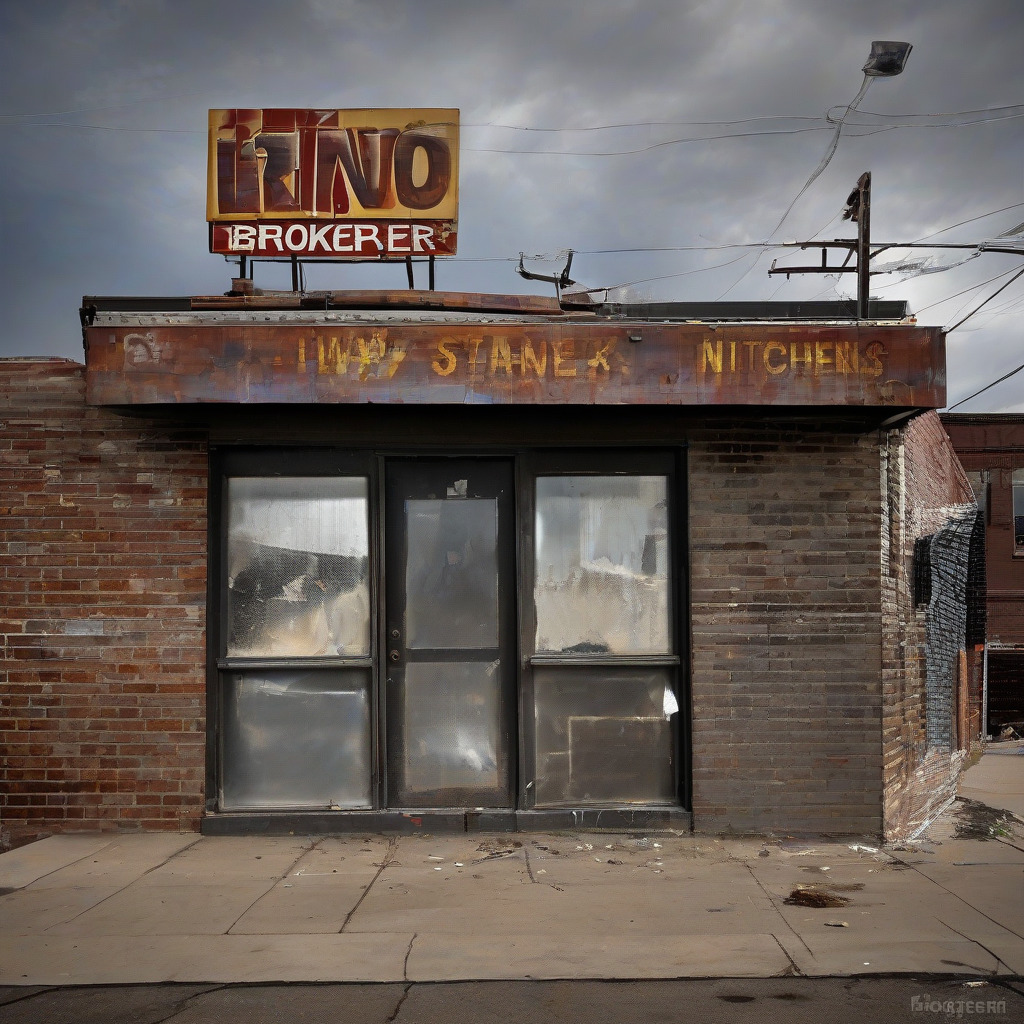
There’s a storefront on Larimer Street, just east of the Brighton Boulevard interchange, that has been dark since early 2024. The glass is clean, the build-out is intact — hood system, prep counters, walk-in — and a broker’s rider has been zip-tied to the door handle long enough that the plastic has gone brittle in the sun. It’s not an anomaly. Walk either of RiNo’s main commercial spines on a weekday evening and you’ll count more dark windows than you’d expect in a neighborhood that still generates glossy travel-magazine coverage and “best new restaurant” nominations.
The River North Art District, roughly bounded by I-70 and 38th Avenue, Brighton Boulevard and York Street, remains one of Denver’s most recognizable dining destinations. It is also, by a frank reading of available data, economically hostile for an independent restaurant operator trying to survive past year three. This is an attempt to put real numbers behind that tension — not to eulogize the neighborhood, not to hype it, but to give operators, investors, and residents an honest picture.
What RiNo Rents Actually Look Like in 2025
Base asking rents for ground-floor restaurant space along Larimer Street run among the highest in Denver outside LoDo and Union Station. Operators in the corridor describe NNN rates well above Denver’s broader retail market. Brighton Boulevard new-construction spaces carry an additional premium, reflecting construction costs and the structured parking amortization baked into those leases.
The actual occupancy burden is worse than the base figures suggest. Layer in CAM charges — which operators in newer RiNo mixed-use buildings consistently describe as the real killer — plus property insurance pass-throughs and Denver’s business personal property tax obligations, and the all-in cost of a RiNo lease lands materially higher than any quoted asking rate.
Comparable ground-floor restaurant space on South Broadway, Tennyson Street in Berkeley, and along 32nd Avenue in LoHi all come in meaningfully cheaper. Those neighborhoods also have something RiNo lacks: a dense residential base that generates weekday traffic without an event on the calendar. For an independent operator, the rent gap translates directly into cover counts that have to be generated somewhere. That somewhere doesn’t exist in RiNo’s current foot-traffic picture.
Reading the Storefronts Along Brighton and Larimer
Ground-floor vacancy in RiNo isn’t evenly distributed. The heaviest concentration of dark storefronts runs along Larimer between roughly 25th and 38th Avenue — historically the denser, more pedestrian-scaled of RiNo’s two main spines. Mid-2010s mixed-use development added significant new restaurant square footage to these blocks that the neighborhood’s organic foot traffic has never fully absorbed.
Brighton Boulevard is a different problem. Its wider lots and heavier through traffic made it a destination corridor rather than a walk-by one even in good times. The ongoing complete street reconstruction has made it worse. The project has intermittently closed turning lanes, disrupted parking access, and made the corridor feel like a construction site. Some operators on Brighton-adjacent blocks have lost customers who simply stopped bothering.
Denver Community Planning and Development’s commercial storefront records and Denver business license data for the RiNo zip codes are the most reliable way to track vacancy patterns. Operators and reporters doing due diligence should pull both.
Who Closed: Independent Restaurant Departures Since January 2024
Safta, Alon Shaya’s Israeli restaurant inside the Source Hotel at 3350 Brighton Boulevard, closed in 2024 after several years. Hotel F&B partnerships offer high-visibility placement but tend to undercut the kind of independent neighborhood loyalty that carries a restaurant through slow periods — the loyalty that shows up on a Tuesday in February. Safta never quite built that.
Dio Mio, the handmade pasta spot at 3264 Larimer Street, closed in 2024. It had been one of RiNo’s longer-tenured independent anchors, and its departure is widely cited by other Larimer operators as a signal about the corridor’s direction. Smaller café and counter-service concepts in mixed-use ground floors have also closed in this period — their names generated less press, but their empty storefronts are part of the same vacancy picture. Denver business license surrender records for the RiNo zip codes are the most current source for tracking the full list.
The Cover Count Problem
Ask any experienced restaurant operator what they need to survive and they’ll tell you: not a great Saturday, not a blowout First Friday, not a record GABF weekend. They need Tuesday. They need a reliable base of neighborhood customers who come in without a special occasion, without an event, without a hotel concierge sending them over. People who live or work nearby and whose restaurant is part of their regular week.
RiNo has never reliably provided that. And not enough of the people who cheerfully invest in this neighborhood have fully reckoned with it.
The residential density remains surprisingly low for a district that has absorbed this much development capital. The residents who are there skew toward younger renters whose dining budgets aren’t matched to the price points that RiNo rents require operators to charge. The daytime worker population — the lunch covers and after-work traffic that make a P&L functional — is thinner than the neighborhood’s street energy suggests.
What RiNo does generate is event-spike traffic: First Friday, GABF week, Denver Art Week, summer weekend brunch. These spikes are real. A well-positioned RiNo restaurant can do tremendous volume on a GABF Thursday. But the math doesn’t work if Monday through Thursday covers are running well below where they need to be and you’re depending on a handful of exceptional weekends to carry the year. That’s not a business model. It’s a prayer.
The Brighton reconstruction has made the access problem measurably worse. Seasonal volatility compounds everything. RiNo’s most popular concepts rely heavily on patios — the neighborhood’s identity is built around outdoor dining, murals, open-air gathering. From November through February, those patios go dark, and interior-only foot traffic rarely compensates. For a concept that opened in spring and built its customer base during patio season, the first winter can be genuinely destabilizing. It has been, repeatedly, for operators who maybe should have stress-tested that scenario before signing.
Operator Voices
An operator facing lease renewal on Larimer Street described receiving a renewal offer representing a 22 percent increase over her current base rate. “That’s over six figures a year just to have the space,” she said. “Before a single plate goes out. Before payroll. Before food cost.” Her weekday covers haven’t returned to 2019 levels — running about 75 to 80 percent of pre-pandemic weekday volume, while weekends have largely recovered. “The math doesn’t work at this rent unless I’m doing Saturday numbers every night, and I’m not, and I won’t be.” She’s actively touring spaces in LoHi and along Platte Street.
Another operator who chose Five Points over RiNo after a site search that included multiple RiNo showings said the decision came down to a significant all-in cost difference. “I would have loved to be in RiNo. The energy is real. But I couldn’t build a business model that worked at that rent given what I honestly believed I could do in covers.” His Five Points location draws a consistent neighborhood base — residents, families, regulars — with less reliance on event traffic. “I have people who come in twice a week. That’s what you need. I don’t know if RiNo gives you that anymore. Maybe it never did.”
He noted that roughly 35 percent of his revenue comes from guests who found the restaurant through hotel concierge recommendations or travel media. In RiNo, that hotel-guest dependence is often higher — which has real structural implications for what kind of business the neighborhood actually rewards. There’s a version of success in RiNo that looks great in a magazine and is quietly unsustainable. The neighborhood has produced a lot of both.
How Hotels and Chains Have Redrawn RiNo’s F&B Picture
The Source Hotel’s in-house program became a destination immediately. The Ramble Hotel on Larimer operates Death & Co Denver — a nationally branded cocktail bar, not a local independent. The Catbird Hotel added further hospitality-adjacent dining. These properties aren’t simply competitors. They operate under a fundamentally different business model in the same discretionary dining market.
A hotel restaurant can absorb losses that would close an independent. Room revenue subsidizes the F&B program. The restaurant doesn’t need to stand alone as a profitable enterprise. When an independent on Larimer is competing against a hotel bar that can lose money indefinitely and nobody upstairs particularly cares, that’s not a fair fight. It was never supposed to be, but it’s worth being honest about what it means for the neighborhood’s composition over time.
The arrival of national and regional chain concepts in RiNo mixed-use ground floors is the clearest evidence of this shift. Chains can pay RiNo rents more easily than independents — not because the math is better but because the loss is survivable. The result is a neighborhood slowly tilting toward institutionally backed concepts and away from the independent, chef-driven restaurants that built RiNo’s reputation in the first place. That’s not a lament, just a market-structure observation. But it has concrete consequences for what this neighborhood becomes and who it serves.
Who Is Still Opening — and What Their Choices Signal
New independent openings haven’t stopped entirely, but the profile has shifted. The concepts signing leases in 2024 and into 2025 are almost uniformly taking second-generation restaurant spaces — existing hood systems, grease traps, walk-in refrigeration, plumbing already in place. A ground-up buildout in Denver carries enormous front-end capital requirements. A second-generation space can cut that number dramatically. At RiNo rents, that’s often not a preference but a survival condition.
The concepts moving into these spaces tend to be smaller in format, lower in price point, or more beverage-centric than the full-service dinner restaurants that defined RiNo’s peak. Cocktail bars in former restaurant spaces. Counter-service concepts where sit-down dining used to be. Some of these are excellent. But the shift reflects what’s economically viable at current lease rates, not some organic evolution in neighborhood taste. The pipeline of ambitious, full-service independent openings has thinned considerably. Talk to any chef who’s looked at space in RiNo recently and that’s not a controversial observation — it’s just what they found when they ran the numbers.
What the Same Dollar Buys Elsewhere
For anyone deciding where to open a restaurant in Denver in 2025, a direct comparison is more useful than corridor-specific analysis. Brokers and operators consistently point to South Broadway (roughly Mississippi to Arkansas) and Tennyson Street in Berkeley as Denver’s most functional neighborhoods for independent restaurant survival. Not because they’re cheap in isolation, but because lower lease rates combined with a resident-driven, walk-by customer base make the cover-count math achievable. You don’t have to manufacture foot traffic. It’s already there.
LoHi carries its own rent pressure given proximity to downtown, but its denser residential base gives operators a more predictable weekday floor. Five Points along Welton offers lower barriers to entry and a customer base that operators consistently describe as more genuinely neighborhood-rooted. RiNo sits at the top of the cost structure with the least reliable ambient traffic. That combination is the core of the independent operator problem here.
South Broadway and Tennyson keep demonstrating that Denver’s most durable independent restaurant scenes aren’t in its most hyped neighborhoods. They’re in places where the customer base is resident-driven, lease rates are survivable on realistic cover counts, and a restaurant can build genuine regulars rather than depending on event calendars and hotel concierge lists. It’s a boring lesson the industry seems to relearn every decade.
The Verdict
RiNo isn’t dead. There are still excellent meals being served in the neighborhood, and operators who are making the math work. But the structural picture is clear, and at this point it isn’t close.
Commercial vacancy is running well above the Denver metro retail average. A documented wave of independent closures has reshaped the neighborhood over the past 18 months. Foot traffic remains event-dependent and seasonally volatile. Lease rates haven’t corrected to reflect any of that. Landlords are holding rents while sitting on vacant space for extended periods, apparently betting the next tenant will absorb the cost rather than that rates need to come down. Some of them will win that bet.
For an independent operator, the viable RiNo play in 2025 is narrow: a second-generation space with strong bones, a concept that can generate revenue from both neighborhood regulars and event-adjacent traffic, and a lease negotiated hard enough to bring all-in costs to a level the concept can realistically cover. That deal exists. It is not common.
The broader question — whether the city has tools to slow commercial displacement in RiNo — has a dispiriting answer. Denver has explored anti-displacement tools but hasn’t implemented them at a scale or speed that matches the pace of market pressure here. Operators looking for city-side interventions should check current Denver small-business support programs through Community Planning and Development, but shouldn’t build a business model around them.
What Denver has instead is a collection of neighborhoods where the economics still work for independents: South Broadway, Tennyson, Five Points, stretches of Colfax. RiNo, block by block, is becoming something different from what made it worth naming. Whether that something different is still worth the rent is a question every operator considering a Larimer Street lease should answer with a spreadsheet, not a mood board. The operators walking away aren’t pessimists. They’re doing the math.
CityDesk Denver covers the business of Denver’s neighborhoods. Tips, corrections, and operator perspectives can be sent to the editors.