Before You Rip Out That Old Bathtub in Denver, Do the Math
Refinishing services are gaining ground in a city with aging rental stock, HOA restrictions, and replacement costs that can top $5,000.

Refinishing services are gaining ground in a city with aging rental stock, HOA restrictions, and replacement costs that can top $5,000.
Why This Matters Now in Denver
Denver’s renovation economy has shifted the math on bathroom upgrades. Supply-chain disruptions pushed fixture prices up, contractor labor rates followed, and now a full bathtub replacement in this city routinely lands somewhere north of $3,000 once you account for the tub, surround tile, plumbing hookup, and haul-away. For a landlord managing a Capitol Hill fourplex or a Park Hill homeowner doing a cosmetic refresh before listing, that number stops conversations cold.
Into that gap has moved an older trade that never really left: bathtub refinishing. What was once associated almost exclusively with low-budget apartment turnovers is now a mainstream option across Denver’s ownership and rental markets. The business case is obvious. The details, though, are considerably murkier than most people realize before they actually start making calls — and the available consumer coverage on this topic is, with few exceptions, useless. National content farms recycle the same vague explainer. Local specifics are almost entirely absent.
Here’s what the Denver picture actually looks like.
What Refinishing, Reglazing, and Resurfacing Actually Mean
The terminology alone trips people up. Search for help online and you’ll encounter “refinishing,” “reglazing,” “resurfacing,” and occasionally “recoating” used interchangeably by contractors, home improvement sites, and forum commenters. Sometimes these describe meaningfully different approaches. Usually they describe exactly the same thing.
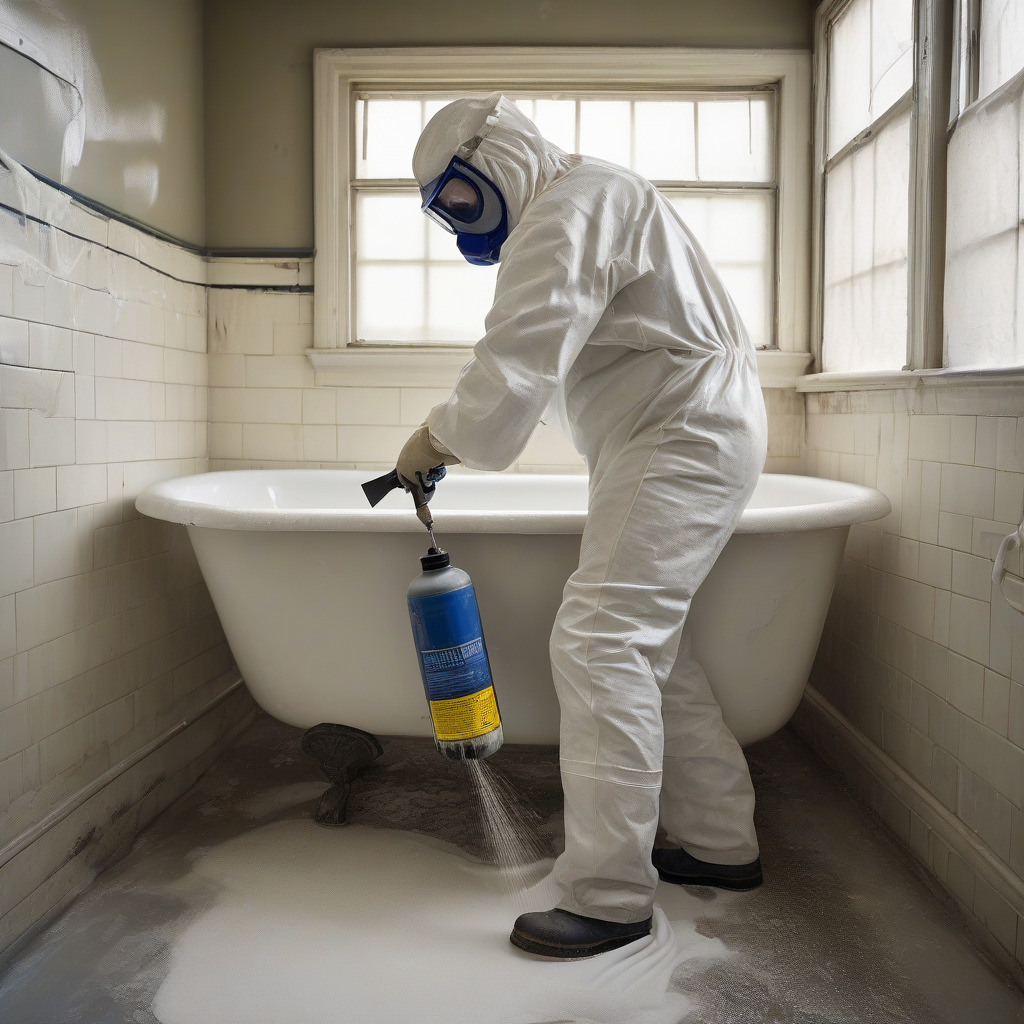
All three terms typically refer to the same basic process. The existing surface is stripped of soap scum, old caulk, and surface contamination. Chips or cracks get filled with a repair compound. A bonding primer goes on. Then one or more topcoats are sprayed to create a new hard finish. The tub doesn’t move. The plumbing doesn’t change. The job happens in your bathroom over the course of a workday.
The two most common topcoat systems are acrylic urethane and two-part epoxy. Acrylic urethane finishes cure faster and emit lower VOC levels. Two-part epoxies are often marketed as more durable, but they use isocyanate-containing hardeners that carry their own safety considerations — more on that below.
Here’s what most coverage buries: prep work, not the brand of topcoat, determines whether a finish lasts or peels at the caulk line in eighteen months. The thoroughness of the degreasing step, whether etching is done properly to create mechanical adhesion, how many coats go on, whether the contractor manages the spray environment — all of this is largely invisible at booking time, and none of it shows up in the quote. This is why “lowest quote” is a bad decision framework for this particular service. The failure mode is always cheap prep, not cheap paint.
Denver’s Housing Stock Is the Story
Denver’s case for refinishing isn’t generic. It’s rooted in neighborhood geography and the city’s particular housing history.
Capitol Hill and Baker are dense with pre-1960 multifamily construction, much of it containing original cast iron tubs. Cast iron is actually an excellent refinishing candidate — dimensionally stable, holds heat well, doesn’t flex the way acrylic does. A landlord refinishing a cast iron tub between tenants rather than replacing it is making a financially rational call. The alternative is a genuine headache: demoing a cast iron tub out of a second-floor bathroom in a 1940s building involves serious labor and the structural reality that these tubs are exceptionally heavy. Anyone who’s coordinated that kind of project in an occupied building knows what I mean.
Wash Park and Park Hill tell a different story. Largely owner-occupied, these neighborhoods are full of homeowners making aesthetic decisions about renovation sequencing. A Wash Park bungalow owner who wants the bathroom to look fresh without a full gut remodel is a natural refinishing customer. The fixtures are often structurally sound but cosmetically dated, and blowing up a functional bathroom for six months of construction disruption doesn’t make sense for someone planning to stay another decade.
Cherry Creek and the Denver Tech Center condo market introduce HOA complications — and this is where things get interesting. Many associations require board approval or licensed-contractor sign-off before any fixture is swapped, a dynamic covered in depth in our home & property coverage. The practical logistics of removing a bathtub from a high-rise unit also matter: elevator access, building protection requirements, disposal coordination. All of that can make replacement prohibitively expensive relative to a surface coating job. Refinishing produces no demolition debris and requires no plumbing work, which often sidesteps HOA review requirements entirely. That said, confirm this with your specific association documents before booking. Don’t assume.
RiNo and LoHi present a different technical scenario. The newer construction that filled these neighborhoods over the past fifteen years typically features acrylic or fiberglass tubs, not cast iron. Acrylic surfaces require a different prep protocol — less porous, more prone to flexing, more sensitive to solvent-based strippers. A contractor who has spent most of their career on cast iron needs to understand these differences. When interviewing contractors, ask specifically whether they regularly work on acrylic and fiberglass. The right answer is yes, and it should come with some detail.
What It Costs in Denver, and What Replacement Actually Runs
National benchmarks for bathtub refinishing run roughly $300 to $600 for a standard alcove tub. Denver’s labor market runs above national baselines across every trade, and this one is no exception. Get direct quotes from local operators — but don’t expect to land at the national floor.
A clawfoot or freestanding tub requires working on all exterior surfaces and takes more time. Nationally these run $500 to $900 or more; expect higher in Denver. Tile surround refinishing is an add-on worth considering early. If the tub looks worn and the surrounding tile is stained or still that particular shade of mauve that was everywhere in 1989, refinishing the tile in the same appointment is far cheaper than tiling it separately. The square footage involved determines the add-on cost.
Full tub-and-surround replacement is a legitimate renovation — nobody’s arguing otherwise. But the range is wide: a straightforward drop-in replacement with basic tile can be done cheaper, while anything involving tile demo, cement board, a freestanding tub, or plumbing rerouting climbs fast and can easily exceed $5,000. For rental property owners on thin margins, this comparison is the core of the refinishing value proposition.
The ROI calculus also depends on your timeline. A homeowner planning a full bath remodel in the next two years may not recoup a refinishing cost before they’re tearing the tub out anyway. Skip it, put that money toward the real project. A landlord holding a property for ten years operates under completely different math. So does a homeowner who simply wants the bathroom to look clean without a six-month construction project.
The Safety Question Most Coverage Skips
Refinishing work involves real chemical exposure. Most consumer-facing content either glosses over it or buries it in boilerplate. Denver residents deserve a clearer picture.
The most significant regulatory development in recent years was the EPA’s 2019 final rule prohibiting the manufacture, processing, and distribution of methylene chloride for consumer and most commercial paint and coating removal. Methylene chloride was widely used as a stripping agent in bathtub refinishing for decades. It is acutely toxic and has been linked to fatalities in enclosed bathroom environments — not hypothetically, but in documented cases. Reputable contractors have moved to alternative strippers. Ask directly whether any methylene chloride-containing products are used in the prep work. If there’s hesitation in the answer, keep looking.
The coating phase introduces its own chemistry. Two-part epoxy systems that use isocyanate hardeners generate isocyanate vapor during application. Isocyanates are a leading occupational cause of chemically induced asthma and can trigger sensitization with repeated low-level exposures. This is primarily a contractor risk — they should be using supplied-air respiratory protection, not a standard cartridge respirator — but it has implications for everyone in the home. A responsible contractor requires the bathroom to be vacated during application and establishes the ventilation protocol before starting, not as an afterthought when they’re already setting up the sprayer.
Denver’s older housing stock makes this harder. Pre-1970s construction typically features smaller bathroom windows, inadequate mechanical ventilation, and limited cross-ventilation. In January, those windows may not be openable at all without trashing the heat. Ask any contractor you’re considering how they manage ventilation for application and curing. A vague answer is a red flag. The Colorado Department of Public Health and Environment regulates VOC-containing coatings under the state’s air quality framework — which is one more reason to be skeptical of whoever shows up with the cheapest quote and no clear ventilation plan.
Licensing, Lead Paint, and What Colorado Actually Requires
Colorado has no state license specific to bathtub refinishing. Anyone can legally call themselves a refinishing contractor here. That’s the whole sentence.
The one federal certification that is legally required in specific circumstances is EPA Renovation, Repair and Painting certification. Under the RRP Rule, contractors working in pre-1978 housing must be certified as an EPA Renovator working for a Certified Firm. Pre-1978 housing covers nearly every building in Capitol Hill, Baker, Curtis Park, Potter-Highlands, and much of Park Hill and Sunnyside. The rule applies when work disturbs painted surfaces — which is directly relevant to the stripping phase of a refinishing job. A contractor who cannot produce their RRP certification number when working in a pre-1978 home is out of compliance with federal law.
The liability for that falls on them. The lead-dust exposure risk falls on you and your tenants.
Denver landlords with properties in older neighborhoods should treat RRP certification as a hard requirement, not a nice-to-have. The EPA’s certification lookup is publicly accessible at epa.gov. Verify the firm’s certification number there, not from a card the contractor hands you — those are easy to produce and impossible to verify on the spot.
Denver Community Planning and Development does not require a building permit for surface coating work that doesn’t involve structural changes or plumbing alteration. Refinishing falls squarely in that category. But no permit requirement doesn’t mean no standards — it means the credential burden falls entirely on you to verify.
Does Denver’s Altitude and Climate Change Anything?
This is a question almost no national coverage addresses. It should.
At 5,280 feet, atmospheric pressure is measurably lower than at sea level. For spray applications, lower pressure affects how coatings atomize, flow, and level after application. Solvents also evaporate faster at altitude, which shrinks the open time — the window during which the coating is still workable and can self-level before it begins to set. An experienced Denver refinisher should be aware of this and may need to adjust spray technique, tip selection, or material viscosity. If they’ve never thought about it, that’s worth knowing.
Denver’s low relative humidity — averaging around 40 percent, often drier in winter — interacts with curing chemistry differently depending on the coating type. Water-based systems may actually benefit from lower humidity. Solvent-based systems behave differently.
Cold-season work is a variable that’s easy to overlook and genuinely consequential. Refinishing in an unheated bathroom in January — in a rental property where the thermostat is turned down between tenants — can produce adhesion and curing failures if surface temperatures fall below the manufacturer’s minimum application threshold. Any contractor who doesn’t ask about the bathroom’s temperature conditions in winter is skipping a step that directly affects finish quality.
When evaluating contractors, ask specifically whether they’ve adjusted their protocols for Denver’s altitude and climate. A contractor who has thought about it will have something substantive to say. One who hasn’t will either bluff or go blank. Both answers tell you something.
How Long It Lasts, and Why That Answer Is Complicated
The “10 to 15 years” lifespan claim appears in virtually every piece of refinishing marketing. It deserves some scrutiny.
That upper range is achievable: high-quality coating, experienced contractor, properly prepared substrate, light household use, pH-neutral cleaners, re-caulked at the perimeter before water gets behind the finish. Under those conditions, a refinished surface can hold up for a decade or more. I’m not disputing that.
But rental properties aren’t that scenario. A Capitol Hill studio apartment where a different tenant every twelve months cleans the tub with whatever abrasive scrub is on sale at King Soopers will produce a shorter finish life than a Wash Park guest bath that gets used twice a month. Landlords refinishing rental-grade tubs in high-turnover units should plan on a shorter finish life than the marketing suggests, especially if the initial job had prep corners cut.
For homeowners, the maintenance habits that extend finish life are simple. Use pH-neutral cleaners — many standard bathroom cleaners are alkaline enough to dull and eventually degrade a refinished surface. No abrasive scrubbing pads. No powdered cleansers. Address caulk failures at the tub perimeter promptly. Water that migrates under the finish edge doesn’t just cause a cosmetic problem — it causes adhesion failure that spreads beneath the surface and produces peeling that no touch-up will fix.
Re-caulking at the tub perimeter on a regular schedule is, unglamourously, the single highest-return maintenance action for a refinished tub. Nobody enjoys doing it, but it’s the difference between a ten-year finish and a four-year callback.
Talking to a Local Contractor: What to Know About Denver Operations
Renew-It Refinishing operates as a Denver-based refinishing service covering the broader metro. Verify current operational details, service radius, and any specialty certifications directly with the company, and cross-reference against Colorado Secretary of State business records for any operator you’re considering — that’s a thirty-second search and worth doing.
What distinguishes a locally rooted operator from a national franchise or a solo handyman matters in this specific trade. Local operators tend to know the housing stock — which neighborhoods are full of cast iron, where the acrylic-heavy new construction is concentrated, how to adjust for Denver’s climate conditions. They’ve also seen what fails in this market and what holds up. That institutional knowledge is harder to develop if the last fifty jobs you did were in Phoenix.
The standard industry timeline for a single tub job is four to six hours on-site for application. If a contractor quotes significantly under four hours, they’re cutting time somewhere in the process. Ask specifically where.
Questions to Ask Before You Book Anyone
Use this list whether you call Renew-It or any other contractor in the Denver market. Use it before you book, not while the guy is already setting up his sprayer in your bathroom.
What coating product are they using, and what is its VOC content? You want a specific answer — product name, manufacturer, VOC grams per liter — not a vague assurance that it’s “professional grade.”
If your home was built before 1978, is the firm EPA RRP certified? Get the certification number and verify it at epa.gov before the job starts. Non-negotiable.
What is their ventilation protocol for application day? They should have a specific plan. In winter, ask how they handle adequate ventilation without dropping the bathroom temperature below the coating’s minimum application threshold.
Get the warranty terms in writing. A warranty covering materials but not labor is different from one covering both. Ask what happens if adhesion fails at the perimeter in the first year.
For acrylic or fiberglass tubs, does their prep protocol differ from porcelain on cast iron? The right answer is yes, with some specifics attached.
Have they adjusted their application protocol for Denver’s altitude and humidity? Any contractor who has thought about this will say something substantive. One who hasn’t will either guess or go quiet.
What cleaning products should be used after the job? Any contractor who doesn’t raise this proactively is leaving out information that directly affects how long their work holds up. Ask it yourself and get the answer in writing.
Bathtub refinishing isn’t glamorous — nobody’s featuring it on a home renovation show. But in a city where replacement costs have climbed sharply and a large portion of the housing stock contains tubs worth saving, it’s a decision point that a lot of Denver residents and property owners are hitting right now. The service has real advantages, real limitations, and real safety and regulatory considerations that most available coverage either oversimplifies or skips entirely. Go in knowing all three, and you’re in a much better position than going in on the basis of a low price alone.