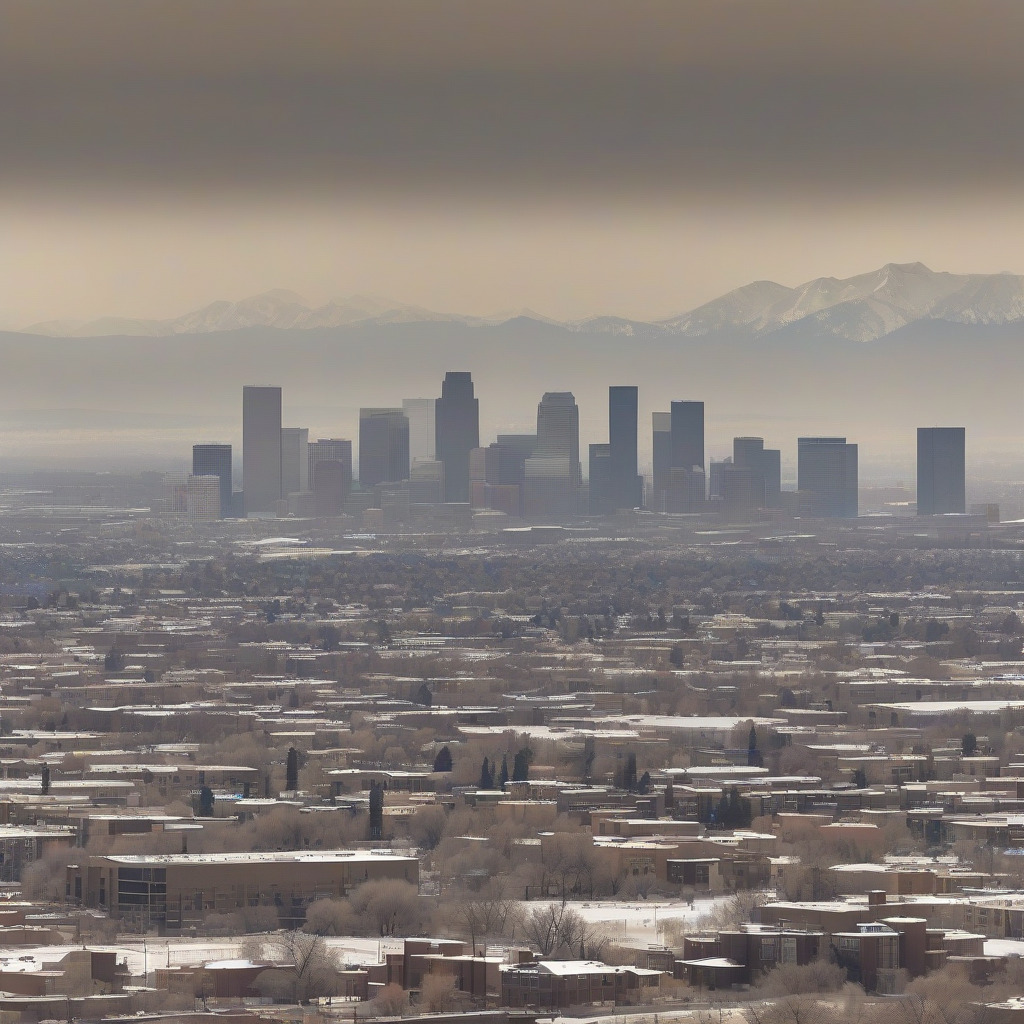
Carbon Monoxide Is Denver's Quiet Winter Killer. Here's What Residents Actually Need to Know.
Altitude masks the symptoms. Aging boilers miss the inspections. And the riskiest moment of the year may already be here.

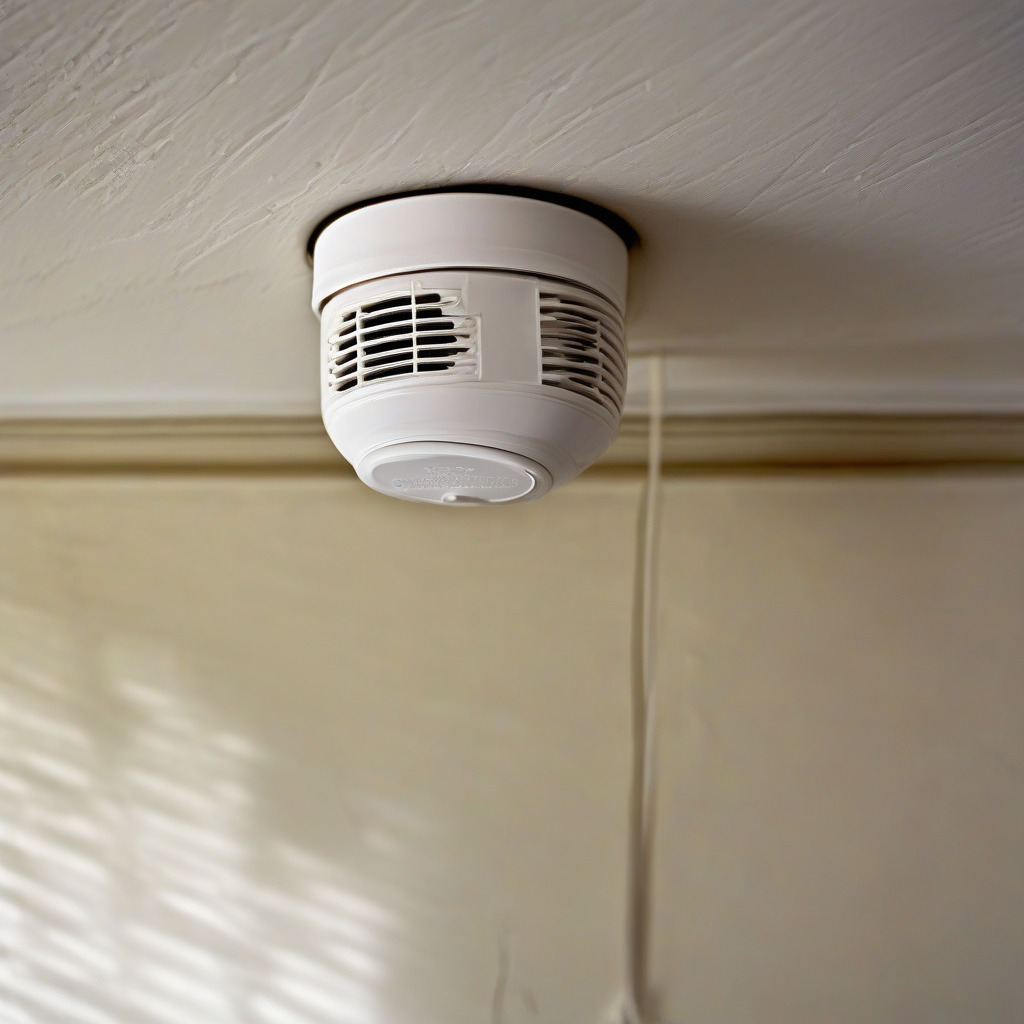
Altitude masks the symptoms. Aging boilers miss the inspections. And the riskiest moment of the year may already be here.
Sometime in the next two weeks, tens of thousands of Denver furnaces will do something they haven’t done since April: run for hours without stopping. A night drops into the thirties. The thermostat calls for heat. A gas appliance that has sat dormant all summer fires up and runs through the morning. For most households, nothing happens. For a predictable number of Denver households every year, that first sustained run is when carbon monoxide begins leaking into the living space, and the family inside starts feeling like they have the flu.
This is the pattern Denver Fire Department responders see across the metro every November, when forced-air systems begin running in the sustained, multi-hour cycles that stress aging heat exchangers, blocked flue vents, and corroded boiler components that haven’t been examined since the previous spring.
What makes Denver’s CO risk different from the same risk in Chicago or Houston is a combination of local factors that national safety content almost never addresses. This piece does.
The Exposure Window Opens in Mid-October
The early weeks of heating season—not the coldest months of January and February—are when CO risk is most acute, for a specific mechanical reason.
A gas furnace that runs for fifteen minutes in September, then sits for three weeks, then runs again, is not under the same physical stress as one running eight-hour cycles through an October night. Heat exchangers—the metal component that separates combustion gases from the air circulated through your ducts—expand and contract with each firing. Hairline cracks that cause no problem in intermittent use can allow combustion gases, including CO, to bleed into living air when the system runs continuously. The first long, cold night of the season is functionally a stress test that a summer-dormant system may not pass cleanly. Most do. Some don’t.
Gas boilers, common in Denver’s older housing, have the same problem expressed differently. Sediment builds up over summer. Flue connections loosen. Pilot assemblies corrode. When the boiler fires for its first sustained run of October, problems that accumulated over eight months of disuse show up—sometimes as a service call, sometimes as a CO event.
Why Denver Is Not Like Everywhere Else
National carbon monoxide safety content—the kind produced by the EPA, the CPSC, and most major media outlets—is written for sea-level physiology and median-age housing stock. Three things make it a poor fit for Denver.
Altitude. At 5,280 feet, the partial pressure of oxygen in the air is roughly 17 percent lower than at sea level. CO poisoning works by binding to hemoglobin and displacing oxygen—so the starting baseline here is already compromised. Whether altitude causes a given ambient CO level to produce faster or more severe effects than it would at sea level is a question for emergency physicians at Denver Health or UCHealth, not a newspaper. But the symptom confusion problem is not in dispute: headache, fatigue, and mild nausea are ambient background noise for Denver residents year-round. That’s a genuinely dangerous diagnostic situation, something our health & wellness coverage returns to across multiple seasonal hazards. If you’ve lived here a few years, you’ve already learned to push through what locals call “vague Colorado malaise.” CO exposure can hide behind it for days.
The housing stock. A large share of Denver’s single-family homes were built before 1980. The city’s older core neighborhoods—Sunnyside, Berkeley, Cole, Clayton, Five Points, Globeville—are dominated by pre-war construction built around gas furnaces, gas boilers, and gas water heaters. All of these produce carbon monoxide as a byproduct of combustion that must be safely exhausted. Aging equipment, aging flue systems, aging ventilation: they converge in housing that tends to be densely occupied, often renter-occupied, and less likely to get regular professional maintenance. None of that is a knock on the neighborhoods. It’s just the situation.
Attached garages and the warm-up habit. When a November snowstorm drops overnight, Denver residents do something rational and dangerous: they walk into their attached garage, start their car, and let it run while they go back inside to finish getting ready. In a city where temps regularly drop into the teens between October and March and scraping ice is a monthly reality, car idling in attached garages is a normalized winter habit that contributes to CO deaths every year. CO moves fast through construction gaps—the gap under the door, the unsealed top plate of the garage wall, HVAC ductwork passing through the garage cavity. Within minutes of a running car in the garage, measurable CO concentrations reach adjacent living spaces.
No other major U.S. city combines these three factors in the same configuration. Denver is distinctive here, and not in a good way.
What CO Poisoning Actually Feels Like Here, and Why You Might Not Recognize It
The classic CO symptom description—headache, fatigue, nausea, confusion—reads like a normal Wednesday in October for many Denver residents. Seasonal transition, shorter days, cooling temperatures, ongoing altitude adjustment for newcomers. Established residents have already learned to push through those symptoms because they’re genuinely common. That’s exactly what makes CO exposure so easy to miss.
Emergency physicians in Denver see this translate directly into delayed presentation. A patient arrives with CO poisoning that’s already progressed to moderate severity, and there’s often a history of days of low-grade symptoms attributed to a coming cold, or altitude fatigue, or just a bad week. The carboxyhemoglobin blood test—the definitive diagnostic—can reveal exposure levels that don’t match the patient’s self-reported symptom timeline, because the patient stopped noticing symptoms they were already normalizing.
The same physiological vulnerability that shapes Denver’s guidance on outdoor exercise during ozone season applies here: when your oxygen baseline is already reduced by altitude, additional respiratory or blood-oxygen stress compounds faster than it does at sea level. Three signals should override that habit and prompt evacuation regardless of whether your detector has sounded.
Symptom relief when you leave. If your headache and fatigue improve meaningfully after an hour outside and return when you go back in, that’s a CO signal, not a coincidence.
Multiple household members affected at once. Two adults and a child all feeling off on the same morning, or a dog that’s lethargic and uninterested in food—simultaneous symptom onset across different physiologies in the same space is a red flag that individual symptoms don’t raise.
Symptoms worst in the morning. CO concentrations in a leaking home rise overnight when windows are closed and the heating system runs for hours. Waking up feeling worse than you went to bed, when nothing else accounts for it, is characteristic.
Which Homes Are at Greatest Risk, and Where They Concentrate in Denver
Housing age is the primary risk factor, and it maps directly onto neighborhood geography.
Sunnyside, Berkeley, Barnum, Valverde, Globeville, Elyria-Swansea, Cole, Clayton, Five Points, and the eastern sections of Park Hill contain some of the densest concentrations of pre-war and early post-war residential construction in the city. Many of these homes have original or once-updated cast iron boilers with gravity or early forced-circulation systems. A boiler that hasn’t been inspected, cleaned, and tested within the last two years is accumulating risk: corroded heat exchanger surfaces, flue connections loosened from decades of thermal cycling, combustion inefficiencies that produce elevated CO output.
Westwood and Barnum carry a specific additional problem: post-World War II ranch homes with attached garages positioned directly adjacent to, or below, bedrooms. That floor plan is structurally vulnerable to the garage idling scenario in ways that townhomes and row houses are not. A bedroom sharing a framed wall with an attached garage has very limited CO resistance even when the construction is in good condition.
Cracked heat exchangers are the most common furnace-related CO mechanism across Denver, broadly distributed in homes built between 1960 and 1990. They produce no symptoms you can detect with a visual inspection of the unit. Gas water heaters in enclosed utility closets are an underappreciated risk, particularly in older apartment and condo buildings where utility closets were designed without adequate combustion air supply. When a water heater pulls combustion air from a sealed closet, it can backdraft—pulling exhaust gases back into the living space rather than exhausting them through the flue. It’s a slow, invisible process, and nearly impossible to diagnose without instrumentation.
Newer construction in RiNo, Central Park, and Stapleton uses all-electric heating—heat pumps, electric resistance systems—with no CO risk from the heating element itself. No gas appliances, no attached garage: your CO exposure risk from your own systems is effectively zero.
The Garage Scenario
Do not idle a vehicle inside an attached garage. Even with the garage door open. Even for two minutes. A partially open door doesn’t reliably ventilate CO fast enough to prevent hazardous accumulation near the house-side wall—the relevant wall, the one separating you from the car.
Denver’s snowstorms create exactly the conditions that maximize garage CO buildup: frozen door seals, the desire to warm the car before scraping, the entirely human belief that two minutes is fine. The homes most vulnerable are those with bedrooms immediately above the garage—common in Denver’s 1970s and 1980s split-level construction—or bedrooms sharing an unsealed wall with the garage, the post-war ranch layout common in Westwood and Barnum. A car running in a garage on a February morning when temps are in the single digits will produce lethal CO concentrations in an upstairs bedroom within twenty minutes.
Two minutes is not fine.
What Colorado Law Actually Requires, and Whether Your Home Complies
Colorado’s Carbon Monoxide Alarm Act (CRS § 38-45-101 et seq.) requires CO detectors in any dwelling that contains a fossil-fuel burning appliance—gas furnace, gas water heater, gas range, oil boiler, wood stove—a fireplace of any type, or an attached garage. That covers the vast majority of Denver’s housing stock. The requirement has been on the books since 2009.
The placement rule most residents get wrong: the statute requires a detector within fifteen feet of each sleeping room. Not one per floor. Not one per home. A multi-story home with bedrooms on two floors requires detectors on both floors. A home with a basement bedroom requires a detector at the basement level. Installing one detector in the hallway outside the master bedroom satisfies the requirement for that bedroom and may leave every other sleeping room in the house uncovered. This is the most common compliance failure in Denver homes, and it’s invisible until something goes wrong.
CO detectors have a rated functional life of five to seven years, set by the electrochemical sensor inside that degrades over time regardless of whether the unit has ever alarmed. Homeowners who installed their first detector in 2009 or 2010 when the law passed are likely running units that are now fifteen years old—more than twice the rated lifespan. Here’s the part that genuinely bothers me: an expired detector may still chirp when you press the test button, because the test button confirms the alarm circuit, not the sensor. It looks fine. It beeps. It’s useless.
Under state law, landlords must install compliant CO detectors before a tenant occupies the unit. Tenants are responsible for notifying the landlord in writing if a detector is absent or not functioning. Write it down, keep a copy, include a requested response date. Verbal complaints are difficult to act on and easy to deny. No exceptions.
Combination smoke and CO detectors satisfy the Colorado requirement for both functions and are worth considering for the simple reason that when a single unit ages out, you replace both at once.
Two Scenarios—What You Do Next
If your detector alarms: Get everyone out immediately. People, pets, anyone who can move. Don’t open windows first. Don’t go back for your phone, your wallet, or your medication. Don’t try to find the source. Exit the building, move away from it, then call 911 from outside. Denver Fire Department responds to CO alarm calls at no charge and carries four-gas meters that can test every room for CO concentration, oxygen level, and combustible gas presence. They won’t leave until the source is identified or the space is confirmed safe. Do not re-enter until a DFD responder gives you clearance.
If you feel symptoms but the detector hasn’t alarmed: This is the more dangerous situation. You can be experiencing meaningful CO exposure while your detector remains silent—because it’s placed wrong, because the sensor has degraded, or because chronic low-level exposure is building your carboxyhemoglobin gradually without spiking above the alarm threshold in any single hour. If you’re experiencing headache, nausea, fatigue, or disorientation and multiple household members have similar symptoms, or your symptoms are worse in the morning, or you feel better after time outside—treat it as a potential CO emergency. Get everyone out, get fresh air, and call the Rocky Mountain Poison and Drug Safety Center at 1-800-222-1222. Clinicians there can assess your symptoms by phone and advise whether immediate ER evaluation is warranted. If anyone in the household is confused, unconscious, or has lost consciousness: call 911, not the poison center.
What Happens After You Call 911
For mild to moderate CO poisoning, the standard treatment is high-flow oxygen via a non-rebreather mask. Every emergency department in the Denver metro has this capability.
For severe cases—loss of consciousness, neurological symptoms, cardiac involvement, or any significant exposure in a pregnant patient—hyperbaric oxygen therapy is the preferred treatment. HBO delivers oxygen at greater than atmospheric pressure, which drives CO off hemoglobin far more aggressively than surface-level oxygen can. UCHealth University of Colorado Hospital in Aurora operates a hyperbaric medicine program; patients and referring physicians should verify current acute CO poisoning acceptance capacity directly with the facility, since hyperbaric chambers have limited availability and CO cases require urgent coordination. Denver Health Medical Center, as the primary Level I trauma center for Denver’s west and central side, is the acute destination for severe cases from those neighborhoods.
One more thing, and it matters: if you feel fine after fresh air, you still need a blood test. Carboxyhemoglobin levels can’t be assessed by how you feel, particularly at Denver’s elevation. Patients who seem recovered after time outside can still have clinically significant carboxyhemoglobin levels requiring monitoring and treatment. “I feel better” is not a discharge criterion.
Three Things to Do This Week
The timing of this piece isn’t incidental. The first sustained cold stretch of fall is either here or days away.
Check your detectors. Turn every unit in your home over and find the manufacture date on the label. If you can’t find it, replace the unit. If the date is 2017 or earlier, replace it now, regardless of whether it appears to function. A combination smoke/CO detector is available at any hardware store in the city and satisfies Colorado’s code requirement for both.
Schedule a furnace inspection before you need the heat. Not an annual tune-up for sometime this winter—an inspection before the first continuous-use cold stretch, which is now. A licensed HVAC technician doing a proper inspection will examine the heat exchanger for cracks using a combustion analyzer, check flue connections and draft, clean burners, and test the system under operating conditions. Xcel Energy has offered programs related to furnace safety for residential customers in the past; check current offerings at xcelenergy.com, as availability varies by season. Confirm any contractor holds a current Colorado state HVAC license—that’s the legal credential, not a marketing certification.
Walk your home against the fifteen-foot rule. Start at each sleeping room door and measure fifteen feet in both directions along the corridor. If your nearest CO detector is farther than fifteen feet from any bedroom door, that bedroom isn’t covered—by the code requirement or by the physical detection range of the unit. This failure is especially common in single-story ranch homes with long central hallways, and in multi-story homes where residents installed one detector on the main floor and assumed it covered the upstairs. It doesn’t.
Denver’s CO risk is real and specific—altitude, old gas systems, attached garages, eight months of heating season. That combination doesn’t make poisoning inevitable. It makes ignoring the risk more costly than it would be somewhere else. The furnaces firing up this week in Sunnyside and Barnum and Westwood are doing something they haven’t done in six months. Most will run cleanly. But the ones that won’t are running right now, and the people inside them may feel nothing unusual until they already have a problem.
Check your detectors. Schedule your inspection. Know the symptoms that don’t announce themselves as CO poisoning.
For CO emergencies, call 911. For symptom questions and non-emergency poisoning guidance, contact the Rocky Mountain Poison and Drug Safety Center at 1-800-222-1222, available 24 hours a day.