What Denver Home Inspectors Flag Most Often and Why It Matters Here
Denver's housing market has drawn tens of thousands of out-of-state buyers over the past decade. California. Texas. Illinois. Many arrive with a reasonable assumption: a home inspection is a home i…

Denver’s housing market has drawn tens of thousands of out-of-state buyers over the past decade. California. Texas. Illinois. Many arrive with a reasonable assumption: a home inspection is a home inspection. The checklist their agent sends looks familiar. The inspector shows up, walks the roof, checks the electrical panel, runs the faucets, issues a report with color-coded risk categories.
What that report may not adequately flag — unless the inspector knows this market specifically — is the set of failure modes tied to Colorado’s geology, its elevation, its hail corridor position, and its housing construction eras. Those are the findings that cost Denver buyers the most money after closing. They don’t make national real estate content because they’re local problems. This guide covers them directly.
Why Generic Inspection Checklists Fail Denver Buyers
The standard national home inspection framework was built around problems that affect housing broadly: leaky roofs, aging HVAC, moisture in basements, knob-and-tube wiring. Denver has all of those too. But layered on top is a set of conditions that are either unique to this region or dramatically more severe here than in most American cities.
Start with the geology. The Front Range sits on Pierre Shale and Arapahoe Formation clay — bentonite-heavy soils that absorb water and expand, then dry and contract. That cycle happens every year, sometimes dramatically within a single season, and it does things to foundations that inspectors in Houston or Atlanta never see. Add Denver’s position on the edge of Hail Alley. Add its 5,280-foot elevation, which accelerates UV degradation of roofing and cladding materials at roughly 25 percent above sea-level rates. Add approximately 155 freeze-thaw cycles per year and a monsoon-and-drought climate swing that would embarrass most cities. The result is a housing environment that punishes certain construction choices in ways a national checklist simply wasn’t designed to catch.
What follows is a category-by-category breakdown of those risks, with repair costs verified against local contractor estimates and risk levels tied to specific neighborhoods and housing eras. For broader context on Denver real estate decisions, this article fits within our home and property coverage for the metro area.
Expansive Soils and Foundation Movement
This is the single costliest inspection finding in the Denver metro. It’s also the one that most confounds buyers from regions with stable soils.
The Pierre Shale and Arapahoe Formation clays beneath much of the metro contain significant bentonite — a clay mineral that can expand to several times its dry volume when saturated, then shrink as it dries. Denver’s climate, with wet springs and monsoon pulses followed by extended dry stretches, puts that expansion-contraction cycle through its paces every single year.
The Colorado Geological Survey has mapped this risk across the metro in enough detail to be genuinely useful. Neighborhoods with documented high-to-very-high expansive soil risk include Montbello, Green Valley Ranch, and parts of Harvey Park in Denver proper. Aurora carries significant risk across large sections. So does Stapleton/Central Park, where late-1990s and early-2000s construction on former airport land created its own foundation risk profile. The CGS mapping tool at coloradogeologicalsurvey.org is a legitimate first stop before you even schedule an inspection — before, not after.
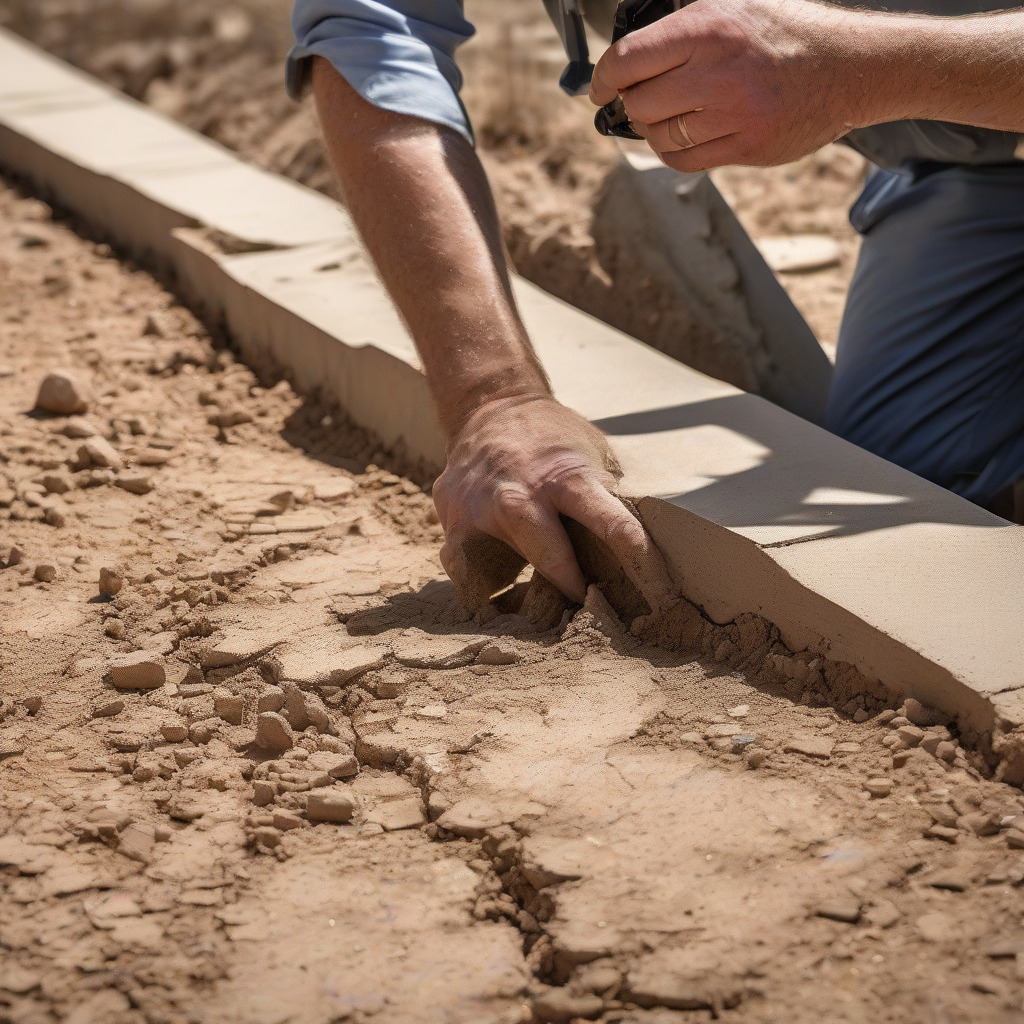
What foundation movement looks like: stair-step cracking in brick and block, running diagonally up the mortar joints. That’s the signature sign. Interior door frames that are no longer plumb. Sloped floors, especially in slab-on-grade construction. Gaps between walls and ceilings. Horizontal cracking in poured concrete walls indicates serious lateral soil pressure. Any of these findings means a structural engineer should step in before you finalize your decision.
Timing matters here more than in most categories. Spring snowmelt — roughly March through May — is peak visibility season, because the soil is at or near maximum saturation. Buying in late summer or fall, when soils have dried and cracks have partially closed, can make active movement harder to see. An inspector worth hiring in Denver will tell you this and help you understand what you’re looking at given the season. If yours doesn’t bring it up, ask directly.
Repair cost exposure is wide — and this is one case where the range isn’t evasion, it’s the reality of the problem. Helical pier installation runs approximately $10,000 to $40,000 depending on the number of piers required and site access. Full underpinning for a significantly compromised foundation starts around $50,000 and climbs from there. Local firms including Ram Jack of Colorado operate across the metro and can provide pre-closing assessments.
One critical point that many buyers miss entirely: foundation movement driven by expansive soils is often not covered by standard homeowners insurance. Buyers who close without understanding the scope of an active foundation problem can face six-figure repair bills with no insurance path. It happens in this market.
Radon in Denver Homes
Denver County carries an EPA Zone 1 radon classification — the highest-risk category. Colorado’s geology generates radon gas that moves up through soil and into structures through foundation cracks and penetrations. Roughly half of Colorado homes tested come back above the EPA’s 4 picocuries per liter action level. That’s not a marginal risk. It’s essentially a coin flip on any given property.
Below 2 pCi/L is normal background. Low concern. Between 2 and 4 pCi/L is elevated but below the action threshold — worth considering mitigation if you’ll spend significant time in below-grade spaces. Above 4 pCi/L, the EPA recommends mitigation, and this is where your negotiating position with the seller matters most. Ask whether the seller will fund mitigation before closing or provide a credit you can apply toward it.
In Denver, sub-slab depressurization systems — a PVC pipe routed from beneath the slab through the home and above the roofline, with an inline fan — run approximately $800 to $1,500 installed. Colorado’s contractor market has scaled to the demand, and costs here are lower than national figures sometimes cited in general real estate content.
Levels above 10 pCi/L don’t automatically mean walk away; mitigation works at those levels. What you want to understand is whether a previous mitigation attempt was made, why it didn’t achieve lower readings, and whether the proposed fix is appropriate for the home’s specific construction.
Two procedural notes Denver buyers miss regularly. First, radon testing is almost never included in a standard base inspection. It’s a separate add-on — a short-term charcoal canister or electronic monitor placed in the lowest livable space for 48 hours — and it costs $100 to $250. Colorado requires sellers to disclose known radon issues but doesn’t mandate pre-sale testing, so in many transactions, the buyer’s add-on test is the first reading the property has ever had. Add it to every deal. Second, if an active mitigation system is already installed, verify that the fan is operating, the suction point is properly sealed, and a visual indicator confirms it’s working. A failed or improperly installed system provides no real protection, and from the street you can’t tell the difference.
Stucco Homes and Moisture Intrusion
This is the inspection failure mode that surprises Denver buyers most often, because the problem is invisible from the street. It’s concentrated in a specific construction era — roughly 1985 through 2005 — and in specific suburbs: Aurora, Highlands Ranch, Centennial, Littleton, and the Stapleton-era builds in Central Park.
The issue is EIFS — Exterior Insulation and Finish System, commonly called synthetic stucco. EIFS was widely used in Denver-area suburban construction during this period. The problem is that first-generation installations were often applied without proper drainage planes behind the cladding. When moisture gets in through cracks at window and door penetrations, it has nowhere to go. It sits against the wood sheathing and framing.
In most American climates, that’s a slow rot problem. In Denver, with 155 freeze-thaw cycles annually, it accelerates. Water behind the EIFS freezes, expands, thaws. The wood behind a surface that looks pristine from the street can be actively disintegrating. Buyers have closed on homes where the stucco appeared flawless and found five-figure wood rot remediation waiting behind the first wall they opened. There’s no casual visual cue that anything is wrong. None. The house looks fine. It isn’t.
A standard home inspection will not catch this. General inspectors assess what’s visible and accessible — they’re not equipped to probe behind cladding. Buyers targeting homes in these neighborhoods need a separate moisture intrusion specialist who uses a calibrated probe meter to test moisture levels at the wood sheathing behind EIFS penetration points. That specialist inspection runs $300 to $600. If you’re buying an EIFS home built before 2005, this isn’t optional.
Hard-coat stucco — the cement-based material found on older Denver homes in Congress Park, West Highland, and Berkeley — has different failure modes. Cracking at window and door penetrations is the primary concern, since those cracks allow water infiltration that can damage the underlying wood lath and framing. This is generally visible and easier to assess during a standard inspection. But any crack at a penetration point needs to be investigated, not just noted.
Remediation costs: partial wall repairs addressing discrete sections of moisture damage run $8,000 to $20,000 depending on how far behind the cladding the rot has traveled. A full re-clad of a home’s exterior starts around $30,000 and rises sharply if framing or sheathing has been compromised. Window and door flashing repairs on hard-coat stucco typically run $2,000 to $8,000. The moisture probe inspection is the only way to know what you’re actually buying before you’re committed to buying it.
Roofs and Hail Damage
Denver sits squarely in the national hail corridor. The metro averages seven to ten significant hail events per year, and Front Range storms have produced some of the costliest insured hail losses in U.S. history. That’s not background color — it has direct consequences for how you should approach the roof section of any Denver inspection report.
What hail damage looks like varies by material. On asphalt shingles, soft impressions — impact marks that bruise the granule coating — accelerate weathering and can void manufacturer warranties. On wood shakes, hail creates distinct splits. A good inspector will flag the approximate age of damage and whether what’s visible is consistent with a single event or years of accumulation.
The buyer trap that catches people off guard: if a previous owner filed an insurance claim for hail damage and the roof was replaced, that history matters. If damage exists but no claim was ever filed — the inspector noted it as informational, no one flagged it as a negotiating point — the new owner faces a roof replacement with no insurance path. Request the CLUE report (Comprehensive Loss Underwriting Exchange) as part of your due diligence. It shows the property’s claim history and will surface prior hail payouts. If a claim shows a payout but the roof still carries damage or looks older than it should, that’s a conversation to have before closing.
Roof replacement in Denver for an average single-family home runs $12,000 to $25,000 depending on square footage, pitch complexity, and material. Class 4 impact-resistant shingles cost 15 to 30 percent more than standard dimensional shingles upfront, but many Denver-area insurers reduce premiums 20 to 30 percent for Class 4 installations. Some HOAs in the metro now require them on replacement roofs. For most buyers replacing a roof here, the premium reduction pays back the material upgrade within a few years.
Plumbing Red Flags by Housing Era
Denver’s plumbing risk maps cleanly onto when a home was built.
Homes from 1978 to 1995 in suburbs like Aurora, Lakewood, Arvada, Thornton, and older Highlands Ranch frequently carry polybutylene pipe — a gray plastic supply line marked “PB2110” that was cheap and easy to install. The chlorine levels in municipal water supplies cause polybutylene to degrade from the inside. Eventually it cracks at fittings, producing anything from slow drips inside walls to abrupt bursts. Full replacement runs $4,000 to $15,000 depending on home size and how the plumbing is routed. Ask the inspector to document whether supply lines are polybutylene before the inspection concludes. Don’t wait for the written report.
Pre-1960 urban stock in Congress Park, Potter-Highlands, Sloan’s Lake, Park Hill, and Baker typically carries galvanized steel supply lines. These corrode internally over decades, reducing flow gradually and eventually failing at joints. Signs include low water pressure, rust-colored water from a fixture that’s been unused, and visible corrosion where pipes are exposed. Full repipe of a pre-1960 Denver home runs $5,000 to $20,000. Galvanized drain lines deteriorate the same way and should be documented separately.
The sewer scope applies across all Denver housing eras but especially pre-1970 stock. A camera run from the cleanout through the main line to the city connection reveals pipe condition, joint separations, root intrusion, and pipe material. In older Denver neighborhoods, Orangeburg pipe — a mid-century material made from compressed tar and felt — is still in service in some properties. It eventually collapses under soil load. A sewer scope runs $150 to $300 as a standalone add-on. Skipping it on a pre-1970 Denver home is a real financial risk for a trivial incremental cost. Nobody who’s run one has ever said it wasn’t worth it.
Electrical Panels in Denver’s Post-WWII Housing Stock
Federal Pacific Electric Stab-Lok panels and Zinsco panels — also sold as Sylvania — are concentrated in Denver’s postwar suburban neighborhoods: Wheat Ridge, Lakewood, Englewood, and older sections of Capitol Hill. Both have documented histories of breaker failure. Specifically: breakers that don’t trip under overload conditions. That’s the core safety function of the device. When it fails, the overcurrent that should have tripped the breaker keeps flowing instead.
The practical urgency for Denver buyers isn’t theoretical. Most Denver-area homeowners insurers will either decline coverage outright or add a significant surcharge on a property with one of these panels. Some carriers will provide coverage with a written commitment to replace the panel within 30 to 90 days of closing. Buyers who discover this after closing can find themselves in a coverage gap on a tighter timeline than they anticipated.
Panel replacement for a straightforward swap in a home with existing 200-amp service runs $2,500 to $5,000. Pre-1970 homes still running 100-amp service — common in postwar Denver construction — that need a service entrance upgrade add to that figure, sometimes substantially. The work requires an electrical permit and city inspection.
On negotiating: asking for a seller credit here is almost always cleaner than asking for a seller repair. Panel replacement involves scheduling an electrician, pulling a permit, and passing inspection — work that happens after closing regardless of who arranges it. A credit lets the buyer schedule the work on their own timeline and choose their own contractor. Most Denver seller’s agents understand this logic.
Neighborhood Risk Matrix
The table below maps Denver neighborhoods and nearby suburbs to their primary inspection risks by housing era. Individual properties vary, and a thorough inspection takes precedence over any generalization. But knowing the baseline risk profile of a neighborhood before you schedule helps you build the right team and ask sharper questions before you’re standing in someone’s living room.
| Neighborhood / Area | Primary Housing Era | Top Inspection Priorities |
|---|---|---|
| Montbello | 1960s–1980s | Expansive soils / foundation movement; galvanized plumbing; older electrical |
| Green Valley Ranch | 1990s–2000s | Expansive soils / foundation movement; polybutylene pipe; EIFS moisture |
| Harvey Park | 1950s–1960s | Expansive soils; galvanized plumbing; Federal Pacific / Zinsco panels |
| Stapleton / Central Park | 1997–2015 | Fill-soil foundation risk; EIFS moisture intrusion; sewer scope |
| Congress Park | 1920s–1940s | Galvanized plumbing; hard-coat stucco cracking; older electrical; sewer scope |
| Potter-Highlands / LoHi | 1890s–1920s | Galvanized plumbing; knob-and-tube electrical; sewer scope (Orangeburg / clay tile) |
| Park Hill | 1920s–1950s | Sewer scope; galvanized plumbing; older electrical panels |
| Sloan’s Lake | 1940s–1960s | Galvanized plumbing; Federal Pacific / Zinsco panels; sewer scope |
| West Highland / Berkeley | 1920s–1940s | Hard-coat stucco cracking at penetrations; galvanized plumbing; sewer scope |
| Wheat Ridge | 1950s–1970s | Federal Pacific / Zinsco panels; galvanized plumbing; hail damage on older roofs |
| Englewood | 1950s–1970s | Federal Pacific / Zinsco panels; galvanized plumbing |
| Highlands Ranch | 1985–2005 | EIFS moisture intrusion; polybutylene pipe; hail damage |
| Aurora (older sections) | 1970s–1990s | Expansive soils / foundation movement; polybutylene pipe; EIFS risk |
| Aurora (newer sections) | 1990s–2010s | Expansive soils; EIFS moisture intrusion; hail damage |
| Centennial / Littleton | 1980s–2000s | EIFS moisture intrusion; polybutylene pipe; hail damage; radon |
| Lakewood / Arvada | 1960s–1980s | Federal Pacific / Zinsco panels; galvanized plumbing; hail damage |
| Capitol Hill (older) | 1900s–1940s | Knob-and-tube / older electrical; galvanized plumbing; sewer scope |
Radon applies to the entire Denver metro. Every property in Denver County and surrounding counties deserves a radon test regardless of neighborhood or age. Denver is Zone 1. That’s the whole story.
How to Build Your Denver Inspection Team
The base general inspection is your foundation, not your complete due diligence. For most Denver properties, you need a layered inspection stack based on the home’s era and neighborhood.
Radon test. $100 to $250 added to the base inspection or ordered standalone. Required for every Denver property without a verified, functioning mitigation system already in place.
Sewer scope. $150 to $300. Required for any pre-1970 home; strongly recommended through pre-1985 construction. You’ll get a video of the main sewer line to the city connection showing cracks, blockages, root intrusion, and material deterioration.
Moisture intrusion specialist with probe meter. $300 to $600. Required for any EIFS-clad home built before 2005, in any neighborhood. A general inspector cannot adequately assess this risk. Look for specialists who explicitly advertise EIFS experience and carry calibrated probe equipment.
Structural engineer assessment. $500 to $1,200 for an inspection and written report. Warranted when an inspection flags active movement, significant cracking patterns, or the property sits in a neighborhood with documented expansive soil risk. In Montbello, Green Valley Ranch, or any property with stair-step cracking, don’t close without one.
The cumulative cost of a thorough inspection stack — call it $1,500 to $2,500 fully loaded — is manageable set against the cost of any single missed issue. Polybutylene repipe: $15,000. Hail-damaged roof replacement: $25,000. Foundation piers: $40,000. EIFS remediation: $80,000. The math is not complicated.
One last point on inspector selection. When interviewing inspectors, ask directly whether they have experience with expansive soil foundations. Ask whether they know EIFS failure modes in the Denver climate. Ask whether they understand the Pierre Shale geology of the neighborhoods you’re targeting. Several Denver-area inspection firms explicitly advertise Colorado geological knowledge as part of their training and it’s worth paying a modest premium for that specificity. An inspector who learned their trade in a geologically stable market and hasn’t invested in learning Front Range conditions is a real limitation on a Denver transaction — and there’s no polite way to sugarcoat that.