What Denver Home Inspectors Actually Flag That Out-of-State Buyers Don't Expect
Five conditions that routinely surprise relocating buyers — and what to do about each one before your inspection objection deadline runs out.

Five conditions that routinely surprise relocating buyers — and what to do about each one before your inspection objection deadline runs out.
If you moved to Denver from Houston, Sacramento, or Chicago and you’re currently under contract on a house, there’s a real chance your inspection report will contain findings you’ve never seen before. They’ll be tied to conditions your agent may not have mentioned, written in language that sounds either more alarming than it is — or less alarming than it actually is.
Summer is Denver’s busiest transaction season and, increasingly, a relocation market. Buyers from California and Texas are arriving with solid real estate instincts calibrated entirely to different geographies: reactive clay that hasn’t seen a drought, coastlines that don’t get softball-sized hail, and inspector pools regulated by state licensing boards. The national inspection guides on HomeAdvisor and Realtor.com won’t prepare them. Those resources are written for an average that doesn’t exist anywhere in particular, and the conditions that regularly derail Denver closings — bentonite clay foundation movement, unreported hail damage, high-risk radon geology, corroded humidifiers, and post-monsoon basement moisture — don’t appear on any national template.
This is written for those buyers. It covers what Denver-area inspectors actually find in 2026, what the findings cost to fix, and how to use Colorado’s inspection objection process before time runs out.
The First Thing to Know: Colorado Does Not License Home Inspectors
Anyone can legally call themselves a home inspector in Colorado. Anyone. No state exam. No license to pull. The professional certifications that matter — InterNACHI (International Association of Certified Home Inspectors) and ASHI (American Society of Home Inspectors) — are voluntary, but they represent real vetting: coursework, proctored exams, minimum inspection counts, continuing education, and adherence to published standards of practice.
For a buyer relocating from Texas or California, inspector licensing is a regulatory baseline someone else established. In Colorado, verifying credentials is entirely the buyer’s job. Ask for the certification number and level, check it against the InterNACHI or ASHI member directory before you book, and don’t rely solely on your agent’s referral without doing that check. Your agent isn’t trying to steer you wrong — but they also have a closing to reach.
Expansive Clay Soil and What It Does to Denver Foundations
This is the condition that distinguishes buying in the Denver metro from buying almost anywhere else in the country. Out-of-state buyers are surprised by it more than anything else on an inspection report — and in my experience, the surprise is rarely about the existence of the problem. It’s about how ordinary it looks until you understand what’s driving it.
The Denver Basin sits on Pierre Shale. Surface soils throughout much of the metro carry heavy concentrations of bentonite clay, a mineral that absorbs water, expands dramatically, then contracts as it dries. The cycle is called Colorado heave, and it exerts enormous upward and lateral pressure on slabs, footings, and basement walls. Unlike the differential settlement you’d see from Texas expansive clay or a flood-zone home in the Southeast, Denver’s problem is as often soil pushing up against a foundation as it is soil pulling away beneath one.
The neighborhoods with the most documented exposure include east Aurora, Highlands Ranch, Green Valley Ranch, Stapleton/Central Park, and parts of Castle Rock. These aren’t obscure outer-ring locations — they’re among the highest-volume housing markets in the metro. Newer construction is not exempt. Subdivisions built in the 1990s and 2000s on poorly mitigated bentonite lots have recorded movement within the first decade.
The things to look for: a stair-step crack pattern in brick exterior walls, where cracks run diagonally through mortar joints, indicates foundation movement rather than cosmetic aging. Diagonal drywall cracks from upper corners of door frames, doors that have started sticking, and floors that slope more than an inch across a room all mean something different than a hairline shrinkage crack in poured concrete. Pattern matters. Direction matters. Crack width and whether it’s consistent or variable matters.
The repair method depends entirely on what’s actually happening. Differential settlement — the foundation has sunk unevenly as soil compresses beneath it — requires a different engineering response than heave, where soil is pushing upward. A pier system designed to arrest a settling foundation can worsen a heaving one. A structural engineer’s report needs to state that distinction explicitly. A general inspection cannot make that determination on its own. If the inspection report says “recommend structural engineer evaluation” in connection with foundation cracks or floor slope, that phrase is not filler. Commission the engineer before your objection deadline, not after closing.
Cost ranges depend on scope. Helical piers or push piers run roughly $1,500 to $3,000 per pier installed; a typical stabilization job might involve four to eight piers depending on what’s moving. Mudjacking — pumping a grout mixture beneath a sunken slab to relevel it — runs $500 to $2,500. A structural engineer’s residential assessment typically costs $300 to $700 in the Denver market.
All meaningful foundation repair requires permits in Denver and most surrounding municipalities. An unpermitted prior repair noted in the inspection report is a red flag on its own. If someone skipped the permit on foundation work, the question worth asking is why — and the likely answer is that the work wasn’t engineered or inspected.
Reading Hail Damage: How Old Is It, and Who’s Responsible?
Denver sits in Hail Alley. The corridor running from northern Texas through eastern Colorado and Nebraska takes more significant hail events than anywhere else in the country, and Denver’s peak season runs May through August. If you’ve been house-hunting this summer and noticed an unusual number of listings with new roofs, that’s not a coincidence. The May 2017 storm alone caused over $2.3 billion in insured losses across the metro.
Competent inspectors look for bruising on asphalt shingles — impacts that knock granules loose and dent the underlying asphalt mat. But the soft-metal test is often more reliable. Gutters, downspout edges, aluminum fascia, AC condenser fins, and lead pipe boots all record hail impacts clearly and consistently. A roof where the shingles look ambiguous but the gutters show 40 circular dents is a roof with hail damage.
Fresh hail damage has sharp crater edges and bright exposed substrate where granules were stripped. No secondary weathering. Aged damage looks different — impact zones weathered to match surrounding shingle color, algae or dark streaking in impact craters, indistinct granule loss. The distinction matters because it affects seller disclosure obligations and insurance claims.
Denver has a well-documented pattern: sellers received insurance payouts for hail damage, did partial or no repairs, kept the money, and left a damaged roof for the next buyer. Colorado’s Seller’s Property Disclosure form requires sellers to identify “known” defects — but whether a seller who cashed an insurance check three years ago considers the roof “damaged” is, in practice, a matter of interpretation and occasionally litigation.
Under Colorado’s standard Contract to Buy and Sell (the CBS contract), a hail-damage finding is grounds for inspection objection whether the damage is recent or aged. The buyer can request repair by a licensed roofer, a price reduction, or a closing credit.
The practical wrinkle buyers don’t always anticipate: a roof with documented hail damage that hasn’t been replaced will generate higher homeowners insurance premiums or coverage limitations. Denver metro homeowners insurance rates rose 30 to 60 percent in some cases between 2022 and 2024, driven substantially by hail loss history. Get a new-buyer insurance quote on a damaged roof before closing, not after. A buyer who discovers during the lender’s final review that the roof is effectively uninsurable — or insurable only at a steep surcharge — has no negotiating leverage left. The time to find that out is during the objection period.
Current replacement costs: architectural asphalt shingle on standard residential work runs $8,000 to $18,000 depending on pitch, access, and square footage. Standing-seam metal starts around $15,000 and goes up from there.
Radon Testing Is Not Optional in Colorado
Buyers arriving from coastal California, the Southeast, or the Gulf Coast often have never thought about radon. It genuinely doesn’t come up in those markets. In Denver, it should be the first add-on you schedule.
Colorado consistently ranks among the top five states nationally for elevated indoor radon. Data from the Colorado Department of Public Health and Environment shows roughly half of tested homes exceed the EPA’s action level of 4 picocuries per liter. The entire Denver metro — Denver, Jefferson, Arapahoe, Adams, and Douglas counties — falls in EPA Radon Zone 1, the agency’s highest-risk designation. This is a documented, well-measured risk that compounds over years of occupancy.
The standard inspection radon test runs 48 hours under a closed-house protocol. Verify that protocol was followed — results from an open-house test are unreliable. Continuous electronic monitors are more precise than charcoal canister tests; they record hourly readings and can flag whether test conditions were stable. Most inspectors price radon testing as an add-on at $125 to $175.
The EPA thresholds: at or above 4 pCi/L, mitigation is strongly recommended. In the 2 to 4 pCi/L range, the EPA suggests considering mitigation; given Colorado’s baseline, most informed buyers don’t sit on that decision. A result above 4 pCi/L gives explicit grounds for inspection objection under the CBS contract.
The standard fix is sub-slab depressurization — a PVC pipe from beneath the slab routed outside the building, with an inline fan drawing radon out before it enters the living space. In Denver, a straightforward single-family installation typically runs $1,000 to $1,500. Homes with multiple sub-slab zones or finished basements can run higher. Colorado requires mitigation contractors to hold NRPP certification through CDPHE. Verify that credential before hiring, and confirm the job includes post-mitigation testing.
Skipping the radon test to save $150 in EPA Zone 1 is not a defensible decision. The exposure risk is real, the test is cheap, the mitigation is affordable, and discovering a 12 pCi/L result after you’ve moved in is a very different conversation than negotiating it during the objection period.
Whole-House Humidifiers and What Goes Wrong With Them
Out-of-state buyers almost universally either don’t know what a whole-house humidifier is or have never encountered one. Both reactions point to the same gap, and it’s one of the more forgivable surprises on this list — there’s no reason a buyer from Miami would ever have needed one.
Denver’s indoor humidity drops to 10 to 20 percent in winter months. At that level, hardwood floors crack along their length, wood furniture joints fail, static electricity becomes a constant irritant, and respiratory health takes a measurable hit. Forced-air heating systems make it worse. Whole-house humidifiers are installed on the return-air plenum of the furnace and add moisture directly to the air stream. They’re standard equipment in Denver homes, not upgrades.
The most common units in Denver’s existing housing stock are bypass humidifiers — Aprilaire and Honeywell dominate — and fan-powered units. Steam humidifiers are more expensive, more capable, and found mostly in larger homes.
Not every humidifier finding is serious. A dirty water panel — the evaporator pad inside a bypass unit — is a maintenance item. Replacement panels run $15 to $50 and should be swapped annually. If that’s the only finding, it’s a minor negotiating point at best. A failed solenoid valve, the component that opens to allow water flow when the humidistat calls for humidity, is a repair: $150 to $350 for a plumber or HVAC tech in most cases.
A unit that has been leaking into ductwork, the air handler cabinet, or the subfloor beneath the furnace for an extended period is a different matter entirely. Persistent moisture in ductwork creates conditions for mold growth. If the inspector notes moisture staining on the plenum, rust along nearby ductwork, or visible microbial growth, that finding requires evaluation by a licensed HVAC contractor with mold-assessment experience — not a general cleaning service. Mold remediation in ductwork can run $500 to $5,000 or more depending on extent.
A new bypass or fan-powered humidifier, professionally installed on an existing forced-air system, runs $300 to $700. Ask your inspector to operate the humidifier during the inspection if the season permits. A non-functional unit in October warrants a different conversation than a corroded, actively leaking unit discovered in July.
Efflorescence in the Basement and What It Actually Means
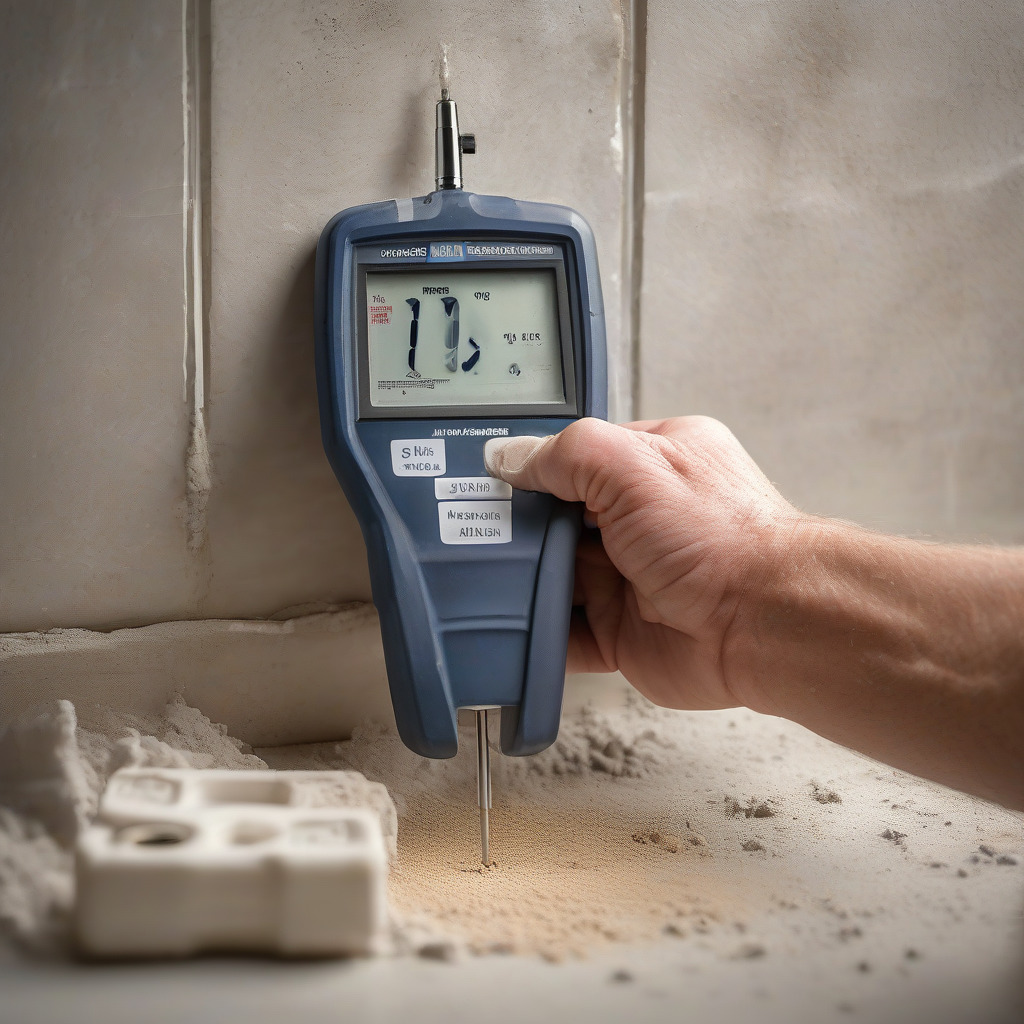
Walk through a Denver basement in late August or September and you may find white, chalky mineral deposits on the concrete walls or floor. This is efflorescence — water-soluble salts carried through concrete by moving moisture, crystallizing on the surface as the water evaporates. It means water is moving through your foundation walls. It’s extremely common in Denver’s clay-soil environment. Common doesn’t mean harmless, but context matters more than the finding itself.
Denver’s monsoon season runs roughly July through September, when afternoon thunderstorms push significant moisture into already-saturated clay soils. That moisture presses against basement walls. In neighborhoods built on fill — Stapleton/Central Park particularly, where the former airport site involved extensive grading — drainage behavior can be unpredictable even in homes built in the 2000s. For a deeper look at how water intrusion patterns develop in the metro, our home & property coverage tracks these issues across Denver neighborhoods on an ongoing basis.
A small, isolated patch of efflorescence on an interior wall, no associated cracking, no floor staining, and a history of otherwise dry conditions: that’s manageable seasonal seepage. Correct the grading, make sure gutters discharge away from the foundation, add a window well cover. This is common in Denver and doesn’t automatically indicate a drainage emergency.
Active, recurring moisture intrusion tells a different story. Walls with significant mineral deposits across multiple courses, efflorescence combined with horizontal cracks or wall bowing, wet floors, or visible daylight through cracks indicate lateral soil pressure with structural involvement. That requires a structural engineer’s evaluation — not a waterproofing company’s free assessment.
That distinction matters. Waterproofing companies are not disinterested parties. Several operating in the Denver market will hand you a $12,000 interior drain tile proposal in exchange for a free visit. Some of those proposals are appropriate. Some are not. A structural engineer’s evaluation, typically $300 to $700 for a residential basement, will tell you whether the wall has moved, whether cracking is active or historic, and what the correct remedy actually is. Get that evaluation before your inspection objection deadline. Waiving objection on a moisture finding and commissioning an engineer after closing means the repair cost is entirely yours — and at that point, the seller has no reason to discuss it.
What a Thorough Denver Inspection Should Cover
A competent Denver-area inspector goes beyond the standard national checklist in specific ways that reflect local conditions.
Four-sided roof access matters. Hail and wind damage often affects particular exposures — the south and west faces take the most sun and storm exposure — and an inspector who checks the most accessible slope and stops there is missing real findings. Drone imagery is standard or available as an add-on from most Denver inspectors, and it’s particularly useful when roof pitch or height makes walking impractical.
Attic access from inside allows inspection of the roof deck for soft spots, moisture staining, or impact damage from large hail that may not be visible from outside. This is especially important on older homes where the original roof structure has less tolerance for moisture intrusion.
Basement and crawl space documentation should include crack measurement, orientation and width notation, moisture readings, and efflorescence locations. Photography matters. A report with written findings but no images is harder to use in objection negotiations — you want to point to specific photographic evidence, not rely on a written description that the seller can dispute. If your inspection report arrives as dense paragraphs without accompanying photos, push back before you accept it.
Swamp cooler identification: out-of-state buyers routinely don’t recognize evaporative coolers. If the home has a roof-mounted unit rather than a central AC condenser, the inspector should note it, identify its age and condition, and explain the operational difference. Evaporative coolers work well in low humidity and struggle on Denver’s most humid monsoon days. They require winterizing in fall. They’re not inferior to central AC — just different, and worth knowing about before July.
Electrical panel type deserves explicit attention on older Denver stock. Capitol Hill, Park Hill, and Sloan’s Lake have significant mid-century inventory that may still carry Federal Pacific Stab-Lok or Zinsco panels. Both are associated with elevated fire risk due to breaker failure, and both create insurance complications. Identifying and disclosing panel type is a basic expectation when inspecting a home built before 1980. Ask your inspector about it directly.
Water heater age matters more in Denver than in softer-water markets. Denver water is moderately hard to hard depending on the service zone, and sediment accumulation shortens tank lifespan. A heater with a 12-year rated life may realistically need replacement at 8 to 10 years in Denver conditions. The inspector should note age, test the pressure relief valve, and identify anode condition where accessible.
What a Home Inspection Costs in Denver in 2026
Based on current pricing from active InterNACHI- and ASHI-certified inspectors in the Denver metro, here are realistic fees as of mid-2026.
Base inspection, single-family home under 2,000 square feet: $375 to $475. From 2,000 to 3,000 square feet: $450 to $575. From 3,000 to 4,000 square feet: $550 to $675. Over 4,000 square feet starts at $675. Older homes with complex systems or visible concerns may carry modest additional fees for extended inspection time.
Add-ons are separate. A 48-hour continuous radon monitor: $125 to $175. Sewer scope (camera inspection of the main lateral): $150 to $250. Mold air sampling per area: $100 to $200. Drone roof imagery: $75 to $150. Sprinkler system inspection: $75 to $125.
A buyer purchasing a 2,200-square-foot home and adding radon, sewer scope, and drone roof imagery should budget $700 to $1,000 all-in. Adding mold sampling on a home with humidifier concerns or basement moisture findings adds another $100 to $400.
The math is not complicated. A radon test at $150 in EPA Zone 1 is not optional. A sewer scope is close to mandatory on any pre-1980 home in Denver’s older neighborhoods, where cast iron and clay tile laterals fail regularly and replacement of a collapsed lateral runs $5,000 to $15,000. Drone roof imagery on any home that’s been through hail season without a documented recent replacement is cheap insurance before committing to a price negotiation.
Mold sampling is more situational. On a home with known humidifier problems or active basement moisture, do it. On a well-maintained home with no moisture findings, it can reasonably be skipped.
The Inspection Objection Deadline and What Buyers Get Wrong
Colorado’s CBS contract gives buyers an inspection objection period — typically 10 calendar days from contract execution, though it’s negotiable and competitive offers sometimes shorten it. During that window, the buyer delivers a written objection notice identifying specific findings and requesting remedies. The seller has a defined period to respond with an Inspection Resolution amendment.
If buyer and seller reach agreement, the deal proceeds on modified terms. If not, the buyer may terminate and recover earnest money — a more buyer-protective exit than many states provide. In Colorado, unresolved inspection objections give the buyer a clean out.
Here’s the scenario that plays out every summer, repeatedly. A buyer gets the inspection report on day two, sits with it over a long weekend, finally calls their agent on day eight, and then tries to commission a structural engineer to evaluate foundation cracks before a day-10 deadline. The engineer can’t schedule in two days. The buyer tries to extend informally, hoping the seller cooperates. The deadline passes. The buyer either waives objection or creates a contract dispute. Don’t be this buyer.
Read the report the day it arrives. Identify every “further evaluation recommended” flag and immediately determine which ones require a specialist before you can put a dollar figure on your objection. Foundation findings, efflorescence with structural implications, electrical panel concerns, active moisture intrusion — all of these require a specialist’s assessment before your written objection can be specific enough to matter. Schedule that specialist on day one or two. Most structural engineers in Denver can turn around a residential assessment within three to five business days if you book promptly.
Written objection must be specific. “We have concerns about the foundation” is not an objection that carries legal weight. “The inspection report identifies stair-step cracking on the east elevation consistent with foundation movement; buyer objects and requests seller credit of $8,500 toward structural evaluation and repair per structural engineer’s recommendation” creates a negotiating record and a basis for termination if the parties can’t resolve it. The specificity is what makes it enforceable. If you want more context on what buyers encounter once inspections are resolved and closings approach, what closing costs actually look like for Colorado home buyers in 2026 is worth reading before you get to that stage.
Buyers relocating to Denver this summer have already done something difficult — competed in a tight market, gotten under contract, figured out the contract process in an unfamiliar state. The inspection period is the last real opportunity to understand what you’re actually buying. The conditions that matter are specific to Denver’s geology, climate, and housing stock. An uncredentialed inspector won’t explain them. A national checklist won’t find them. And a buyer who waits until day nine to read the report won’t have time to act.
The clock starts when you go under contract. Read the report the day it lands.