What Denver Homeowners Should Do Before Turning on the Furnace This Fall
Denver's first freeze lands around October 7. HVAC companies enter a booking crunch in early October. If you haven't run your heat since April, you're already cutting it close. Here's exactly what …

Denver’s first freeze lands around October 7. HVAC companies enter a booking crunch in early October. If you haven’t run your heat since April, you’re already cutting it close. Here’s exactly what to check, when to call a pro, and what it costs right now.
Denver’s fall heating season doesn’t arrive with much warning. One week it’s 72 degrees and sunny; the next, a Front Range cold front drops temperatures 30 degrees in 24 hours and you’re staring at a thermostat you haven’t touched since April. Denver’s average first frost hits around October 7 at DIA, and by the time city neighborhoods feel it a week or so later, HVAC companies are already deep into a booking crunch they saw coming in early September.
Applewood Plumbing, Heating and Electric, Cooper Heating and Cooling, Blue Sky Plumbing and Heating, and Save Home Heat Company — a Boulder-origin operation that now covers much of the metro — are the names you’ll hear most often when you call around. Booking windows tighten hard between October 1 and October 15. That’s the practical result of a metro area where a significant share of homes were built before 1960, many running forced-air gas furnaces that last saw a technician well before last winter.
(Editors: Confirm current booking lead times and tune-up pricing with Applewood, Cooper, Blue Sky, and Save Home Heat before publication.)
Do the steps below in order, this week, before October arrives and your options narrow.
Step 1: The DIY Walk-Through You Do Before Anything Else
Before you call anyone, spend 45 minutes with the furnace itself. This isn’t about diagnosing mechanical problems. It’s about catching the easy failures before they become expensive ones.
Start with the filter. Pull it out and hold it up to a light. Denver has a high particulate load from traffic and construction dust, and wildfire smoke routinely overlaps with fall startup season. The city’s chronically low humidity keeps fine particles airborne longer than most national guidance assumes — filters load faster here than almost anywhere else in the country. A filter left in since April is almost certainly past its useful life, regardless of how it looks. If you can’t remember the last time you changed it, change it now. More on filter selection below.
Replace the thermostat batteries while you’re at it. A dead thermostat battery is the single most common cause of “furnace failure” calls in early October, and it’s a $4 fix. Switch the system to heat mode, set it five degrees above your current room temperature, and listen. You should hear the furnace cycle within a minute or two. Nothing happens? Try the batteries before you assume anything else is wrong. Genuinely — technicians check this first because it solves the problem more often than homeowners expect.
Walk through every room and check your supply and return vents. After a summer of rearranging furniture, it’s common to find a return vent blocked by a couch or a supply vent under a rug. A blocked return strains the blower motor and kills efficiency. A couch pushed against a return vent is practically a Denver interior design tradition, but fix it now.
Look at the visible flue pipe. No tools needed — just your eyes. The flue exits the furnace and runs to an exterior wall or chimney. Look for disconnections at joints, rust patches, or debris at the exterior end. A flue that disconnected over the summer is venting combustion gases into your mechanical room instead of outside. That’s a CO situation requiring an immediate call, not a mental note.
If you ran an evaporative cooler this summer, stop and handle this before you touch the thermostat. Denver’s swamp-cooler population is concentrated in older city neighborhoods — Congress Park, Capitol Hill, Highlands, parts of Park Hill — where residents cool through September. Before you fire the furnace, close the damper inside the duct system that connects the evap cooler to your forced-air return, cap the exterior unit, and shut off its water supply line. An open evap damper means heated air escapes straight through the cooler duct. An uncapped supply line will freeze when temperatures drop. This step costs nothing and takes 15 minutes, but it gets skipped constantly, and the consequences range from a mysteriously high gas bill to a burst pipe in November.
Step 2: Choosing the Right Filter for Denver’s Air
Generic filter advice — “replace every 90 days, use whatever fits” — was not written for Denver. The Front Range’s particulate environment is worse than the national average on several counts simultaneously: higher baseline dust from the semi-arid climate, wildfire smoke that routinely pushes Denver’s air quality into unhealthy ranges from late summer through October, and low relative humidity (Denver’s annual average runs around 40 to 50 percent, dropping further in winter) that keeps fine particles airborne longer before they settle.
A filter rated for 90-day replacement in an Ohio suburb might be saturated after 60 days near a Denver arterial. During active smoke events, 30 days. If you spent any part of this summer watching the AQI ticker on your phone, your filter needs to come out right now, before startup.
Most Denver forced-air systems work well with MERV 11 to 13. This range captures particles down to 1 micron — fine combustion particles from wildfire smoke, fine road dust, the usual Denver air. Nordic Pure MERV 12 pleated filters and Filtrete 1500 to 1900 series are widely available at Home Depot on Evans, Lowe’s locations metro-wide, and Ace Hardware stores throughout the city. Expect to pay $15 to $40 per filter depending on size.
One caveat that matters for older Denver homes. Pre-1970 construction in Capitol Hill, Highlands, Potter-Huffman, and similar neighborhoods often has smaller ductwork with tighter bends than modern systems. A higher-MERV filter creates more static pressure resistance, and in a system with undersized ducts or a lower-capacity blower, that resistance can strain the motor and actually worsen airflow. If you’ve been running fiberglass MERV 1 to 4 filters your whole life because that’s what fit, don’t jump straight to MERV 13 without asking a technician first. If you’re scheduling a tune-up — which you should be, if your furnace is 15-plus years old — ask the tech what the highest-MERV filter your system can actually handle.
If a higher-MERV filter won’t physically fit your system’s filter slot, don’t force it. A media filter cabinet — installed between the blower and the return plenum, holding a 4- to 5-inch-thick filter with far higher capacity — is the right fix. Ask about it at your tune-up.
Under normal Denver conditions: replace every 60 to 90 days. During active wildfire smoke or sustained Chinook events: monthly. Check it visually every 30 days regardless and replace early if it’s visibly loaded.
Step 3: The Go/No-Go Decision on Professional Inspection
Your furnace is probably fine with a DIY filter swap if it’s under 10 years old, has been professionally serviced within the past two years, runs without unusual smells or sounds at first startup, and cleared the walk-through in Step 1 without red flags.
Get a professional inspection before the first cold night if any of the following are true:
Your furnace is 15 years old or older. This covers a substantial share of city-proper Denver homes. The pre-1960 housing stock in Capitol Hill, Congress Park, Park Hill, and Highlands is full of aging furnaces that have never been seriously evaluated. As part of our home & property coverage, we track the repair and replacement costs Denver homeowners face with older systems — and the pattern is consistent: deferred maintenance on aging furnaces costs far more than preventive service.
You see a yellow or flickering burner flame instead of a steady blue one. Yellow flame means incomplete combustion and CO production. Don’t monitor this. Call.
There’s a sulfur or burning smell on startup that doesn’t clear within five minutes. Some dust burn-off smell is normal on first startup. Persistent sulfur or a sharp chemical smell is not.
You hear banging or rumbling on ignition. This is usually delayed ignition — gas accumulating before the igniter fires — which produces a small explosion in the combustion chamber on startup. It’s hard on the system and worth diagnosing before it becomes a repair.
Your CO detector alarmed during a previous heating season and the furnace was never inspected afterward.
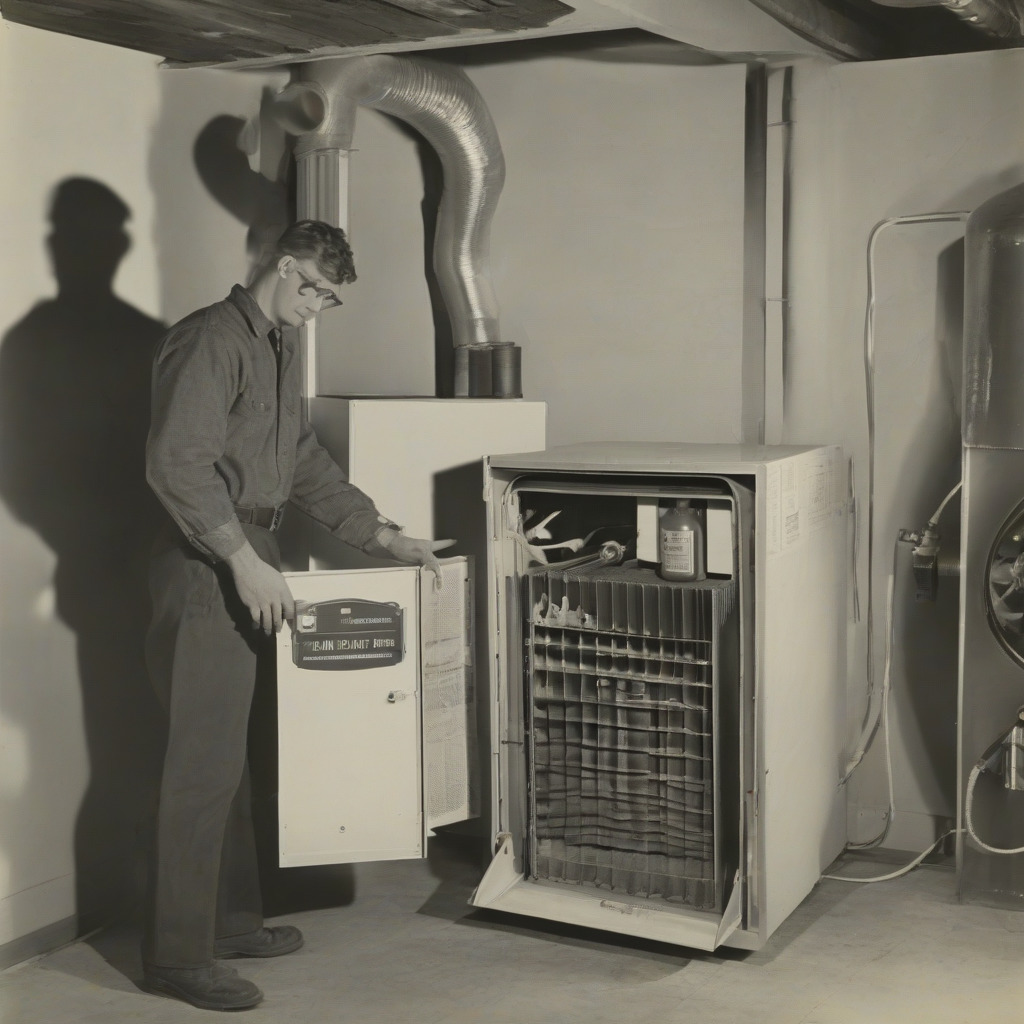
The heat exchanger issue deserves its own emphasis, because it’s the one homeowners most reliably underestimate. The heat exchanger is the metal barrier between the combustion gases and the air your system pushes through your home. Cracks allow CO into your living space. These cracks develop from thousands of heating and cooling cycles — the repeated expansion and contraction of metal over years of use. Here’s the thing: they produce no symptom a homeowner can detect. No smell, no visible sign, no change in how the furnace runs. The only way to find a cracked heat exchanger is a direct inspection by a licensed technician with proper equipment. If your furnace is old enough to be in this risk category, there is no DIY substitute. None.
Step 4: Carbon Monoxide Risks at First Startup, and Denver’s Altitude Problem
Three specific CO risks concentrate at seasonal startup that don’t apply during active heating season.
A cracked heat exchanger, as described above. The first firing of the season is often when a marginal exchanger finally fails.
A blocked flue. Older B-vent systems — the metal flue pipe common in pre-1990s Denver construction — vent upward through the roof. Birds use them as nesting spots during a long off-season. A flue blocked by a nest can’t exhaust combustion gases. They back up into the living space instead.
A corroded flame sensor. The flame sensor tells the control board combustion is happening. A corroded one produces false readings, causing the system to cycle improperly and produce CO before any other detectable symptom appears.
Denver’s altitude makes this harder to catch than it sounds. At 5,280 feet, early CO poisoning symptoms — headache, nausea, fatigue, mild disorientation — are clinically indistinguishable from altitude adjustment. A resident who recently moved to Denver, or anyone visiting from sea level, may attribute early poisoning to the altitude and not act on it. That’s a potentially catastrophic delay, and it’s specific to this city in a way that doesn’t get said often enough.
Colorado law requires CO detectors in residential properties with gas appliances. Before you run the heat this fall, replace the batteries in every detector in the house, then check the manufacture date on the back of each unit. CO detectors have a fixed lifespan — typically 5 to 7 years — because the electrochemical sensor degrades with age. An expired detector will not reliably alarm, regardless of battery condition. If yours is past its date, replace the unit before you run the heat. This is the part of the checklist I’d push hardest on, because it’s the one people treat as optional.
When you fire the furnace for the first time this fall, be home and alert for the first 30 minutes. Don’t start it and leave for work. If your CO alarm sounds, or if anyone in the house develops headache, nausea, or unusual fatigue during or shortly after startup, leave the building and call 911. Not the HVAC company. 911. The fire department clears the building. The HVAC company comes after.
Step 5: Booking a Pro — Pricing, Timing, and What the Tune-Up Actually Covers
Gas furnace inspection and tune-up appointments at Denver-area contractors currently run approximately $89 to $179 for a single system. Applewood offers membership plans — roughly $20 to $30 per month — that bundle annual visits across HVAC, plumbing, and electrical and typically lower the per-visit cost. (Editors: Verify current pricing with Applewood, Cooper, Blue Sky, and Save Home Heat before publication.)
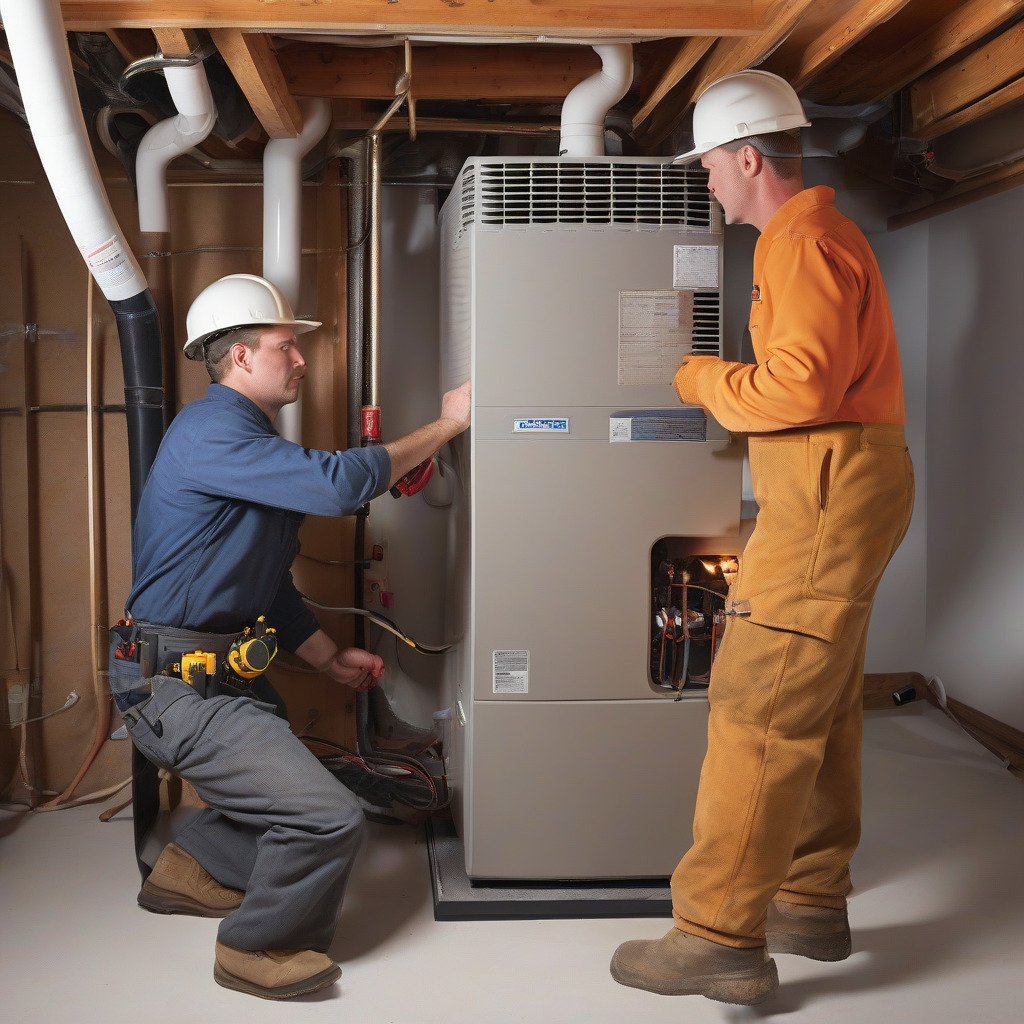
A legitimate tune-up covers: direct inspection of the heat exchanger for cracks; testing the igniter and flame sensor; measuring gas pressure at the manifold; cleaning the burners; checking the flue for blockages and proper draft; lubricating the blower motor if it has oil ports; calibrating the thermostat against an independent reference; a CO and combustible gas test at the unit; and a full startup cycle to verify temperature rise and limit switch function. If a contractor offers a “tune-up” for $49 and doesn’t mention heat exchanger inspection or gas pressure testing, ask specifically what they’re skipping. They’re skipping something.
The math on skipping an inspection for an older system is worth running once. A MERV 12 filter is $20 to $40 — that’s the full cost if your system is healthy and recently serviced. But on a furnace that’s 15 to 20 years old, a cracked heat exchanger a technician would have caught can send you into emergency repair territory fast. Heat exchanger repair runs $500 to $1,500 if it’s even repairable. Many aren’t. A new gas furnace installed in Denver runs $3,000 to $7,000 depending on efficiency rating and system configuration, with installation labor pushing toward the higher end in city-proper neighborhoods where older mechanical rooms make access difficult. If a failing system ultimately pushes you toward a full replacement, [what Denver home inspectors flag most often](/ home-property/denver-home-inspection-red-flags/) can help you understand the broader condition of an aging home before you commit to capital repairs.
Call this week. The earlier in September you book, the better your chances of a pre-frost appointment at standard pricing. By mid-October, some schedulers will tell you directly that they can’t fit preventive maintenance before the first cold stretch. At that point, you’re either taking your chances or paying emergency-call rates.
When you call, be specific: say you need a full furnace inspection and tune-up, including heat exchanger inspection. Ask what’s included and what it costs before anyone arrives. Ask whether they work on your system type — a company that specializes in forced-air will sometimes refer boiler work elsewhere, and finding that out after you’ve waited a week for an appointment is a bad way to start October.
If You Have a Boiler — Capitol Hill, Highlands, and Park Hill Homeowners
A substantial number of Denver’s pre-1950s homes in Capitol Hill, Highlands, and parts of Park Hill run steam or hot-water boiler systems, not forced air. If your home has cast-iron radiators, everything above about filters and forced-air diagnostics doesn’t apply to you.
For hot-water (hydronic) systems: check the pressure gauge — it should read 12 to 15 psi cold. Inspect the expansion tank for proper function. Test the circulator pump before you need it. Bleed the radiators to release trapped air, which prevents heat from reaching the end of the loop. Steam systems have their own startup sequence and their own failure modes; if you inherited one and you’re not sure how it works, this is not the time to improvise.
Either way, anything beyond these visual checks requires a licensed technician. Boiler systems involve higher-pressure components and more involved diagnostics than forced-air. More importantly: when you call to book service, confirm the company actually works on boiler systems. Some Denver HVAC contractors specialize in forced-air and refer boiler clients elsewhere. Ask before you book so you’re not waiting a week for a tech who shows up unprepared for a 1940s steam system.
The same booking crunch applies. The window is now.
The Short Version — Do This Before October 1
For readers who skimmed: five tasks, in priority order.
1. Test your CO detector and replace it if it’s over 7 years old. Check the manufacture date on the back. Expired means replace — before you run the heat. Not optional.
2. Change your furnace filter. Use MERV 11 to 13 for most Denver forced-air systems. Nordic Pure MERV 12 and Filtrete 1500 to 1900 series are at Home Depot on Evans, Lowe’s locations metro-wide, and local Ace Hardware stores. Don’t leave whatever was in there since April.
3. If you ran an evaporative cooler this summer, close the swamp cooler damper and cap the unit before you touch the thermostat. This is the step Denver homeowners skip most reliably. The consequences range from wasted heat to a frozen water line.
4. Assess your furnace age. 15 years old or older means book a professional inspection before the first cold night — not after. Under 10 years old and recently serviced, the filter swap may be all you need.
5. Call to book your tune-up this week. Denver contractors are already filling October. The window for a non-emergency appointment before the October 7 frost window is closing.
A tune-up runs $89 to $179 at Denver-area contractors. A cracked heat exchanger discovered in November on emergency timing runs $500 to $1,500 to repair, if it’s repairable. A replacement furnace runs $3,000 to $7,000 installed. And a CO event that a working detector and a seasonal inspection would have prevented has no dollar figure attached to it at all.
CityDesk Denver will update contractor pricing and booking lead times as the season progresses. If you’ve had a recent tune-up with a local contractor and want to share your experience, contact our editorial team.