Which Denver Neighborhoods Have the Highest Radon Levels and What Mitigation Costs in 2026
The entire Denver metro sits in the nation's highest-risk radon zone. Here's what that means for your basement, your home purchase, and why testing before winter matters.

The entire Denver metro sits in the nation’s highest-risk radon zone. Here’s what that means for your basement, your home purchase, and why testing before winter matters.
The EPA’s action level is 4.0 pCi/L. That’s the threshold above which the agency recommends mitigation. Denver County, Jefferson County, Adams County, Arapahoe County, and Douglas County all sit entirely within EPA Zone 1, the agency’s highest-risk designation. Zone 1 counties have predicted average indoor radon screening levels exceeding 4.0 pCi/L.
Most of the Denver metro isn’t near the boundary of Zone 1. It’s in the middle of it.
January is Colorado Radon Action Month, and the timing is real rather than ceremonial. As heating season arrives, residents close windows they opened in May. Furnaces cycle on for the first time since fall. Buyers negotiate closings on homes they plan to occupy through the coldest months. All three of those facts make radon—specifically, what’s accumulating in Denver basements right now—an urgent, practical concern rather than an abstract public health talking point. And yet, in my experience covering this city, radon still gets treated like a footnote in too many real estate transactions.
Why Denver’s Soil Is the Origin of the Problem
Radon is a naturally occurring radioactive gas that forms when uranium decays in rock and soil. It’s odorless and invisible. It moves through soil pore spaces into buildings through any gap in the foundation. The Front Range geology creates conditions particularly favorable for this.
The Rocky Mountains west of Denver contain significant deposits of uranium-bearing granite and metamorphic rock. Over millions of years, erosion has carried uranium-rich sediment off the mountains and deposited it across the Piedmont—the gently sloping transition zone between the foothills and the High Plains where the overwhelming majority of Denver’s residential density sits. That band, running roughly from Fort Collins through Denver to Pueblo, is where the uranium-bearing soils are thickest and most continuously distributed.
Two soil characteristics make the Denver Piedmont particularly problematic. First, the uranium content in the parent rock is genuinely elevated compared to most of the country. Not a marginal difference. Second, the clay-heavy soils common across much of the metro channel soil gas through preferential pathways. Silt and clay layers trap radon beneath them, building pressure that drives gas through foundation cracks, sump pits, utility penetrations, and the porous rubble foundations common in pre-1940 Denver homes. The result is hazard distributed predictably across the ground—concentrated where the geology is richest and the housing stock is oldest and least sealed.
The Neighborhood Breakdown: Where Denver Risk Concentrates
The Colorado Department of Public Health and Environment (CDPHE) collects radon test results from across the state and publishes summary data by county and, in aggregated form, by zip code. The CDPHE radon database at colorado.gov/cdphe/radon is the primary resource for zip-code-level averages. If you’re researching a specific address, go there directly—neighborhood averages can mask significant house-to-house variation, and the variation here is genuinely dramatic.
Wheat Ridge (80033, 80034) has older housing stock dominated by pre-1970 ranch-style homes with full basements. Basement-heavy ranches built before 1960 predate any radon-resistant construction standards and typically have slab floors with no vapor barrier, multiple utility penetrations, and sump pits that open directly to the soil below. Jefferson County is confirmed EPA Zone 1.
Lakewood (80214, 80215, 80226) and Arvada (80002, 80003, 80004) form a dense Jefferson County corridor. Lakewood’s mix of 1950s and 1960s development along West Colfax and the Wadsworth corridor includes substantial basement construction built when radon was not a design consideration. Arvada’s older core contains ranch homes and bungalows with foundations that were standard practice in 1955 but are now understood to be radon entry points. What distinguishes this corridor is sheer density of that housing type—block after block of it.
Park Hill, Montclair, and Mayfair (80207, 80220) are dense with pre-1960 brick bungalows and two-story homes built on full basements. Rubble-stone foundations in some cases, cinder block in others. Almost universally lacking the sealed concrete slabs and vapor barriers that reduce radon infiltration. If you’re buying in this zip code, treat the age and foundation type as a strong prompt to test before closing. Not a nice-to-have. A requirement.
Highlands and West Highland (80211, 80212) add a specific risk factor less common in newer suburbs: dirt-floor crawlspaces. Pre-1940 homes here frequently have partial crawlspaces beneath additions or rear sections of the house. An exposed soil floor beneath a living space produces some of the highest indoor readings you’ll find anywhere in the metro. Buyers of Highlands bungalows who are renovating for expanded square footage should treat this as something to investigate before permits are pulled, not after—because once you’ve enclosed the space, you’ve also enclosed whatever was off-gassing from the soil.
West Denver (80219, 80223)—Barnum, Westwood, and Athmar Park—combines older housing stock with less-sealed construction and a buyer demographic that skews heavily toward first-time purchasers. First-time buyers are also the people least likely to know they should ask about radon. Worth naming plainly.
Here’s what I’d want anyone reading this to hold onto: high average readings in a zip code don’t mean every home in that zip code is above 4.0 pCi/L. A home in 80033 might test at 2.1 pCi/L. Its neighbor might test at 11.0 pCi/L—same street, similar vintage, different result depending on a crack in the slab or an unsealed sump lid. The neighborhood data tells you the prior probability. It tells you where to be more rather than less insistent about testing before you buy, or before another winter passes without a result.
Why Winter Is the Right Time to Test and Summer Numbers Mislead
The seasonal variability of indoor radon concentrations is real, consequential, and consistently misunderstood by homeowners who test once and assume they have a permanent answer.
When Denver residents close their windows and fire up forced-air heating systems, two things happen simultaneously. The house becomes a sealed vessel, stopping the air exchange that summer window-opening provides. And the negative pressure dynamics of a heating system actively draw soil gas upward—forced-air furnaces return air from the living space to the unit, creating slightly lower air pressure inside the home relative to the soil beneath the slab. That pressure differential pulls radon-laden soil gas through every available opening.
Denver’s high-altitude, low-humidity climate compounds this. Homes here are sealed tighter and for longer than homes at lower elevations with milder winters. A home in Denver is effectively closed from October through April—six months during which radon accumulates with minimal dilution. A winter test is the most representative measure of what occupants are actually breathing across the year.
Summer tests produce misleadingly low readings. Open windows, reduced pressure differential, and active air exchange all suppress the measured concentration. A 48-hour charcoal canister test in July with windows open may produce a result that, come January with the house sealed and the furnace running, would read meaningfully higher. That’s the seasonal swing CDPHE testing data regularly reflects.
For buyers closing during heating season, this creates a specific problem. A seller may have a summer test result on file—conducted for a prior attempted sale or for their own peace of mind—that looks reassuring. Before accepting it as informative, ask when it was conducted and whether windows were open. A July test is not the same information as a January test. Both are legally sufficient for disclosure purposes. Only one tells you much.
CDPHE designates January as Colorado Radon Action Month and has historically offered subsidized test kits during that period—sometimes as cheap as $5 through CSU Extension offices (csuradon.colostate.edu). Check colorado.gov/cdphe/radon in late fall for any 2026 kit programs and current pricing.
What the EPA’s 4.0 pCi/L Threshold Actually Means in a Denver Basement
The 4.0 pCi/L action level is not a line between safe and dangerous. Understanding what it actually is matters—and matters especially for not talking yourself out of mitigation when the number comes back at 4.2.
The EPA action level is a risk-management threshold, not a biological bright line. Below 2.0 pCi/L, the agency considers the risk low and does not recommend mitigation, though it notes there is no completely safe level of radon exposure. Outdoor air in the U.S. averages approximately 0.4 pCi/L. The 2.0–4.0 pCi/L range is a gray zone where the EPA says homeowners “should consider” mitigation, particularly if occupants spend significant time on lower floors. At or above 4.0 pCi/L, the agency recommends mitigation—not suggests considering it.
Radon is the leading cause of lung cancer among non-smokers and the second leading cause overall. The EPA estimates it’s responsible for approximately 21,000 lung cancer deaths annually. The risk is dose-dependent and cumulative—concentration multiplied by years of exposure. It’s also synergistic with smoking: a smoker living in a high-radon home faces dramatically elevated combined risk. That particular combination deserves its own sentence.
In the Denver context: the entire metro is confirmed EPA Zone 1, meaning predicted average indoor radon screening levels exceed the federal action level. A home in Wheat Ridge or Park Hill that has never been tested is not starting from a neutral baseline. Never tested is not the same as low. It means unknown. In a Zone 1 metro, unknown is a poor position to be in when the alternative is a $15 test kit.
If your test result is at or above 4.0 pCi/L, the EPA’s guidance is clear that mitigation is warranted. If it’s between 2.0 and 3.9 pCi/L, consider your household: young children, a smoker in the home, occupants who regularly use the basement. Those factors reasonably push the decision toward mitigation even in the gray zone. I don’t think there’s a clean answer for every household in that range—but I’d rather people wrestle with that question than assume 3.7 pCi/L is fine because it’s technically below the threshold.
What Radon Mitigation Actually Costs in Denver in 2026
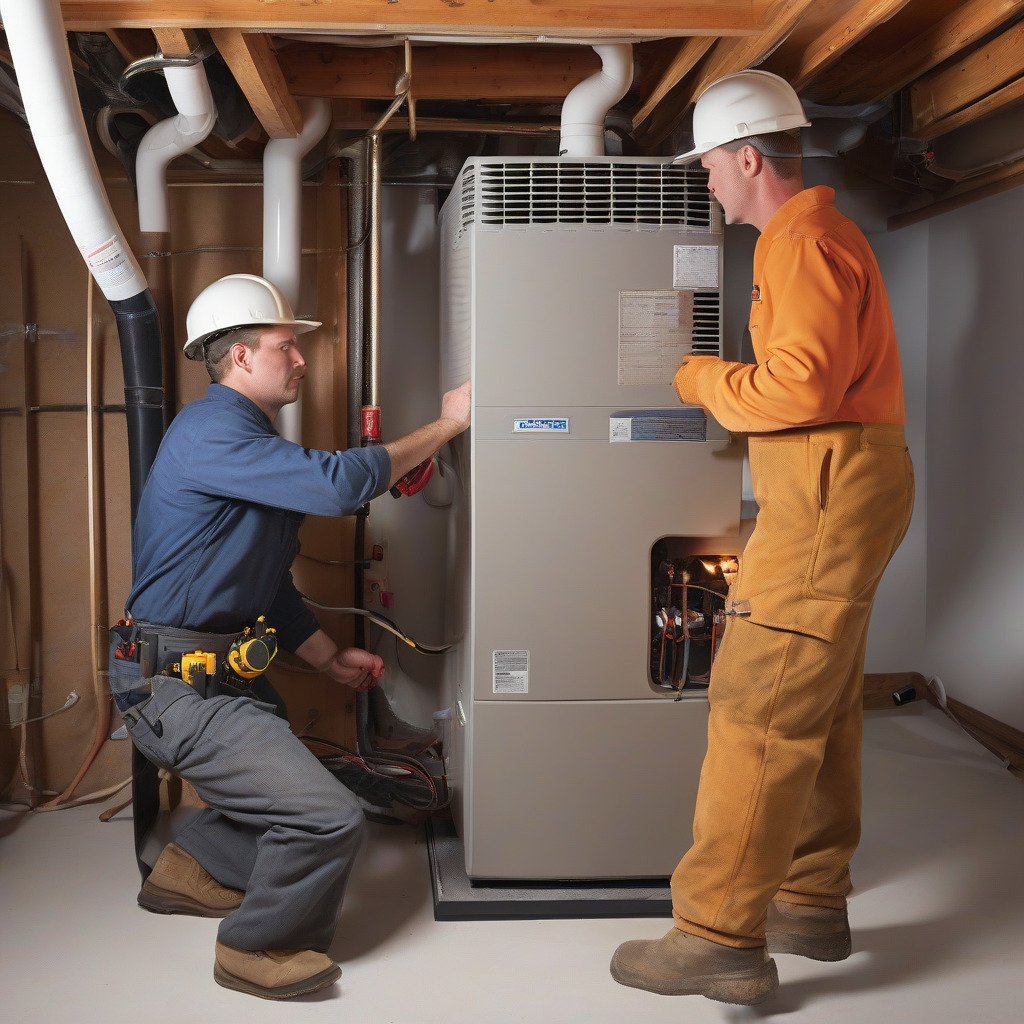
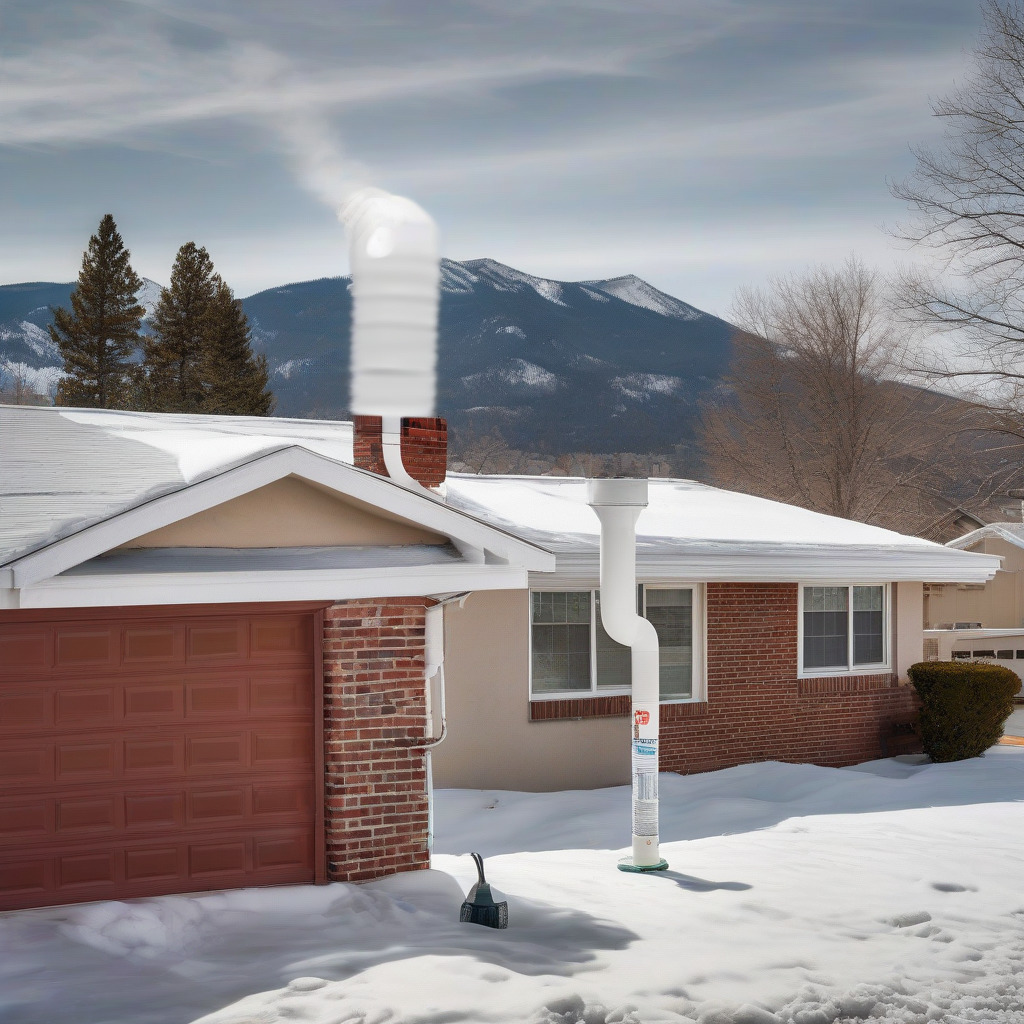
The standard system for a single-family home with a full basement is sub-slab depressurization. The contractor drills one or more suction points through the basement slab, routes PVC pipe to the exterior, and attaches a continuously running exhaust fan. Entry points—sump pits, utility penetrations, visible cracks—get sealed. For a straightforward single-pipe installation on a standard basement, Denver-market quotes in 2025 were running roughly $800 to $1,500 for most homes. Get at least two itemized quotes and confirm that each includes the fan unit, all pipe and fittings, labor, and a post-installation radon test. If a contractor doesn’t include that verification test as standard, ask why. Any contractor worth hiring already knows to include it.
Costs climb with the foundation complexity common in older Denver-area ranches. A home with both a basement slab and a crawlspace—common in Lakewood and Arvada ranches that were expanded with rear additions—requires a two-zone system, and if the crawlspace has a dirt floor rather than concrete, a vapor barrier membrane goes down before the depressurization system connects to it. Homes with multiple foundation sections, post-and-beam additions, or pre-code rubble construction may need a preliminary site visit before any contractor commits to a firm price. That’s not unusual; it’s just the reality of foundations that predate building codes.
The fan runs continuously. On an Xcel Energy bill, that’s roughly $5 to $10 a month—call it $100 a year, give or take. Against a one-time installation cost and the alternative, it’s not worth losing sleep over. To find NRPP-certified contractors serving the Denver metro, use the lookup at nrpp.info.
What Colorado’s Disclosure Law Requires and Where It Leaves Buyers Exposed
Colorado requires sellers to disclose known radon test results if testing has been done. The operative word is known. A seller who has never tested their home has no radon information to disclose—and therefore no disclosure obligation. The home hits the market, a buyer goes under contract, inspection happens, and if no one orders a radon test, the buyer closes on a home that might be at 2.0 pCi/L or might be at 14.0 pCi/L. No one knows, and nothing in the transaction required anyone to find out.
This is a meaningful protection gap, and it doesn’t get said plainly enough in real estate conversations. Buyers and their agents sometimes assume that the absence of a radon disclosure means the home has been tested and cleared. It frequently means the home has simply never been tested. Those are very different situations.
Request a radon test contingency with a defined action-level threshold when you write an offer. The standard is 4.0 pCi/L. If the test comes back at or above that level, the contingency gives you defined remedies: seller-paid mitigation before closing, a price reduction to cover the cost, or the right to walk. Be specific in the contract language about who orders the test, who selects the contractor, and what type of test is required. A 48-hour charcoal canister test fits within a normal inspection window and is standard in real estate transactions.
The timing tension: a 48-hour test is fast enough to fit inspection windows but shorter than the 90-day long-term tests that produce the most accurate annual-average estimate. If the 48-hour result lands in the 2.0–4.0 pCi/L gray zone and you want more certainty before closing, you can negotiate a longer testing window—or simply require a certified mitigation system as a condition of closing and verify its performance with a post-installation test after you move in. For a pre-1960 home in Park Hill or Wheat Ridge with no prior test on record, that’s honestly not a bad way to approach it. Skip the debate, require the system, confirm it’s working.
One more thing: if the seller hands you a prior test result, ask when it was conducted. A test from July with windows open tells you less than a test from January with the house sealed and the furnace running.
How to Test Your Denver Home: Kits, Resources, and When to Call a Pro
The testing process is straightforward and genuinely inexpensive—one of the lowest-friction health checks you can run on a house.
DIY 48-hour charcoal canister kits are available at Home Depot and Lowe’s in the Denver metro for $15 to $30, including lab analysis. Place the canister in the lowest livable area of your home—typically the basement, or the lowest floor if you have no basement—with windows and exterior doors closed. After 48 hours, seal it and mail it to the included lab. The closure requirement matters: testing with windows open is how people end up with summer-style low readings in the middle of January, which defeats the point entirely.
Long-term alpha track kits run 90 days or more and produce a time-averaged result that is more representative of true annual exposure. If you own the home and want an accurate baseline rather than a snapshot, a long-term kit placed in October and retrieved in January will tell you something real. CDPHE has historically offered subsidized versions through CSU Extension offices for as little as $5 during radon action month. Check colorado.gov/cdphe/radon in late fall for any 2026 offerings.
If you’re buying a home and need a documented result for a real estate transaction, or if a DIY test came back above 4.0 pCi/L and you want confirmation before commissioning mitigation work, an NRPP-certified professional tester provides results that carry more weight in negotiations. Professional testing in the Denver metro typically runs $100 to $175 for a residential test.
Regardless of method, placement matters. The detector goes in the lowest space where occupants spend regular time—not a storage closet, not the utility room. If you have a finished basement where kids play or family watches television, test there. The EPA placement guidelines are included with every kit. Read them.
Before Winter Closes In
The argument for testing this heating season rather than filing it away for later is simple: the conditions that produce honest test results are arriving now. A 48-hour kit placed in your basement with the house sealed and the furnace running will tell you something real about what you’ve been breathing for the past several winters. That’s a $20 investment.
If you’re buying a home right now in Park Hill or Wheat Ridge or Lakewood or Arvada—in a pre-1960 brick bungalow or a basement ranch that has never had a radon test—that information belongs in your contract, not left to chance. Colorado’s disclosure law will not surface it for you. Your inspection contingency can.
And if you’ve already tested, the results came back above 4.0 pCi/L, and you’ve been meaning to call a contractor since last winter: mitigation is a standard one-day installation for most homes. The soil under your foundation has been doing this the entire time you’ve lived there.
For current test kit programs and a list of NRPP-certified contractors serving the Denver metro, visit colorado.gov/cdphe/radon. CSU Extension’s radon resources are available at csuradon.colostate.edu.
For more local coverage, explore our Home & Property section.