What Denver Homeowners Should Know Before Refinishing a Bathtub
Denver's remodeling market has a timing problem. General contractors with open schedules are scarce. Kitchen-and-bath specialists are backlogged. A full bathroom renovation has gotten expensive eno…

Denver’s remodeling market has a timing problem. General contractors with open schedules are scarce. Kitchen-and-bath specialists are backlogged. A full bathroom renovation has gotten expensive enough that plenty of owners are rethinking whether a gut job is actually necessary. Into that gap has stepped an unglamorous but genuinely useful trade: bathtub refinishing.
It’s not new. But Denver’s aging housing stock, elevated labor costs, and a rental market where landlords run tight per-unit math have made it relevant to a wider audience than just people watching their budgets. This is what the process actually involves, what it costs here, what goes wrong, and how to hire someone who knows what they’re doing.
Why Refinishing Has Become a Real Option
The math starts with the housing stock. A substantial share of Denver’s single-family homes and smaller apartment buildings were built between 1950 and 1975. In Lakewood, Wheat Ridge, Englewood, and Aurora, ranch-style homes from that era are everywhere—and a lot of them still have their original bathtubs. Those tubs are frequently cast iron or early fiberglass, structurally sound after fifty-plus years but coated in a grayish dullness that no bathroom cleaner actually fixes. You know the look.
Replacing one of those tubs is not a simple line item. A full tub replacement in the Denver metro—removal, disposal, new fixture, tile or surround work, plumbing reconnection, labor—runs $2,000 on the low end for a straightforward swap, climbing to $5,000 or more once tile, plumbing access, or floor repair enters the picture. That’s before you deal with the contractor availability problem.
A property manager overseeing multiple rental units in a Capitol Hill or Baker building faces that cost multiplied across dozens of fixtures. It’s why the economics shifted toward refinishing for that segment years ago.
Refinishing a structurally intact tub costs a fraction of replacement. It requires far less scheduling lead time. One visit completes the work. When the tub itself is sound and the problem is purely cosmetic, refinishing isn’t a compromise—it’s the smarter call. I’ll get to the failure modes, because there are real ones.
Refinishing, Reglazing, Resurfacing—They’re All the Same Thing
Contractors and homeowners use these three terms interchangeably. That’s fine, because they describe the same basic process, the same chemistry, applied to the same fixtures. The variation is a product of the industry’s fragmented history, not any meaningful technical distinction. Don’t let a contractor charge you more because they’ve decided to call it “resurfacing.”
Here’s what actually happens:
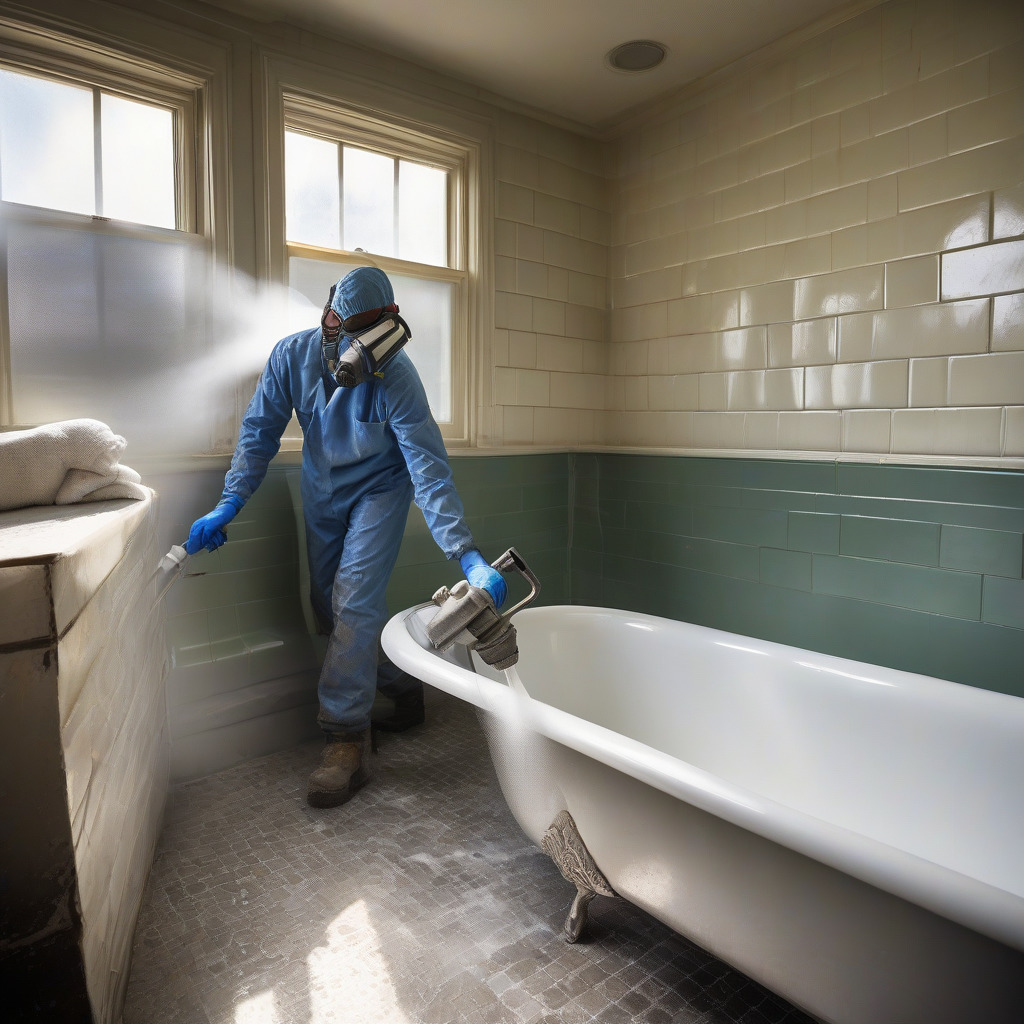
The existing surface—porcelain enamel, fiberglass gel coat, or acrylic—gets cleaned to remove soap scum, mineral deposits, and any previous coating. Old caulk comes out. Chips or cracks get filled with epoxy filler and smoothed flat.
Then comes the step where the job either succeeds or fails: surface preparation. The tub gets mechanically abraded, then chemically etched—usually with diluted acid—to open the substrate’s pores and give the coating something to grip. This matters more in Denver than in softer-water markets because Denver Water’s supply carries moderate mineral content that leaves deposits on fixture surfaces. Those deposits have to be gone before etching, or the coating will start separating within months. Rushing this step is how you get a tub that peels before the year is out.
A primer or adhesion promoter goes on next, chemically matched to the substrate. Then the finish coat—typically a two-part polyurethane or acrylic urethane—gets sprayed in multiple thin layers. Most residential work is white or off-white, though color matching exists. After application, the coating needs 24 to 48 hours before the tub can be used; full cure takes longer depending on the specific product.
When comparing quotes, ask contractors to walk you through each of these steps. A competent one won’t mind the question. Someone who gets evasive or vague about the prep sequence is telling you something useful—just not what you were hoping to hear.
What It Costs in Denver
Get quotes directly from local operators, because any published range is a starting point, not a budget. Denver’s labor market moves faster than this article can track.
That said: nationally, a standard residential refinishing job runs roughly $300 to $600. Denver’s trades market pushes local pricing above that.
Cast iron tubs require more aggressive preparation and cost more accordingly. Garden tubs and whirlpools cost more than standard alcove tubs—more surface area. A tub with significant chip damage requiring multiple fills before coating will cost more than a clean surface. Claw-foot tubs are a completely different category. With their exterior finish, feet, and complete wraparound coverage, they’re a different job entirely—often running 50 to 75 percent higher than a standard alcove installation. If you’ve got one of the original claw-foots in a Potter-Highlands Victorian, expect a longer conversation about scope before anyone names a price.
For landlords running multifamily buildings, volume pricing is real and significant. A contractor refinishing five tubs in the same building will price per unit meaningfully lower than one-off residential work—mobilization cost gets distributed across the batch. If you’re managing a building and paying single-unit rates for every tub, you should be having a different conversation.
Denver’s Housing Stock and What’s Actually Refinishable
Material type matters. Denver’s neighborhoods have different distributions of tub types, and that affects what a job involves.
Pre-war homes in Capitol Hill, Curtis Park, and Potter-Highlands tend to have porcelain-on-cast-iron tubs—heavy, deep, and ideal candidates for refinishing. The substrate is rigid, dimensionally stable, and holds coatings well when properly prepared. Many are still in excellent structural condition after more than eighty years. If you’ve ever tried to move one, you understand why nobody’s replacing them casually.
The postwar ranches in Lakewood, Wheat Ridge, Aurora, and Englewood more commonly have fiberglass tubs. Fiberglass can be refinished successfully, but the preparation differs. Adhesion failure on fiberglass is more common when a contractor applies a system calibrated for porcelain without adjustment—something a qualified refinisher should flag immediately during an estimate, not discover after the fact.
Acrylic tubs, found in newer construction and updated homes, can also be refinished, though not all coating systems bond equally well to acrylic. The chemistry of the prep step differs.
One thing applies to every tub type: refinishing addresses surface damage—chips, staining, worn finish. It does not address structural damage. A contractor who suggests refinishing a tub with structural cracks or active leaks is either unqualified or dishonest. There are no exceptions to this. Knowing what those structural problems look like before you call a refinisher is exactly the kind of thing Denver home inspectors flag most often in properties with aging fixtures.
What Denver’s Altitude and Dry Air Do to a Refinishing Job
Denver’s at 5,280 feet. Lower atmospheric pressure affects how spray coatings atomize, how solvents flash off, and how quickly cure reactions proceed. Solvent-based coatings flash faster at altitude, which can work in a contractor’s favor—or create real problems if they don’t adjust technique. Coatings that partially dry before hitting the substrate produce texture problems and poor flow-out. This isn’t theoretical; it shows up in the finish.
Denver’s indoor relative humidity in winter regularly drops below 20 percent in homes without humidification. Many two-part polyurethane systems need ambient humidity within a certain band for the isocyanate component to cure properly. Too dry, and the finish cures softer and more vulnerable than it should be. A competent Denver-area refinisher knows this and actively adjusts—whether by modifying spray equipment settings, choosing a coating formulation appropriate for the season, or timing jobs to avoid the worst of the dry winter weeks.
Ask directly: how do you account for altitude and winter humidity when you’re selecting and applying the coating? A good answer involves specific product knowledge and technique adjustments. A vague answer is a flag. Summer brings different humidity dynamics that can cause adhesion problems if a coat gets applied at the wrong point in the day. There’s no season that makes this a trivially simple job.
Fumes, Safety, and Colorado’s Air Quality Rules
Bathtub refinishing involves real chemical hazards, and some contractors are too casual about this. Modern urethane topcoats—the chemistry that produces the most durable, highest-gloss finish—contain isocyanates. Isocyanates are respiratory sensitizers. They can cause occupational asthma with repeated exposure, and in people who’ve already been sensitized, even low-level exposure can trigger serious reactions. The standard 24-to-48-hour vacancy window after application isn’t arbitrary—the fumes represent a genuine exposure concern, particularly for anyone with asthma or respiratory sensitivities.
Colorado’s Air Pollution Control Division, within CDPHE, enforces VOC limits on coatings used in refinishing. Responsible contractors use products that meet applicable thresholds and can provide the product name and safety data sheet on request. If a contractor is using cheap off-spec product, this is one way you’d catch it.
Before scheduling, ask: What coating product do you use? Can you share the SDS? How do you ventilate during application? When is it safe for children and pets to return? A contractor who can answer these specifically is operating professionally. One who minimizes the fume concern or can’t name the product is not. Vague reassurance here shouldn’t satisfy you.
What Landlords and Property Managers Need to Know
Denver’s older multifamily housing is concentrated in neighborhoods like Capitol Hill, Baker, and along South Broadway. Bathtub refinishing is a recurring maintenance line item for operators in these buildings—alongside painting and carpet replacement—because the economics are reliable. For a broader look at managing aging fixtures and surfaces across a portfolio, this falls squarely within our home & property coverage of maintenance decisions Denver owners face.
A refinishing job on a rental unit tub takes one day of access. The unit needs to be vacant for 24 to 48 hours for fume clearance. For a turnover between tenants, that’s no additional cost or complication. For an occupied unit, that vacancy window is the main scheduling challenge. The practical move is to align refinishing with lease cycles—many property managers schedule it before tenant move-in specifically to sidestep the issue.
Volume pricing for multifamily is real. A contractor refinishing eight tubs in the same building might quote $300 per unit, against $450 for a one-off residential job. The mobilization economics favor batching, and most commercial operators price accordingly. If you’re managing a building and paying single-unit rates every time, ask a different question when you get the next quote.
One compliance note: Denver Revised Municipal Code habitability standards require that rental units remain livable during maintenance work. For an occupied unit, the temporary vacancy for fume clearance needs to be handled thoughtfully. It’s rarely complicated for a one-day job, but it should be part of the scheduling conversation—not something to sort out after the contractor has already shown up.
What Can Go Wrong
The failure modes in bathtub refinishing are well-documented, and they’re almost always traceable to one of two causes: inadequate surface preparation, or the wrong product for the substrate and conditions.
Peeling at edges is the most common failure. It typically appears within the first year and almost always means the bonding coat didn’t adhere—either prep was insufficient or the acid-etch step was skipped or rushed. Once an edge starts lifting, water gets underneath and separation spreads. A homeowner noticing this six months after refinishing has a legitimate workmanship complaint and should push the contractor on their warranty immediately.
Bubbling typically results from solvent or air trapped under the topcoat, or from applying a coat before the previous one has properly flashed. In Denver’s dry air, coatings flash faster than an applicator from a lower-altitude market might expect. This is a preventable failure if the contractor has actually worked in these conditions before.
Surface contamination failures—craters, adhesion problems—come from residue that wasn’t fully removed before coating. Old caulk material, cleaning product, mineral deposits. Preventing this is entirely a prep issue. There’s no version of this that’s the homeowner’s fault.
Premature yellowing appears on most refinishing topcoats over time. In a bathroom with significant direct light—south-facing windows—it can arrive earlier than expected even on a well-applied coating. A contractor working in a high-light bathroom should select a formulation with appropriate UV stability and say so upfront.
A properly applied refinishing job, maintained with non-abrasive cleaners, should last a decade or more. Jobs that peel or bubble within a year indicate contractor error, not an inherent limitation of the process. That distinction matters when you’re evaluating a warranty claim—and it matters when a contractor tries to tell you otherwise.
How to Vet a Refinisher
Colorado has no state license specific to bathtub refinishing—verify current status with DORA, since regulations change. That means the usual signal of contractor credentialing doesn’t exist here, which makes due diligence more important, not less. You’re vetting the person.
The baseline minimums: general liability insurance (request a current certificate showing coverage limits and active policy dates) and active registration with the Colorado Secretary of State. You can verify SOS registration in about two minutes at the state business search portal. A contractor who won’t provide a certificate of insurance on request should not be working in your home.
Refinishing is generally not subject to building permit requirements in Denver—it’s a cosmetic service on existing fixtures, not structural or plumbing work. Confirm with Denver Community Planning and Development if you have any doubt about your specific situation.
Ask these questions. A competent contractor answers them without hesitation:
What coating product do you use, and what’s its VOC content? A competent contractor knows this immediately. If they have to look it up or get vague, that’s a tell.
Walk me through your prep process step by step. How long does etching take, and what chemical do you use? Vagueness here is a warning sign. So is an annoyed reaction to being asked.
What does your warranty cover and for how long? Serious operators warrant against peeling and adhesion failure for a specific period—some offer one year, others five. The difference is significant. Read the terms.
How do you adjust for Denver’s altitude and seasonal humidity? You want a specific answer about equipment settings, product selection, or timing. Confusion about the question is itself useful information.
Can you provide references from jobs done six months to a year ago—not last month? Recent jobs don’t tell you whether the coating has held. Older jobs do. A contractor who’s confident in their durability won’t hesitate.
On Google reviews: read for specific details—prep process, fume management, whether the finish held up after a year. A pattern of complaints about early peeling is disqualifying. Reviews that just say “great job!” tell you almost nothing.
Renew-It Refinishing in Denver
Renew-It Refinishing operates in the Denver metro area, serving residential and commercial clients. Confirm their current service area directly before scheduling, since coverage of specific neighborhoods and municipalities is worth verifying.
The questions to bring to any estimate conversation with Renew-It—or any refinisher—are the ones in this article. What coating they use and its VOC content. What their prep process involves, in detail. What their warranty actually covers. How they account for Denver’s altitude and winter humidity. A contractor confident in their work answers all of these without deflection.
For property managers, ask specifically about capacity for batching multiple units and how per-unit pricing is structured for volume jobs. That’s the conversation that determines whether refinishing makes financial sense across a building or stays a one-off expense you manage reactively.
CityDesk Denver covers local business and housing for residents of the Denver metro area. This article was not sponsored or reviewed by any service provider prior to publication.