How to Break a Lease in Denver Without Losing Your Security Deposit or Getting Sued
What Colorado statutes actually say — and which local organizations will help you work through it for free.

What Colorado statutes actually say — and which local organizations will help you work through it for free.
Denver renters who need to exit a lease before it ends face a problem that internet search results make worse: nearly all the advice available is generic, cites no Colorado statute numbers, and ignores Denver’s local ordinances entirely. This piece covers what the specific Colorado statutes actually say, what Denver’s ordinances add, and how Denver County Court handles these disputes when they get there.
It also covers the realistic question most guides avoid: what landlords actually do when a tenant breaks a lease in Denver, as opposed to what they threaten to do. Those two things are not the same, and the gap between them matters to your decision-making.
Step One: Figure Out Which Lane You’re In Before You Do Anything Else
Before you draft a notice, text your landlord, or start packing, you need to know which category applies to you. The entire sequence of steps depends on it. Acting before you know is the single most expensive mistake Denver renters make — and the most common one.
Lane 1: You have a recognized legal ground under Colorado statute. The law gives you the right to exit without owing remaining rent, if you follow the correct notice procedure. The four statutory grounds are uninhabitability (C.R.S. § 38-12-503), domestic violence or safety threat (C.R.S. § 38-12-507), military deployment or permanent change of station under the federal Servicemembers Civil Relief Act, and landlord material breach under Denver’s Right to Cure Ordinance. A valid legal ground improperly noticed is still a losing position.
Lane 2: Your lease has an early termination clause. Some Denver leases — particularly those managed by larger corporate property management companies — include a buyout clause, typically one to two months’ rent. If yours does, that clause controls. It’s not free, but it’s clean. It protects you from the open-ended liability of an undocumented departure.
Lane 3: No statutory ground, no lease clause. This is where most renters find themselves, and it doesn’t mean helpless. The strategy shifts to managing financial exposure through Colorado’s landlord mitigation requirement, negotiating a written mutual termination, and documenting your exit properly. You may owe something. You probably won’t owe as much as your landlord claims.
Pull out your lease and read it tonight.
Step Two: The Legal Grounds That Actually Hold Up
Uninhabitability Under C.R.S. § 38-12-503
Colorado’s warranty of habitability statute requires landlords to keep rental units safe and fit for human habitation. The statute names qualifying conditions specifically: functioning heating and ventilation, plumbing and sanitation, electrical systems, adequate weatherproofing, and freedom from mold that materially affects habitability. “Materially affects habitability” is the operative phrase — courts actually parse it that carefully.
If a landlord fails to maintain these conditions after proper written notice and the required cure period, a tenant can terminate without liability for remaining rent. The notice-and-cure sequence is not optional. Skip it and you lose the ground, even when the underlying condition is serious.
Domestic Violence, Stalking, or Sexual Assault Under C.R.S. § 38-12-507
Colorado gives survivors of domestic violence, stalking, or sexual assault the right to terminate a lease with written notice and documentation. Qualifying documentation includes a police report, a protection order, a statement from a licensed counselor or medical professional, or a sworn statement by the tenant. The law also includes a 72-hour lock-change provision: request it in writing, and the landlord must comply within 72 hours or allow the tenant to arrange it.
No penalty for early termination, no charge for the lock change. The statute covers leaseholders and any household member who qualifies. One protection most people don’t know: if a co-tenant is the perpetrator, the statute provides a mechanism to remove that person from the lease rather than requiring the survivor to leave. That’s a meaningful distinction.
Military Deployment Under the Servicemembers Civil Relief Act
Renters connected to Buckley Space Force Base in Aurora or Colorado National Guard units on federal activation have federal-law protections under the SCRA. Written notice plus a copy of official orders; termination effective 30 days after the next rent due date following delivery. No penalty, no deposit kept as a lease-break fee. Protections extend to dependents living in the unit.
Landlord Material Breach Under Denver’s Right to Cure Ordinance
Denver’s Right to Cure Ordinance gives tenants a remedy when a landlord commits a material lease violation. Written notice of the violation, a cure period, and if the landlord doesn’t fix it, you can terminate without further rent liability. Verify specific notice periods against the current Denver Revised Municipal Code at denvergov.org before sending anything — Denver’s tenant-protection framework has been moving, and details shift.
Document every claimed violation with timestamped evidence. This ground fails without it.
Step Three: The Mold and Heat Question, Answered Directly
Does a mold problem qualify as constructive eviction in Colorado? It depends on severity and documentation — which determines whether you’re in Lane 1 or Lane 3.
Under C.R.S. § 38-12-503, mold qualifies as a habitability violation when it “materially affects” habitability. Moisture on a windowsill in January doesn’t meet that standard. A documented infestation spreading across walls, appearing in HVAC systems, or causing respiratory symptoms treated by a physician may. Get an air quality test from a certified inspector and keep the written report.
Broken heat is legally cleaner. Denver’s average January low is 16°F, with record lows well below zero. A failed furnace in a Denver winter is not a minor inconvenience — it’s a material habitability failure under virtually any reading of C.R.S. § 38-12-503, and courts have treated it that way. The statute doesn’t require temperatures inside the unit to drop to a specific number. A non-functioning heating system during a Denver winter satisfies the standard.
Once you discover the condition, notify the landlord in writing immediately. Specify the condition, the date you found it, and that you’re invoking your rights under C.R.S. § 38-12-503. Under the statute as strengthened by HB 23-1120, the landlord then has 24 hours to begin repairs for emergency conditions (no heat in winter, sewage backup) and 72 hours for urgent non-emergency conditions. Note the word “begin” — courts have given some latitude to landlords who initiate repairs but face contractor delays, which in Denver’s market is genuinely common. A landlord who disputes the condition rather than addressing it is in a weak position.
HB 23-1120, signed in 2023, added mold as an explicit named condition and expanded habitability provisions generally. Check for any 2025 session updates at leg.colorado.gov before filing notices.
Document every communication. Every one.
Step Four: The Notice Letter, and Why Certified Mail Is Not Optional
Every legal termination requires written notice that creates a documented record. A text thread or email is useful as backup, but weaker than paper.
Your written termination notice must include: the specific statutory basis, cited by number (“C.R.S. § 38-12-503,” not just “uninhabitable conditions”); the date of the triggering event; your intended move-out date, which must respect the notice period for your ground; a brief chronology of prior written communications about the condition, with copies attached; your forwarding address, which also starts the deposit return clock; and your signature and date.
Notice periods vary. Habitability under C.R.S. § 38-12-503: written notice, then wait out the cure period (24 or 72 hours depending on severity) before vacating. Domestic violence under C.R.S. § 38-12-507: written notice with qualifying documentation; no extended notice period beyond delivery. Military/SCRA: written notice plus orders; termination effective 30 days after the next rent due date. Landlord material breach: written cure notice; termination upon expiration without cure. Verify current periods against the Denver Revised Municipal Code before filing.
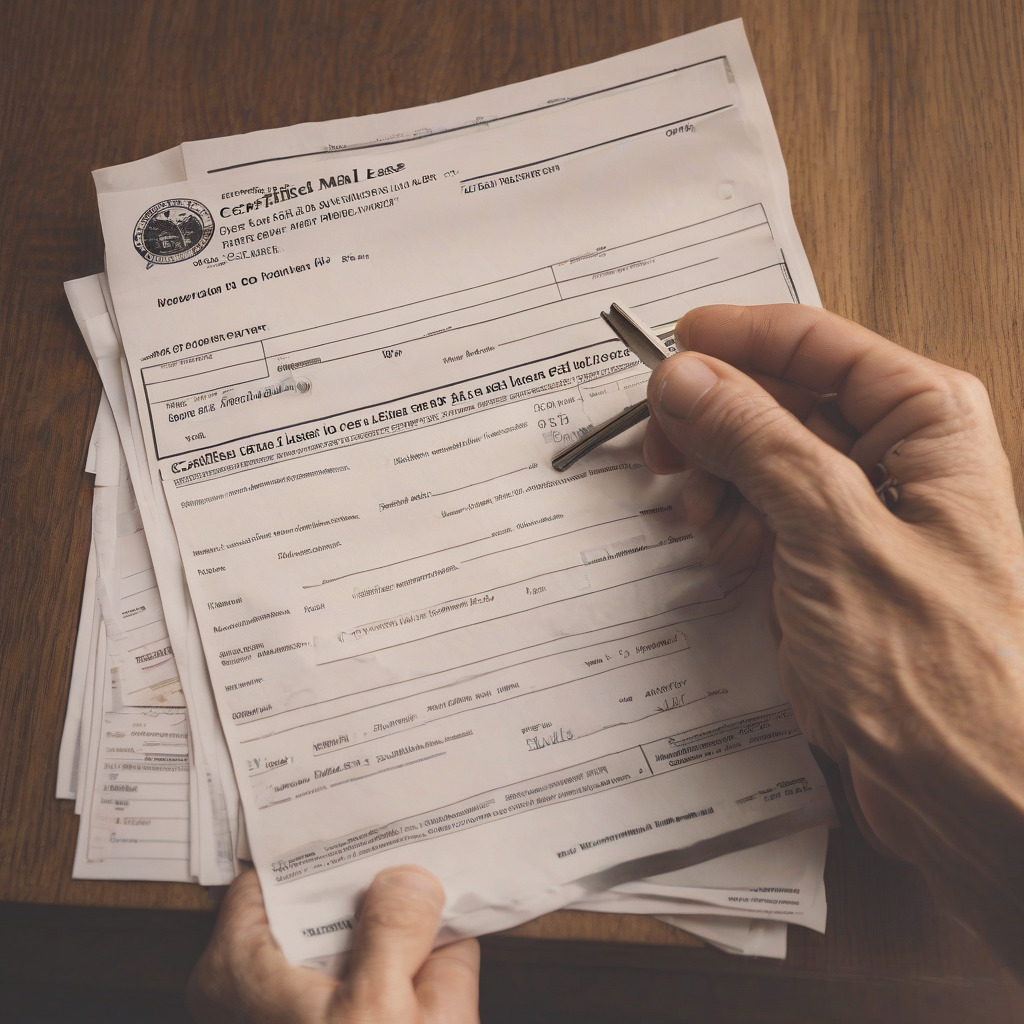
Send every notice by USPS Certified Mail with Return Receipt Requested. Keep the green card. Send a copy by email simultaneously and save the timestamp. If a landlord later claims they never received your notice, you have a postal tracking record, a signed return receipt, and an email timestamp. Denver County Court judges know what certified mail is. A landlord who signs the green card and then claims non-receipt has a credibility problem in front of a judge — and experienced landlords know that.
Step Five: Your Security Deposit and What Can Legally Be Withheld
The fear most renters have is that the landlord will pocket the security deposit and call it even. The law is more specific than that, and it mostly favors tenants.
Under C.R.S. § 38-12-103, a landlord must return the deposit within 30 days of the tenancy ending — or 60 days if the lease specifies a longer period, which is the maximum allowed. Any deduction requires an itemized written statement explaining what was withheld and why. Without that statement, the landlord can’t legally keep any of it.
Permissible deductions: actual damage beyond normal wear and tear, unpaid rent, reasonable cleaning costs if the unit was left genuinely dirty. Not permissible: scuffs on walls, minor carpet wear, faded paint. A lease-break penalty drawn from the deposit is also off limits unless the lease specifically defines an early termination fee and names the deposit as the source. Most Denver leases don’t. A landlord can pursue remaining rent as a separate legal claim. They cannot treat the deposit as automatic compensation for the lease break.
If a landlord wrongfully withholds a deposit — no itemized statement, impermissible reasons — C.R.S. § 38-12-103 allows a tenant to recover up to three times the wrongfully withheld amount plus attorney’s fees. This is the provision that makes Denver small claims court genuinely useful for tenants. Denver County Court Small Claims covers disputes up to $7,500, which covers most deposit cases in the current market. For a broader look at how Denver small claims court actually works, including filing fees and what to expect at a hearing, that process is worth understanding before you file.
The Self-Help Center at the Lindsey-Flanigan Courthouse (520 W. Colfax Ave.) helps pro se filers with forms. No attorney required. The three-times-damages provision carries enough financial consequence that many landlords settle once a formal demand letter citing the statute arrives. In Denver’s softening rental market — Capitol Hill, Baker, RiNo, Five Points have all seen the post-2022 surge flatten considerably — some landlords face real vacancy pressure. That changes the negotiation. Know the statute and demand the itemized statement in writing the day you leave.
Step Six: If You Have No Legal Ground, What You Actually Owe
If you’re in Lane 3 — no statutory protection, no termination clause — your exposure is real but bounded by a Colorado law most renters have never heard of.
Colorado requires landlords to mitigate damages. If you leave with six months left on the lease, your landlord cannot let the unit sit empty and bill you for six months. They have a legal obligation to make reasonable good-faith efforts to re-rent at market rate. The moment they find a new tenant, your liability for remaining rent ends. You owe the gap between your departure and that new lease, plus documented re-renting costs — advertising, screening fees, sometimes a month of preparation time.
This obligation gives you real negotiating position. Before you leave, consider approaching your landlord with a written mutual termination agreement: one to two months as a negotiated break fee, a specific key-return date, a written release from further claims on both sides. Many Denver landlords — especially individual owners managing a unit or two — will take that deal rather than deal with vacancy and the uncertainty of collecting a judgment from someone who’s already gone. Get any agreement signed by both parties before you move anything out. A handshake means nothing here.
If you believe a landlord failed to mitigate, document it. Check their listings after you leave. Screenshot with timestamps. A unit that sat vacant for months when comparable apartments in the building were listed and rented is directly relevant to any damages calculation in Denver County Court.
Step Seven: What Denver Landlords Actually Do vs. What They Threaten
The lawsuit threat is real as a threat. As an action, it’s rarer.
A full remaining-rent lawsuit on an $1,800/month apartment with nine months left is a potential $16,200 claim — above Denver County Court Small Claims jurisdiction ($7,500), meaning the landlord would need District Court. Legal costs and timeline create real disincentives. Unless the departing tenant has visible, attachable assets, the math often doesn’t work. What most Denver landlords actually do: withhold the deposit, re-rent as fast as they can, and send a demand letter for the gap.
Some of those demand letters get ignored. Some produce negotiated settlements for a fraction of the claimed amount. A smaller portion go to small claims for the gap period. Full district court suits over residential lease terminations do happen — concentrated in cases involving substantial remaining rent, a landlord facing no vacancy pressure, and a tenant who left with no documentation or notice.
Cases that reach Denver County Court small claims usually turn on one question: did the landlord re-rent, and when? Judges have seen enough of these to know the mitigation law cold. A landlord claiming $14,000 in remaining rent on a unit that re-rented in 45 days walks out with 45 days’ rent. The cases landlords win decisively involve tenants who left without notice, left the unit damaged, gave no forwarding address, and created no paper trail. That’s the profile to avoid.
Step Eight: Free and Low-Cost Legal Help in Denver
Most general tenant-law content skips this section. It’s the most useful part.
Colorado Legal Services (1905 Sherman St., Suite 400; 303-837-1313; coloradolegalservices.org) provides free civil legal help to income-eligible Coloradans, including housing cases. Their Denver office has a dedicated housing unit handling lease disputes, evictions, and deposit cases. Eligibility is generally at or below 200% of the federal poverty level. Expect a waitlist — intake is frequently backlogged when eviction volume spikes, which in Denver’s current market means often. Call early in the process, not after you’ve already left and the damage is done.
Community Economic Defense Project (cedp.org) focuses on eviction defense and housing stabilization and has grown significantly since 2020. Their scope for pre-eviction matters — tenants at risk who haven’t yet received a filing — is worth confirming at intake, as their service offerings have shifted. They have a real track record on habitability cases and unlawful landlord conduct.
Denver Metro Fair Housing Center (denverfairhousing.org) handles situations where a lease dispute intersects with a discrimination concern. If a landlord is treating you differently than other tenants based on race, family status, disability, or another protected class, this is the right first call. They investigate complaints and can intervene when a landlord’s response to a habitability issue or early termination appears discriminatory.
Denver Bar Association Lawyer Referral Service (303-831-8000) connects renters above CLS income eligibility who still can’t afford full representation to an attorney for a $75 initial consultation. Many Denver tenant-side attorneys will give you a realistic assessment of your case in that session — including whether your statutory ground actually holds and what your realistic exposure is if it doesn’t. Seventy-five dollars for that kind of clarity is usually money well spent.
Denver County Court Self-Help Center (Lindsey-Flanigan Courthouse, 520 W. Colfax Ave.; verify current hours at denvercountycourt.org) assists pro se litigants with court forms, the filing process, and hearing preparation. They can’t advise you on the merits of your case — that’s not their job — but they can help you navigate the process correctly, which matters. As part of our legal and finance coverage, CityDesk Denver tracks how these local court resources serve renters navigating disputes without an attorney.
Step Nine: Before You Leave the Unit, Do These Things in This Order
How you exit determines your legal position for everything that follows.
The day before you vacate, do a full photo and video walkthrough — every room, every wall, every appliance. Timestamp everything. Then compare it to your move-in documentation. If you completed a move-in inspection checklist, pull it now. Conditions documented at move-in can’t be legitimately charged as damage at move-out.
Return keys in person with a written receipt, or send them certified mail. Key return establishes your official vacatur date, which starts the 30-day deposit return clock under C.R.S. § 38-12-103. If you hand keys to a property manager, get a signed, dated receipt before you leave.
Provide your forwarding address in writing — in the vacatur notice, in the key-return note, and in a separate written communication if needed. The deposit return timeline runs from when the tenancy ends and the landlord has your address.
Send a written demand for itemized deposit accounting the day you vacate, stating that you expect a full return or itemized statement within 30 days per C.R.S. § 38-12-103. Send it certified mail. Some landlords who might otherwise sit on the deposit pay closer attention when they see that statutory citation in writing. It’s a small thing that does real work.
Keep everything: every letter, every certified mail receipt, every photo, the inspection checklist, the original lease, the notice you sent. If a dispute ends up in Denver County Court, you want a binder that tells a coherent story. Judges look at whose documentation is more complete and more credible. Make sure that’s you.
The single most important thing a Denver renter can do when breaking a lease — with a statutory ground or without one — is document everything in writing, send notices the right way, and follow the sequence the statute requires. The law has more tools for tenants in this situation than most people realize. The question is whether you use them before you need them, not after.
CityDesk Denver covers local business, housing, and policy. This article reflects Colorado statute and Denver ordinance provisions as of mid-2025. Statutes are subject to legislative amendment — verify current notice periods under the Denver Right to Cure Ordinance and any 2025 Colorado legislative session changes at leg.colorado.gov and denvergov.org before filing formal notices. For advice specific to your situation, contact Colorado Legal Services or the Denver Bar Association Lawyer Referral Service.