How Buyer's Agent Commissions Actually Work in Denver Two Years After the NAR Settlement
What the buyer-broker agreement really commits you to, whether Denver sellers are still picking up the tab, and where the new system is quietly failing buyers.


What the buyer-broker agreement really commits you to, whether Denver sellers are still picking up the tab, and where the new system is quietly failing buyers.
Two years ago, the real estate industry treated the August 2024 NAR settlement like a Y2K moment. Either catastrophic disruption or overblown panic, depending on who was talking. The actual outcome, at least in Denver, is messier and more instructive than either camp predicted.
Buyers signing contracts this fall are operating under rules that are genuinely different from 2023. The difference isn’t just procedural. It touches what you sign before you see your first house, what your agent can legally collect, and who you can realistically ask to foot the bill. Most explanatory coverage of the settlement was filed in 2024, before anyone had real transaction data. The articles Denver buyers are finding right now were written before a single Exclusive Right-to-Buy agreement had been signed under the new framework. They’ve aged about as well as you’d expect.
This piece draws on interviews with eight active Denver buyer’s agents across price tiers conducted in September 2026, current Denver Metro Association of Realtors data, title company observations from the Front Range, and Colorado Real Estate Commission forms. The goal: give you the information you actually need before someone hands you a contract.
What Actually Changed — and Why Colorado Got There First
The NAR settlement resolved antitrust litigation over how buyer-agent commissions were structured and advertised. Two practical things changed. First, sellers’ agents can no longer post buyer-agent compensation offers on MLS systems, ending the decades-old practice of a listing agent advertising “2.5% to cooperating broker” directly on REcolorado. Second, buyers must sign a written compensation agreement with their agent before touring any property.
Here’s the thing: Colorado had already moved in this direction before the NAR settlement’s compliance deadline. The Colorado Real Estate Commission mandated written buyer-broker agreements years earlier. The state’s existing framework meant the transition smoothed out here faster than in markets where written buyer-broker agreements were a foreign concept. We were, for once, ahead of the curve.
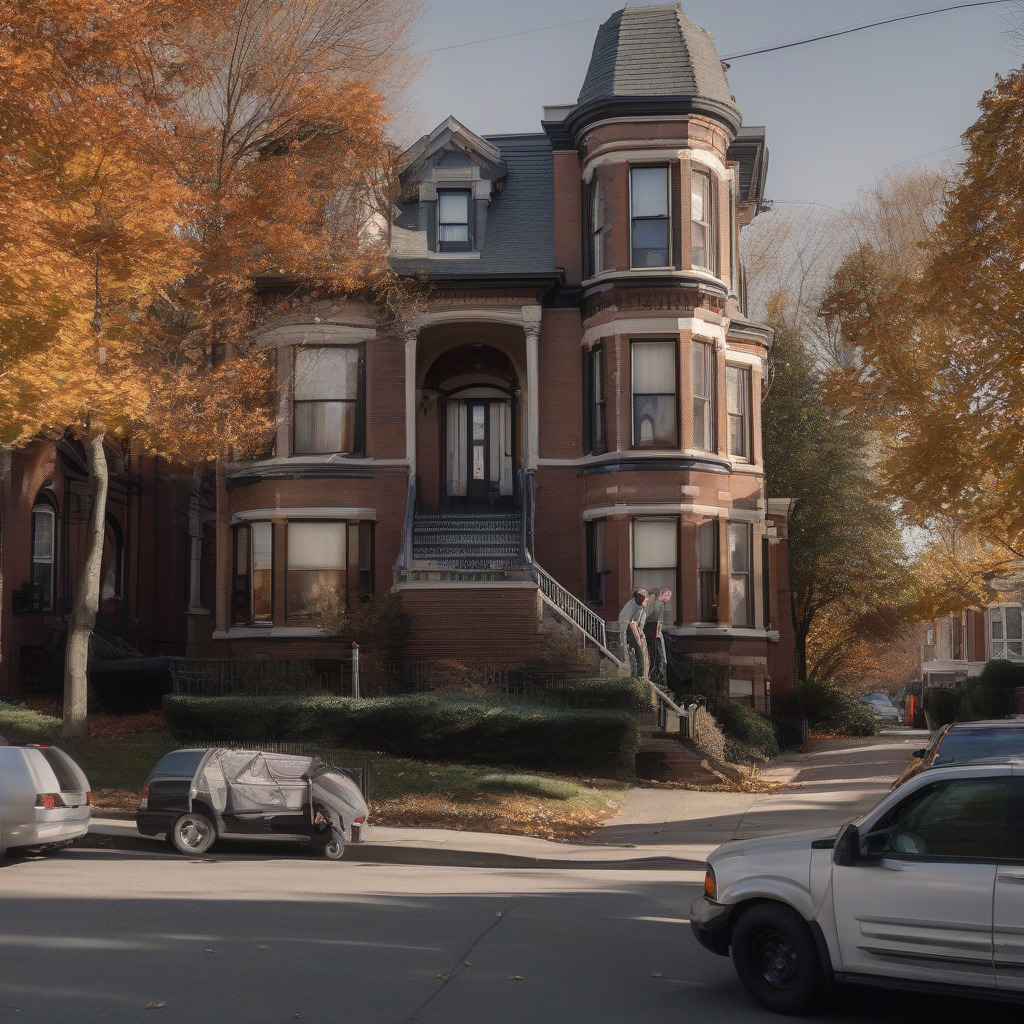
The practical result is visible on REcolorado, Denver’s MLS and the data source behind Zillow, Realtor.com, and most consumer-facing search portals. Listing sheets no longer display buyer-agent compensation. When you browse a $610,000 Tudor in Congress Park on Zillow, there’s no field showing whether the seller has instructed their agent to offer any concession toward your agent’s fee. That information exists. Sellers are still making decisions about it. But it now lives in private agent remarks or moves between brokers directly. As a buyer doing your own research, you can’t see it.
That gap matters more than it sounds. Buyers can’t compare listings based on which sellers are offering to cover buyer-agent costs. The commission conversation now happens primarily between you and your agent before you’ve seen a single property — at the moment when you have the least information and the most pressure to sign quickly. Whether that’s a feature or a flaw depends on who you ask, and I’ve heard convincing arguments in both directions.
What Denver Buyer’s Agents Are Actually Charging in Fall 2026
The 2–3% figure that still appears in national coverage is a legacy artifact. Here’s what agents are quoting right now.
In the entry-level segment under $450,000 — Commerce City, Aurora, Green Valley Ranch — the most compression has occurred. Several agents interviewed are accepting 2% to 2.25%, and flat-fee structures are most common here. Some agents reported regularly taking flat fees on transactions under $400,000. At 2.5%, a $380,000 purchase generates $9,500 in commission. Entry-level deals require similar legwork but close faster than move-up transactions, making a flat fee viable. That said, “fewer complications” is doing a lot of work in that sentence — ask any agent who’s walked a first-time buyer through their first inspection objection deadline.
In the move-up tier from $450,000 to $750,000 — Central Park, Sloan’s Lake, Harvey Park — 2% to 2.5% is most common. Agents in Central Park and the Sloan’s Lake corridor consistently quoted 2.5% as their standard ask, though several said they’d come down to 2% for buyers who were pre-approved, decisive, and not expecting extensive hand-holding across dozens of showings. One agent who works primarily in Central Park said she regularly accepts 2% when a client is relocating from out of state and the transaction is likely to move quickly once they arrive. That calculus changes when the agent anticipates extended showings with a buyer who’s still deciding whether to move — and some clients genuinely are still deciding, even at offer time.
Above $750,000 — Washington Park, Congress Park, Hilltop, Berkeley — rates cluster between 2% and 2.5%. Dollar amounts make negotiation more common. On a $950,000 home, the difference between 2% and 2.5% is $4,750, which tends to trigger a conversation. Agents working this range are more willing to accept 2% when the property is likely to require fewer offer iterations, and less flexible when they expect competitive bidding where strategy and speed matter. Flat fees are rare here partly because the dollar amounts are substantial enough that agents can just negotiate a percentage down.
New construction follows its own logic. Builders historically paid outside buyer’s agents a co-op commission. Post-settlement, many have shifted toward models where outside-agent compensation must be negotiated separately — and ideally before a buyer sets foot in the sales office. Agents working Richmond, Meritage, and Lennar communities in Aurora, Thornton, and the southwest metro were consistent on one point: if you’re buying new construction with your own agent, the conversation about who pays the agent and how much must happen before your first sales center visit. Several agents used the phrase “once you walk through that door unregistered, it’s over,” and they weren’t being dramatic. For a broader look at what Denver area builders are actually offering buyers right now in new construction, the picture on outside-agent compensation varies significantly by builder and community.
The most room to negotiate downward exists at entry level and in any situation where the buyer is low-maintenance: pre-approved, clear on what they want, buying where inventory is ample. The least flexibility is in Berkeley, Highlands, and similar submarkets where sellers’ market conditions still apply and agents know they’ll be competing hard for limited inventory.
What Colorado’s Buyer-Broker Agreement Actually Says
Colorado’s Exclusive Right-to-Buy Buyer Listing Contract is produced by the Colorado Association of Realtors and adopted by CREC. You’ll sign it before an agent takes you to your first showing. Read it. Actually read it — all of it.
The contract specifies a start and end date. Standard practice among Denver agents is to write three to six months, though several said they’re open to 30- or 60-day initial terms for buyers who want to test the relationship. Don’t accept a 12-month term without a clear exit path built in.
Compensation is defined as either a percentage or flat dollar figure that you are contractually obligated to ensure the agent receives. The critical phrase is “ensure the broker is paid.” This doesn’t mean you automatically write a check at closing. It means that if the seller agrees to a concession covering your agent’s agreed fee, that concession satisfies your obligation. If the seller won’t pay and the transaction closes, you’re on the hook for the difference. I keep returning to how many buyers are reportedly “surprised” by this at the closing table. It’s right there in the form. People sign quickly and read later, which is exactly backwards.
Colorado’s form explicitly anticipates that buyers may seek seller-paid concessions to cover buyer-agent compensation. Doing so doesn’t breach the agreement. The buyer-broker contract and the purchase contract — Colorado’s standard Contract to Buy and Sell Real Estate, the CBS form — are separate documents. You can write an offer requesting a seller concession equal to your agent’s fee without violating your commitment to that agent.
The termination language is where buyers consistently misread the form. Colorado’s Exclusive Right-to-Buy contract includes a mutual termination provision. Mutual is the operative word — both parties must agree. An agent who wants to keep you as a client isn’t required to release you. In practice, most Denver agents will sign a mutual release if the relationship has genuinely broken down. Agents working higher price points, where significant unpaid showing time is at stake, can be less accommodating. Before you sign, ask explicitly: “If this isn’t working after 30 days, will you release me in writing?” Get the answer on the spot, and get the willingness written into the contract before you commit.
One thing worth knowing: Colorado’s license law includes a “ministerial acts” provision that allows a licensed agent to show a property to an unrepresented buyer without triggering a representation relationship. The agent can answer factual questions and provide basic information. In practice, this means an agent can legally show you a home before you’ve signed a buyer-broker agreement. Several agents interviewed said they use this for an initial “chemistry” showing before asking a buyer to sign. If an agent refuses to show you any property until you’ve signed, that’s their policy choice, not a legal requirement.
Are Denver Sellers Still Covering It
The short answer is: yes, frequently. But not universally, and not in every price tier.
DMAR data and title company observations from fall 2026 suggest seller concessions of some kind appear in a substantial portion of closed Denver transactions. Nationally, roughly 40–50% of sellers are offering buyer-agent concessions. Denver-specific frequency varies considerably by neighborhood and price point. The complicating factor is that “seller concession” covers multiple categories — closing costs, rate buydowns, buyer-agent fees, or combinations. These are separate strategic decisions, and conflating them causes buyers to misread what they’re actually being offered. Understanding the full picture of what buyers pay at settlement is covered in our closing costs and moving & real estate coverage for the Front Range.
The cleanest way to find out whether a seller is open to covering buyer-agent costs is to ask, through your agent, before submitting a formal offer. This is now routine in Denver. An agent will reach out to the listing agent and ask whether the seller has instructed any concession for buyer-agent compensation. The answer shapes how the offer is structured.
When a buyer requests seller-paid buyer-agent compensation in an offer, the mechanism is a seller concession written into the CBS contract’s concession line item — expressed as a dollar amount. Say $11,700, representing 2% of a $585,000 purchase price. It appears on the settlement statement as a seller credit and satisfies the buyer’s contractual obligation to their agent. Legal, common, explicitly anticipated by the current contract framework.
The condo market — particularly Cheesman Park, Capitol Hill, and parts of Uptown — has enough inventory and enough days on market that sellers are motivated and concession requests frequently land. Slower-moving segments in Aurora and Commerce City, where homes are sitting longer than they were in 2022, similarly give buyers room to ask. Neighborhoods with tighter inventory tell a different story.
Highlands, Berkeley, and parts of the Platt Park corridor continue to see competitive offer situations. In those markets, asking for a seller concession to cover your agent fees can sink an otherwise competitive offer. The agents I spoke with in these neighborhoods were blunt about it in a way I appreciated: in a multiple-offer situation, any seller credit request is likely to disadvantage you relative to a clean offer. Period.
When a seller flatly refuses: you pay your agent from your own funds at closing. This is the scenario many buyers didn’t fully absorb when they signed their buyer-broker agreement. On a $585,000 home at 2.5%, that’s $14,625 coming out of pocket at closing, on top of your down payment and standard closing costs. Agents reported this happening in Berkeley and Washington Park transactions this fall. Buyers who hadn’t budgeted for it were genuinely angry when the number materialized.
The Market Conditions That Determine Your Leverage Right Now
Denver’s fall 2026 market is neither the feeding frenzy of 2021 nor the frozen market of late 2023. According to DMAR’s most recent monthly report, the metro remains below the four-to-six months of supply that defines a balanced market. Median close price for single-family homes is running in the $575,000–$600,000 range based on late 2024 DMAR data. The condo segment has lagged single-family meaningfully, driven partly by persistent HOA insurance issues and Fannie/Freddie eligibility problems in older Denver buildings — a situation that’s gotten less attention than it deserves.
Denver is broadly a mild seller’s market at the median, with significant variation by price tier and neighborhood. Buyers have more leverage than they did three years ago, particularly in the condo segment and above $800,000, where the pool of qualified buyers shrinks. The $450,000–$650,000 range in desirable in-town neighborhoods still moves relatively fast, and sellers there have less incentive to accommodate concession requests.
For commission negotiating specifically, market conditions translate directly. If you’re buying a condo in a building with multiple active listings and elevated days on market, your agent’s request for a seller concession covering the buyer-agent fee will likely land. If you’re buying a four-bedroom house in Sunnyside with competing offers, it probably won’t — and pressing for it may cost you the house. That calculus is neighborhood-specific and month-specific, which is why a local agent’s reading of current conditions matters more than any national rule of thumb.
New construction deserves separate mention. Richmond, Meritage, Lennar, and other volume builders in the metro’s suburban fringe aren’t adjusting base pricing in ways that benefit buyers. Builder incentives run heavily toward rate buydowns and design-center upgrades rather than cash concessions for buyer-agent fees. If you’re using your own agent on new construction, the agent’s compensation typically must be negotiated with the builder’s sales manager before you register as a represented buyer. After that, the math on who pays what is builder-specific and varies between communities run by the same builder. Some builders are cooperative; others treat outside agent compensation as a one-time negotiation, non-negotiable thereafter. Ask before you walk in.
Going Unrepresented — What Denver Buyers Are Actually Running Into
Is going unrepresented saving Denver buyers money in fall 2026? In a limited set of circumstances, yes. In most, no. The losses aren’t hypothetical — they’re showing up in attorneys’ offices and on real closing statements.
Colorado’s Seller’s Property Disclosure is detailed and legally significant. It asks sellers to disclose known defects, permit history, HOA issues, and environmental conditions. An experienced buyer’s agent knows which answers to probe, which items to escalate to an inspector, and which disclosures in certain zip codes warrant additional investigation — particularly near former industrial sites in Globeville and Adams County. Unrepresented buyers are receiving this form and often treating it like routine paperwork rather than a legal record. Denver real estate attorneys reported seeing post-closing disputes involving buyers who missed or misread SPD language in the past two years. One involved a buyer in the Platt Park area who didn’t flag a disclosure about foundation settlement history and discovered active cracking after closing.
Colorado’s CBS contract contains a strict chain of deadlines. Earnest money delivery, inspection objection, loan objection, title objection — each has its own date. These aren’t suggestions. Missing a deadline, or failing to terminate properly at a deadline, can lock you into a contract you intended to exit or cost you your earnest money. One buyer in Aurora realized after her inspection objection deadline had passed that a home had unpermitted work in the basement. She couldn’t terminate and lost her earnest money when she tried to back out.
The title commitment you receive after going under contract contains a Schedule B-II list of exceptions to coverage: easements, access restrictions, mineral rights reservations, covenant restrictions. Properties near Jefferson County and Adams County lines frequently carry agricultural or utility easements. Older properties in Swansea, Elyria, and the Globeville corridor sometimes carry restrictions tied to industrial history. An unrepresented buyer reading a Schedule B-II cold may close on a property with a significant easement affecting planned use and not realize it until later. A buyer in the Globeville corridor discovered after closing that a utility easement thirty feet wide ran through the middle of a lot she’d planned to develop. Thirty feet wide. Through the middle.
Colorado law requires sellers to provide HOA documents, and buyers have a right to review and object within a specified period. Unrepresented buyers often don’t know what to scrutinize: reserve fund health, pending special assessments, litigation history, insurance adequacy. A condo buyer in LoHi missed her review period and couldn’t terminate when she discovered the HOA was carrying a $2 million reserve fund deficit heading into a special assessment. That’s a building with serious structural financial problems, not a rounding error.
There are genuine scenarios where going unrepresented makes sense. New construction from a large reputable builder with disclosed pricing, a move-in-ready spec home, minimal negotiation complexity. Or an off-market transaction where you already know the seller, the property, and its history, and you’re having a real estate attorney review the contract directly. Denver has transactional attorneys who will review a CBS contract for a flat fee, meaningfully cheaper than a full commission if the deal is genuinely uncomplicated.
The threshold question is whether the transaction’s complexity justifies the agent’s cost. On a $600,000 resale house with an SPD, an inspection period, and a seller who may not negotiate straight, the risk of missing one CBS deadline or one material disclosure can exceed the agent’s fee. On a brand-new spec home with a builder’s standard contract you’ve had an attorney review, the math may tip the other way. No universal answer — which is itself useful information.
How to Negotiate Your Buyer-Agent Agreement Before You Sign
The Exclusive Right-to-Buy contract is presented to buyers as a standard form. Most sign it without negotiating anything. That’s a mistake, because several terms are genuinely movable.
Start with a direct question on rate or flat fee: “Is your stated rate negotiable, or do you work with a flat fee?” Agents who say neither is negotiable are either at the high end of the market with a track record that justifies the confidence, or they’re bluffing. In the current Denver market, rate negotiation is common enough that any agent who treats it as an insult is probably not someone you want representing you. If an agent quotes 2.5%, ask what it would take to get to 2%. Shorter decision timeline. Clear pre-approval. A defined cap on showings. Be specific about your situation; vague rate-shopping signals you’re not serious, and agents read that immediately.
Thirty to sixty days for an initial engagement is a reasonable ask. If an agent won’t work with a shorter term and a renewal option, ask why. A strong agent should be comfortable with a 60-day initial term. If they push back hard, pay attention.
The contract can specify which property types and geographic areas are covered. If you’re primarily looking in Washington Park but want the option to pursue new construction in the suburbs independently, you can attempt to carve that out. Some agents won’t agree; others will write in limited scope if the primary search area is clear. Worth asking before you sign.
Ask specifically for a mutual release provision allowing termination within a specified period with written notice. Some agents will write in a 30-day cancellation right. Others won’t. If an agent refuses any termination flexibility, that tells you something about how they view the client relationship.
When evaluating whether a rate is justified, ask for transaction history: how many buyer-side closings in the past 12 months in your price range? What was the average list-to-sale ratio for their buyers? Have they successfully negotiated seller concessions covering agent fees? An agent quoting 2.5% with 15 closed buyer transactions in your target neighborhoods has a better case than one quoting the same rate with four closings and vague answers about market knowledge. Transaction volume in your specific market segment is a clearer signal than years-of-experience claims, which anyone can make.
The agents most open to reduced rates are those working entry-level and move-up price points in areas with decent inventory, experienced agents who value repeat referrals over maximum extraction from a single deal, and agents at boutique brokerages not subject to the minimums some larger firms impose. They’re also typically the ones who are transparent about why they’ll negotiate or why they won’t — which is itself worth something.
The Commission Math on a Median Denver Home
Three scenarios on a $585,000 purchase price.
| Buyer-Agent Rate | Dollar Amount | Seller Concession Request | Buyer Out-of-Pocket if Seller Pays | Buyer Out-of-Pocket if Seller Refuses |
|---|---|---|---|---|
| 1.5% | $8,775 | $8,775 | $0 | $8,775 at closing |
| 2.0% | $11,700 | $11,700 | $0 | $11,700 at closing |
| 2.5% | $14,625 | $14,625 | $0 | $14,625 at closing |
When a seller concession is written into an offer, the seller’s net proceeds decrease by that amount. That’s why sellers in competitive markets resist it. The buyer’s loan is based on the purchase price, not the purchase price minus the concession, so the buyer isn’t borrowing less. The concession redirects funds from seller proceeds to buyer-agent compensation at the closing table. For cash-constrained buyers, getting a seller to cover the agent fee can be the difference between making a deal work and not. For sellers evaluating multiple offers, a concession request of $11,700 or $14,625 can be the deciding factor in choosing a different buyer. Both things are true simultaneously, and your agent should be helping you navigate exactly that tension.
What This All Adds Up To for a Denver Buyer This Fall
The post-settlement system isn’t chaos, but it’s not the clean improvement the NAR press office advertised either. Denver buyers have more transparency on paper — the fee is disclosed and negotiated upfront. They have less transparency in practice, because they can no longer see what sellers are offering buyer’s agents before touring a home. Whether that trade-off is a net positive depends entirely on how informed the buyer is walking in. Which is sort of the whole problem.
The buyers faring best in fall 2026 are the ones who had the commission conversation before signing anything. They understood exactly what their buyer-broker agreement obligated them to pay and under what circumstances. They worked with an agent who helped them structure seller concession requests accurately for the specific market they were buying in.
The buyers running into trouble signed a six-month Exclusive Right-to-Buy agreement in the first meeting without reading it. They assumed the seller would automatically cover the agent fee. They went unrepresented on a resale to save money and missed a CBS deadline or a material disclosure. They found out at closing that they owed an unexpected $14,000 because no one had confirmed whether the seller would cover the fee. Agents described versions of this in almost every interview.
Colorado’s head start on written buyer-broker agreements did smooth the transition here relative to states that implemented these changes from scratch. But two years in, the system still places a significant information burden on buyers who don’t know the right questions to ask. This piece is the start of that conversation. It is not a substitute for reading your contract before you sign it.