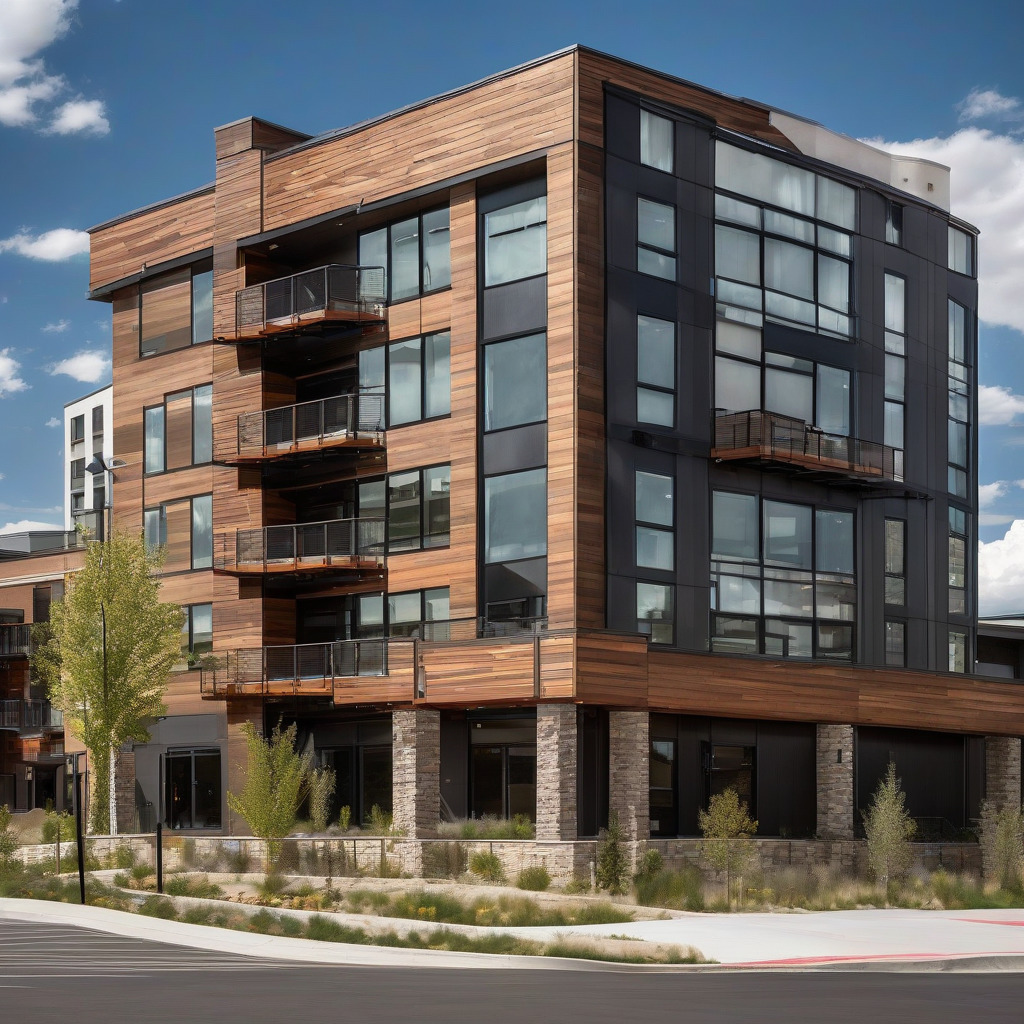
What Denver Area Builders Are Actually Offering Buyers Right Now in New Construction
Lennar, Richmond American, and Meritage are competing hard for buyers in Commerce City, Thornton, and Brighton. Here's what the fine print actually says.


Lennar, Richmond American, and Meritage are competing hard for buyers in Commerce City, Thornton, and Brighton. Here’s what the fine print actually says.
The model homes are open. The flags are flying. And the sales agents will tell you, with genuine enthusiasm, that there has never been a better time to buy new in Denver’s outer suburbs.
That may even be true — depending on which incentive you’re actually receiving and what the public report says about your metro district obligations. Three of the metro’s largest production builders are running significant concession programs across communities in Commerce City, Thornton, Brighton, Broomfield, and along the Douglas County corridor. The competition is real. So is the fine print.
Why Builders Are Cutting Deals Right Now
Mortgage rates have stayed stubbornly high into early 2026, which has meaningfully reduced the pool of qualified buyers in the price range where most Denver-area production builders operate. At the same time, resale inventory in Adams, Arapahoe, and Broomfield counties has climbed back from the near-zero levels of 2021–2022. Buyers have options again. Builders know it.
The response has been a structured concession model: instead of cutting base prices on record — which would undermine comps for already-closed buyers and drag down appraised values across a phase — builders are deploying temporary rate buydowns, lot premium waivers, and design center credits in our moving & real estate coverage. Some of these incentives deliver real value. Others are accounting architecture. The distinction matters, and it’s rarely explained clearly at the sales office.
How the Rate Buydown Math Works
Understand the structure before you walk into any model home.
A 2-1 temporary buydown reduces your effective mortgage rate by two percentage points in Year 1 and one point in Year 2, then resets to the full contract rate for the remaining term. The savings in those first two years are real — the builder deposits money into an escrow account at closing to fund the lower payments. But after 24 months, the reduced rate is gone. You’re carrying the full market-rate payment for the remaining 28 years of the loan.
Here’s the comparison that almost never appears in a builder’s sales presentation: What happens to your long-term payment if that same dollar amount — what it costs the builder to fund the buydown — goes toward a straight price reduction instead?
A permanent price cut lowers your principal and your payment for the full life of the loan. The buydown delivers a larger short-term reduction; the price cut delivers a smaller but permanent one. Which is actually better for you depends on your timeline and your honest read on whether you’ll refinance when rates fall. A buyer who needs breathing room in the first two years, or who genuinely expects to refinance, can find real value in a buydown. A buyer planning to hold long-term and who won’t refinance should run the full-term math on both before accepting.
Ask the builder’s sales rep to show you the Year 3 payment — the reset payment at the full contract rate. It should be on the same worksheet as Year 1 and Year 2. If they don’t volunteer it, that tells you something. Then get a competing loan estimate from at least one outside lender: same loan amount, same term, same closing-cost structure. All three builders discussed here tie their rate incentives to in-house mortgage lenders, and the all-in cost comparison is what determines whether that relationship is actually worth accepting.
Lennar at Painted Prairie and Barefoot Lakes
Lennar is active at two communities worth attention: Painted Prairie in Aurora near the DIA corridor, and Barefoot Lakes in Firestone, farther north along the Weld County road network. Call or visit the model homes for current pricing — base prices shift with phase inventory.
Lennar’s signature offering is Everything’s Included®, which bundles features that competitors charge as upgrades into the base price. If you’ve ever watched a design-center bill quietly double on a comparable build elsewhere, you understand why this matters. The gap between Lennar’s advertised price and actual closing price tends to be narrower than at comparable builders. That’s a real structural advantage.
Lennar Mortgage handles their rate buydown offers. Buyers using an outside lender typically lose the rate incentive. If you have a credit union, VA eligibility, or an existing lender relationship you want to keep, have that conversation before signing — not after — and ask what alternative closing-cost credit is available in its place. Get any such credit in the purchase agreement addendum, not as a verbal commitment from the sales office.
Richmond American at Reunion in Commerce City
Richmond American’s most active Denver-area presence is Reunion, the large master-planned community in Commerce City. Reunion has been under construction long enough that some early phases have mature trees, which is its own kind of milestone out here. Current base prices require direct verification with the sales office.
Richmond American finances through HomeAmerican Mortgage, and current incentive structures are tied to that relationship — typically a buydown, a closing-cost contribution, or a combination, varying by closing date and phase.
The design center is where this model demands the most scrutiny. Richmond American builds from a competitive base price and then offers extensive customization through its design center in Greenwood Village — flooring, cabinetry, countertops, exterior elevations, structural options, all chosen after you’ve signed the purchase contract. The experience is intentionally immersive. It is also expensive. The gap between a signed base-price contract and the final purchase price after design center selections is the most documented buyer frustration point with this builder, and it is a known and predictable risk.
This is how Richmond American’s business works — it’s not a secret. But buyers who budget based on the advertised price, then spend two hours in a well-appointed showroom with a sales consultant, can close well above their initial expectation. Set a hard-dollar cap before the appointment. Ask for an itemized base-price specification sheet before you go in, so you know exactly what’s included and what isn’t. Treat the design center as a financial transaction, not an interior design experience.
Meritage in Douglas County and Broomfield
Meritage is active in two distinct corridors: communities near Castle Rock in Douglas County, and the Baseline master-plan in Broomfield off US-36. Baseline is a long-running mixed-use development; what was available last quarter may not be this quarter. Check directly with the sales office on both locations before budgeting.
Meritage’s differentiating pitch is energy efficiency. Spray foam insulation and tankless water heaters are standard construction — not upgrades. In Denver’s climate, where heating loads are genuine and hail damage affects insurance premiums year after year, lower utility costs are a real long-term ownership factor. Ask for the written spec sheet to verify what’s actually included.
Meritage Homes Mortgage is the affiliated lender for their rate incentives, and the same tied-lender dynamic applies as with Lennar and Richmond American. At Baseline, where price points run higher, getting the alternative closing-cost credit negotiated in writing matters more. The dollar amounts are larger, and the gap you might leave on the table is too.
What Buyer’s Agents Actually See
I talked to a buyer’s agent who works exclusively with buyers across these communities — no listing business, no builder referral arrangements. Two observations came up consistently.
First: the incentive is real when a buyer is comparing a new home to a resale at a genuinely equivalent price and the builder is paying meaningful points toward a buydown. Where buyers get into trouble is when the base price has been set above what the market would otherwise bear precisely because the builder knows an incentive is coming. That’s a circular discount. Before any incentive enters the picture, compare the builder’s base price to resale price per square foot in the same ZIP code. If the spread is suspiciously large, that’s worth understanding.
Second: on design center appointments at Richmond American and comparable builders, the advice was blunt. Set a hard-dollar budget cap before you walk in. The design center is not there to help you spend less money. This sounds obvious. Apparently it isn’t obvious enough, given how often it comes up after the fact.
Metro Districts and Property Taxes
This is the most underreported financial risk in Denver-area new construction, and it deserves plain language.
Colorado metropolitan special taxing districts — metro districts — are how most suburban master-plan developers finance infrastructure: roads, water lines, sewer, parks, common area amenities. The district issues bonds. Homeowners repay those bonds through property tax mill levies assessed annually on top of the base county rate. In communities like Reunion, Painted Prairie, and comparable developments in Thornton and Brighton, metro district mill levies commonly add several thousand dollars per year to a homeowner’s property tax bill — in some cases substantially more in the first decade, when bond debt is highest. None of that cost appears in the builder’s payment worksheet, which typically shows only principal, interest, and base-county taxes.
Colorado law requires disclosure of metro district obligations. That disclosure appears in the Public Offering Statement, which builders must provide and buyers must acknowledge. The problem: this document often arrives in a signing package at or near contract execution, and buyers who don’t know to look for it can sign without understanding its financial impact. That timing is not accidental.
Ask for the Public Offering Statement by name before you sign anything. Read the sections on mill levies and the projected bond payoff timeline. The document is also publicly available through the Colorado Department of Local Affairs special district database, which maintains a searchable registry of metro districts and their financial obligations. Look it up before your first sales office visit.
Other Risks Specific to These Suburbs
Builder-controlled HOAs in early phases control reserve contributions and common-area maintenance standards. In a master-plan’s first years, the HOA is typically run by the developer — the same entity selling you the house, which is a strange arrangement when you sit with it for a moment. Developer control typically transfers to homeowners a few years after buildout. Reserve underfunding may only become apparent then. Ask for any reserve study that exists before closing. In developer-controlled HOAs, there may not be one. Understand that as a signal.
Radon is a genuine concern. Colorado’s Front Range has elevated radon risk, and new construction in Commerce City, Brighton, and Thornton is not exempt. Get written confirmation that a passive radon mitigation system is included in the construction spec. Post-occupancy radon testing should happen in the first year.
Infrastructure lags. The DIA corridor and outer-ring suburbs in Adams County are growing faster than supporting infrastructure can follow. Road completion in active master-plans often trails home sales by years, not months. School capacity gaps at the elementary and middle-school level are documented in districts serving these communities. The model home brochure won’t mention any of this.
Hail insurance carries real costs. The Denver metro sits in the hail corridor, and insurance premiums on new construction in outer suburbs — where replacement values are high — are a material ongoing expense. Builder payment estimates don’t include homeowner’s insurance. Get actual quotes from multiple carriers before closing, particularly in any community east of I-25. Builder warranties don’t cover hail damage after closing.
What to Ask and Demand in Writing Before You Sign
Get a competing loan estimate from at least one outside lender. Compare total cost — rate, fees, closing costs — not just the rate headline. If the builder’s all-in cost is genuinely lower, the tied-lender relationship may be worth it. If the gap is narrow, negotiate a closing-cost credit for using your own lender. Get it in the purchase agreement.
Builder contracts in Colorado are not Colorado Real Estate Commission standard forms. They’re written by the builder’s legal team and they favor the builder — on earnest money forfeiture, construction timeline extensions, specification changes, and dispute resolution. Have an independent real estate attorney review the contract before you sign. Ask specifically about the builder’s right to modify specifications, the conditions under which earnest money is forfeited, and whether an arbitration clause is present. These provisions matter far more when something goes wrong than when everything is going smoothly in the sales office.
Before the design center appointment: write down your dollar cap. Get the itemized base-price specification sheet first. Before signing the purchase contract: request the Public Offering Statement. Ask the sales rep for the current mill levy and the projected bond payoff timeline. Ask whether additional bond issuances are planned for future infrastructure phases. Ask for the current HOA budget and any reserve study. Confirm in writing that the home includes a passive radon mitigation system. Get projected start and closing dates in writing, and find out what happens contractually if the builder misses them. Timeline slippage is routine. Know whether your earnest money is refundable — and under exactly what conditions — before you sign, not after.
The concessions are real. The competition among these three builders is producing genuine buyer value in some transactions. But the builders writing these contracts have been doing this longer than most of their buyers, and the incentive structures are designed to work in their favor across the full arc of the transaction. That’s not a criticism — it’s just how production homebuilding operates. The buyers who come out ahead are the ones who do the math, read the documents, and ask the hard questions before signing. Not after.