How Alcohol Actually Hits Harder at Altitude and What Denver ER Doctors Want You to Know
Every summer, the same scene plays out in the Red Rocks Amphitheatre first aid station: someone who had "just a few beers" sits in a camp chair, pale, nauseated, confused, and convinced they got ba…

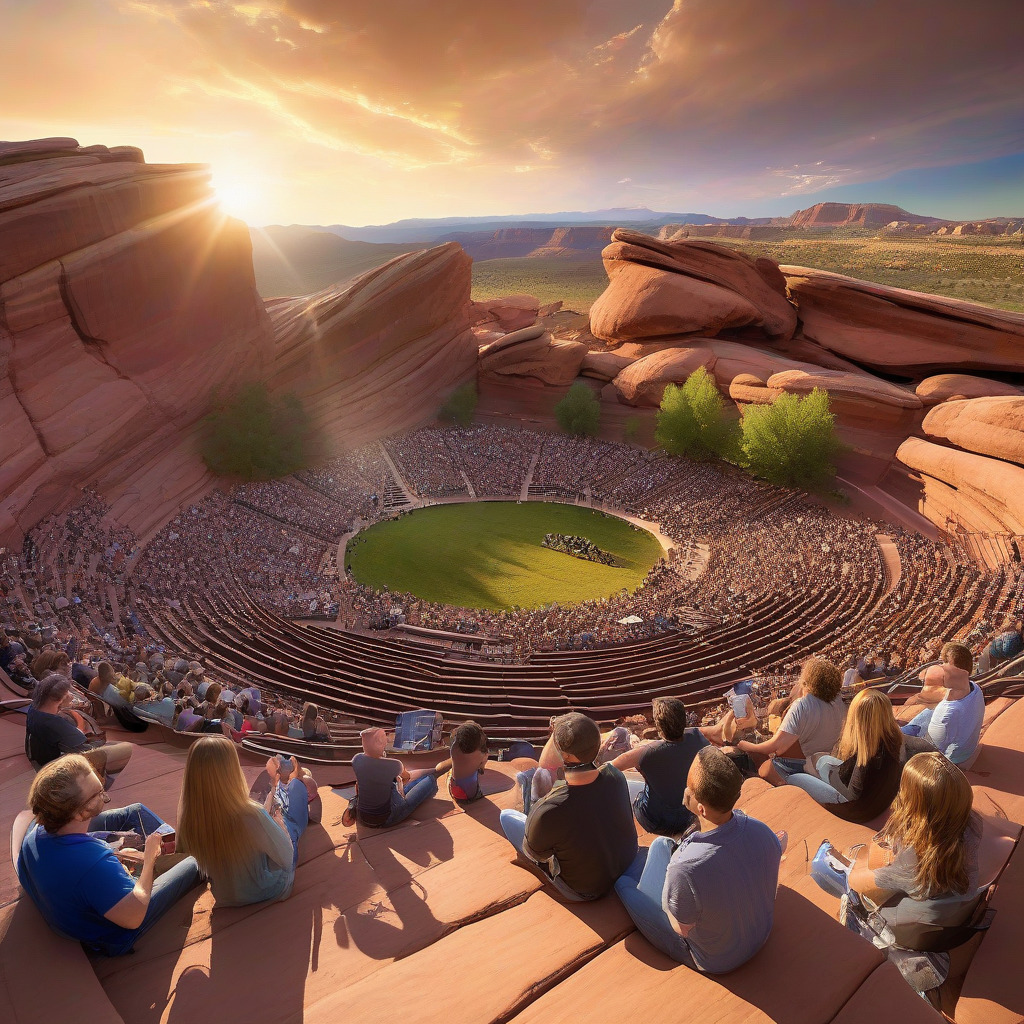
Every summer, the same scene plays out in the Red Rocks Amphitheatre first aid station: someone who had “just a few beers” sits in a camp chair, pale, nauseated, confused, and convinced they got bad food from the lot. The medics know otherwise. By late July, UCHealth emergency physicians have seen enough of these presentations to recognize the pattern. Altitude. Alcohol. Dehydration. Radiant heat. The slow creep of a body in real distress.
This is not a lecture about drinking less. It’s an explanation, sourced from emergency medicine, of the physiological gap between how drunk you feel and how impaired you actually are at 5,280 to 6,450 feet — and what to do when your body starts sending signals at a venue where the ambulance is parked at an access road, not your row.
The Study Everybody Gets Wrong
The misinformation circulating in travel guides, Reddit threads, and outdoorsy listicles traces back to a single 1987 study. Researchers found that blood alcohol concentration — the actual measurable level of ethanol in your blood — does not significantly increase at altitude compared to sea level, given the same amount of alcohol consumed. Travel websites grabbed that finding and ran: “Science says altitude doesn’t make alcohol hit harder. Myth busted.”
That reading is wrong. Dangerously so.
The study measured BAC. It did not measure cognitive performance, coordination, reaction time, or any functional indicator of how impaired someone actually was. Your BAC at 6,450 feet may be identical to what it’d be at sea level after the same number of drinks. But your brain at 6,450 feet is already operating under mild hypoxic stress before you open a single can. Alcohol’s depressant effects stack on top of that, and the combined impairment is worse than the BAC number alone would predict. That gap is where people get hurt.
“The ‘87 study has been misapplied for decades,” said a UCHealth emergency medicine physician who works in the Denver area and routinely treats altitude-related presentations. “BAC is a proxy for impairment at sea level. It’s a less reliable proxy at altitude. The number on a breathalyzer isn’t telling you the whole story when someone’s oxygen saturation is already lower than baseline.”
Thirty-eight years later, that single study is still doing damage.
What’s Actually Happening to Your Body at 6,450 Feet
Red Rocks sits at 6,450 feet. Denver proper is 5,280. For most visitors arriving from coastal cities — and for Denver residents who haven’t spent extended time above 8,000 feet — that elevation produces measurable physiological changes. Not dramatic, not immediately obvious. Just real.
At sea level, a healthy adult’s blood oxygen saturation runs 98 to 99 percent. At Red Rocks’ elevation, you’re looking at 92 to 94 percent for someone who hasn’t acclimatized. Still within the range physicians consider normal, but at the lower end. The brain is sensitive to even modest reductions in oxygen delivery — more sensitive than most people give it credit for.
The condition is called mild hypoxia, and its cognitive fingerprints look a lot like mild intoxication: slowed reaction time, reduced executive function, impaired short-term memory, a dip in fine motor coordination. None of these are dramatic in isolation. You won’t feel obviously impaired just from walking to your seat in Section 40. But alcohol produces the same categories of impairment through a different pathway, and the two compound directly.
“What we see clinically is that alcohol’s sedating and coordination-impairing effects are amplified when someone is already in mild hypoxia,” said the UCHealth physician. “The brain is working with less oxygen, and then you add a substance that further depresses central nervous system function. The impairment exceeds what either stressor would produce alone. BAC accurately reflects how much ethanol is in your blood, but it cannot account for the hypoxia your brain was already managing before drink one.”
So How Many Drinks Is That, Actually
This is the question everyone wants answered. The honest answer is imprecise, and I’d rather say that up front than hand you a clean number that gives you false confidence — because I’ve seen what happens when people treat rough equivalencies as permission slips.
Emergency physicians and altitude medicine researchers describe a rough working figure: at Red Rocks’ 6,450 feet, one standard drink may impair you comparably to about 1.3 to 1.5 drinks at sea level. The blunter rule you’ve probably seen — “one drink at altitude equals two at sea level” — is more applicable above 8,000 feet, like Breckenridge or Aspen. It overstates the effect at Denver and Red Rocks elevations.
“I’m cautious about giving people a formula,” the UCHealth physician said, “because individual variation is enormous. Body weight. Acclimatization time. Fitness level. Whether someone has eaten. Hydration status. All of it matters. But the ‘1.3 to 1.5 drinks’ equivalency is a reasonable working framework for the Denver elevation range. At Red Rocks specifically, I’d tell someone to pace as if each drink is one-and-a-half.”
More useful than any conversion number is a timing model. Your liver processes one standard drink per hour regardless of elevation — altitude doesn’t change that rate. What changes is the impairment you’re carrying between drinks. If you arrive dehydrated, haven’t eaten since lunch, and you’re on your third beer by the time the opener finishes, your functional impairment is not three drinks at sea level. It’s closer to four or five. And that’s before July sun and dry air have finished their work on you. Slow your pace by one drink per set. Eat before the lot. Treat the water-to-alcohol ratio as non-negotiable.
Denver’s Dry Air Is the Part Nobody Talks About
The altitude conversation tends to crowd out an equally important factor specific to Colorado’s climate: the dehydration multiplier. It’s underappreciated even by longtime Denver residents.
Denver’s average relative humidity in July runs 40 to 45 percent. Sweat evaporates almost immediately at that level. People who’ve never been to Colorado consistently underestimate how much fluid they’re losing — you don’t feel wet, don’t feel like you’re sweating heavily, but the loss is continuous and real.
Alcohol makes it worse through a well-documented mechanism: it suppresses antidiuretic hormone (ADH), which the kidneys use to retain water. Every drink increases urine output beyond what you’d normally produce. In a humid environment, that effect is noticeable but manageable. In Denver’s July air, it stacks on top of already-elevated baseline fluid loss, and the deficit accumulates faster than most people register.
Red Rocks’ specific geography adds another layer. The amphitheater is a sandstone bowl — the Morrison Formation that makes it visually striking also radiates heat absorbed throughout the afternoon. Rows 1 through 40 face west, which means direct sun until around 8:30 PM during summer shows. Denver’s July UV Index runs 10 to 11, in the “Very High” range, which accelerates both sunburn and fluid loss.
And before any of this starts, you’ve walked 0.3 to 0.5 miles uphill from the parking terraces to your seat — typically in that same afternoon sun. For visitors from sea level, that walk alone will noticeably elevate heart rate. By the time the headliner takes the stage, a concertgoer who skipped dinner, had a beer in the lot, and bought a second one at their seat may already be meaningfully dehydrated. That state amplifies alcohol’s effects and blunts the body’s early warning signals for heat stress. The machine is running behind before the show even starts.
Is That Nausea the Beer or the Altitude
This is one of the more consequential diagnostic problems at summer outdoor events in Denver, because acute mountain sickness, alcohol intoxication, and heat exhaustion share a nearly identical symptom cluster: headache, nausea, dizziness, impaired coordination. In the Red Rocks first aid station, you cannot tell from symptoms alone which of the three you’re dealing with. The person experiencing it almost certainly can’t either — and that’s not a character flaw. It’s just how the physiology works.
The key differentiators come down to trajectory and context. Alcohol intoxication correlates with the drinking timeline and plateaus once drinking stops. Symptoms track with consumption, then slowly improve as the body metabolizes ethanol.
Acute mountain sickness follows a different pattern. It can take 24 to 48 hours at elevation to show up, and it worsens progressively rather than improving when drinking stops. Someone who had two beers, felt fine for an hour, and then developed a persistent, deepening headache with nausea and light-headedness that intensifies over the next hour — that’s describing AMS, not a buzz. The dangerous masking problem: people in this state almost always attribute their symptoms to alcohol. “I just drank too much” is the first explanation, every time. It’s the most familiar frame, and it carries the least social alarm. Nobody wants to be the person who can’t handle altitude.
Heat exhaustion has its own signature: cessation or dramatic reduction of sweating in someone who should be sweating, skin that becomes pale or clammy, rapid heart rate. Sitting in the sun at Red Rocks, someone experiencing early heat exhaustion or AMS will often tell a friend they’re fine, they just need water, they’ll walk it off. This is the moment when timing matters most. “I’ll walk it off” is not a medical plan.
Warning Signs That Mean Get Help Now
These are not “probably fine, take it easy” symptoms. Each one requires immediate medical attention.
Confusion or disorientation beyond normal tipsiness. If someone can’t answer simple questions, doesn’t know where they are, or can’t follow a basic instruction, that’s not drunk. That’s a neurological red flag — possible heat stroke, severe alcohol poisoning, or altitude cerebral edema. Rare at Red Rocks elevation, but not impossible in vulnerable individuals.
Cessation of sweating with hot, flushed skin. A body that has stopped sweating in heat has lost its primary cooling mechanism. This is a medical emergency. Shade is not the intervention.
Vomiting more than once, particularly without improvement. A single episode is common and usually benign. Repeated vomiting — especially after drinking has stopped — points toward severe alcohol poisoning, worsening AMS, or dehydration severe enough to need IV fluids.
Rapid heart rate with pale or clammy skin. Either dehydration is reducing blood volume, heat exhaustion is taking hold, or something more serious is underway.
A persistent, worsening headache that doesn’t respond to water and rest. If someone drinks two beers, develops a headache, drinks a liter of water, and the headache intensifies over the next hour, that’s not dehydration. That’s the trajectory of AMS.
Loss of consciousness, or near-loss. Call 911. Not in ten minutes.
“The presentations that end up in the ICU versus going home are almost always differentiated by how long people waited,” the UCHealth physician said. “Heatstroke and severe AMS are both manageable with early intervention. They become life-threatening when someone has been symptomatic for two hours and their friends thought they just needed to sleep it off.”
What to Actually Do When You Feel Off
The logistics of getting help vary by venue, and knowing them in advance takes 30 seconds and could matter a great deal later.
Red Rocks: During permitted events, AMR staffs the venue with on-site paramedics. But here’s the physical reality of the place: an ambulance cannot pull up to Row 25. The sandstone formations and staircase terrain mean EMS response to the upper rows requires either the patient being brought to the venue access road, or paramedics navigating stairs on foot with equipment. That’s not a criticism of AMR or Red Rocks management — it’s the geology. Waiting until someone is unresponsive before flagging help adds significant time to the response. Flag a staff member or security the moment symptoms raise concern. They have direct radio contact with the first aid station. If you’re not sure whether something is serious — and you rarely will be — sit the person down, stop drinking, get water into them, and have someone stay while another person flags staff. Don’t let someone walk off alone to “get some air.”
Coors Field: The venue’s grid-street location allows ambulance access directly to the building perimeter, and the team maintains full-time medical staff during games. The same dehydration-and-alcohol dynamics apply — the lower deck in July is direct sun, beer sales run through the seventh inning, and at $12 to $18 a pour, the pace can accelerate without people noticing. The key difference from Red Rocks is that advanced care, once flagged, is faster.
Confluence Park and the South Platte float corridor: There is no fixed medical infrastructure along the float. No first aid station. No on-site EMS. Cell service is unreliable at certain points. The nearest Level I trauma center is Denver Health Medical Center at 777 Bannock Street, about 1.5 miles east. If someone in your float group is in distress, get them out of the water and to the nearest road access point, then call 911. Don’t float a symptomatic person toward the next takeout point if they’re getting worse.
At all three venues: shade, stop drinking, slow hydration with water. Not energy drinks. Not more alcohol. “Walking it off” is one of the worst responses to heat exhaustion or AMS — exertion raises core temperature and heart rate precisely when the body needs to cool down and stabilize.
The Practical Checklist
Eat a real meal before you arrive. A full stomach slows alcohol absorption. This isn’t a hack; it’s basic pharmacokinetics.
Give your body time to adjust before drinking. Visitors from sea level who step off a plane, drive straight to Red Rocks, and open a beer in the parking lot are combining maximum hypoxic stress with alcohol before the show starts. Even an hour or two at elevation helps.
Drink 8 to 16 ounces of water per alcoholic drink. Free water is available at the fountains near the main stage entrance at Red Rocks. Know where they are before you need them.
Pace against the show’s duration, not your usual rhythm. A Red Rocks show with an opener runs two to three hours. If you’re planning four drinks, spread them across that window. Your liver processes one standard drink per hour regardless of elevation. Compressing four drinks into 90 minutes means spending the second half of the show with an elevated BAC and a body that’s had no time to catch up.
Wear sunscreen and a hat for any afternoon or early-evening start. UV exposure at Red Rocks elevation is higher than at Denver’s base. Sunburn accelerates fluid loss and impairs the body’s ability to regulate temperature. SPF 30 minimum, before the walk up.
Find the first aid station before you need it. When you’re at your row and the opener hasn’t started, take 30 seconds to note the direction of the station. You don’t want to be navigating sandstone stairs in poor light while managing a symptomatic friend.
Don’t let someone sleep it off without checking on them. Is the person responsive to questions? Breathing normally? Sweating? Someone who loses consciousness at an outdoor event at altitude is not sleeping. They need help.
July and August in Denver are extraordinary months to be outside. Red Rocks at dusk with the sandstone catching the last light. A Saturday afternoon float down the Platte. Nine innings at Coors Field with the Rockies visible past left field — one of the better views in professional baseball, honestly. The altitude and climate that make these experiences distinctive are the same ones that require a bit more deliberate preparation than a concert in a flat, humid city would. None of this is complicated. It’s just information that, until you’ve heard it explained correctly, you were probably filling in with a misread study from 1987. For residents who want to stay safer this summer, our health & wellness coverage regularly addresses the ways Denver’s specific environment affects the body — including how to exercise outside in Denver when the air quality is bad, another factor that compounds on hot July days.
CityDesk Denver reached out to Denver Health’s media relations office for comment on emergency department volume trends at summer outdoor events; data from the Colorado Hospital Association’s most recent public report does not break out alcohol-altitude presentations as a discrete category. A UCHealth emergency medicine physician provided clinical context for this article.