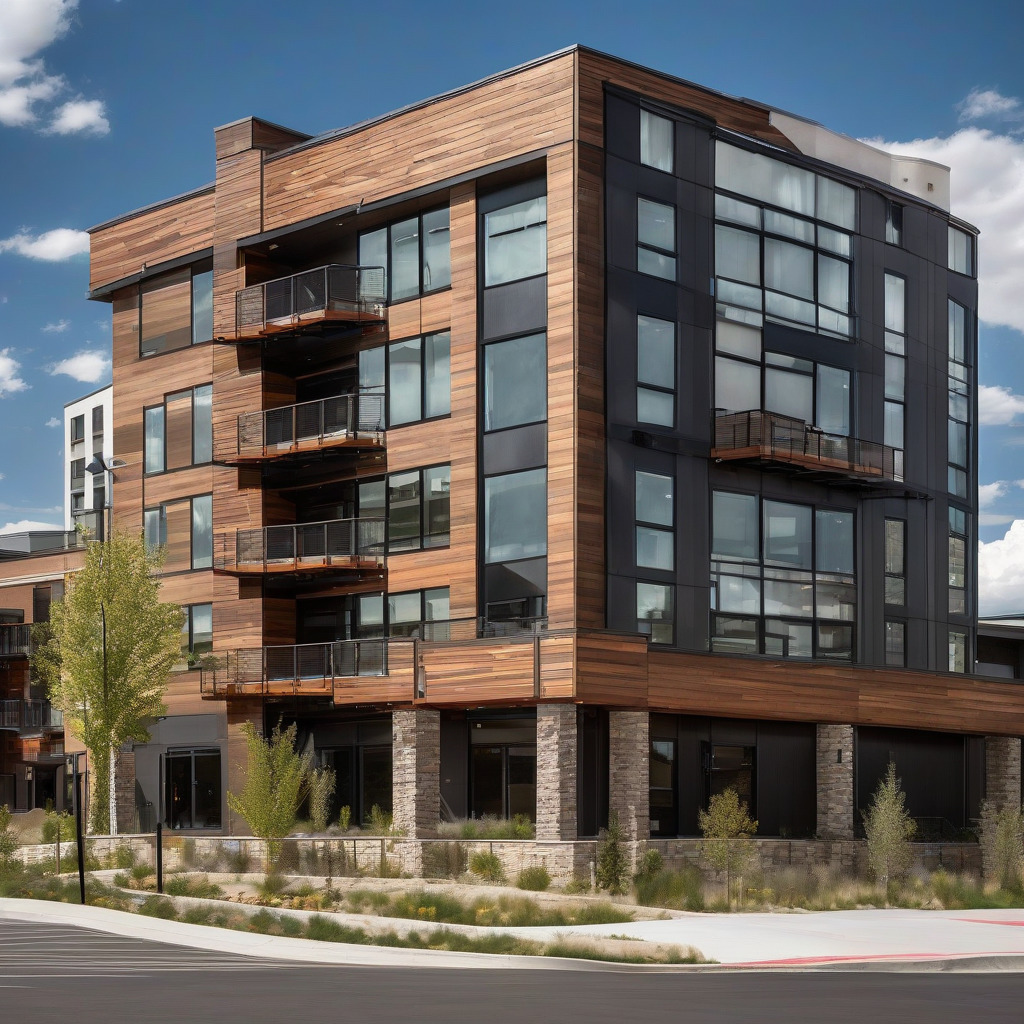
Aurora vs. Lakewood vs. Arvada vs. Thornton for Denver Suburban Home Buyers in 2026
Per-square-foot prices, school ratings, commute realities, and what's driving each market right now


Per-square-foot prices, school ratings, commute realities, and what’s driving each market right now
If you’re house-hunting in metro Denver’s suburbs and trying to figure out where your dollar actually goes furthest, you’ve probably gotten contradictory answers. Aurora is “cheap.” Lakewood is “expensive.” Arvada is “hot.” Thornton is rarely mentioned at all. None of those shorthand descriptions is wrong, exactly—but none is useful either.
This piece builds the side-by-side comparison that doesn’t really exist anywhere else in local coverage: price per square foot, school performance ratings, RTD and drive commute times to downtown, and market velocity data across Aurora, Lakewood, Arvada, and Thornton—the four largest suburbs in the metro. The goal is a framework buyers can actually make decisions with, not a ranking that pretends one suburb is objectively better. No such ranking exists, and you should be suspicious of anyone offering one.
The Number That Matters: Price Per Square Foot, Side by Side
Start with the core data, sourced from DMAR Q1 2026 figures and county assessor records:
| Suburb | Median Price/Sq Ft | County | Typical Property Type |
|---|---|---|---|
| Lakewood | $290–$320 | Jefferson | Mix of ranch, townhome, single-family |
| Arvada | $275–$305 | Jefferson | Single-family, older ranch stock |
| Thornton | $240–$270 | Adams | Newer single-family, some townhomes |
| Aurora (city-wide) | $230–$265 | Arapahoe/Adams | Wide range; see below |
Aurora is cheaper than Lakewood and Arvada on a per-square-foot basis, and Thornton is competitive with Aurora’s mid-range. That headline requires immediate qualification.
Aurora’s city-wide average is the single most misleading number in Denver suburban real estate. The city spans two school districts whose performance profiles are almost nothing alike. The eastern half operates under one funding structure and serves a different demographic than the southeast, where newer construction and master-planned communities dominate. You need to know which half of Aurora you’re actually buying in before the price figure means anything.
Aurora: The Suburb That Contains Two Distinct Markets
Aurora’s affordability story is really two stories told under one city name. Conflating them is the most common mistake buyers make—and agents don’t always rush to clarify it.
In the eastern ZIP codes—80010 and 80011, served by Aurora Public Schools—prices can dip below $200 per square foot. This is the metro’s genuine entry-level market for buyers who want a detached single-family home. These neighborhoods cluster around East Colfax and Peoria, with post-WWII ranch stock and smaller lots. Days on market run longer here than in the rest of the metro, which means more negotiating room. But let’s be honest about what longer days on market actually signals: real demand issues, not just a buyer’s-market perk.
Aurora Public Schools district performance lags the metro average. The car-dependent commute to downtown Denver runs 40–50 minutes even off-peak. For buyers who prioritize affordability above all else and have school flexibility, the math can work. For most other buyers, the apparent savings erode once you factor in commute cost and school quality concerns.
Southeast Aurora is an entirely different market—different enough that it arguably deserves its own category. The 80015 and 80016 ZIP codes fall under Cherry Creek School District, and that single fact reshapes every tradeoff. Cherry Creek SD is one of Colorado’s highest-rated large school districts by CDE accreditation metrics, and homes in its boundaries price accordingly. In Copperleaf, Tallyn’s Reach, and the Painted Prairie development near DIA, per-square-foot pricing runs closer to Lakewood territory. These are master-planned communities with architectural controls and active HOAs.
That HOA reality matters more than most buyers budget for. Fees in southeast Aurora communities typically run $150–$350 per month—call it $3,500 to $4,200 annually in effective carrying cost. A buyer comparing a home in 80016 to one in Lakewood needs to run that number before calling Aurora the cheaper option. The sticker price comparison without HOA is essentially fiction.
Painted Prairie near DIA deserves specific attention because it’s being actively developed right now. It’s a transit-oriented master-planned community positioned largely for airline and airport employee buyers, and new construction supply there continues to feed the southeast Aurora pipeline. Higher inventory availability than supply-tight Arvada or Lakewood means buyers in 80016 have more options and more time. Both useful things to know if you’re trying to time an offer without getting into a bidding war.
Lakewood: What the Premium Actually Buys
At $290–$320 per square foot, Lakewood is the priciest of the four suburbs. The question buyers should ask is whether that premium reflects something concrete or just inherited habit and marketing.
Here’s what I keep coming back to: the W Line light rail is Lakewood’s most tangible asset and it’s genuinely underappreciated in price-per-square-foot comparisons. From Federal Center station, Union Station is a 22-minute ride. From Wadsworth, it’s 28–35 minutes. That’s reliable rapid transit—and reliable is the key word, because RTD operates the W Line consistently in ways it hasn’t always managed on other lines in the system. A Lakewood buyer can credibly eliminate one car from a two-car household. When you actually model mortgage, insurance, fuel, and maintenance on two vehicles versus one, Lakewood’s premium over comparable suburbs narrows considerably.
The physical amenities matter too. Bear Creek Lake Park and Red Rocks sit roughly 20 minutes from most Lakewood addresses. These are resources that retain residents and drive resale demand in ways that show up in transaction data. Belmar—built on the bones of the old Villa Italia mall site—created a walkable mixed-use node that very few Denver suburbs can match. (Most people who grew up here remember the original mall; the replacement is genuinely better.) Homes on Belmar’s edges command premiums within Lakewood itself.
Older single-family stock in Lakewood largely avoids HOA structures, which sets it apart from Aurora’s master-planned communities. Most neighborhoods built before 1990 carry no HOA burden. Jefferson County’s tight permitting environment also supports the price: permit volume runs lower than Adams or Arapahoe County, limiting new supply in ways that Aurora and Thornton simply don’t face. That shows up in price resilience even in slower markets. Not theory—it’s what the transaction data consistently shows.
Arvada: The Tightest Market in the Group
Arvada’s per-square-foot pricing sits close to Lakewood’s, but the dynamic is different. Lakewood’s premium comes from transit and amenity access. Arvada’s comes from the structural kind of scarcity that builds up over decades in neighborhoods with almost no land left to develop.
Olde Town Arvada is the scarcity epicenter. The 80002 ZIP code, centered on the pedestrian main street near Ralston Road, has genuine walkability and an active dining and retail scene that took decades to develop and shows it. Buyers who want it have limited options, and homes in the immediate Olde Town radius push above the city average. There’s a reason buyers priced out of Wheat Ridge and Edgewater keep moving this direction—Arvada is the next logical step west, and enough people have figured that out.
Arvada has very little developable land remaining. While Aurora permits new construction aggressively in the southeast and Thornton has an active development pipeline along the 144th corridor, Arvada’s growth is mostly single-lot tear-downs and the occasional small infill subdivision. That limited pipeline means Arvada likely shows the fastest per-square-foot appreciation of the four suburbs. Buyers get priced out of the inner west, move progressively further into Arvada, and they’re willing to pay for it.
The G Line commuter rail runs from Olde Town Arvada station to Union Station in roughly 25–35 minutes. Real asset for downtown-commuting buyers, in theory. Honest coverage requires saying what many pieces skip: the G Line had persistent reliability and signal system issues through much of its early operational history. RTD has made improvements, but riders still report inconsistency. If you’re buying specifically for that rail commute, test the line during your actual commute window before you close—not once on a Saturday afternoon, but multiple times on actual workday mornings. I wish more buyer’s agents were telling clients this.
Thornton: The Overlooked Option
Thornton appears in almost no serious local real estate coverage despite being Adams County’s largest city and one of the fastest-growing municipalities in the state. That’s a genuine editorial failure, and CityDesk has been as guilty of it as anyone. The case for Thornton in 2026 is more compelling than most buyers realize. I suspect the reason it gets ignored is partly that it doesn’t have the walkable-neighborhood narrative that makes for easy feature writing. That’s a bad reason to leave $30,000 in equity on the table.
The per-square-foot pricing at $240–$270 is competitive with Aurora’s mid-range, but Thornton’s housing stock skews significantly newer. Where Aurora’s 80010 and 80011 ZIP codes have aging post-war ranches, Thornton’s active construction corridors deliver homes built in the last fifteen years at comparable prices. For buyers concerned about deferred maintenance, modern insulation, or updated HVAC, that difference is real. A 1962 ranch with 1962 electrical wiring is not the same purchase as a 2015 home with current building systems at the same price per square foot—even if they look identical on a listing sheet.
The N Line commuter rail is Thornton’s most overlooked infrastructure asset. Thornton Crossroads/124th station and the 112th Street station are both operational, with Union Station reachable in approximately 30–40 minutes. Because the N Line is RTD’s newest commuter corridor, parking at stations is still relatively easy to find—a real-world advantage that will erode as ridership grows. Buyers who get in early will look back on that as a minor quality-of-life win. Developer interest in the 144th Avenue and Eastlake corridor is accelerating, with transit-oriented development proposals that will eventually reshape that area. New infrastructure tends to precede appreciation. Adams County permit pulls remain among the highest in the metro, and that pipeline is still working through the system.
The school story is where Thornton gets most systematically undervalued. Adams 12 Five Star Schools serves most of Thornton and performs above its Adams County peers on CDE’s school performance framework—genuinely competitive with Jefferson County’s schools, at a lower price tier. If you’ve been assuming that Adams County schools can’t compete with Jeffco, you haven’t looked at current data. Adams 12’s Hulstrom K-8 Options School deserves specific mention: it’s a highly regarded option school with a strong academic model that draws families specifically to the district. When you layer in the $240–$270 per-square-foot pricing, the Adams 12 corridor in Thornton is one of the most underpriced school-affordability combinations in the metro. I genuinely don’t understand why it doesn’t come up more in buyer conversations.
Schools vs. Price: A Value Matrix Worth Building
The school-affordability question is the one families consistently struggle to answer because nobody’s put the two variables on the same page. Here’s the comparison, using CDE 2024–2025 accreditation and school performance framework ratings. Verify current status at cde.state.co.us before making individual school decisions—ratings shift, and one year can matter.
| District | Suburb | Overall CDE Performance | Median Price/Sq Ft | Value Assessment |
|---|---|---|---|---|
| Cherry Creek SD | Aurora 80015/80016 | High (one of CO’s top large districts) | $230–$265 city-wide; higher in CCSD corridors | Best value for school quality per dollar |
| Jefferson County SD | Lakewood, Arvada | Strong; above state average | $275–$320 | Strong schools, but you’re paying for them |
| Adams 12 Five Star | Thornton | Above average for Adams County; Hulstrom K-8 is standout | $240–$270 | Undervalued relative to performance tier |
| Aurora Public Schools | Aurora 80010/80011 | Mixed; below metro average | Sub-$200/sqft possible | Priced accordingly; entry-level market |
Families targeting Cherry Creek SD who are willing to buy in Aurora 80016 rather than Jeffco-served Lakewood or Arvada are accessing one of Colorado’s highest-rated large districts at a meaningfully lower per-square-foot cost. The HOA fees narrow that gap. They don’t eliminate it. Adams 12 in Thornton performs above its county average at a price tier well below Jeffco, and most buyers outside Adams County have never heard of Hulstrom. That’s an information gap with a dollar value attached to it.
Commute Reality: RTD vs. the Drive
What the commute to Union Station actually looks like from each suburb, with honest assessments of both modes:
| Suburb | RTD Rail Time | Rail Line | Rail Reliability | Off-Peak Drive | Peak Drive |
|---|---|---|---|---|---|
| Lakewood (W Line) | 22–35 min | W Line light rail | High; frequent, consistent service | 20–30 min | 45–60 min |
| Arvada (G Line) | 25–35 min | G Line commuter rail | Moderate; historical issues, improving | 25–40 min | 40–60 min |
| Thornton (N Line) | 30–40 min | N Line commuter rail | Good; newer corridor, still building ridership | 25–45 min | 40–60 min |
| Aurora 80010/80011 (R Line) | 40–50 min | R Line light rail | Moderate | 35–55 min | 60+ min |
| Aurora 80016 | No direct rail | None | Not a practical option | 35–55 min | 50–70 min |
A buyer in Aurora 80016 and a buyer in 80010 live in entirely different commute realities. That distinction almost never gets made explicit when both addresses show up under “Aurora” in listing data.
The R Line serves central Aurora, connecting at Aurora Metro Center or 13th Avenue station and running to Union Station in roughly 40–50 minutes. Southeast Aurora at 80016 has no meaningful rail connection. The closest access requires driving to a station first, which defeats most of the time and cost advantages. Anyone buying in 80016 is a car commuter, full stop. The Cherry Creek SD premium makes sense if you’re buying for schools and can tolerate the peak-hour crawl on I-225 and I-25. If you’re also counting on some rail option materializing, it’s not there yet. Don’t buy on that expectation.
The Costs Nobody’s Showing You
Two affordability factors don’t appear in headline price comparisons but materially affect real monthly cost. This is the kind of granular breakdown we aim to provide in our Denver suburban home-buying coverage.
HOA fees are the first. Aurora’s master-planned southeast communities typically carry fees of $150–$350 per month. On the high end, that’s over $4,000 annually. Most of Arvada’s single-family stock carries no HOA. Most of Lakewood’s older neighborhoods carry no HOA. A buyer comparing Aurora 80016 to Arvada needs to add the HOA into the comparison, or they’re not actually comparing the same thing.
Property taxes in Jefferson County (Lakewood, Arvada) and Adams County (Thornton, northern Aurora) carry different effective mill levies, and the gap compounds with home price. Colorado’s SB23-108 placed caps on assessment growth after the 2023 valuation surge, but a seller’s current tax bill may not accurately predict a new buyer’s first full year of ownership. Get the current assessed value from the county assessor directly—not the tax bill from the seller’s disclosure—and model your own first-year number before comparing monthly costs across county lines. The difference between Jefferson and Adams County rates, applied to a $500,000 home, can swing $200–$400 per year depending on your specific location code. It won’t show up anywhere on the listing sheet.
Which Market Is Moving Fastest?
On market velocity, pending confirmation against DMAR’s most recent days-on-market data:
Arvada is likely the fastest-appreciating suburb on a per-square-foot basis. Supply is tight and spillover demand from the inner-west keeps arriving. If you want Arvada, waiting probably works against you—the pool of available homes turns over slowly, and prices accelerate when supply stays pinched. That’s not a prediction; it’s how constrained markets behave.
Thornton is the fastest-growing suburb in raw population and permit volume. The N Line corridor is the catalyst to watch, and it’s still early. Buying in Thornton now, before the 144th corridor fully materializes, may position you for appreciation that hasn’t been priced in yet. I find this argument genuinely compelling, with the caveat that any “ahead of the curve” thesis carries real uncertainty. The N Line either becomes a serious commuter asset or it doesn’t—and that determination is still being made.
Aurora’s appreciation pace is moderated by active new construction supply, particularly in the southeast. New homes coming online in 80016 provide a price ceiling that doesn’t exist in Arvada. Aurora’s transaction volume is the highest of the four suburbs due to its geographic size; high volume tends to indicate a functioning market without artificial scarcity, which limits appreciation velocity but also limits downside risk.
Lakewood is the most stable of the four. Highest entry price, limited new supply, but not appreciating at dramatic rates. It’s a preservation-of-value story more than a growth story. If you’re buying for long-term stability and don’t need price appreciation to justify the purchase, Lakewood delivers that reliably.
At current mortgage rates in the 6.5–7% range, the per-square-foot spread between suburbs is more consequential than it was in 2021. The gap in effective monthly cost between Lakewood and Thornton is real and meaningful right now. It mattered a lot less when money was cheap.
Who Should Buy Where
First-time buyer seeking the metro’s most accessible entry point for detached housing: East Aurora (80010, 80011) offers the metro’s lowest per-square-foot prices for a detached home. Accept Aurora Public Schools and the car-dependent commute as the real tradeoffs. If your credit and down payment stretch to Cherry Creek territory, 80016 is worth the step up despite the HOA fees—the school district alone often justifies it for families with kids.
Family prioritizing school quality relative to price: Aurora 80016 (Cherry Creek SD) or Thornton (Adams 12). Cherry Creek at a lower per-square-foot than Jeffco delivers school value that’s hard to replicate elsewhere in the metro. Adams 12 at $240–$270 is undervalued relative to its actual performance tier. Model the HOA fees for 80016 explicitly, and don’t assume Thornton is second-tier without checking the CDE data first.
Downtown Denver commuter who wants rail: Lakewood, specifically near the W Line corridor. The reliability is worth paying for if your work schedule requires predictable commute times. Arvada’s G Line is serviceable but not consistent enough to build a lifestyle around yet. Thornton’s N Line is newer and still establishing itself—early adopters are accepting some variability in those first years.
Move-up buyer who wants neighborhood character and appreciation: Arvada, specifically the 80002 ZIP code and adjacent corridors. Supply constraint and spillover demand from the inner-west are structural forces, not marketing talking points. Neighborhood character is genuinely strong. But be prepared: Arvada doesn’t offer deals. You pay for what you get here, and sellers know it.
Buyer with flexibility who values newer construction: Thornton. The housing stock is newer, the school district is underrated, the N Line is in early innings, and the per-square-foot pricing gives you room to build equity before the market fully reprices the location. It’s the most interesting value proposition in this group right now—which is exactly why I’d expect the window to close as more buyers figure it out.
The honest summary: Aurora is cheaper on average, but only in the ZIP codes where the school district and transit options reflect that price. Lakewood earns its premium through rail access, amenity proximity, and limited new supply. Arvada is the tightest market and the clearest case for near-term appreciation. Thornton is the most overlooked, with newer housing stock, a school district that genuinely competes on quality, and an N Line corridor that’s still early in its development arc.
Your commute pattern, your household’s school priorities, and how you weight monthly stability against appreciation potential will determine which of these four markets fits. These are the numbers and tradeoffs that comparison required.
All DMAR price-per-square-foot figures reflect Q1 2026 data and should be confirmed against DMAR’s most recent monthly market statistics report. School ratings reference CDE’s 2024–2025 accreditation and school performance framework; verify current status at cde.state.co.us before making school-based decisions. Commute times reflect RTD schedule estimates from rtd-denver.com and should be confirmed for current service and tested during your actual commute window. Property tax estimates should be confirmed with the relevant county assessor’s office. Mortgage rate estimates should be verified against the current Freddie Mac Primary Mortgage Market Survey.