What You Actually Need to Know Before Moving to Denver in 2026
A practical guide for arriving residents: neighborhoods, lease law, vehicle deadlines, and the city you'll actually find

A practical guide for arriving residents: neighborhoods, lease law, vehicle deadlines, and the city you’ll actually find
The Honest State of Denver Right Now
If your mental picture of Denver was formed between 2020 and 2022, reset it. The city that made national headlines for bidding wars, U-Haul shortages, and California transplants outbidding locals in cash has settled into something more ordinary — and in several ways, more workable.
Apartment vacancy rates across metro Denver climbed through 2024 and into 2025 as a wave of new construction delivered thousands of units the market is still absorbing. Landlords who were fielding ten applications per unit three years ago are now offering one to two months of free rent on new leases, waiving application fees, and in some cases covering parking costs that were previously passed to tenants. That already sounds like a different city.
Population growth has normalized. Net domestic in-migration, which spiked sharply in 2020–2022, has moderated. Denver proper isn’t shrinking, but the demographic sprint is over.
The cost-of-living arbitrage that drew coastal transplants — the idea that a San Francisco or New York salary stretched dramatically further here — has largely closed. Denver’s median rent, grocery costs, and home prices have all moved substantially upward since 2019. Remote work salary adjustments and return-to-office mandates have complicated the income side of that equation. The math that made Denver feel like a cheat code doesn’t work the same way anymore.
None of this is a reason not to move here. Denver has real outdoor access, a climate that delivers around 300 days of sun annually despite wildfire smoke and hail, and a food scene that has quietly gotten interesting. But arriving with calibrated expectations rather than hype-cycle assumptions is the difference between a smooth landing and an expensive adjustment period.
Where You Can Actually Afford to Live: A Budget-Anchored Neighborhood Guide
Competing relocation listicles name the same six neighborhoods, rank them vaguely by “vibe,” and skip the numbers. Here’s what current asking rents and genuine trade-offs look like.
Under $1,500 per Month
At this price point in 2026, you’re looking at older stock, smaller units, or neighborhoods that require a car.
Montbello (northeast Denver) delivers the most square footage per dollar in the city. It’s predominantly single-family, with a strong working-class Latino community and limited walkability. Transit connections to the A Line exist via bus transfer — it works, it’s just not fast. If you work remotely or own a car, Montbello is worth a serious look. It gets skipped by transplants who only research neighborhoods with walkability scores and coffee shops, which is their loss. Research specific blocks and talk to current residents before committing.
Westwood (southwest, near Federal and Morrison) gets overlooked in lifestyle coverage but offers genuine neighborhood density along Morrison Road, where several excellent taquerias and panaderías anchor the commercial corridor. Not walkable to downtown without transit, and the nearest light rail requires a bus transfer. The neighborhood itself is stable. Research crime patterns by specific block rather than dismissing it wholesale.
Capitol Hill is the anomaly in this tier. It’s urban and walkable, with bus access and a dense restaurant corridor along Colfax. One-bedrooms in older building stock occasionally come in under $1,500. The trade-offs are noise, older building systems, and a Colfax streetscape that has long included visible homelessness and street activity — more on that in the downtown section. Walk the neighborhood during both daytime and evening hours before signing.
$1,500–$2,200 per Month
This is where most new transplants end up, and it’s where Denver earns its reputation as livable.
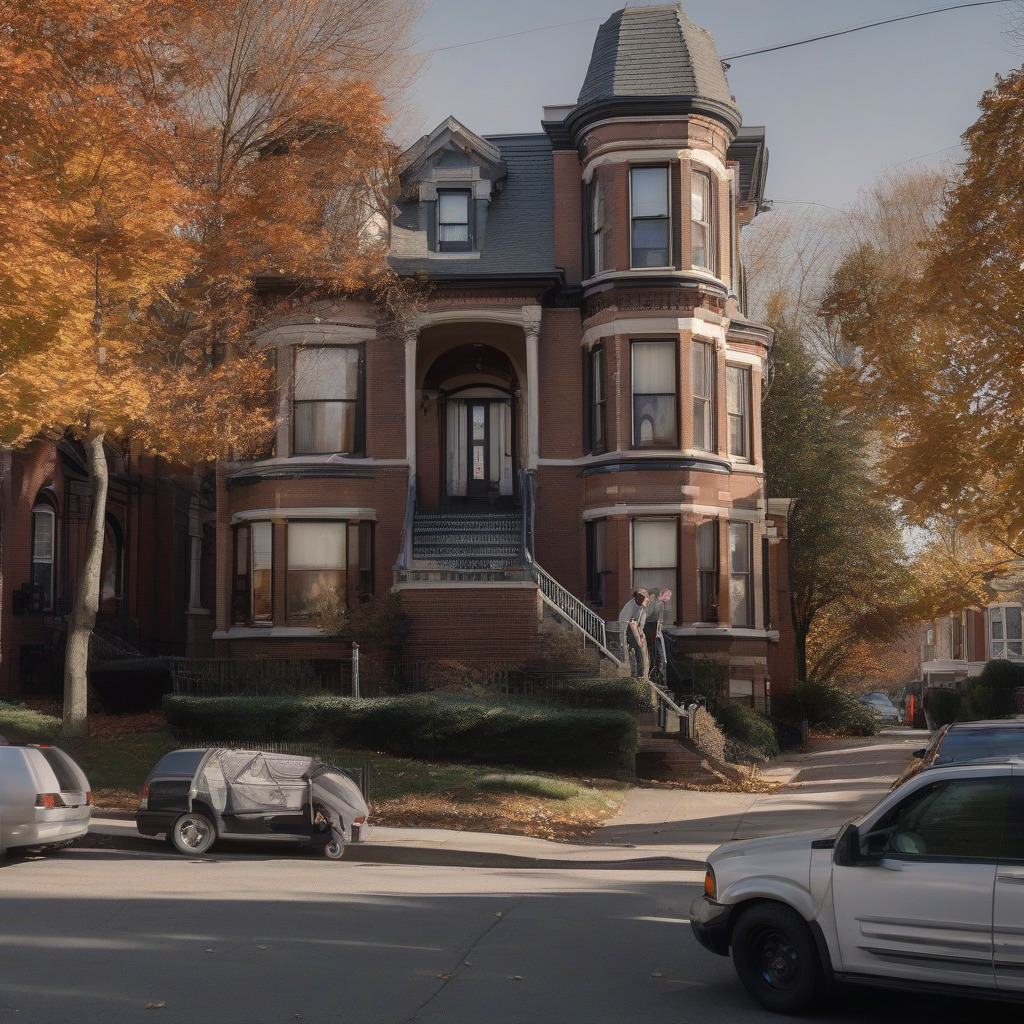
Whittier and Cole are adjacent neighborhoods northeast of City Park with steady appreciation over the past decade — a mix of Victorian-era housing, genuine racial and economic diversity, proximity to the park and the zoo, and bus access to downtown. One-bedrooms run around $1,600 in older buildings, more in newer construction.
Baker (south of downtown along Broadway) is one of Denver’s more walkable neighborhoods, and I mean that in the actual sense, not the real estate brochure sense. The commercial stretch of South Broadway has independent restaurants, bars, and record shops within walking distance of most residential streets. Rents have risen here but haven’t matched RiNo pricing. A one-bedroom in a renovated older building runs $1,500–$1,900. Baker supports car-free living more credibly than most Denver alternatives.
Sloan’s Lake has a genuine anchor in the 165-acre lake and park, and the Edgewater Public Market on the western edge has drawn foot traffic and investment. Rents cluster around $1,700–$2,000 for one-bedrooms. Transit access is mediocre — I won’t pretend otherwise. The W Line light rail at Perry Street is a reasonable walk from the eastern parts of the neighborhood but not from the lake’s western side. During summer, the lake itself becomes a genuinely used outdoor amenity, the kind that actually changes how you feel about where you live.
$2,200–$3,000 per Month
Congress Park is quieter than its proximity to Cherry Creek suggests — wide, tree-lined streets, older bungalows converted to rentals, an overwhelmingly residential character. It’s also one of the neighborhoods with a Residential Parking Permit (RPP) zone, meaning you’ll need to register your vehicle with Denver’s RPP program separately from your Colorado registration to park on neighborhood streets. More on that in the transit section. It catches people completely off guard.
Wash Park (Washington Park) commands a premium because it earns one. The 165-acre park is a legitimate daily amenity, the surrounding streets are among the most pleasant in the city, and the South Gaylord Street strip offers walkable retail. Wash Park also has RPP zones on many residential streets. If you have a bike and use parks, this is worth the premium. If you mostly work from home and rarely go outside, maybe reconsider.
RiNo and LoHi are the neighborhoods most aggressively marketed to young professional transplants, and pricing reflects that. New-construction one-bedrooms in RiNo run $1,800–$2,400; LoHi, which sits across the 15th Street bridge from downtown, runs slightly higher at $1,900–$2,500. LoHi has RPP zones. RiNo’s walkability has improved in recent years but remains more car-dependent than its marketing implies — the gap between “there are restaurants here” and “you can live without a car here” is real. Both neighborhoods are changing faster than some residents expect, and not always in ways residents prefer.
Globeville and Elyria-Swansea, the two adjacent neighborhoods north of downtown long cut off by I-70 and the South Platte River, are being watched by price-conscious buyers as investment begins moving north from RiNo. The National Western Campus redevelopment and Platte River improvements have anchored early activity, but arrival here requires eyes open. Environmental legacy issues and infrastructure gaps are real concerns worth researching thoroughly before committing to a year-long lease.
Downtown Denver Deserves Its Own Honest Assessment
Downtown is not like the other neighborhoods on this list.
Office vacancy in the Denver CBD exceeded 30% as of 2024 — one of the highest rates among major American downtowns. That translates directly to street level: retail closures, empty storefronts, reduced foot traffic, a daytime energy that falls short of what you’d expect from a city this size. Several restaurants and bars that anchored the 16th Street Mall have closed since 2022. If you’ve been reading Denver’s press releases about downtown recovery, temper those expectations until you’ve walked the blocks yourself.
Recovery is happening. New apartments, some retail leasing activity, and improved transit connections are visible. But walk the blocks between Larimer and Arapahoe on a Tuesday at 2 PM before you sign anything.
Homelessness is geographically concentrated in downtown — along Colfax Avenue from Broadway westward, the South Platte River corridor, and around shelter facilities in the area. This is a real feature of the neighborhood, not a generalization to project onto the entire city. Renters in Baker or the Highlands will have meaningfully different everyday experiences than renters in a downtown tower one block from those facilities. That’s worth knowing before you decide downtown’s discounted rents are the obvious call.
The new downtown apartment stock does offer something genuine: concessions. Buildings delivering 200 or 300 units into a softening market are motivated landlords. If you’re willing to live in a transitional neighborhood during its recovery period, you may find the best per-square-foot value in the city. Walk it at multiple times of day before deciding.
Before You Sign a Lease: Colorado Tenant Law and Denver-Specific Protections
Colorado is not California, and it’s not New York. The tenant protections here are real but require you to know what they are before you need them — which is why this sits squarely in our moving & real estate coverage.
Security deposits under C.R.S. § 38-12-103 must be returned or accounted for with written itemization of deductions within one month of lease termination for unfurnished units, two months for furnished. Colorado does not cap the deposit amount itself, which is meaningfully different from states with statutory limits. A landlord here can legally require two or three months’ rent as a deposit. Some do, particularly in newer buildings.
Just-cause eviction protections in Denver apply to month-to-month tenants who have resided in a unit for 12 months or more. After that threshold, a landlord cannot terminate tenancy without a specified legal reason. If your lease converts to month-to-month at the end of a fixed term, you have more protection than many transplants assume.
Rent stabilization is in flux. In 2023, the Colorado legislature passed HB 23-1099, restoring municipal authority to enact rent stabilization measures. Denver has explored the question but had not enacted a rent stabilization ordinance as of publication. Track this through the Denver Office of Housing Stability at denvergov.org/host, as status can change.
Notice requirements differ from what many transplants expect. An eviction notice for nonpayment or lease violations is a 21-day cure-or-quit in most circumstances. Transplants from California or New York, where 3-day notices are standard, are often surprised — it’s actually more tenant-friendly than what they’re used to.
Lease addenda require close reading. The line items that consistently catch new tenants off guard: mandatory “smart home” technology fees ($20–$40/month for a tablet or keyless entry system you may not want), valet trash fees billed separately from rent, and pest control charges. These are legal and increasingly common in newer buildings. A building advertising $1,850/month can easily land at $2,050 once you add the fees. When comparing buildings, tally the addenda before you compare the advertised rents.
Denver’s Office of Housing Stability publishes a free Renter’s Guide at denvergov.org/host covering local protections in plain language. Download it before you negotiate.
Your 90-Day Compliance Window: Registration, Emissions, and Your License
This section covers deadlines that most relocation content gets wrong or skips entirely.
Colorado driver’s license: You’re required to obtain a Colorado license within 30 days of establishing residency. Residency is established when you take a job, register to vote, or establish a domicile — not necessarily when you sign a lease. Thirty days is shorter than most people expect. DMV offices in the Denver metro run appointment backlogs of two to four weeks during summer. Book early.
Vehicle registration: You have 90 days from establishing residency to register your vehicle with Colorado. Verify the current deadline at myDMV.Colorado.gov, as DMV guidance updates periodically. Don’t wait until week ten. Appointment availability tightens in late summer, and there’s no grace period that will feel graceful when you’re scrambling.
Emissions testing: Every vehicle registering in the 7-county Denver metro area — including vehicles from out of state — must pass an emissions test through the AIRS/Envirotest system before registration can be completed. The test costs approximately $25 and takes about 15 minutes. This requirement catches transplants off guard because many states exempt out-of-state or new vehicles from first-year testing. Colorado does not.
The Specific Ownership Tax: Colorado doesn’t charge a flat registration fee. Instead, it charges a Specific Ownership Tax (SOT) calculated as a percentage of your vehicle’s original MSRP — not its current market value — on a depreciation schedule. The rate is 2.1% of MSRP in year one. A $45,000 truck generates approximately $945 in SOT its first year of Colorado registration, declining in subsequent years. Even on a well-depreciated vehicle, the SOT can exceed what transplants paid for registration in states with flat fees. Budget for it explicitly as a separate cost. It’s the kind of thing that feels weirdly personal when the bill arrives.
Book your DMV appointments at myDMV.Colorado.gov. Walk-ins at busy Denver locations during summer are not a reliable strategy.
What Moving in July or August Actually Costs You in Logistics
Summer is the dominant moving window, and Denver’s summer weather is genuinely consequential for a moving day.
Afternoon thunderstorms develop over the Front Range on a near-daily schedule from June through August, typically arriving between 2 and 5 PM. These are not light showers. Denver afternoon storms frequently involve lightning, hail, and sudden wind gusts that can topple unsecured items on a truck. Plan all outdoor loading and unloading for morning hours and expect to be under cover by 2 PM. A delayed truck arrival that stretches work into late afternoon is a genuine risk.
Hail is not a minor footnote. The Denver metro sits in one of the most hail-active corridors in North America. A moving truck with your belongings parked on the street during a hail event is an uninsured risk. Confirm your renters and auto insurance coverage before move day, not after.
Wildfire smoke has become a structurally recurring summer condition. Fires on the Western Slope, in Wyoming, and across the broader Mountain West regularly push Denver’s Air Quality Index into Unhealthy territory for days at a stretch. If you or anyone in your household has respiratory conditions, plan around this seriously. Bookmark AQI tracking at AirNow.gov.
Heat and dry air compound each other. Denver routinely hits 95°F during summer, and extremely low humidity means sweat evaporates instantly — your body’s cooling signal works differently here. You won’t feel as obviously overheated as you would in humid heat, which is exactly what makes dehydration sneaky. Front-load your hydration the night before and morning of move day. Dehydration at 5,280 feet happens faster than most people expect.
Altitude Is Not a Joke
Denver sits at 5,280 feet. The mountain suburbs and I-70 ski towns are higher still, and day trips into the mountains during your first weeks here are worth approaching with some humility.
At 5,280 feet, the air contains meaningfully less oxygen than at sea level. For most healthy adults this doesn’t trigger altitude sickness in the clinical sense, but it does measurably impair physical performance during the first week or two. Moving furniture up three flights of stairs in that window will be harder than you expect — genuinely harder, not just because moving is exhausting.
Dehydration accelerates in low humidity at altitude. Alcohol has a more pronounced effect until your body acclimates — relevant if you’re celebrating your new apartment on night one, which you probably are. UV intensity is meaningfully higher than at sea level. Sunburn happens faster at 5,280 feet than at the beach, even on overcast days.
Most people reach a baseline of acclimation within two to four weeks, with full adaptation for vigorous exercise taking four to six weeks. If you plan to run or hike during your first month, expect to feel noticeably weaker than you do at home elevation. This surprises people who are in excellent shape. It’s not you; it’s the air.
Taxes, Insurance, and Costs That Will Catch You Off Guard
Colorado’s flat 4.4% state income tax is one of the more straightforward aspects of your financial picture here. Calculate it, budget it, move on.
The costs that actually surprise transplants run deeper. The Specific Ownership Tax covered in the vehicle section bears re-flagging here as a first-year budget item. If you own a newer or more expensive vehicle, treat it as a known cost before you arrive.
Renters insurance with hail coverage requires explicit policy review. Standard renters insurance covers your personal property inside your unit — what that means for a hail event during a move or during temporary storage depends on your specific policy language. Given Denver’s documented hail exposure, review your policy for weather-related exclusions before move day.
Auto insurance review matters. Colorado’s minimum liability coverage requirements — 25/50/15 — are lower than the minimums in many transplants’ home states. Arriving with only minimum-limit coverage may leave you underinsured for the accident scenarios Denver’s roads actually present. Review your limits, particularly if you’ll be driving I-70 into the mountains. That road earns its reputation.
A note on cost of living: Denver now tracks closer in overall cost to mid-tier coastal markets than to the affordable Mountain West city it was in 2015. Grocery prices, dining out, and utilities are all meaningfully higher than the Midwest. If you’re budgeting based on what you read in 2019 or what a colleague paid in 2021, verify current prices directly before committing to a monthly budget. A lot of Denver residents rely on Costco ($65/year membership) to meaningfully reduce grocery bills on bulk staples. It’s not a glamorous tip, but it’s a real one.
Transit, Cars, and Getting Around Without Illusions
RTD’s light rail and bus rapid transit network is real infrastructure. The A Line connecting downtown Union Station to Denver International Airport is reliable and genuinely useful. The W Line to Lakewood and the light rail lines covering the southeast suburbs serve significant corridors. For residents living near a station and working near another station, RTD provides a real car-free option.
For everyone else, service cuts in 2023 and 2024 due to operator shortages and budget pressures have reduced reliability and frequency. Bus frequency in many neighborhoods is low enough to make transit impractical for time-sensitive trips.
Cross-referencing with the neighborhood guide: Capitol Hill and Baker have the most legitimate transit access for bus-dependent riders. Montbello requires a bus-to-rail transfer that works but isn’t fast. Wash Park and Congress Park are car neighborhoods. That’s just the reality.
If you’re evaluating a job outside downtown — in the Denver Tech Center, in Aurora, in Englewood — assume you need a car. The I-25 corridor sees meaningful congestion during commute hours. So does I-70. This is not Los Angeles-scale gridlock, but Denver is not a city where you can casually assume transit will cover a suburban commute.
If you’re parking on neighborhood streets in LoHi, Highlands, Congress Park, Wash Park, or portions of Capitol Hill: research the specific Residential Parking Permit zone status of your block before you move in. Failing to register your vehicle with Denver’s RPP program can result in citations on the street in front of your own home. It’s an entirely avoidable bureaucratic indignity. The registration process takes about 15 minutes once you have your Colorado registration in hand.
Questions to Bring to Your Landlord Before You Commit
Ask these before you hand over a deposit or sign a 12-month lease.
On rent and concessions: Is the advertised rent the effective rent, or is there a concession built in that reverts to a higher amount in month three? What does the lease say about the rent amount after any free-month period?
On fees: Request an itemized list of all monthly charges beyond rent — parking, smart home technology, valet trash, package lockers, pet fees, utility billing administrative fees. Add them to the advertised rent before comparing buildings.
On the deposit: What is the exact deposit amount, and under what conditions will deductions be made? Confirm the landlord’s documented return timeline against the statutory requirement under C.R.S. § 38-12-103.
On parking: Is the building or block in an RPP zone? If so, how does the landlord handle parking registration for residents, and does the building provide off-street parking included in rent or at additional cost?
On just-cause protections: If your lease converts to month-to-month, confirm in writing that the landlord is aware of and compliant with Denver’s just-cause eviction ordinance.
On the neighborhood: Ask specifically about current construction, planned developments, and any street or transit changes expected in the next 12 months. Construction activity on I-25 or I-70 can shift commute times significantly. Nobody at the leasing office is going to volunteer this.
Two stops worth bookmarking now: Denver HOST’s Renter’s Guide at denvergov.org/host, and Colorado DMV appointment booking at myDMV.Colorado.gov.
Denver in 2026 is a more honest version of itself than the city that dominated headlines three years ago. The rental market has room. The neighborhoods are real and varied. The legal framework protects tenants who know what it says. The logistics — altitude, vehicles, deadlines, summer weather — are manageable with specific preparation. What they aren’t is automatic. The transplants who have a rough first year here are usually the ones who arrived with 2021 assumptions and 2019 budgets. Show up with current information and you’ll be fine.