What the RiNo and Curtis Park Real Estate Markets Look Like as Development Keeps Pushing East
The condo listings have been sitting longer. Price cuts are more common now than two years ago. And buyers who were priced out of RiNo in 2021 are circling back, wondering if they missed something—…

The condo listings have been sitting longer. Price cuts are more common now than two years ago. And buyers who were priced out of RiNo in 2021 are circling back, wondering if they missed something—or if the neighborhood itself has actually changed.
Both are partly true, and the distinction matters more than most listings will tell you.
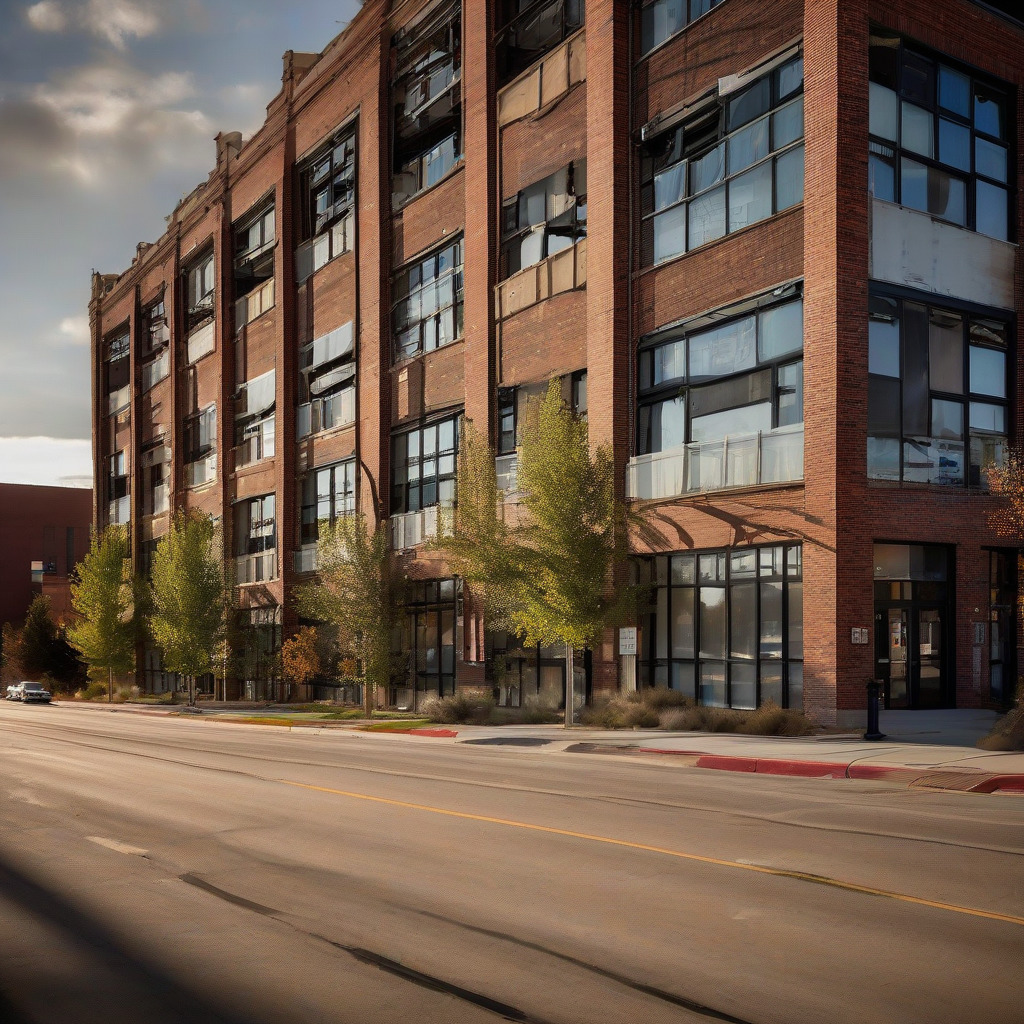
RiNo’s cultural identity isn’t really in question. The murals are still there. The breweries and food halls still pull foot traffic. What softened is the condo market specifically, and for structural reasons worth understanding before anyone writes an offer. A mile up Brighton Boulevard, the National Western Center is still taking shape—slowly, with funding debates ongoing in City Council—and its effect on residential prices is weaker and more complicated than development boosters suggest. Between RiNo and the National Western site, the neighborhoods are moving in ways that don’t show up in headline numbers: Curtis Park is holding firmer than most buyers expect, and Globeville and Elyria-Swansea are absorbing investor cash that has nowhere else cheap to go.
Here’s what the data and the agents working these streets actually show.
RiNo’s Numbers Right Now
Denver Metro Association of Realtors data tracks RiNo’s attached dwelling market—condos and townhomes—with the post-2022 rate environment cooling this submarket faster than the broader Denver single-family market. Days on market have lengthened. Active inventory has risen sharply from the 2021 lows. (This publication is requesting updated Q1 2026 submarket figures from DMAR; readers should confirm current pricing directly.)
Townhomes have held better than flat-floor condos. Multi-story attached product with rooftop configurations competes more directly with single-family alternatives and attracts buyers who are less rate-sensitive. True single-family detached in RiNo proper barely exists, and what does trade has moved sideways rather than down.
New construction delivered a substantial supply wave between 2020 and 2023. Those units arrived into a submarket that was already primarily investor-owned or short-term-rental-dependent. When the rate shock hit in 2022, the investor calculus broke—cap rates inverted against mortgage costs—and those units had nowhere to go except into longer market times and price cuts. The demand pool for a mid-$500,000s condo in a neighborhood that requires a car-optional, nightlife-adjacent lifestyle is narrower than developers underwrote it to be. Turns out “young professionals who want to walk to a brewery” is not an infinitely expandable demographic.
This is a supply absorption problem, not a terminal diagnosis. These problems resolve. The question is the timeline.
The HOA Problem Nobody Puts in the Listing
The monthly HOA fee is doing real damage to buyer qualification—and it’s the number that gets underreported in nearly every RiNo condo story. It should be the first thing any serious buyer asks about.
Mid-rise condo buildings in the neighborhood—the four-to-seven-story construction that defines the eastern edge of the Arts District—have seen HOA fees climb hard since 2022. Insurance premium increases following the Champlain Towers collapse in Surfside drove much of it. Insurers repriced mid-rise risk across the country, and Colorado buildings without recent structural reserve studies were hit especially hard.
“I had a buyer qualify comfortably at their target purchase price,” said one Denver buyer’s agent who works the RiNo and Five Points corridor. “When we got into the weeds on a specific building on Larimer, the HOA added something like $400 a month to their effective debt load once the lender stress-tested it. We had to go back and look at a lower purchase price or a different product type entirely.”
Buyers should request specific HOA fee figures before they fall in love with the rooftop view—not after.
Colorado’s SB 23-206 modified the state’s construction defect liability framework, intending to make condo development more attractive by limiting class-action exposure. The law’s effect on existing mid-rise stock is indirect but real. Buildings constructed under the prior liability regime that never underwent defect litigation still carry uncertainty about reserve adequacy. That complicates financing. Buyers using conventional loans in buildings with thin reserves or pending special assessments may find their lender requires a larger down payment or declines the building entirely.
Special assessment risk is not theoretical in RiNo. Buildings approaching the age at which envelope inspections, HVAC replacement, and elevator modernization converge are present in this submarket. Before writing an offer, request the most recent reserve study and the current funded reserve percentage. No exceptions.
The National Western Center: What Is Real and What Is Still a Rendering
CSU Spur, the Colorado State University facility at 4575 National Western Drive, opened in 2022 and is operating. It houses health and medical sciences programming, agricultural education, and community-facing exhibit space. It is a genuine anchor that opened on schedule. Credit where it’s due.
Phase 2 is where the timeline gets uncertain. The renovation of the main National Western Events Center arena and the addition of a multipurpose venue depend on financing packages that were still being assembled as of this writing. City planning documents and statements from Denver Community Planning and Development as of late 2025 put Phase 2 construction in a 2027–2029 delivery window—contingent on financing that hasn’t been finalized.
City Council debates over the project’s public funding component—federal BUILD grant money and city GO Bond support—have not concluded cleanly. No groundbreaking date for the main arena renovation had been formally announced at publication.
Brighton Boulevard’s streetscape improvements are further along. Several blocks between 38th and 46th Avenues have received or are receiving investment: wider sidewalks, protected bike lanes, improved pedestrian crossings, connections to the South Platte River trail. That trail connection is considerably closer to reality than Phase 2 is.
For buyers: CSU Spur is real and open. The streetscape is improving block by block. The arena and multipurpose venue are still a construction project without a groundbreaking date, with a realistic delivery somewhere in the late 2020s. Anyone pricing NWC completion into a purchase decision in 2026 is making a multi-year bet, not responding to a near-term catalyst. That’s not necessarily wrong—but know that’s what you’re doing.
Is NWC Actually Moving Residential Prices Yet
“Buyers ask about it, absolutely,” said one listing agent who has represented sellers along the Brighton Boulevard corridor. “It comes up as a ‘this neighborhood is going somewhere’ talking point. But I have not seen a buyer pay over asking specifically because of NWC proximity, and I have not seen a seller successfully push price on that basis in the current market.”
The roughly half-mile radius around the National Western campus doesn’t show a distinguishable price premium in DMAR transaction data compared to broader submarket trends in those neighborhoods. Infrastructure investments of this scale tend to move commercial and rental markets first, residential for-sale markets second—and only after construction is visible, not while it’s planned. Every time. This is not a Denver-specific phenomenon.
NWC’s near-term residential impact may actually be weakest in the immediate vicinity—Globeville specifically—because that community faces dynamics that don’t fit the typical infrastructure-lift scenario. Along Brighton Boulevard itself, the more active story is commercial: breweries, food and beverage tenants, and light industrial-to-creative conversions tracking NWC’s development timeline. Investors in those sectors are pricing in the arrival of foot traffic and destination status. Residential buyers are still waiting to see Phase 2 break ground.
Curtis Park Is Holding, and Here Is Why
Curtis Park rarely gets its own chapter in RiNo coverage, which shortchanges buyers making a direct comparison. The neighborhoods share a border, and the price trajectories since 2022 have been different enough to matter.
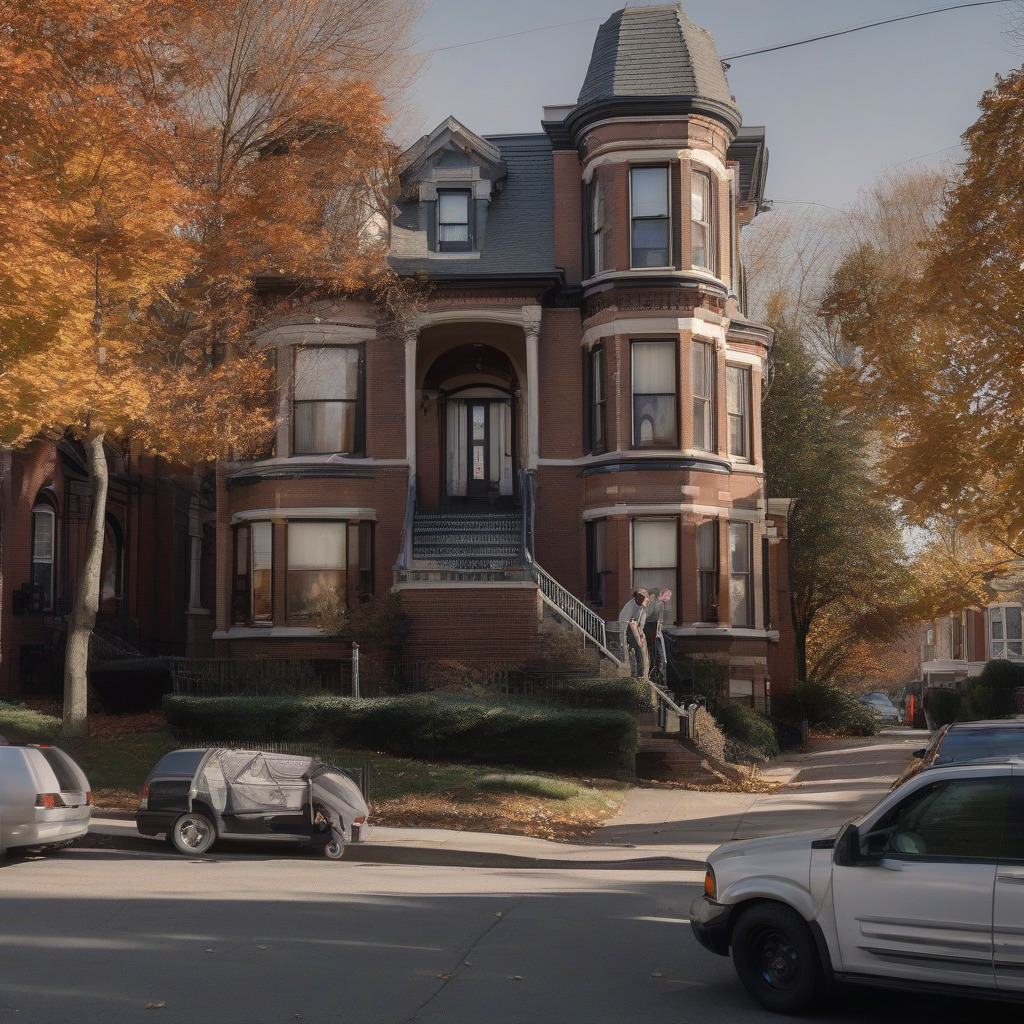
Curtis Park’s Victorian and Craftsman single-family and duplex stock—much of it within or adjacent to the Curtis Park Historic District—has shown considerably more resilience through the rate correction than RiNo’s condo market. (This publication is requesting updated DMAR figures for Q1 2026; readers should confirm current median pricing directly.) The mechanics are straightforward. Curtis Park’s housing stock is constrained by design. Historic district designation limits teardowns and new construction, capping supply additions in a way RiNo’s industrial-to-residential conversion pipeline never did. The buyer profile skews toward owner-occupants rather than investors underwriting rental yields, and owner-occupants hold through soft markets. There’s something to be said for a neighborhood where most people actually live there.
Denver’s 2021 ADU ordinance has drawn buyers who see a path to mortgage offset through a backyard cottage. Curtis Park’s lot sizes and existing bungalow configurations work well for those conversions—better than many neighborhoods where the rules technically apply but the lots make it nearly impossible. For a fuller picture of what those projects run in practice, see our coverage of ADU construction costs in Denver.
The historic district designation carries real costs, though. Buyers in the Curtis Park Historic District face Denver Landmark Preservation Commission review for exterior modifications. Window replacements, roofline changes, additions—all require approval under a sympathetic-to-period restoration standard. For buyers who want to gut-renovate and modernize the exterior, this is genuine friction, not bureaucratic inconvenience. For buyers who want to preserve what they’re buying, it’s part of the value proposition.
The Curtis Park versus RiNo condo comparison comes down to product type and total cost of ownership. The bungalow—no HOA, ADU income potential, constrained resale supply—may pencil better over a seven-to-ten year hold than the higher purchase price suggests, once you model the HOA exposure on the condo side. Run that math before you assume the cheaper listing is actually cheaper.
Where Globeville and Elyria-Swansea Come In
Buyers who arrive at RiNo and Curtis Park and find themselves out of reach aren’t going back to the suburbs. Many have been going north into Globeville and Elyria-Swansea—the communities that sit between the National Western campus and the rest of the city, absorbing price-displaced demand since at least 2022.
Single-family homes in Globeville and Elyria-Swansea have been trading well below what similar-sized product costs in RiNo or Curtis Park, making them among Denver’s most affordable remaining close-in neighborhoods. Cash purchase activity from investors has been elevated since 2022—a pattern consistent with what happens in any near-in Denver neighborhood after adjacent areas price out conventional buyers. It’s a familiar sequence in this city, and it usually ends the same way.
The I-70 and Central 70 project context is essential here, and it gets underreported every time someone writes about GES as a real estate opportunity. These communities spent the better part of a decade contending with a highway reconstruction that removed homes, altered street patterns, and imposed sustained disruption on neighborhoods that already had limited political capital to resist it. The displacement pressure now accumulating from real estate investment is arriving on top of that history. For many residents, it’s the second or third disruption in a decade. That doesn’t appear in the transaction data.
What Displacement Looks Like When Most Residents Rent
Around 60 to 70 percent of GES residents are renters, according to figures cited by community organizations working in the area. That means the majority of current residents don’t benefit from home price appreciation. They experience it as rent increases and eventual displacement when investor purchases lead to renovations and market-rate repricing.
The GES Coalition and Servicios de La Raza have raised concerns about displacement tied specifically to NWC-area development. Denver’s city government has adopted anti-displacement policy and operates programs intended to address those pressures. Whether those programs are scaled to match the pace of investment activity being documented on the ground is a different question—one this publication is pursuing with the GES Coalition, Servicios de La Raza, and Denver’s Office of Housing and Opportunities for People Everywhere. Denver has a mixed track record on this front. Anyone who watched what happened in Five Points knows how fast a “stated priority” gets outpaced by market reality.
For buyers considering GES: your purchase is part of a larger dynamic affecting long-term residents who have no ownership stake in what’s happening to their neighborhood. That’s not a reason to stay out—ownership is legal and GES is a real neighborhood with real value. But it’s a fact worth holding alongside your return projections, not something to set aside because it’s uncomfortable.
Where This Leaves Buyers in 2026
RiNo condos are at their most price-flexible in several years. The HOA cost headwind is real and must be modeled, not assumed. A buyer who stress-tests the HOA fee against their mortgage qualification, reviews the reserve study, and has no illusions about NWC delivering a price catalyst in the next 18 months is looking at a genuinely usable entry point. A buyer who buys the neighborhood story without reading the building’s financials is not.
Curtis Park’s price premium over RiNo condos is justified by product durability, supply constraints, and a buyer profile that creates lower volatility. That premium has held through this cycle and will likely keep holding. Buyers who can reach the upper end should run the bungalow math against the condo math—including HOA exposure—before deciding. I’d be surprised if the gap is as wide as it looks on the listing sheets.
GES is close-in, cheaper, and genuinely appreciating. It’s also a community where buyer migration is a displacement mechanism for renters who have nowhere else affordable to go in this part of the city. Investors know this and are already positioned. Buyers who show up now should go in with clear eyes about what they’re entering.
“For someone shopping this corridor,” said one agent who works all three neighborhoods, “I tell them to slow down on the first RiNo building that checks the boxes. Look at the HOA financials like you would look at a business you’re buying into, because that’s what you’re doing. If they can stretch to Curtis Park, the case for that stretch is stronger now than it’s been in a while. And if they’re looking at Globeville—it’s real value. It’s also a neighborhood in the middle of real change, and those two things aren’t separate.”
Sidebar: National Western Center Phase Timeline at a Glance
Completed and Open
CSU Spur (Colorado State University academic and public-facing facility at 4575 National Western Drive): Opened 2022. Operating. Includes health and medical sciences programs, agricultural education, and community exhibit space.
Brighton Boulevard streetscape improvements: Ongoing. Multiple blocks between 38th and 46th Avenues receiving investment in pedestrian and bike infrastructure. South Platte River trail connections in various stages of completion.
In Process or Pending
Phase 2 — National Western Events Center arena renovation and multipurpose venue: Design and financing ongoing as of publication. No groundbreaking date announced. City planning documents project a 2027–2029 delivery window, contingent on finalizing a financing package that draws on federal BUILD grant funding and city GO Bond support.
City Council public funding authorization: Deliberations ongoing. No final appropriations resolution at publication.
Still in Planning
Additional mixed-use and commercial development parcels on the roughly 250-acre NWC campus remain in early planning phases. No construction timelines confirmed.
CityDesk Denver will update this timeline when Denver Community Planning and Development confirms a Phase 2 groundbreaking date. For broader context on Denver’s shifting residential landscape, this article is part of our moving and real estate coverage.