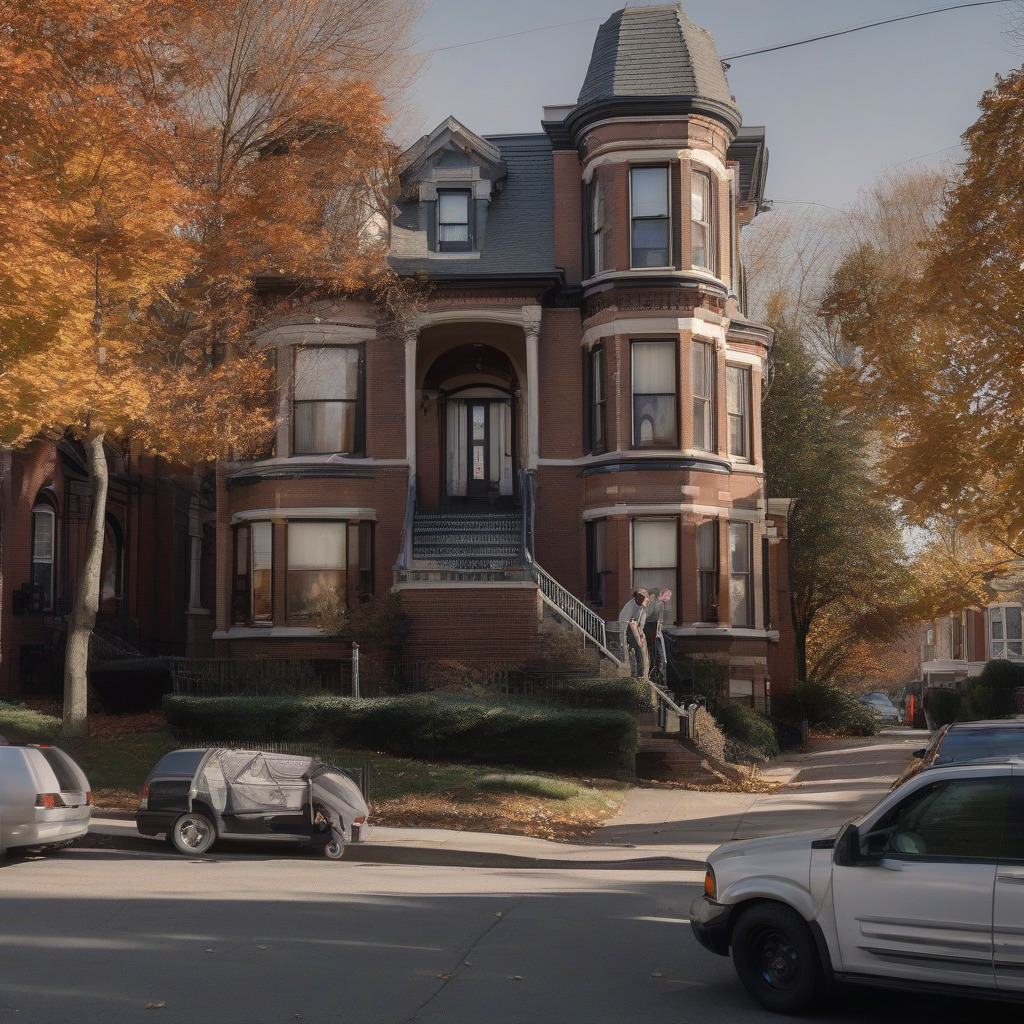
What Is Happening to Home Prices in Sunnyside, One of Denver's Last Affordable Close-In Neighborhoods
Four years after Denver's boom peaked, a neighborhood-level look at what 80211 homes actually cost, who's buying them, and what the permit pipeline means for the blocks between I-70 and 38th Ave.

Four years after Denver’s boom peaked, a neighborhood-level look at what 80211 homes actually cost, who’s buying them, and what the permit pipeline means for the blocks between I-70 and 38th Ave.
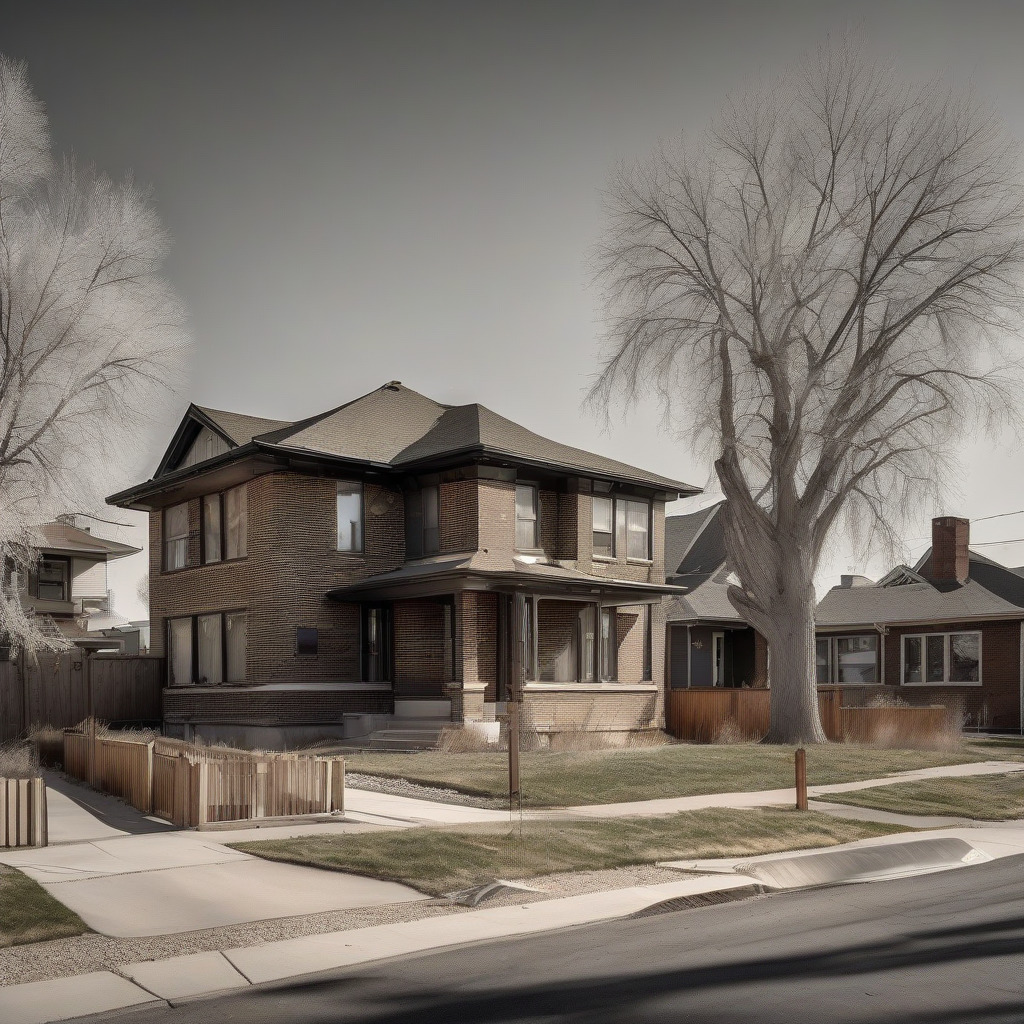
On the 4400 block of Tejon Street, a 1940s brick bungalow sits roughly ten feet from a freshly framed duplex whose asking price will likely land somewhere north of $750,000. The older house last sold for $312,000 in 2018. The new one hasn’t hit the MLS yet.
That 100-foot stretch of sidewalk tells you more about where this market is heading than any aggregate ZIP code report can.
Sunnyside has spent the better part of a decade being compared to Highlands. Whether or not that comparison was ever accurate, the gap between the two is no longer theoretical. It’s measurable. It’s narrowing. Depending on what you can afford, that’s either an opportunity or a door that’s almost shut.
Where Prices Landed After Four Years of Boom, Correction, and Stabilization
Sunnyside single-family prices peaked hard in early 2022 alongside the rest of Denver. Polygon-level data from Redfin and monthly reports from the Denver Metro Association of Realtors (DMAR) put the neighborhood’s median price per square foot for detached homes at roughly $425–$450 during the first half of 2022. That number reflected both the low-rate buying frenzy and a genuine, years-long supply squeeze in close-in northwest Denver.
Rate increases through 2022 began choking off the buyer pool. Days-on-market stretched. List-to-sale ratios that had run above asking fell on many properties through 2023 as sellers confronted a fundamentally different environment. Properties that might have attracted five competing offers in March 2022 were sitting by autumn. The same story played out across close-in Denver, but in Sunnyside the whiplash felt sharper because the run-up had been so compressed in the first place.
By the second half of 2024, Sunnyside had largely stopped losing ground. Price per square foot for single-family homes settled into the $350–$390 range, based on estimates consistent with DMAR and Redfin data — readers should verify against current MLS pulls before acting on those figures. Median sale prices for Sunnyside-proper transactions were coming in between $550,000 and $620,000 by late 2024 and have largely held into 2025.
That last sentence contains a caveat worth dwelling on: Sunnyside-proper. The 80211 ZIP code includes portions of Highland, LoHi, and Jefferson Park — submarkets that carry meaningfully higher price points than Sunnyside’s core residential blocks. When Zillow or Redfin publishes an 80211 median, it’s aggregating across all of them. Buyers using those numbers to benchmark Sunnyside are often looking at a figure inflated by LoHi condo sales or Highlands teardown lots. Easy mistake. Expensive one to act on.
The on-the-ground Sunnyside market — roughly the area bounded by I-70 to the north, 38th Avenue to the south, Federal Boulevard to the west, and Pecos Street to the east — runs measurably lower than the ZIP aggregate suggests. If you’ve been researching on Zillow and writing Sunnyside off as already unaffordable, it’s worth doing the more granular pull before you move on.
Sunnyside vs. Highlands: Hard Numbers, Not Vibes
The comparison almost always comes up in conversation about this neighborhood. What rarely appears is a figure anyone can actually use.
Historically, single-family homes in Highlands and LoHi have commanded roughly $75–$150 per square foot more than comparable Sunnyside product. That spread has been the persistent structural gap between the two neighborhoods across multiple market cycles. A buyer in 2015 could find a similar-vintage bungalow in Sunnyside for $100 per square foot less than an equivalent home across 38th — a difference that made the choice obvious for price-conscious buyers.
That gap hasn’t collapsed. But it has compressed, and it’s compressing fastest on one specific product type: new-build townhomes and duplexes. New construction in LoHi has listed at $700–$900 per square foot. Sunnyside new builds are tracking lower, but not by as much as they used to. On older pre-1960 stock, the Sunnyside discount remains more meaningful — but that inventory is shrinking as demolitions and lot splits proceed.
A buyer in 2025 choosing between a new townhome in Sunnyside and one in Highlands might be looking at a $50,000 price difference rather than $150,000. Still real money, but not the margin that historically made Sunnyside the obvious call for buyers watching their budget. The conversation that used to be “Sunnyside is just cheaper, full stop” is more complicated now.
Who Is Buying Now and Who Has Been Priced Out
The buyer who made Sunnyside’s reputation as an affordable close-in neighborhood was a specific person: a first-timer, often in their late twenties or early thirties, putting 3.5–5% down on an FHA loan, purchasing a bungalow that, as recently as 2021, could still be found below $450,000 on many blocks. That buyer dominated Sunnyside purchases through the pre-rate-shock era.
Those buyers have largely disappeared — not because they stopped wanting to live here, but because the math stopped working. On a $575,000 purchase with 5% down, the difference between a 2.8% rate (available in early 2022) and a 6.8% rate (the environment after 2023) runs to roughly $650 more per month. For someone buying their first home on a tight margin, that swing is disqualifying regardless of whether the purchase price itself moved. They didn’t make a different choice. They lost access to the choice entirely.
DMAR data on Sunnyside-area transactions from 2022 through 2025 shows this directionally. FHA financing as a share of purchases in 80211 has declined since the rate environment shifted; conventional financing with larger down payments has become more common, pointing toward buyers who either have existing equity or significant savings — neither of which describes the people who historically anchored the neighborhood’s first-timer reputation. Agents working the neighborhood describe this consistently: fewer FHA deals, higher down payments, older median buyer age. For more context on how these dynamics play out across Denver neighborhoods, see our moving & real estate coverage.
The House-Hacker and ADU Effect on the Bungalow Stock
One buyer category that’s held on despite rate pressure is the house-hacker: someone who acquires a bungalow or duplex specifically to rent one unit and use that income to offset the mortgage. Denver’s 2021 by-right ADU ordinance allows accessory dwelling units on most residentially-zoned lots without a discretionary approval process, which expanded the math for this buyer significantly. A bungalow that’s too expensive for a traditional owner-occupant becomes rational for someone underwriting the property on rental income from a basement unit.
Denver Community Planning and Development permit records show elevated ADU permit activity in the Sunnyside planning area since the ordinance took effect — detached garage conversions, basement unit permits, new carriage house construction on existing lots. CPD staff, speaking informally at neighborhood meetings, has acknowledged Sunnyside as a high-volume ADU zone compared to other close-in neighborhoods. Whether that’s something to celebrate depends a lot on who you ask.
House-hackers compete directly with first-timers for the same pre-1960 bungalow stock. They can justify a higher purchase price because they underwrite the property on a blended basis — part primary residence, part rental income. A first-time buyer without a tenant lined up cannot. The result is upward pressure on the bungalow segment that has nothing to do with rising demand from traditional owner-occupants and everything to do with a different financial model winning the same transaction.
And beyond pricing, ADU construction is changing the physical character of residential blocks in ways that don’t show up in listing data. A block that contained 12 single-family homes in 2019 may now effectively house 15 or 16 households, with units tucked behind garages or in finished basements. This densification is real and largely invisible to standard market metrics. Parking tightens. The number of strangers on a block increases. Long-term residents notice immediately. Not worse, necessarily. But measurably different from what was there before.
The Development Pipeline: What Is Actually Under Construction
The abstract discussion of infill becomes clearer when you look at what Denver CPD’s permit portal actually contains. Active and recently issued permits in the Sunnyside polygon since 2023 include meaningful volume of new multi-unit residential construction — primarily duplexes and townhome pairs on lots that previously held single-family homes. Several permits have been issued for full demolitions of pre-1960 structures followed by new duplex construction on interior blocks.
The 44th Avenue commercial corridor — home to Hops & Pie, Radiator, and Bacon Social House, a strip that’s worth the trip even if you don’t live nearby — has seen restaurant and retail build-outs. Mixed-use construction remains relatively limited on 44th compared to what happened along 32nd Avenue in Highlands during an earlier cycle, but permits have been filed and are working through the process. Sunnyside’s infill is arriving in smaller increments than adjacent LoHi.
Denver’s Expanding Housing Affordability ordinance, adopted in 2023, requires that residential projects of ten units or more either include on-site affordable units or pay into the city’s affordable housing fund. The practical effect on Sunnyside has been predictable: the ten-unit threshold has become a ceiling. A nine-unit townhome project avoids the affordability requirement entirely, and developers have sized projects accordingly. The neighborhood’s infill is arriving in small clusters — three-unit buildings, four-plexes, duplex pairs — rather than the larger mixed-income projects the ordinance was designed to encourage. Developers responded rationally to the incentive structure. It’s probably not what the ordinance’s authors intended.
The pattern that warrants the most attention in the permit data: demolition and new construction permits replacing single-family structures with market-rate duplexes on interior Sunnyside lots. These transactions trigger no affordability requirement and produce no below-market units. Over a cycle, that compounds. The neighborhood gains housing units and loses ownership opportunities below market rates. That math doesn’t reverse on its own.
What Long-Timers See Changing
Long-term residents who have spoken at Sunnyside United Neighbors (SUN) meetings — the neighborhood’s active civic organization, whose minutes and agendas are public — describe a neighborhood changing in recognizable phases: younger buyers arriving in the mid-2010s, acceleration during the pandemic boom, and now something that feels more permanent than either of those earlier waves.
The consistent observation is that houses get torn down, new ones go up, and the new occupants are often renters or part-time residents rather than owner-neighbors. One resident at a 2024 SUN meeting described buying in Sunnyside in 1998, knowing her neighbors for years, and then watching nearly every house on her block turn over within four years to new owners who weren’t there on weekends or who rented the property out within months of purchase. That’s a specific, concrete loss that doesn’t register anywhere in the median price data.
The neighborhood’s Latino community, which historically anchored the blocks closest to Federal Boulevard, has seen generational turnover accelerate as older homeowners sell into a market that has made their properties worth far more than they’d have imagined when they bought. Whether those sellers are cashing out voluntarily or being pushed out by rising property taxes and the social pressure of a rapidly changing block is a question the MLS cannot answer. Family-owned businesses that served Spanish-speaking customers for decades have closed. Some of this is natural evolution. Some of it is economic displacement. I don’t think that distinction is as clean as either side of the debate usually wants it to be, and I’m skeptical of coverage that treats one explanation as obviously correct.
The 44th Avenue corridor is more commercially active than it was a decade ago — and less locally rooted. A taqueria that opened in the 1990s and operated through three recessions closed in 2023 and was replaced by a wine bar. Whether that represents progress or loss is a values question. But the residents who watched it happen did not consider it inevitable, and their read on what a block feels like from the inside is ground-level information that price data cannot supply.
How the I-70 Reconstruction Changed the Calculus on the North End
For years, the blocks of Sunnyside immediately south of I-70 carried a discount that had nothing to do with the housing stock. The Central 70 project — years of lane closures, noise, dust, and genuine uncertainty about what the finished corridor would look and sound like — was a real quality-of-life objection to the neighborhood’s northern tier. Buyers who might have been interested in something north of 46th Avenue often balked when they understood the timeline. It was a reasonable hesitation.
Central 70 was largely complete by 2022. Agents who work the neighborhood note that the north end has since attracted buyers making deliberate choices rather than fallback ones. Whether that represents a genuine premium shift or simply relief from construction disruption is hard to isolate from the broader compression of affordable options across close-in Denver. The perception among agents is that the constraint has eased. If you wrote off those blocks during the construction years, a second look is probably warranted.
Is the Affordability Window Still Open?
Here’s the honest answer: the window is not closed, but it’s closing at a measured pace, faster on some product types than others.
Original bungalows — pre-1960 single-family homes in the 900–1,400 square foot range that need real work — are where Sunnyside still offers something close-in Denver largely does not: sub-$600,000 purchase prices on walkable, established residential blocks. Those homes exist. They’re not plentiful, they’re not in pristine condition, and they require buyers who can handle deferred maintenance and a rate environment that may not improve dramatically in the near term. But they’re there, particularly on blocks west of Pecos and along Federal, where turnover is driven more by estate sales and longtime owner departures than by speculative flipping.
New construction is a different story. Townhomes, duplexes, anything built after 2018 — Sunnyside no longer offers a meaningful discount over comparable Highlands product. The decision between the two neighborhoods on new builds now comes down to block-level preference, not financial necessity.
The people most squeezed by all of this are first-time buyers — the FHA borrower, the person buying their first property rather than their second. At current rates and current prices, the monthly payment on a median Sunnyside home exceeds what most first-timers can sustain without either a very large down payment, a co-borrower with significant income, or the house-hacking model that effectively converts the purchase into a small landlord operation. None of those paths are impossible. None of them are what built Sunnyside’s reputation as an accessible neighborhood. The neighborhood is becoming accessible to a different kind of buyer — one with more capital, more experience, or a specific investment thesis. That’s a real shift, even if it resists capture in a single data point.
What matters most in the next 18 months is how the permit pipeline resolves. If infill continues adding units primarily in the upper price tier — which is where new construction pencils out given Denver’s construction costs — it will apply further upward pressure to the bungalow stock by funneling buyers who want new construction but can’t afford it toward older homes that remain. If rates decline meaningfully, the calculus shifts again, likely bringing back buyers that current conditions have sidelined and accelerating price movement rather than moderating it. Sunnyside’s affordability is no longer primarily determined by the housing stock itself. It’s determined by interest rate policy, Denver’s development regulations, and the availability of capital among younger buyers. Mostly outside the neighborhood’s control.
Sunnyside is not priced like Highlands. It’s also not priced like the Sunnyside of 2019. Buyers making real decisions right now are working in the space between those two facts. That space is narrowing.
CityDesk Denver covers neighborhood-level real estate, development, and policy. Price data in this piece draws on Redfin polygon-level pulls, DMAR monthly market reports, and Denver Community Planning and Development permit records. Specific price figures should be verified against current market data; a licensed agent familiar with specific blocks will give you more precision than any published report. Several data points — including a quarterly $/sq ft comparison table, current FHA financing share, and specific ADU permit counts — require live MLS and CPD pulls to publish with full precision. This article will be updated when those pulls are complete.