The Best Independent Auto Repair Shops in Denver by Neighborhood
From Baker's Broadway strip to Highlands' European specialists, here's who's actually working on Denver cars — with credentials, wait times, and straight talk from the owners.

From Baker’s Broadway strip to Highlands’ European specialists, here’s who’s actually working on Denver cars — with credentials, wait times, and straight talk from the owners.
The number of auto repair businesses operating within Denver city limits tells you almost nothing useful. It doesn’t tell you which shops closed during the pandemic and never reopened. It doesn’t tell you whether the well-reviewed garage on Yelp specializes in the kind of car you’re driving, or whether that four-star average was earned by a previous owner who sold the place in 2021. It doesn’t tell you who has a lift tall enough for a lifted 4Runner, who can pull the codes on a 2019 BMW without guessing, or whose counter staff will actually call you before running up a bill.
This guide tries to fill that gap. It’s organized by neighborhood because that’s how most people actually search — you want a shop you can walk or rideshare away from after you drop off your car, not a cross-city haul to a place you found via algorithm. Each section covers the shops with the strongest verifiable credentials in that area: owner interviews, specialty breakdowns, AAA Approved status, and honest notes about wait times and pricing. Where a neighborhood has a genuine service gap, we say so.
Here’s something Colorado doesn’t advertise: the state has no mandatory licensing requirement for auto repair shops beyond a standard business license. Anyone can open a bay and call it a business. That makes third-party credentials more important here than in states with stricter oversight. AAA Approved Auto Repair status and ASE technician certification are the two that matter most. Both are explained in the sidebar at the end of this piece. Read it before you hand over your keys anywhere.
How to Read This Guide
Two credentials appear throughout this piece. They’re not the same thing, and conflating them is the most common reader mistake.
AAA Approved Auto Repair (AAR) is a shop-level credential. The program requires an annual physical inspection of the facility, verification that the shop employs ASE-certified technicians, a customer satisfaction tracking component, and a 24-month/24,000-mile warranty on parts and labor for AAA members. You can verify whether a specific Denver-area shop currently holds this status at colorado.aaa.com — the listing updates as shops enter and exit the program. AAA approval can lapse. Always check directly.
ASE certification is an individual technician credential. The National Institute for Automotive Service Excellence tests and certifies individual mechanics by specialty: brakes, engine performance, electrical systems, and others. A shop can advertise ASE-certified technicians without holding AAA Approved shop status, and vice versa. They’re different things, and you want both.
Labor rates at independent shops in Denver currently run roughly $95–$140 per hour, versus $150–$200 or more at most dealerships. European specialists typically charge $10–$20 above that independent rate — the tooling and software aren’t cheap, and neither is the training — but even then you’re almost always below what BMW Denver or Audi Denver will charge you. Confirm rates directly with any shop before authorizing work.
One geographic note: the boundary between Denver proper and Englewood runs through the South Broadway corridor in ways that confuse some readers. It matters for city permit records. It doesn’t matter for this guide. If a shop serves Denver customers and sits within reasonable drop-off range of Denver neighborhoods, it’s in scope.
Baker and South Broadway: Denver’s Highest-Density Repair Corridor
The stretch of South Broadway between I-25 and Alameda Avenue contains more independent shops than you can visit in an afternoon. This working-class auto corridor has survived — and in some cases thrived — as the neighborhood around it gentrified into wine bars and vintage furniture stores. The contrast between a transmission shop and the cocktail bar next door is very South Broadway, and somehow it works.
For customers, the Broadway/Alameda light rail station is the underrated advantage here. Drop your car, take the train to work, pick it up that evening. For someone who doesn’t own a second vehicle, that changes the equation entirely. Not many repair corridors in Denver offer that.
Some shops here hold AAA Approved status and post ASE technician certifications. Others operate without either. An uncredentialed shop isn’t automatically a bad shop — a strong personal referral can outweigh a certification gap. But the density of options means you have real choice. When alternatives are two blocks down, a shop that won’t produce a written estimate or answer questions about credentials is easy to walk away from.
For Japanese import owners — Toyota, Honda, Subaru, Nissan — this is your best starting point in Denver. These shops have been working on Civics and Corollas for twenty years. The volume shows. They can diagnose a coolant leak by sound.
Highlands and LoHi: Where Denver’s European Imports Go
The 32nd Avenue corridor has the highest concentration of German and Scandinavian vehicles in Denver. BMWs, Audis, Mercedes-Benzes, Volvos, and the occasional Land Rover populate the residential streets in numbers that support a specialty market. The best independent European shops here do work a dealership does at rates that are meaningfully lower. That gap is real and worth knowing about.
Eurozone Automotive has been frequently cited as a Highlands-area alternative to dealership service for German marques. All details — current operation, ownership, AAA status, accepted makes, pricing — require direct verification before booking. Check colorado.aaa.com and call the shop. The focus is BMW, Audi, Volkswagen, and Mercedes-Benz, with the tooling and diagnostic software to handle jobs that general shops often can’t touch. If it’s operating as reported, rates would fall within the independent range described above — below BMW Denver and Audi Denver service center pricing. Confirm directly.
One consistent thing European specialists say when you interview them honestly: there are jobs they send elsewhere. Major recalls, warranty work, and some model-specific software updates requiring dealer-exclusive access get referred out. Any shop in this segment claiming it handles everything with no exceptions should make you skeptical. That’s not how European specialty repair actually works.
Volvo and Land Rover owners will find the Highlands corridor thinner. A few shops will work on older Volvos, particularly XC models. Current Land Rover work tends to drift toward specialty shops or the dealer. Ask directly before booking.
Capitol Hill, Congress Park, and the Colfax Corridor: Pre-Purchase Inspections and Mixed-Fleet Shops
The Colfax corridor has a distinct customer profile. Renter-heavy Denver. People buying used cars on tighter budgets, often without an established mechanic, asking the most basic but most important question in auto repair: Is this car actually worth buying?
The pre-purchase inspection is the most relevant service here. A PPI runs $100–$175 at an independent shop versus $150–$250 at most dealerships. The independent advantage is real, and the inspection covers the same ground either way. Most shops along this corridor can fit a PPI on short notice — same-week availability is common because PPIs are scheduled separately from repair bays and don’t compete for lift space with customers waiting on brake jobs. If a shop tells you it needs three weeks to get you in for an inspection, keep searching.
Shops near the Colfax/York intersection are practical for customers without a vehicle. When you’re bringing a prospective purchase in for inspection, the logistics here are simpler than hauling the car to Englewood or Aurora. Rideshare times are predictable; fares are reasonable.
A question this neighborhood generates constantly: Can I get my emissions test done at an independent shop? No. Colorado’s biennial emissions test must be performed at a state-authorized Envirotest station — locations at colorado.gov/aidea. Independent shops can diagnose an emissions failure and fix whatever caused it. The actual test has to happen at Envirotest. Some shops will coordinate the repair and test across both facilities, which is worth asking about.
Five Points and RiNo: Industrial Zoning, Overlanding Rigs, and Working Shops
Five Points and River North are among the last inner-city Denver neighborhoods where industrial-zoned parcels make it economically viable for a full-service independent shop to operate. Rising commercial rents have pushed working garages toward the suburbs in most of Denver. Along Brighton Boulevard and the surrounding blocks, shops with full bays, alignment equipment, and clearance for lifted trucks still function.
That last detail matters more than it sounds. Denver’s van-life and overlanding community isn’t small. People are running lifted Sprinters, Ford Transits built for camping, 4x4s with rooftop tents and auxiliary electrical systems. A standard shop lift may not fit a high-roof Sprinter. An eight-foot ceiling rules out rooftop tent installation. Shops in the Five Points/RiNo corridor that have invested in the right equipment are worth knowing about if you’re running a tall or modified rig — and they exist here precisely because this is where the real estate made it possible.
The typical mix in this corridor is domestic trucks, older Jeeps, and fleet vehicles. Limited Japanese import work. No meaningful European specialty presence. If you’re in Five Points with a BMW, go to Highlands.
Stapleton and Central Park: The Underserved Northeast
This is the honest section of the guide.
Central Park — the neighborhood formerly known as Stapleton, now one of Denver’s most densely populated residential areas — has a genuine independent shop gap. The development history prioritized residential density and retail strips over the industrial-zoned land that auto repair requires. The result: tens of thousands of residents who default to dealerships on Arapahoe Road in Centennial or along the I-225 corridor in Aurora. Those dealerships are fine. They’re not independent alternatives, and the pricing reflects that.
There are a few general repair shops near Quebec Street and Smith Road, and at least one national quick-lube chain for basic maintenance. For anything beyond an oil change — European imports, pre-purchase inspections, suspension work, full-service independent relationships — Central Park residents are currently without a strong local option. Someone living near Central Park and Smith Road who needs a pre-purchase inspection on a used BMW has no credible nearby independent shop to call. They’re driving to Highlands or down to the Colfax corridor. It’s a real inconvenience that the neighborhood’s development plan never quite accounted for.
The nearest verified independent cluster with AAA Approved presence and meaningful specialty capability is Colfax, to the south and west. That’s the practical fallback.
This neighborhood is worth watching. The housing density has reached the level where a well-positioned independent shop could build a loyal customer base fast. Whether that happens depends on commercially zoned space — a constraint that has stalled shop development here for years, with no obvious sign of changing soon.
Denver’s Climate Is Harder on Cars Than Most Residents Realize
Denver sells itself on sunshine. Three hundred-plus days a year, the tourist materials say. What those materials don’t mention: freeze-thaw cycles that punish rubber components, UV intensity that bakes dashboards and dries weatherstripping faster than almost anywhere at sea level, and hail events frequent enough that “hail season” is a recognized concept among body shop operators. The altitude puts cooling systems under chronic low-level stress. It’s a lot, and if you moved here from a flat, temperate city, your maintenance habits probably haven’t caught up yet.
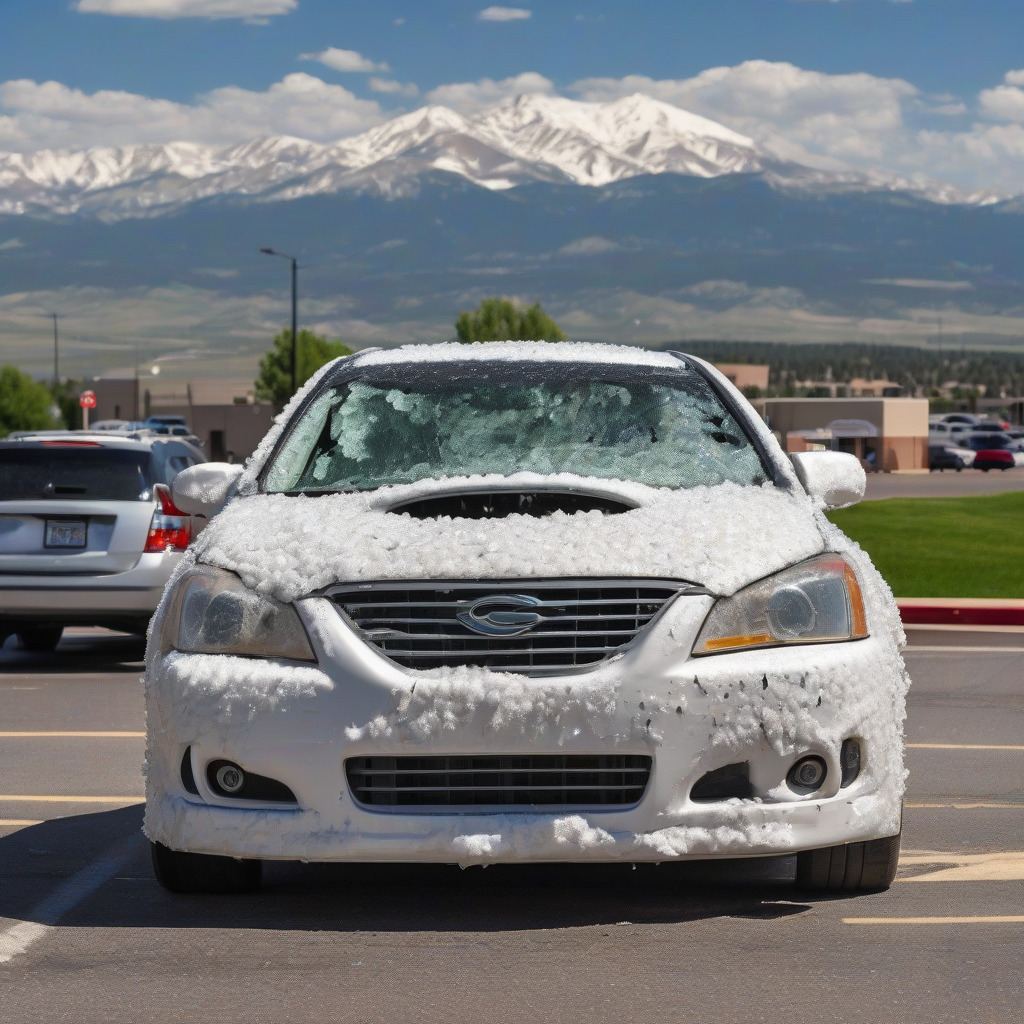
The hail situation is the most acute. May through September, Denver regularly produces storms capable of cosmetic and structural damage — this is one of the most hail-damaged metros in the U.S., and every independent body shop has a waiting list each summer. Paintless dent repair (PDR) is worth knowing about. For hail damage that hasn’t broken the paint surface, PDR is dramatically cheaper than traditional bodywork and produces results that are hard to distinguish from a repaint. Most independent mechanical shops don’t do PDR in-house, but shops that have dealt with Denver hail for years usually have a referral ready. Ask.
Seasonal tire swaps are a volume driver for Denver independents, and shops that offer tire storage do so as a customer retention tool — but it’s useful. If you’re running a dedicated winter set (and if you commute through mountain passes, you should be), ask about storage. Usually $50–$100 per season. You avoid finding shelf space for a second set of mounted wheels. For most people in Denver, that’s a reasonable trade.
Cooling systems deserve specific attention at this elevation. Components that are merely marginal at sea level fail sooner at 5,280 feet. Flush intervals, hose condition, and radiator cap integrity are worth checking more proactively than you might be used to. If a shop mentions elevation during an inspection — flags your radiator cap specifically because you’re at altitude, not just because it happened to be there — that’s a mechanic who has been thinking about Denver cars for a while. You can only fake that kind of local knowledge for so long.
The UV-and-freeze cycle accelerates degradation of every rubber component on your vehicle. Belts, hoses, wiper inserts, door seals — all of it ages faster here than the manufacturer’s general guidance assumes. Denver winters are cold enough to crack compromised rubber; the summer sun at this elevation speeds the compromising. A shop doing a thorough visual inspection in spring or fall should be looking at these components specifically. If they’re skipping it, that’s worth noting.
SIDEBAR: What AAA Approval Actually Means and How to Check It
The AAA Approved Auto Repair program is a shop-level certification requiring an annual physical inspection of the facility. It covers bay equipment, cleanliness, and posted credentials. Shops must employ ASE-certified technicians and maintain a customer satisfaction tracking system. For AAA members, the program includes a 24-month/24,000-mile warranty on parts and labor performed at an approved facility. It’s a meaningful backstop if a repair fails — not a guarantee, but a real protection.
AAA approval is not permanent. Shops can be removed for failing an annual inspection or for unresolved customer complaints. A shop that held AAA Approved status two years ago may not hold it today. Verify current status at colorado.aaa.com before choosing a shop based on that credential. The database is searchable by city and ZIP code. The AAR logo on a shop’s window or website is not sufficient verification — the online listing is. This takes forty-five seconds. Do it.
Individual ASE certifications belong to technicians, not shops. A shop can advertise “ASE-certified technicians” without holding AAA Approved shop status. A shop can hold AAA status while individual technicians rotate in and out of specific certifications. The strongest shops post technician certificates at the service counter and can tell you which tech is working on your car and what credentials they hold. If a shop can’t answer that question clearly, that’s information too.
SIDEBAR: Five Questions to Ask Before You Leave Your Keys
The anxiety around choosing a shop is legitimate. You’re handing a multi-thousand-dollar piece of equipment to someone you’ve probably never met, based on a Google search and reviews from strangers. Five specific signals worth checking before you authorize anything.
Ask for a written estimate before work begins. Parts and labor itemized separately, in writing, before you sign off. A shop that resists this is a shop to reconsider. Verify the specific Colorado statutory requirement under the Colorado Revised Statutes’ motor vehicle repair provisions before relying on this as a legal claim — but the expectation itself is entirely reasonable.
Verify AAA Approved status yourself. Don’t rely on signage. Check colorado.aaa.com. If the shop claims approval but isn’t listed, have that conversation directly: when was the last inspection, are they planning to reapply?
Read how the shop responds to negative Google reviews — not just the rating. A 4.6 average means relatively little. What matters is whether the owner engages with complaints substantively, acknowledges problems, explains what changed. One-star reviews with thoughtful owner responses tell you more than a clean star average does.
Ask to see ASE certifications posted at the counter. Shops that have them display them. If the answer to your question is “oh, our guys are certified” with nothing on the wall, note that.
Ask whether they’ll show you the worn part before you authorize its replacement. An honest shop says yes without hesitation. This isn’t about doubting the diagnosis. It’s about establishing whether the shop is comfortable being transparent with you. Some shops get defensive about the question. That’s an answer too.
Denver’s independent shop scene is strong in some neighborhoods and nearly absent in others. The difference between a shop that’ll serve you well and one that won’t is rarely visible from the parking lot. Check the credentials, ask the direct questions, and know which neighborhoods actually have options — and follow our automotive coverage for shop news, seasonal alerts, and updates as new independents open across the city.