Hail Damaged Your Car in Denver? Here's the Math on Filing a Claim
Whether to file a comprehensive claim, how Colorado's total-loss rule actually works, and why diminished value is money most Front Range drivers leave on the table.

Whether to file a comprehensive claim, how Colorado’s total-loss rule actually works, and why diminished value is money most Front Range drivers leave on the table.
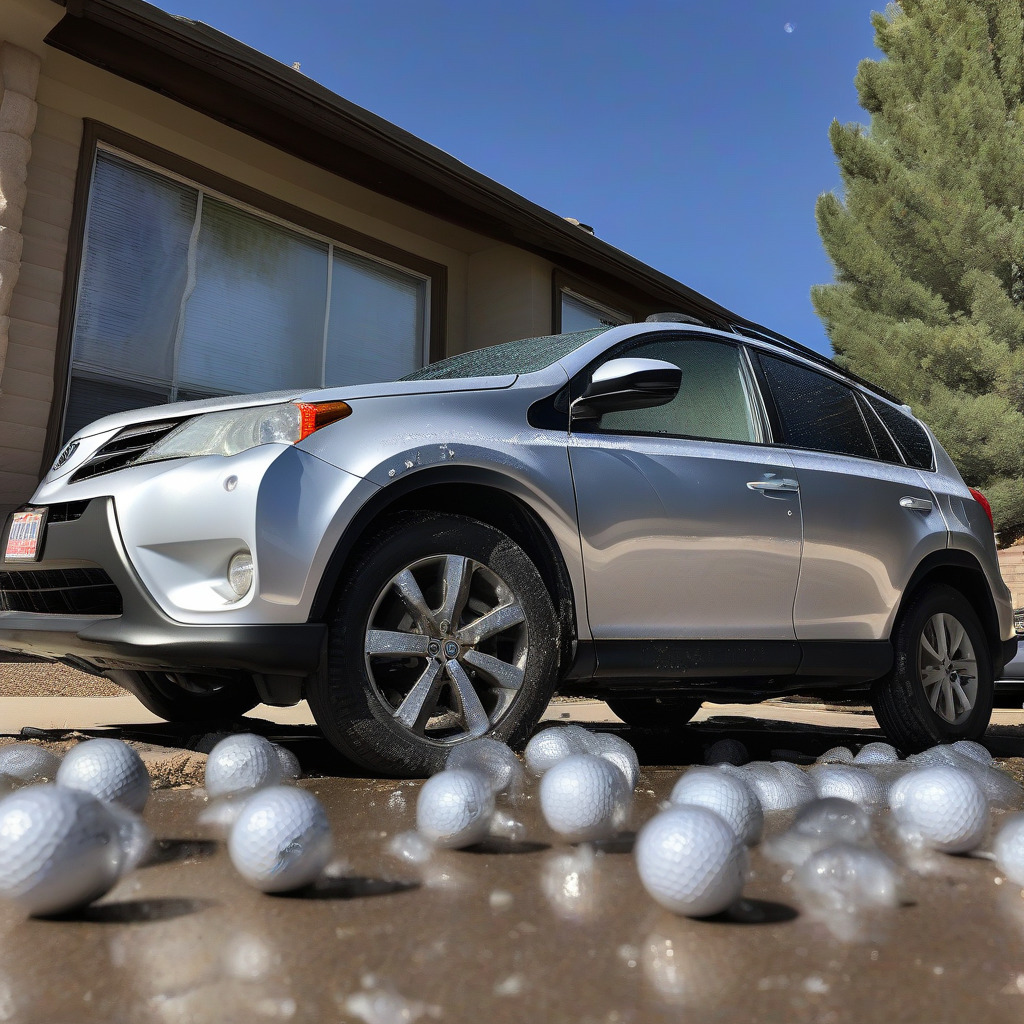
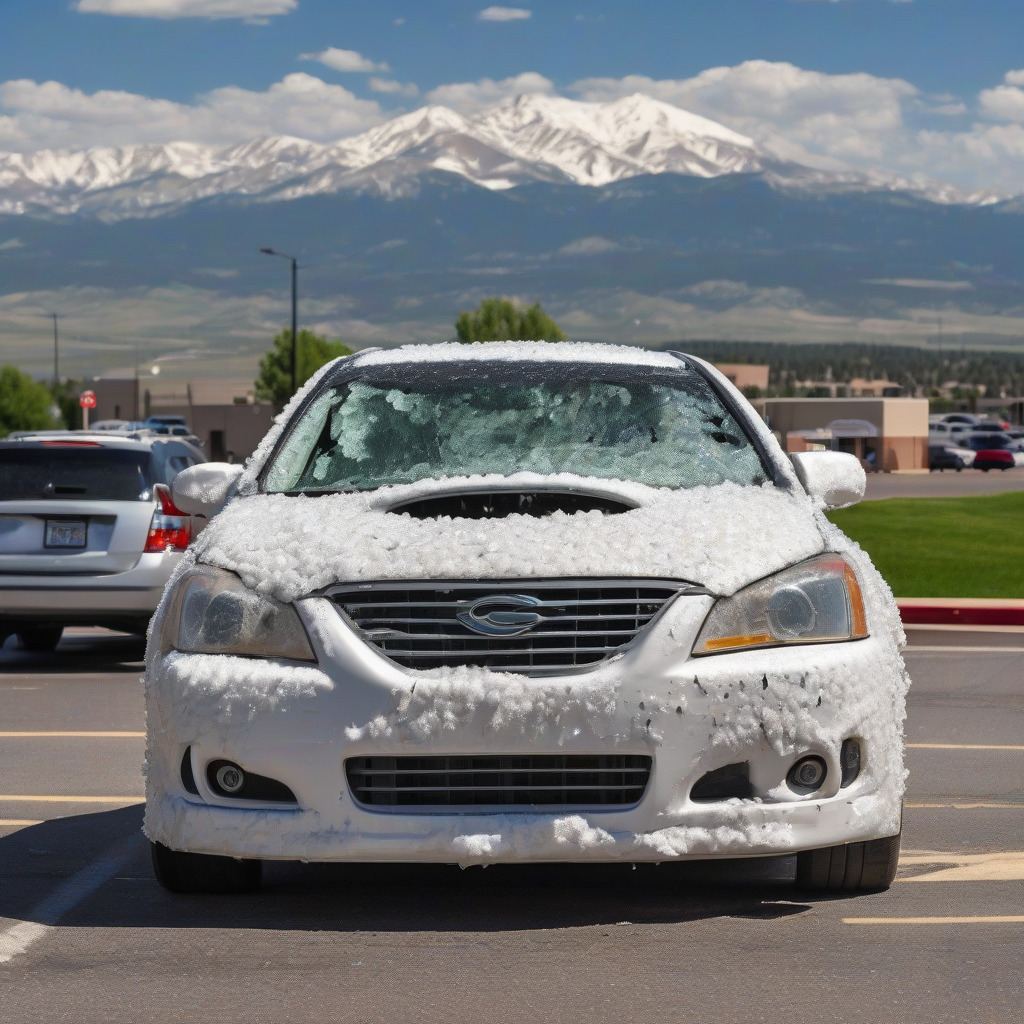
If your car was sitting outside during one of Denver’s summer hailstorms, you already know what the hood looks like. What you probably don’t know yet is whether calling your insurance company will cost you more than it saves — or whether you’re walking away from money you’re legally entitled to collect.
Denver sits near the apex of what meteorologists call Hail Alley, the corridor running through Colorado, Wyoming, and Nebraska that sees more significant hail events than anywhere else in North America. The metro absorbs multiple serious storms most summers, with the worst typically arriving in late May and June. Readers who worked through the PDR-versus-conventional-repair question after those storms — we covered that decision in an earlier piece — now have a different problem: Should I even run this through insurance, and if I do, what am I actually getting into?
This article answers that. It covers the deductible math, the rate-increase risk, Colorado’s total-loss threshold, the rental coverage trap that costs drivers real money, and the diminished value claim that most Front Range drivers don’t know exists.
The Core Math on Filing Versus Paying Out of Pocket
Here’s a working rule: if your out-of-pocket repair cost will be less than twice your comprehensive deductible, seriously consider paying the shop directly. The 2x rule accounts for a possible rate effect and the friction of having a claim on your record.
PDR pricing varies by dent count, severity, and whether any panels need conventional paint work rather than just dent removal — get a written estimate before you decide anything. Then cross it against your deductible:
| Deductible | Break-even repair cost (2x rule) |
|---|---|
| $500 | $1,000 |
| $1,000 | $2,000 |
| $1,500 | $3,000 |
| $2,500 | $5,000 |
If your deductible is low and the storm hit multiple panels, filing almost certainly makes sense once you have a shop estimate in hand. If your deductible is high and the damage is limited to a few dents, the repair cost may not clear your threshold — pay the shop, keep your record clean.
High-value vehicles change the equation. If your car is worth $40,000 or more, the diminished value exposure — covered below — shifts the math toward filing even on borderline jobs. A documented insurance repair creates the paper trail a DV claim requires, and on a vehicle in that range, DV recovery after a real hail event can be substantial.
One more thing to check before you decide: if you’ve already filed a hail claim in the past 12 to 18 months, read the next section before you call anyone.
Will Filing a Hail Claim Raise Your Rates in Colorado?
Usually not for a single claim. But the risk is real, carrier-specific, and most agents won’t bring it up unless you ask directly.
Colorado classifies comprehensive claims as non-fault events. A single comprehensive claim doesn’t trigger automatic surcharges under most standard rate structures in the state. What tends to get left out of the generic national explainers: some Colorado carriers apply a claims-frequency surcharge after multiple comprehensive claims within a defined lookback window, regardless of fault. The trigger is the number of claims, not who caused any of them. That’s a distinction that matters enormously if you’re weighing whether to file a second claim in two years.
The Colorado Division of Insurance (DORA) oversees rate filings for all carriers operating here. Which of the major players — State Farm, GEICO, Farmers, USAA, American Family — have filed surcharge provisions that touch comprehensive claims, and at what threshold, is something you can verify through DORA’s rate-filing records before you commit to filing.
Do the math on what a surcharge actually costs. A 5% increase on a $1,800 annual policy is $90 a year — about $270 over the three years most insurers use before dropping a claim from your rating tier. A 15% surcharge on that same policy runs $810 over three years. At that level, a borderline claim isn’t worth filing.
Before you call your insurer, call your agent with one specific question: “If I file a single comprehensive hail claim, will it affect my renewal rate, and what’s your frequency-surcharge threshold?” Get the answer in writing, or at minimum write down the date, the time, and the name of whoever answered. Agents aren’t required to volunteer this. Most won’t.
Colorado’s Total-Loss Rule and What It Actually Means for Your Car
Colorado’s total-loss threshold is more consumer-protective than most states, and most drivers don’t know it.
In states where the threshold is 70–80%, an insurer can declare a total loss when repair costs hit that share of the vehicle’s actual cash value. Colorado law sets the threshold at 100% of ACV — the insurer can’t be legally compelled to total your car until repair costs equal what the car is worth. Confirm the specific statutory citation in the Colorado Revised Statutes before publication, but the consumer benefit is real: you can’t be forced into a total-loss settlement on a vehicle that’s technically repairable.
That said, the gap between what the law requires and what happens in practice is where money gets lost.
Insurers value cars using one of three platforms — CCC ONE, Mitchell, or Audatex. These tools pull comparable vehicle listings from regional markets and then apply algorithmic adjustments for condition, mileage, and equipment. Those adjustments frequently understate what you’d actually pay to replace your car at a Denver-area dealership. The output isn’t a neutral appraisal. It’s a proprietary calculation that serves as the insurer’s negotiating baseline.
To contest a low ACV number, pull current comparable listings for your specific year, make, model, trim, and mileage from Autotrader, Cars.com, and local dealer inventory. Screenshot everything with dates visible. If those listings — adjusted honestly for your vehicle’s actual condition — support a higher value, submit them in writing to your adjuster with a specific counter-offer. The phrasing that works: “Here are [number] comparable vehicles currently listed in the Denver metro market. My counter-proposed ACV is $[X] based on these listings.” Adjusters have latitude to revise ACV upward when you show your work. Many will.
The 100% statutory standard means an insurer can’t be legally required to total your car just because repair costs hit 78% of their proposed ACV. But here’s the practical reality: carriers often choose to total vehicles voluntarily using their own internal guidelines, because beyond a certain cost-to-value ratio, repair isn’t economically rational for them either. The statute protects you from being forced into a total-loss settlement below ACV. It doesn’t stop an insurer from totaling a vehicle on their own terms.
If your car is totaled, watch for storage fees immediately. Vehicles sitting in a shop queue or tow yard accrue daily charges at Denver-area facilities, and those charges can eat into a settlement if paperwork moves slowly. Move the vehicle to your own driveway or a family member’s property as fast as possible, or get explicit written confirmation from your insurer that storage costs are covered under your policy.
The Rental Coverage Trap Most Policies Don’t Warn You About
Denver’s hailstorms don’t space themselves conveniently. When a significant event hits — the kind that damages thousands of vehicles across multiple zip codes in an afternoon — every reputable body shop and PDR operation in the metro goes to backlog at once. Waits of several months are not unusual after a major storm. Confirm current post-storm wait times with local shops, because the number changes every season.
Now look at your rental coverage limits. Standard Colorado policies commonly cap rental reimbursement at $30–$50 per day with a 30-day total limit. Denver’s current rental market rates frequently exceed that ceiling, and if shop backlogs stretch well past your policy’s 30-day cap, you’re paying the difference.
A move most drivers don’t think to try: ask that the loss-of-use clock start when the shop can actually accept the vehicle, not the day you file the claim. If you file in mid-July and the earliest shop opening is September, there’s no reason for the rental clock to run all summer. Not every adjuster will agree without pushback. Many will, particularly at carriers that have managed large-scale Denver hail events before and understand what a metro-wide backlog looks like. Make the request early, be explicit about why, and document whatever the adjuster tells you.
If the vehicle is eventually totaled after sitting in queue, push for loss-of-use coverage through the settlement funding date — not the total-loss determination date. That distinction can add a week or more of coverage that you’re entitled to.
Diminished Value Claims in Colorado: Real Money Most Drivers Walk Away From
Diminished value is the reduction in your car’s market value that persists after a repair — even a flawless repair — because the vehicle now carries a damage history that shows up on Carfax and AutoCheck. Any buyer who does their homework will discount the price accordingly. It’s not a technicality. It’s real money, and most Colorado drivers have no idea they can claim it.
Whether you have a viable DV claim depends on one thing: who caused the damage.
If another driver hit your car and you’re filing against the at-fault driver’s liability insurer, you’re on solid legal ground in Colorado. You’re entitled to full compensatory damages, which include DV. These claims get paid when properly documented and presented.
If a hailstorm damaged your car and you’re filing a DV claim against your own insurer under your comprehensive coverage, you’re in contested territory. Standard Colorado auto policy language typically doesn’t include explicit first-party DV coverage, and most insurers will deny on that basis. My honest read: if your policy doesn’t include it and the insurer has denied it, you’re probably looking at a legal fight rather than a negotiation — which changes the cost-benefit math considerably. That said, policy language varies and courts have occasionally surprised people. It’s worth a one-hour consultation with a Colorado plaintiff’s auto attorney before you write it off or pursue it blind.
When insurers do pay DV claims, they frequently use what’s known informally as the 17c formula. It produces figures that are systematically low — typically capping the base DV at 10% of pre-loss value, then applying multipliers that substantially reduce the final number. An independent appraisal from a qualified DV appraiser produces a methodology-driven figure that reflects actual market loss and gives you something credible to negotiate against. Confirm current Denver appraisal costs with local appraisers or public adjusters; it varies, and it matters for the cost-benefit calculation.
Before you cash any settlement check on a vehicle worth $40,000 or more, get the independent DV appraisal. Cashing the check may constitute acceptance of the settlement. Confirm the terms with your adjuster or an attorney before you endorse it.
How to Fight a Lowball Settlement Using Your Policy’s Appraisal Clause
If your insurer’s repair estimate is significantly lower than what Denver shops say the work will cost — or if you’ve disputed an ACV figure and the negotiation has stalled — most standard Colorado auto policies give you a specific tool: the appraisal clause. Most policyholders never use it, which is a shame, because it works.
The process is straightforward. You hire a licensed, independent appraiser. The insurer hires theirs. Those two appraisers select a neutral umpire. If they can’t agree on a value, the umpire decides, and any two of the three parties agreeing makes it binding. You pay your appraiser; the insurer pays theirs; the umpire’s fee gets split. It’s cheaper and faster than litigation, doesn’t require an attorney, and doesn’t produce a court record.
Before invoking the clause, build your documentation. Get at least two independent written repair estimates from reputable Denver-area shops — on shop letterhead, not verbal quotes. Get an independent DV appraisal if you’re also pursuing that. Print or screenshot comparable vehicle listings for an ACV dispute, with dates. Collect all written correspondence with your insurer.
A separate path worth knowing: file a formal complaint with DORA’s consumer division at doi.colorado.gov. DORA can’t compel payment directly, but a complaint creates a regulatory record and sometimes moves insurers who’d rather not have the scrutiny. It’s worth doing even alongside the appraisal clause, particularly if the insurer’s conduct has been slow or unreasonable.
Before choosing either path, spend an hour with a Colorado plaintiff’s auto attorney or a licensed public adjuster. Both deal with Colorado insurer disputes regularly and can tell you quickly whether your situation calls for the appraisal clause, a DORA complaint, a demand letter, or some combination. Many plaintiff’s auto attorneys will do a brief consultation at no charge on an insurance dispute with potential merit.
The Storm-Chaser Problem in Denver’s Parking Lots
After any significant hail event in the Denver metro, out-of-state PDR crews appear in shopping center parking lots within days — particularly near Belmar, Flatiron Crossing, and similar high-traffic suburban centers in the hardest-hit zip codes. If you’ve been to those places the week after a bad June storm, you know exactly what I’m describing. They work fast, and they work cheap, which sounds like an upside until you understand the downstream problem.
Incomplete PDR on panels with sharp-edged impacts — the kind that actually need paint repair, not just dent removal — can cause paint failure and rust that a body shop will later charge two to three times the original repair cost to fix properly. By then, the crew is gone, the business entity may be dissolved, and the warranty is worthless.
Before any PDR shop touches your vehicle, run it through Colorado Secretary of State’s business search tool. It takes 90 seconds and tells you whether the entity is registered in Colorado, when it was formed, and whether it’s in good standing. A company that appeared four days after a storm is a specific risk profile worth examining carefully. Check the Better Business Bureau’s Denver-area listing at bbb.org for complaint history. Shops that have operated through multiple Denver hail seasons will have a track record. Shops that materialized last week won’t.
Get a written warranty before authorizing work. Read what it covers, how long it lasts, and whether it transfers to the next owner — which matters for resale value. And read every piece of paperwork before you sign it, particularly anything involving assignment of benefits. Some AOB or direction-to-pay forms don’t just authorize the shop to receive payment — they grant the shop authority to negotiate with your insurer on your behalf, which can complicate your own rights in ways that are hard to undo. If language in a shop’s paperwork gives you pause, a five-minute call to a Colorado public adjuster or attorney will tell you whether it’s standard.
One more thing: your insurer’s preferred shop isn’t necessarily the shop that serves your interests best. Preferred-network agreements are built on volume and efficiency benchmarks; cost control is a real factor alongside quality. Get an independent estimate first so you have a baseline to compare.
Your First 72 Hours After a Denver Hailstorm
The decisions made in the first three days determine most of what follows.
Photograph every damaged panel in daylight with the sun at a low angle — morning or late afternoon. Flat midday light hides dents in photos. Video walkarounds help too. Your documentation is your baseline if damage is later disputed or additional damage is found during repair.
Know your comprehensive deductible before you call your insurer. Get a written estimate from a reputable Denver-area PDR shop — not a parking-lot crew — before you file anything. If the estimate is less than twice your deductible, consider paying out of pocket, particularly if you’ve filed a previous comprehensive claim in the last 18 to 24 months.
Call your insurer within whatever notice window your policy requires. Don’t accept a verbal settlement figure as final. Ask when a written estimate will be provided, who the adjuster is, and what the dispute process looks like if you disagree. If shops are backed up, ask explicitly that the rental reimbursement period start when the shop can actually take the vehicle — not the day you file. Get the adjuster’s response in writing.
Don’t sign a direction-to-pay or assignment-of-benefits form until you understand what you’re authorizing. Read it.
If your car might be close to the total-loss threshold, start pulling comparable market listings immediately. Negotiating ACV after you’ve accepted a number in writing is considerably harder.
For questions about your insurer’s conduct or a dispute that isn’t moving, DORA’s consumer division is at doi.colorado.gov. For broader context on our automotive coverage of Denver-area vehicle ownership, insurance, and registration topics, the section index has related guides.
For coverage of how to choose a PDR shop and how to handle a hail claim on your roof, see the companion CityDesk Denver pieces on those topics. This article covers the auto insurance decision that sits between them and deliberately doesn’t duplicate the technical PDR or roofing material covered there.