Do You Actually Need Winter Tires in Denver or Will All-Seasons Get You Through
What Colorado's traction law, your neighborhood, and a hard calendar deadline mean for your decision this fall

What Colorado’s traction law, your neighborhood, and a hard calendar deadline mean for your decision this fall
National tire guides ignore Colorado’s Condition Codes. Local mechanics know something else they miss too.
The short answer, for anyone who wants it up front: if you drive I-70 or US-285 into the mountains between October and April, you need tires with a three-peak mountain snowflake rating — not just all-seasons — and Colorado law backs that up with fines. If you stay entirely within city limits and never touch a mountain corridor, high-quality all-seasons are legally sufficient and often practically adequate. There are exceptions. Everything below fills in those two sentences.
Now for why the calendar is already working against you.
The October Clock Is Not a Figure of Speech
Denver’s first measurable snowfall arrives, on average, around October 18 to 20. That’s the National Weather Service historical figure for Denver International Airport. Not a conservative estimate. In a pattern that’s repeated itself reliably enough to plan around, the Front Range gets its first significant accumulation somewhere in mid-to-late October, catches a large share of drivers completely unprepared, and the city’s tire shops spend the next three weeks digging out from the backlog.
The reference storm most mechanics reach for is September 8, 2020. More than six inches fell across metro Denver before a meaningful share of the city had thought seriously about tire swaps. It was early — but the lesson isn’t “that was a fluke.” Denver’s shoulder seasons are operationally shorter than residents behave as though they are.
Mid-October is when shops start reporting multi-week waits. A driver who calls after the first televised snowstorm forecast — which typically runs between October 15 and November 5 — is likely booking into the second storm. By early November, appointment windows at busy shops stretch to two or three weeks. September is the right month to schedule. Early October is workable. After the first significant forecast, you’re not planning — you’re reacting. The shops know it, and their calendars reflect it.
What Colorado Law Actually Requires
This is the section national tire guides skip. It’s also the most consequential one for anyone who uses I-70 or US-285.
CDOT operates a real-time traction law system tied to what it calls Condition Codes. Two of them matter to Denver-area drivers.
Condition Code 15 requires that passenger vehicles carry tires with at least a mud-and-snow (M+S) rating, or all-wheel drive or four-wheel drive with adequate tread, or tires with at least 3/16-inch tread depth. Standard all-season tires with an M+S designation — the kind that come stock on most sedans and crossovers — satisfy Code 15.
Condition Code 16 is where most Denver drivers have a gap they don’t know about. Code 16 requires tires carrying the three-peak mountain snowflake (3PMSF) symbol, or chains, or cable chains. A standard M+S all-season tire does not meet Code 16. Drivers who assume their all-season M+S tires cover every winter condition are legally exposed the moment Code 16 activates — and it tends to activate in exactly the conditions they’re driving into.
The corridors where these codes apply include I-70 from Georgetown west to Dotsero (covering the Eisenhower Tunnel, Vail Pass, and Glenwood Canyon), US-285 toward Fairplay and South Park, and I-25 through Monument Pass south of Colorado Springs. City streets, C-470, E-470, and the metro beltways are not subject to traction law activation.
Fines for violations under an active traction law have historically run from around $100 to $650 depending on circumstances — confirm current figures with CDOT or the Colorado State Patrol, since fine schedules are updated periodically. The bigger issue: if you’re involved in an accident on an activated corridor and your tires don’t meet the posted condition code, that fact becomes part of any subsequent investigation.
The practical read is simple. An M+S all-season gets you through Code 15. It is not a Code 16 tire. Check COtrip.org before you leave Denver to see what condition code is active on your corridor — not after you’ve reached the top of Floyd Hill.
The Temperature Number Denver Drivers Should Know
Every tire comparison mentions cold weather. Almost none give you a number you can actually use.
The threshold is 45°F. That’s roughly where the rubber compounds in all-season tires begin hardening measurably, shrinking the contact patch’s ability to conform to road surface irregularities. Once that hardening starts, braking distances grow. At 32°F, the documented stopping-distance penalty compared to a dedicated winter tire runs somewhere around 10 to 25 percent, depending on tire age, compound, and vehicle weight. As temperatures fall into the 20s and teens — routine in Denver from November through February — that gap widens further.
Denver’s altitude adds a wrinkle that lower-elevation guides don’t account for. At 5,280 feet, the city swings hard between daytime and overnight temperatures. Lows in the 20s while daytime highs reach the low 50s are normal in winter. Your all-seasons may feel fine on a sunny Tuesday afternoon and be operating well past their reliable threshold Wednesday at 6 a.m., on the same roads, on the same commute. The pavement looks identical. The tire doesn’t perform the same way.
Elevation also accelerates UV-related rubber oxidation — UV radiation at 5,280 feet runs roughly 25 percent more intense than at sea level. Tires age faster here than they would anywhere along the coasts, which matters for aging all-seasons and for winter tires that have been sitting on a shelf since 2019. If your winters are a few seasons old, they’ve degraded more than the mileage suggests. In our automotive coverage, this altitude-and-degradation issue comes up across several tire and vehicle maintenance topics specific to Colorado driving conditions.
A sourced quote from a Denver independent mechanic on the specific cold-weather threshold they advise local customers is being sought for this section; it will be added on update.
The Honest Answer for City-Only Drivers
If you live in Capitol Hill or Congress Park, commute on Colfax or Broadway, and genuinely never drive I-70 or US-285, your situation is different from a skier’s. You deserve a direct answer instead of a blanket recommendation that pretends your commute looks like Vail Pass.
Denver’s main arterials are pre-treated with magnesium chloride before forecast storms and typically clear within a few hours of significant accumulation. A flat Capitol Hill run on a treated arterial is a real argument for capable all-seasons. That argument has limits.
Pre-treatment doesn’t do much during the first hour of a fast-moving storm when accumulation is outpacing the chemistry. And hilly neighborhoods — Sloan’s Lake, Berkeley, Potter-Highlands — are genuinely different from a flat Colfax run. Side streets in those areas, on the morning after a storm before the plows reach them, are where all-seasons show their limits most clearly. If you’ve watched a neighbor’s Subaru lose an argument with a Berkeley hill in February, that’s the picture. Stopping distance on a grade with hardened all-season compounds and compacted snow is not the same as dry pavement. It’s not even close.
For EV owners in Central Park, Wash Park, or Highlands Ranch — neighborhoods where EV ownership rates run well above the metro average — this decision carries more weight than it might seem. Battery-electric vehicles are significantly heavier than comparable gas-powered cars and deliver peak torque instantly, with no gradual buildup to give a spinning tire a chance to recover. That combination can overwhelm an all-season compound faster than a gas vehicle in identical conditions. EV owners should treat themselves as one tier more urgent across every category in this piece.
The Mountain-Weekends Driver — Where the Math Changes
The driver profile that runs into legal trouble most often is the Denver resident whose daily commute is entirely within the metro but who skis Breckenridge, Keystone, or Loveland on weekends. No real need for winter tires Monday through Friday. Legally mandated need for 3PMSF-rated tires — or chains — when Code 16 is active on I-70 or US-285.
The tricky part: Code 16 can activate between when you leave Cherry Creek and when you reach Floyd Hill. You can’t see it coming from your living room. Check COtrip.org 20 minutes before you pull onto I-70 — not the night before, when conditions can shift significantly overnight.
US-285 toward South Park and Fairplay deserves specific attention for residents in Littleton, Highlands Ranch, Ken Caryl, and southwest Denver who sometimes use it to reach ski areas. US-285 activates its own condition codes independently of I-70. Drivers who assume that because I-70 looks passable their route must be fine are making a bad assumption on a road that will punish it.
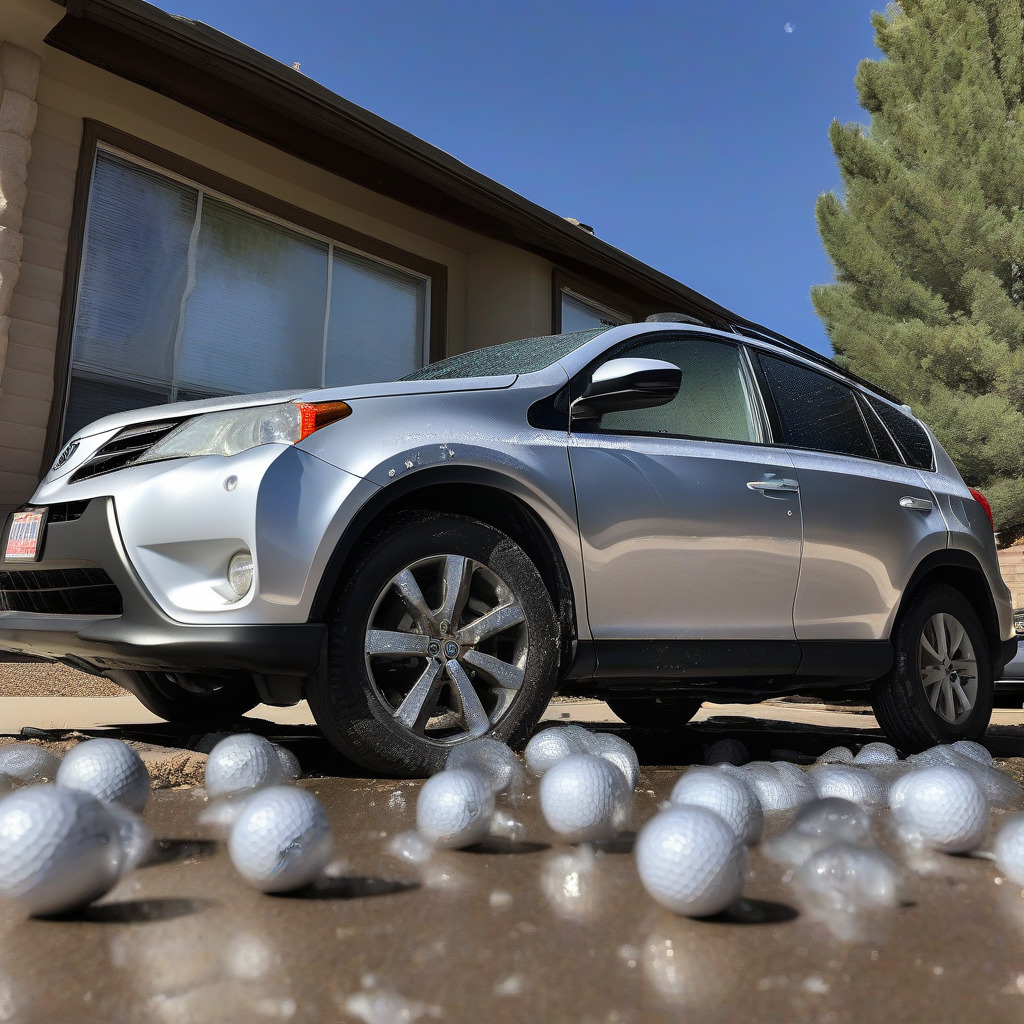
For the metro commuter who skis on weekends, winter tires are not a comfort upgrade. They’re a legal compliance item that also happens to reduce the risk of an accident on Vail Pass. If a Colorado hail storm has recently damaged your vehicle, it’s worth reviewing what filing an insurance claim for hail damage on your car in Colorado actually involves before you’re sorting out multiple repair situations at once.
What It Costs at Denver Shops Right Now
At Discount Tire locations across the metro — Lakewood, Aurora, Northglenn, Littleton — mount-and-balance on customer-supplied tires runs in the $20 to $35 per-tire range. If you’re buying tires through them, mounting is typically bundled. Tires Plus and Firestone shops are in a similar range for bring-your-own work.
Independent shops in Denver generally run $25 to $45 per tire for mount and balance, with higher rates for low-profile performance tires or oversized truck tires requiring more setup time. Independent shops also tend to have more scheduling flexibility and a better sense of who’s a returning customer — worth something when you’re trying to get in ahead of a storm.
One cost that surprises first-time dedicated-wheel-set buyers: TPMS sensors. If your second set of wheels doesn’t have sensors installed, your dashboard warning light stays on. Sensor work runs roughly $15 to $50 per sensor plus programming time. It’s not a catastrophe, but it’s an annoying surprise when you weren’t expecting it. Confirm this with your shop before the appointment.
Several independent shops around the metro offer seasonal swap-and-store service — they do the mount and balance, hold the off-season set in a climate-controlled space, and swap back in spring. This matters specifically for Capitol Hill renters, RiNo condo owners, and anyone else without garage space. Seasonal storage pricing runs roughly $60 to $150 per season. For a driver without a garage, it changes the break-even math on buying a dedicated winter set entirely — and eliminates the problem of four tires occupying a storage unit or a friend’s goodwill for six months. Not every shop offers it; call ahead.
When Denver Shops Actually Back Up
Mid-September: same-week availability is standard at most shops, chains and independents alike. This is the window.
Early October: one-week lead times start appearing at busier locations. Still manageable.
Mid-to-late October, after the first significant storm forecast: one-to-two-week waits become the norm. You’ve lost control of the timeline. You’re fitting your appointment around the shop’s schedule, not yours.
First week of November: two-to-three-week waits at peak locations. The driver who calls now is booking into a window that runs them through a second major storm on the wrong tires. This happens every year. It will happen again this year.
How to Read the Sidewall Before You Spend Anything
Check your current tires before you do anything else. Two minutes. It may answer the question entirely.
Look at the sidewall — the outer face of the tire. You’re looking for two possible markings.
M+S (or M&S, or “All Season”) appears as a molded marking on the sidewall. It indicates the tire meets a basic mud-and-snow performance threshold. It does not mean the tire has been cold-weather tested. An M+S all-season doesn’t go through standardized cold-weather braking or snow-traction testing to earn that designation. It qualifies your tire for Code 15 and nothing more.
The three-peak mountain snowflake symbol is a small mountain outline with a snowflake inside. It indicates the tire has passed standardized testing for severe snow conditions. Dedicated winter tires carry it. Some all-season tires marketed as “all-weather” carry it too — these occupy a middle category worth knowing about if you want one tire set to handle both city commuting and Code 16 compliance. They’re not winter tires, but they’re meaningfully different from standard all-seasons, and for the occasional mountain driver they’re worth pricing out.
Two tires that look nearly identical on a shelf, same brand family, similar price, can carry different legal and performance status in Colorado. The three-peak mountain snowflake is the difference between a Code 16-legal tire and a fine on an activated corridor. Small marking. Matters a lot.
What to Do, Depending on Where You Drive
A city-only commuter who genuinely never touches mountain roads: all-seasons are legally sufficient everywhere in the metro. Traction law doesn’t apply to city streets, C-470, or E-470. High-quality all-seasons perform adequately on treated arterials during most city storms. The real risk points are hilly side streets — Berkeley, Sloan’s Lake, Potter-Highlands — on the morning after a storm, and the opening hour of fast-moving accumulation before pre-treatment chemistry takes hold. Staying on all-seasons is defensible. Running marginal or aging all-seasons and calling it fine is not.
An occasional mountain driver, or someone who uses I-70 a few times each winter: the case for either dedicated winters or 3PMSF-rated all-weather tires is genuine. You may not hit Code 16 every trip. When you do hit it, the legal exposure is real — and those are exactly the conditions where the difference in stopping distance and control is largest.
A frequent skier making regular trips between October and April: winter tires aren’t optional. Code 16 is a legal compliance requirement on I-70 and US-285, and the conditions that activate it are the ones you’re driving through on purpose. If you’re making more than a handful of these trips per season, a dedicated winter set with a second wheel set is the right call — economically and practically. A second wheel set eliminates the mounting hassle and gives you the fastest possible response time when conditions change on the mountain, which they do, and faster than the forecast suggests.
An EV owner: move one tier up in urgency across every category above. A Wash Park driver who never approaches I-70 should take winter tires more seriously than a city-only gas-car commuter in the same conditions. An EV driver making regular mountain runs has no reasonable case for all-seasons on a Code 16 corridor.
Denver’s first measurable snow has historically arrived around October 18 to 20. Shops start backing up in mid-October. A driver who waits for the first storm to prompt action is booking into the second one.
September is the month to call. The shops have the time, the selection is good, and you’re making a decision rather than scrambling.
Check your sidewall tonight. If you see M+S and no three-peak mountain snowflake, and you drive I-70 in winter, you have the answer you came here for.