PDR or Full Repaint for Your Hail-Damaged Car in Denver
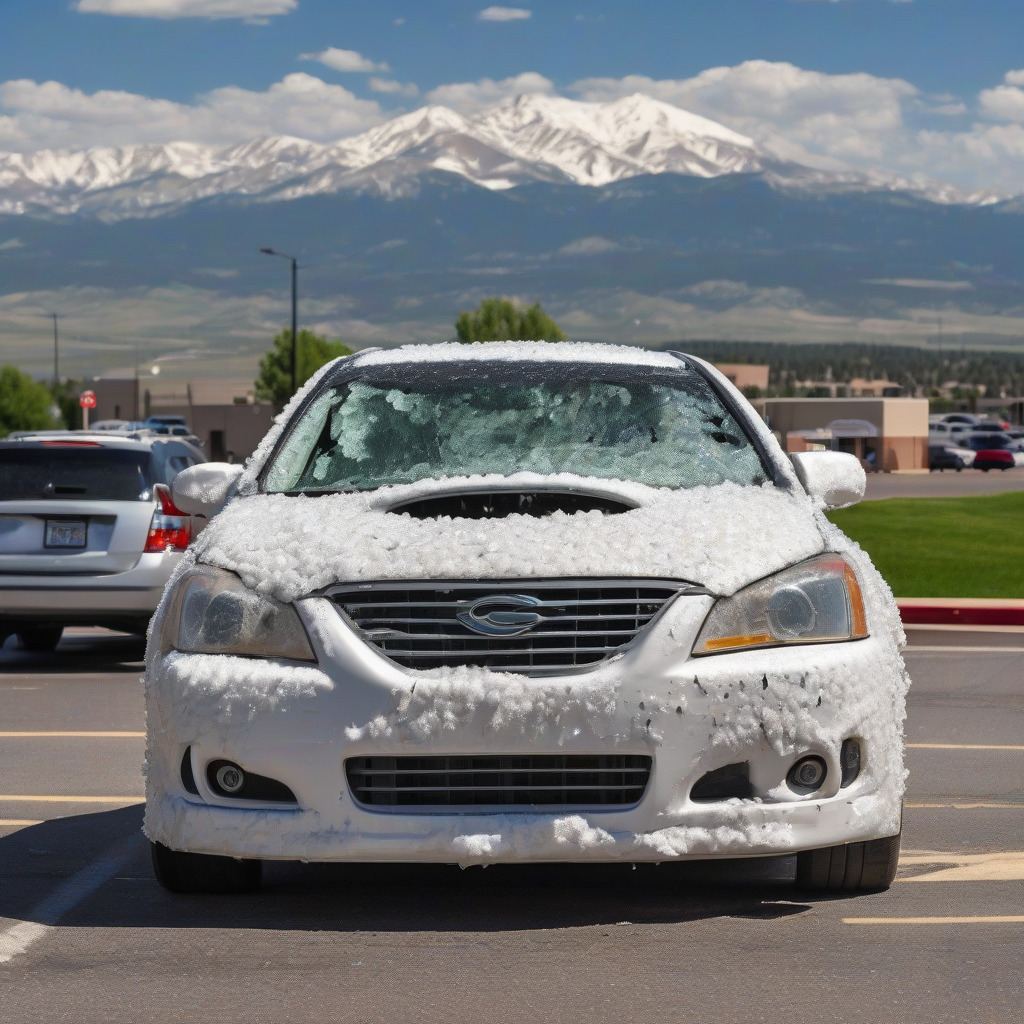
Denver's hail season doesn't negotiate. After the May 8 and August 2023 storms raked through Aurora, Centennial, and Littleton — dropping stones the size of golf balls and larger across some of the…

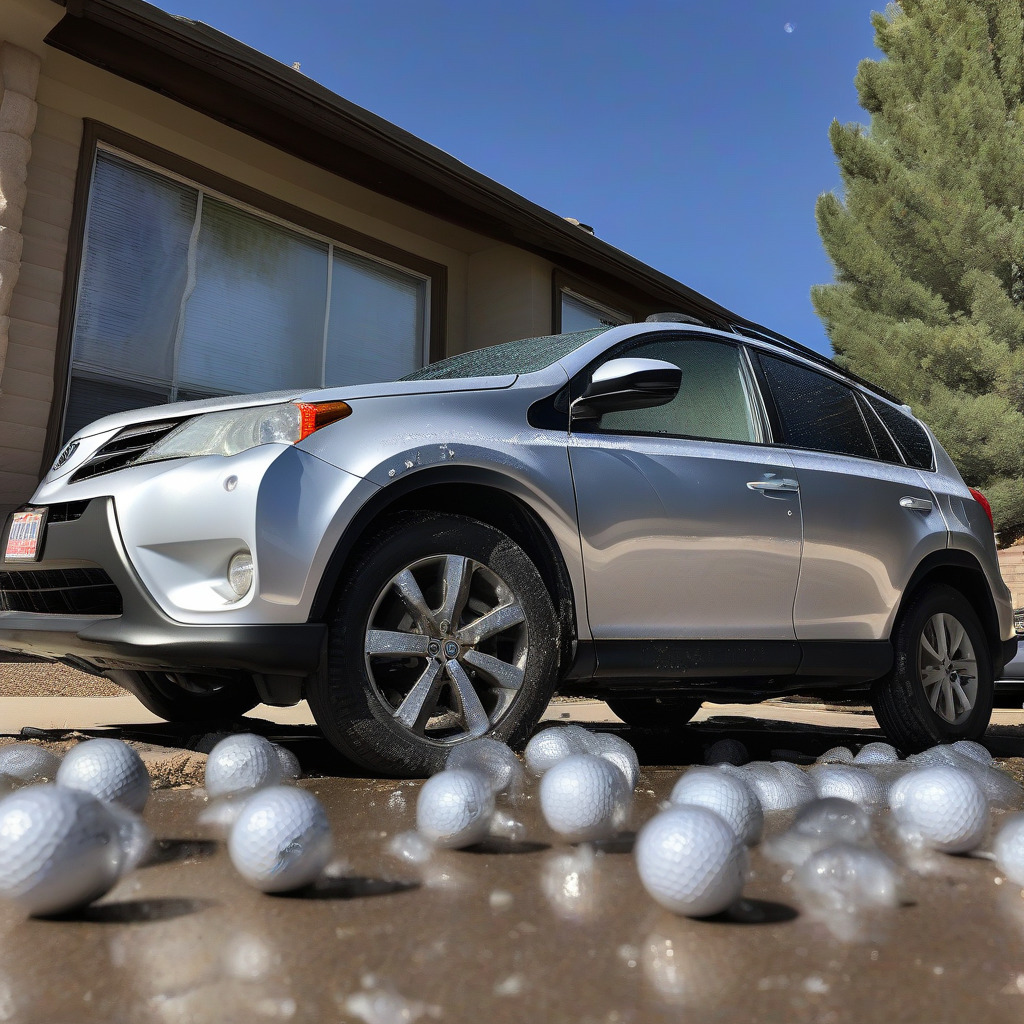
Denver’s hail season doesn’t negotiate. After the May 8 and August 2023 storms raked through Aurora, Centennial, and Littleton — dropping stones the size of golf balls and larger across some of the Front Range’s most vehicle-dense zip codes — body shops from Lakewood to Parker were quoting six-week backlogs before a customer could get an estimate. Thousands of RAV4s and F-150s sat in driveways with dimpled hoods while their owners tried to figure out which repair path made the most financial sense.
Most of what those owners found online was written for a generic national audience. It doesn’t account for Denver’s UV problem, doesn’t reflect what local shops actually charge after a storm floods the market with work, and doesn’t explain how Colorado adjusters treat PDR claims differently than repaint claims. This piece addresses all three, grounded in local shop contacts, adjuster guidance on payout structure, and dealer input on what your repair choice does to your trade-in value.
Why This Decision Hits Differently at 5,280 Feet
Denver’s altitude accelerates paint degradation on any panel that gets refinished. At a mile high, UV radiation is roughly 25 percent more intense than at sea level. Factory paint is engineered and tested to handle that exposure over the life of a vehicle. Aftermarket refinish work — even quality basecoat-clearcoat work from a competent shop — degrades faster here. UV oxidation, color fade, and clearcoat failure all happen sooner in Denver than they would in Houston or Atlanta. That’s the physics of being this high up, and no amount of good prep work fully closes the gap.
That durability difference matters in the PDR-versus-repaint calculation. A repainted panel looks fine in July. In three to five years, if the clearcoat starts failing faster than the factory panels beside it, you’re looking at spot repair costs or a visibly mismatched hood. I find this gets left out of hail repair conversations almost entirely, which is a real oversight given how hard Denver sun hits a panel.
The Aurora-Centennial-Highlands Ranch corridor sits in one of the most hail-active strips in the continental United States. Rocky Mountain Insurance Information Association data consistently places Colorado among the top five states for hail claim volume. The 2023 season overwhelmed local shop capacity almost immediately. PDR queues hit six to eight weeks at several shops by June. Repaint bays had more availability, but not as much more as you’d expect.
That supply crunch also affects pricing. Post-storm, shops prioritize high-volume whole-vehicle PDR contracts negotiated directly with insurers over walk-in single-panel work. Understanding that dynamic before you call helps you set realistic timeline expectations — because showing up cold a week after a major storm and expecting a quick estimate is a reliable way to end up frustrated and making a rushed decision.
What PDR Can Fix and Where It Stops Working
Not every dent qualifies for PDR. A shop that tells you otherwise is either inexperienced or angling for a contract it can’t deliver.
The general viability threshold: a dent roughly four inches in diameter on an accessible panel with intact paint. On flat surfaces like hood centers, roof panels, and trunk lids, skilled technicians can sometimes work larger. Once you move to body lines or the edges where panels curve sharply, PDR becomes much harder and sometimes impossible. The metal’s memory at those stress points doesn’t respond the same way — it’s not a matter of technician skill, it’s basic material physics.
Paint condition is the other hard boundary. PDR works by massaging metal back to shape from behind the panel. If the impact has cracked the clearcoat, produced spider-web fracturing, or chipped paint to the primer or bare metal, the PDR work may be sound but the finish will still need paint. That changes the cost equation entirely, and in most of those cases a straight repaint is the cleaner solution.
Roof damage gets its own calculation. When hail is dense enough that panel replacement is priced comparably to repair, the math often favors replacement — especially on older vehicles where total-loss thresholds come into play. Shops like Colorado Paintless Dent Repair note that damage requiring access through an airbag zone or significant trim removal triggers supplemental cost reviews that can push final numbers close to repaint territory anyway.
The consistent guidance from established PDR shops: intact paint, accessible flat panel, start with a PDR estimate. Crease or paint damage, get a body shop involved before committing to anything.
| PDR Generally Viable | PDR Generally Not Viable |
|---|---|
| Round dents up to ~4 inches, intact paint | Dents with cracked, chipped, or spider-webbed paint |
| Flat panel sections (hood center, trunk lid, roof field) | Dents on or adjacent to body lines and character lines |
| Panel accessible from behind | Panels requiring airbag zone or significant trim removal |
| Shallow multiple-impact patterns | Deep, sharp impacts that have stretched metal significantly |
| Single or clustered impact zones | Distributed damage at high density across a panel |
| Damage on panels with factory clearcoat intact | Damage on previously repainted panels |
What Denver Shops Charge — and What to Ask
Whole-vehicle PDR packages for hail damage in the Denver post-storm market have generally run $1,500 to $4,500 depending on vehicle size and dent count. Individual dents at established shops typically run $75 to $150 each. Full vehicle repaints at quality Denver-area shops run from roughly $3,000 on the low end to $8,000 or more for multi-stage work on a newer vehicle; Maaco is the floor, and you should know that before you walk in.
Verify all of this with written estimates on your specific vehicle before making any repair or insurance decision.
A few shops worth calling:
Hail Specialists of Colorado (Englewood) works exclusively with high-volume hail PDR and handles insurance supplements directly. Ask specifically for a per-panel itemized estimate — they’ll provide one if you ask for it by name, and it’s useful for comparing against other quotes.
Dent Werks has multiple metro locations and handles both PDR and conventional bodywork. Ask upfront whether your damage qualifies for PDR-only or a blended approach. Their answer will tell you whether the estimator has actually looked at your damage type or is defaulting to a standard pitch.
Colorado Paintless Dent Repair operates independently, which makes their itemized estimates useful as a check against chain-shop pricing.
Gerber Collision & Glass has locations in Lakewood, Aurora, and Thornton. They can provide blended PDR-plus-refinish estimates and handle insurance claims in-house, which matters if your damage straddles the PDR viability line.
Maaco in Denver and Lakewood is worth calling only as a cost-floor baseline for budget repaint work. Standard Maaco processes won’t deliver factory-match quality on metallic or pearl finishes. This is a reasonable option on an older vehicle where resale is not a factor.
Caliber Collision in Highlands Ranch and Centennial works as a Direct Repair Program shop for several Colorado insurers. Worth contacting if your insurer is steering you toward their preferred network — you should know what that referral is worth before you agree to it.
When you call any of these, ask three things: What do you charge per dent or per panel for PDR? What specific damage profile triggers a switch from PDR to refinish in your assessment? And what does your warranty cover, for how long, and does it transfer if you sell the vehicle? A shop that hedges on the warranty question in writing is telling you something. Pay attention to it.
How Colorado Insurers Handle PDR and Repaint Claims Differently
Your insurer’s payout structure differs between PDR and repaint claims, and the differences generally favor PDR for the vehicle owner — though the carrier won’t bring this up on their own. This is the part of the conversation most people don’t know to have.
Before authorizing repairs, it’s worth consulting a Colorado Division of Insurance-licensed public adjuster who can explain payout structure without carrier bias.
PDR estimates use line-item counts: number of dents, panel location, access difficulty, and a per-dent or per-panel rate. Repaint claims involve labor hours, paint materials, blending adjacent panels for color match, and OEM versus aftermarket parts decisions — each one a potential dispute point. Supplement challenges on repaint claims are more frequent and more contested.
Under ACV policies — which cover most vehicles not protected by an agreed-value or replacement-cost endorsement — insurers depreciate the value of paint materials and refinish labor based on vehicle age. PDR claims don’t carry that depreciation logic in the same way: you’re restoring metal to its original position, not replacing a consumable material. On older vehicles, PDR payouts tend to come closer to covering actual repair cost. Repaint payouts can fall meaningfully short of what quality refinish work costs. That gap comes out of your pocket.
Colorado Revised Statutes Title 10 explicitly prohibits insurers from requiring you to use a specific shop from their preferred vendor network. They can recommend shops, but you have the right to take your vehicle elsewhere. If your chosen shop’s legitimate estimate exceeds the insurer’s initial figure, the insurer is generally required to supplement to cover the difference. This matters because insurer-preferred shops sometimes write PDR estimates at rate structures that reflect volume contracts, not what the work commands at independent operations.
After major Front Range events, Colorado adjusters work through backlogs that can delay supplement approvals by weeks. Getting your documentation in early and working with a shop that knows how to write supplements to Colorado carrier standards can materially affect your final out-of-pocket cost. A shop with no experience fighting supplement disputes in this state is a genuine liability, not just an inconvenience.
What Your Repair Choice Does to Your Trade-In Value
This is where the decision gets most consequential for owners who plan to sell or trade in within the next few years.
Used car managers at volume dealerships use paint thickness meters as a routine part of the appraisal process. If you’ve never watched one of those meters come out during a trade-in, it’s a quick education. Factory paint reads within a consistent thickness range. Aftermarket refinish work almost always reads thicker, because primer, base coat, and clearcoat applied in layers collectively exceed factory thickness — that’s not a quality failure, it’s just how refinish work is done.
A vehicle with multiple repainted panels, even quality work, typically draws a lower offer than a comparable vehicle with factory paint throughout. The reason is straightforward: repainted panels carry uncertainty. Was it collision damage? Was it disclosed? Every buyer and every dealership appraiser sees a negotiating tool, and they’ll use it.
PDR does not change paint meter readings. No material is added, the paint stays factory, and that matters. The industry directional figure for trade-in impact on a vehicle with multiple repainted panels runs roughly $500 to $1,500 below a factory-paint equivalent — the actual number varies by market, vehicle age, and panel count, and you should ask Denver-area dealers to confirm where they peg it for your segment. The clean vehicle history report combined with PDR-only repair is the strongest resale position. It isn’t particularly close.
Contact used car managers at Denver-area AutoNation locations or CarMax on Arapahoe Road or Colorado Boulevard for direct confirmation of how paint meter readings affect their appraisal process. Ask the question plainly: what does a repainted panel cost me on your appraisal? The answer will clarify the math faster than any estimate comparison.
The Storm-Chaser Problem
Every major Front Range hail event brings a second wave: out-of-state traveling PDR crews moving through Aurora, Centennial, and Highlands Ranch in the weeks after a storm, soliciting door-to-door work at prices that look competitive in the moment.
Established local shops report a recurring pattern. Vehicles come back months later with visible tool marks, high spots from overworking panels without proper lighting, or other quality failures. Some traveling crews are genuinely skilled operators who follow storm work across the country. The problem isn’t always the work — it’s the accountability. If something fails six months later, the crew may be three states away. There is no Colorado business address to send a complaint to, no registration to verify, and no practical recourse. The warranty language in the contract you signed in your driveway is essentially decorative.
Before signing any repair contract after a Front Range storm, verify a Colorado business registration through the Secretary of State’s business search tool at sos.colorado.gov. Confirm a physical Colorado address that has existed for more than the current storm season. Get all warranty terms in writing with specific language about what’s covered, for how long, and who is responsible for honoring it. If the crew won’t provide all three, that’s your answer.
If you’ve already used a traveling crew and have concerns, bring the vehicle to a local shop for an inspection before filing further insurance documents. A professional assessment of what was done — and what needs correction — before you close the claim preserves your options. Once you’ve signed off, supplementing that claim for remediation becomes significantly harder.
How to Make the Call
Start with damage severity. If your paint is intact and the dents are on accessible flat panels, PDR is almost certainly your best starting point — economically and for long-term paint durability at this altitude. If paint is cracked, if damage is concentrated on body lines, or if the density of impacts has stretched metal significantly, a blended or full repaint may be the only path to quality results. That’s not a close call; it’s just the honest assessment.
Check your policy before committing to a repair path. ACV policies on older vehicles may under-compensate on repaint claims in ways that leave you covering the gap between what you’re paid and what quality work costs. On those vehicles, PDR closes that gap where viable. If you’re not sure how your policy handles it, get written estimates from both a PDR shop and a repaint shop and submit both to your adjuster before authorizing work. Yes, this takes more time. It’s consistently worth it.
Timeline matters. Keeping the vehicle for ten-plus years? The durability of the repair takes priority, and PDR’s factory paint preservation is a real long-term advantage in Denver’s UV environment — not a minor consideration. Planning to trade within two or three years? The paint meter and vehicle history implications are your primary concern, and PDR is the stronger choice, assuming the damage qualifies.
In the immediate aftermath of a major storm, PDR queues run longer than repaint availability because PDR technicians are more specialized and book faster. If you need the vehicle back quickly, a repaint-capable shop may have faster availability. If you can wait, lead with PDR estimates. For more context on how Front Range weather shapes local repair decisions and costs, our automotive coverage tracks shop trends, insurance disputes, and vehicle ownership issues specific to Denver.
| Criteria | PDR | Full Repaint |
|---|---|---|
| Typical Denver cost (whole vehicle) | $1,500–$4,500 (verify with named shops) | $3,000–$8,000+ (verify with named shops) |
| Post-storm turnaround | 6–8 weeks at PDR specialists | More variable; historically more availability post-storm |
| Paint preservation | Factory paint intact | Aftermarket refinish, UV-vulnerable at altitude |
| Insurance payout pattern | Less depreciation, fewer supplement disputes | ACV depreciation on materials; more supplement scrutiny |
| Resale/trade-in impact | Factory meter readings; strongest trade position | Higher-than-factory readings; negotiating tool for buyers |
| Damage type suited for | Dents to ~4 inches, intact paint, flat panels | Paint cracking, body line damage, high-density impact |
Next Steps
Get itemized written quotes from at least two shops before signing anything. Written quotes protect you when a verbal estimate grows after teardown — and it does grow, more often than shops like to admit. Itemized breakdowns let you compare what you’re actually getting rather than just a bottom-line number.
Hail Specialists of Colorado (Englewood): specializes in whole-vehicle PDR for hail damage, works directly with insurance supplements. Ask for an itemized per-panel estimate when you call.
Dent Werks: multiple Denver metro locations, handles both PDR and conventional bodywork. Ask which repair approach their estimator recommends for your specific damage profile and why.
Gerber Collision & Glass (Lakewood, Aurora, Thornton): offers blended PDR-plus-refinish estimates with in-house insurance claim handling — useful if your damage straddles the PDR viability line.
When you call, ask what the shop charges per dent or per panel for PDR. Ask what triggers a switch to refinish in their assessment. Ask about warranty coverage — what it covers, how long, and whether it transfers on a sale. A shop that won’t put clear answers to those questions in writing has already told you what you need to know.
The 2023 storm season left Denver with a backlog of decisions that are still being worked through. The owners who end up in the best position are the ones who got itemized quotes, understood what their policy actually covers, and thought about what their repair choice would look like at trade-in time — before they signed anything. Start there.