What Denver Drivers Actually Experience with EV Range on the I-70 Mountain Corridor
Route geography, real charging stops, and honest math on the ski-season run

Route geography, real charging stops, and honest math on the ski-season run
The Saturday Morning Problem
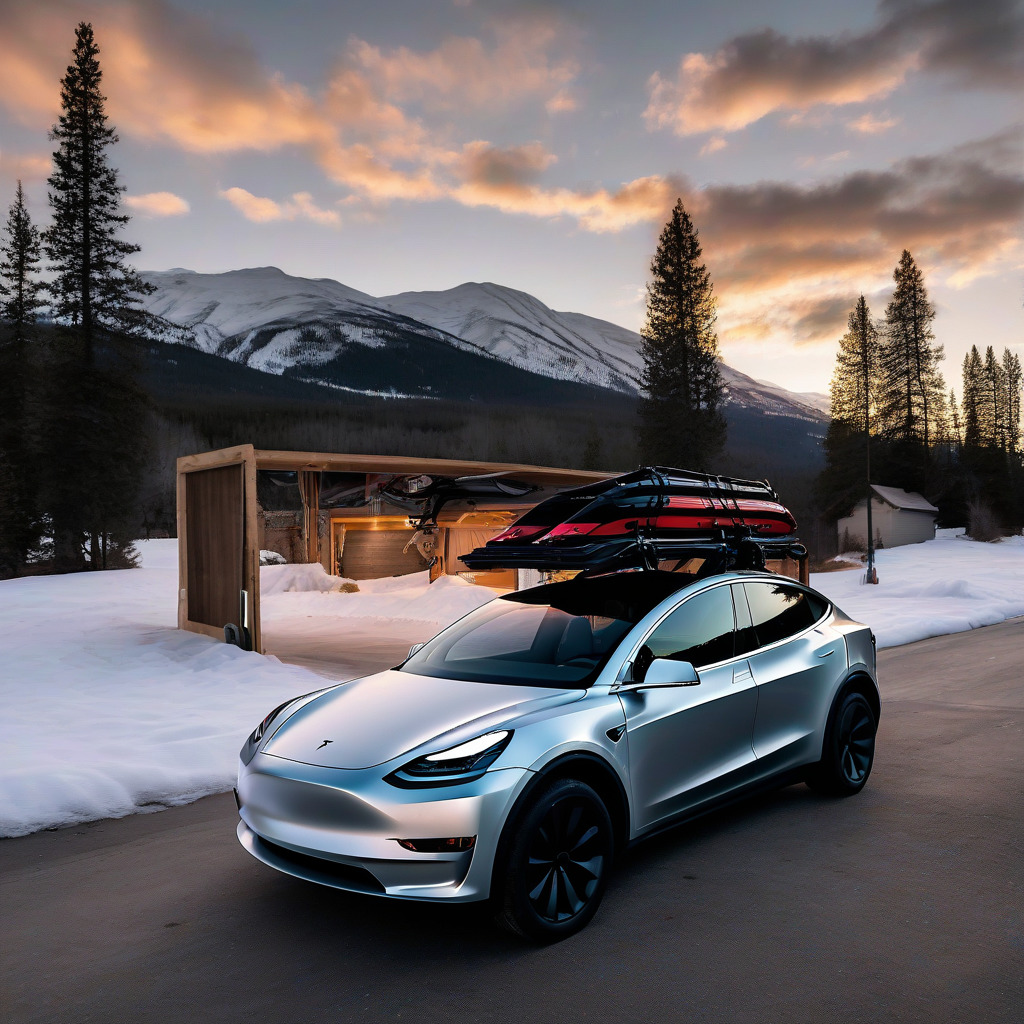
It’s 7 a.m. on a January Saturday and you’re in the garage in Wash Park, your Tesla Model Y Long Range sitting at 100 percent. The EPA sticker says roughly 330 miles. The forecast is 18°F at Vail Pass. I-70 is already showing amber on the CDOT app above Georgetown. You’ve got skis on the roof rack and two adults in the back.
The question isn’t whether you’ll make it. You almost certainly will. The question is whether you’ve done the right math, because the math here is genuinely different from the number on your dashboard.
By the time you reach Idaho Springs, about 35 miles in, your remaining range has dropped more than the miles you’ve driven would suggest. By the time you crest the Eisenhower Tunnel at 11,158 feet, you may have burned through considerably more rated range than actual miles traveled. Sit in a CDOT closure near Georgetown with the heat running and you’ve spent battery you didn’t plan to spend — that’s the part that catches people off guard.
This is what the Denver EV community means when they talk about “the mountain problem.” It’s not that the trip is impossible. It’s that the standard way people estimate EV range falls apart on this corridor. You can’t subtract miles driven from your EPA rating and trust the result. The stakes of getting it wrong are higher here than in most U.S. cities because there’s roughly a 40-mile stretch between Idaho Springs and Silverthorne with no fast-charging. No exceptions.
This article explains what actually happens when you drive an EV up I-70 in winter. It draws on A Better Route Planner modeling methodology, National Renewable Energy Laboratory research from Golden, and community reporting from Colorado EV owners who make this drive regularly. It’s written for Denver-area drivers who are buying an EV, who’ve already bought one, or who are trying to figure out whether their setup is adequate for the ski driving they do.
What’s Actually Draining Your Battery (It’s Not Thin Air)
The most common misconception Denver drivers bring to this is altitude. Gas engines lose power at elevation because thinner air means less oxygen for combustion. EV motors don’t combust anything. Altitude itself does not reduce an EV’s range or power output. I know — it feels like it should matter. It doesn’t.
What does reduce range — substantially — is the work required to climb against gravity on sustained grades. The stretch between Idaho Springs (Exit 240, about 7,500 feet) and the Eisenhower Tunnel (11,158 feet) covers roughly 25 miles at grades averaging 6 to 7 percent, with some sections steeper. That’s not a rolling grade. It’s a prolonged haul that forces your drivetrain to pull continuous high wattage to maintain highway speed. You are lifting several thousand pounds of vehicle up a mountain, and no amount of motor efficiency changes the physics of that.
Cold-weather battery chemistry compounds it. Lithium-ion cells lose charge capacity in the cold because the electrochemical reactions between anode and cathode slow down. NREL, headquartered in Golden about 15 miles from Denver, has published research showing EVs can lose 20 to 40 percent of their rated range at around 20°F compared to the 70°F conditions used for EPA ratings. That distinction probably feels academic when you’re watching your range estimate drop faster than the mile markers — but it matters because the fix is real. Pre-conditioning your battery while still plugged in at home, using the car’s app to warm the pack before you leave, recovers some of this. Not all of it. On a January morning you’re fighting both the climb and cold chemistry at the same time. Colorado EV drivers consistently report real-world range 20 to 30 percent below rated figures on the climb segment in winter conditions.
Your heat is running. If you have a ski box on the roof, you’re adding aerodynamic drag at highway speeds. Both cost you range you won’t get back. Keep interior temperature modest, skip the roof box if you can, and treat every accessory load as a line item in your budget.
The Numbers by Model
Denver’s EV market skews toward a handful of vehicles. Here’s how the route math actually works for the ones that come up most often in our electric vehicle coverage.
Tesla Model Y Long Range (AWD): EPA-rated 330 miles. Denver to Vail is roughly 150 miles. The climb segment demands far more energy per mile than the car’s rated efficiency implies — ABRP modeling accounts for this; a rough mental average doesn’t. Community reports from Colorado owners suggest drivers regularly arrive at Vail with charge to spare when they leave at or near 100 percent, but the margin is much tighter than the raw EPA number implies. The Long Range Model Y can typically handle this run without stopping, though a planned stop in Idaho Springs on severe-weather days is the conservative call and not a bad one.
Hyundai Ioniq 6 (Long Range AWD): EPA-rated 266 miles. The Ioniq 6 is one of the more aerodynamically efficient EVs on sale, but its lower total capacity means the mountain math is tighter. Its 800-volt architecture allows genuinely fast charging when a stop is warranted. On the Denver-to-Vail run in January, experienced Ioniq 6 drivers in Colorado routinely plan a stop in Idaho Springs regardless of departure charge. The dead zone ahead leaves no real cushion.
Ford F-150 Lightning (Extended Range): EPA-rated 320 miles, but that figure is widely regarded as optimistic under mountain winter conditions. The Lightning’s weight works against it on sustained grades — physics doesn’t care what the sticker says. A local Ford dealer who specializes in EV training has noted that new Lightning owners who attempt the route unprepared tend to return saying their next trip will include a charging stop. Denver Lightning owners consistently advocate for defensive charging: stop in Idaho Springs, add range, don’t run the dead zone on a thin margin.
Rivian R1T/R1S (Large Pack): EPA-rated 328 miles for the R1T and 352 miles for the R1S. The large pack provides real buffer, but Rivians share the Lightning’s weight problem on sustained grades. The native navigation system flags charging concerns before they become emergencies — a feature easy to dismiss until you’re genuinely glad it’s there. Colorado Rivian owners generally report the large-pack vehicles handling the Vail run without much anxiety when departure charge is adequate.
The practical threshold: any EV with under 250 miles EPA range needs a charging plan on this corridor in winter. Anything rated 300-plus miles can typically reach Vail without stopping, but should have Idaho Springs locked in as a contingency if conditions deteriorate or a closure burns battery you weren’t expecting to spend.
The Charging Map: Where to Stop, Where the Gap Is, What to Watch
Here is the I-70 corridor as it actually exists for EV drivers, moving west from Denver.
Georgetown (Exit 228): Georgetown has some charging presence and functions as a waypoint for certain drivers. Non-Tesla drivers should verify current DC fast-charging availability on PlugShare before counting on it as a stop. Don’t assume.
Idaho Springs (Exit 240): The most strategically important stop on the corridor. There are DC fast-charging options near downtown — Tesla Supercharger infrastructure and ChargePoint equipment among them — but operational status requires verification before you rely on specific station counts. Reliability of non-Tesla DC fast charging in Idaho Springs has been inconsistent; maintenance issues come up often enough in local EV forums that it’s genuinely worth taking seriously. Check PlugShare within 30 minutes of leaving home. This is the last confirmed fast-charging before a roughly 40-mile gap through the tunnel. Stop here and take it seriously, even if your charge level feels comfortable. The cost is some extra time. The alternative is considerably worse.
The Gap (Exits 240 through 203/205, roughly): From Idaho Springs through the Eisenhower Tunnel to the Silverthorne/Frisco area — no public DC fast-charging. This stretch includes the most demanding climbing on the entire route. If something goes wrong here — running low, or stuck in a closure with heat running — there is no charging option. This is the central operational fact of EV driving on I-70, and it’s what I’d want every new EV owner in Denver to know before their first ski weekend. A Colorado EV group that tracks this corridor reports that the vast majority of range anxiety incidents happen in this 40-mile window when drivers have underestimated their consumption on the climb.
Silverthorne/Frisco (Exit 203/205): Once through the tunnel and down into Summit County, you have real options. Community reports indicate a Rivian Adventure Network station in the Frisco area has earned solid reliability marks from Rivian owners. Tesla Supercharger infrastructure is available in Silverthorne near the outlet mall. ChargePoint and EVgo equipment is at various Summit County locations. Summit County has invested in local EV infrastructure through its climate commitments, and the contrast with the dead zone you just came through is noticeable.
Vail Village and Lionshead: Vail has charging infrastructure in its parking structures. Stall count, public-access status, and validation requirements vary — confirm on PlugShare before relying on these. The practical approach that regulars describe: park, ski for several hours, return to a car that’s accumulated range on Level 2 over a full ski day. That actually works reasonably well.
Breckenridge: Summit County’s EV buildout extends to Breckenridge, which has Level 2 charging at several parking facilities and DC fast-charging options in town. Generally regarded as better-served than Vail for non-Tesla drivers, though current status should be confirmed before the trip.
On ski Saturdays, particularly during inbound and outbound rush hours, Silverthorne-area Supercharger locations see real volume. Colorado EV community reports describe genuine wait times during peak waves. If you’re rolling in on fumes on a powder Saturday, that wait is going to feel long. Plan for it before you’re in it.
The Worst-Case Scenarios No One Writes About
A few Colorado-specific risks that standard range-anxiety articles tend to skip:
I-70 closures with no charging nearby. CDOT closes I-70 through the Eisenhower Tunnel several times each winter — accidents, avalanche control, weather. If you’re stopped in traffic between Idaho Springs and the tunnel in January, your car is running heat in sub-zero windchill. Heat draw is real. An extended closure with the heat at full blast will cost you battery you may not have budgeted, and there’s no way to know when traffic will move. If you were running lean entering the dead zone, this is where the trip becomes genuinely bad. Stop in Idaho Springs and charge even when it feels unnecessary. The upside is that you don’t find out the hard way.
Arriving at a broken or occupied station. DC fast-charging hardware in high-altitude, high-traffic environments has reliability issues — this comes up repeatedly in Colorado EV community reports. Always check PlugShare near your departure time. More importantly, have a backup plan: if Idaho Springs is down, what’s your move? Georgetown is behind you. Silverthorne is roughly 40 miles ahead through the dead zone, with the full climb still to come. This isn’t paranoia. It’s just the actual situation you’re in.
Knowing when to charge defensively. Experienced I-70 EV drivers are unambiguous on this: if the weather is severe, there’s a closure on the CDOT app, or your charge level feels tight entering the dead zone — stop and charge. Don’t optimize for minimizing charging time on this stretch. “I think I’ll probably make it” is the wrong standard here. This is the one place on the front range where margin isn’t optional.
The Descent: How Much Does Regenerative Braking Actually Give Back?
The drop from the Eisenhower Tunnel (11,158 feet) back to Denver (5,280 feet) is a genuine regenerative braking opportunity. That’s nearly 5,900 feet of descent over about 60 miles. Drivers often assume this cancels out the climb. It doesn’t — and that intuition has led people to underplan the outbound run.
The physics are asymmetric. The energy required to push the car up the grade exceeds what regen returns on the way down, because you’re also running heat, lights, and accessories throughout the descent, and regenerative braking only captures energy during deceleration rather than while maintaining speed. Colorado EV community reports suggest drivers recover roughly 15 to 25 miles of range equivalent on the Tunnel-to-Denver descent under decent conditions. The specific number varies by vehicle and conditions; run your own routing estimate rather than relying on a rule of thumb. What’s consistent across vehicles is the pattern: you gain something on the way down, but you spent considerably more on the way up.
Plan your departure charge for the climb. Don’t expect the return trip to make up for a poorly planned outbound run.
Chain Laws, Tire Rules, and the Compliance Question
Colorado has two relevant winter driving regulations on I-70: a Traction Law requiring all vehicles to have adequate all-wheel or four-wheel drive with sufficient tread, snow tires, or chains; and a stricter Chain Law applied in severe conditions. For current language on both laws and their specific applicability to EVs, go to the CDOT winter driving requirements before your first winter mountain trip. The codes and thresholds are subject to revision and enforcement interpretation varies.
Most AWD-equipped EVs — Model Y AWD, Ioniq 6 AWD, F-150 Lightning 4WD, Rivian models — satisfy the Traction Law under most winter conditions, provided tires have adequate tread. An AWD EV on worn all-season tires does not automatically satisfy the law. Tread condition matters as much as drivetrain. If you’re buying a new EV and plan regular I-70 winter runs, a dedicated set of winter tires on steel wheels is worth the money. The performance difference on packed snow and ice is not subtle. EVs are heavier than equivalent gas vehicles, which makes braking distances on ice a genuine issue that real winter rubber addresses directly — anyone who’s tried to slow a heavy vehicle on glazed asphalt in the canyon doesn’t need this explained further.
CDOT enforces traction laws during active mountain weather. Noncompliant vehicles can be turned around. Verify current requirements before the trip.
What’s Coming: The NEVI Pipeline and Resort Charging Buildout
Colorado received approximately $65 million in federal NEVI formula funding through the Infrastructure Investment and Jobs Act. The state’s CDOT-led NEVI plan prioritizes Alternative Fuel Corridors, and I-70 is a designated one. The Idaho Springs-to-Silverthorne gap is the obvious priority for corridor investment; specific sites, timelines, and permitting status should be confirmed with CDOT’s NEVI program office, as planning documents are updated regularly and this is a moving target.
Summit County has moved proactively on local charging, with its Climate Action Plan producing real buildout in Silverthorne, Frisco, and Breckenridge since 2021. Eagle County, which covers the Vail area, has moved more incrementally. Vail Resorts’ net-zero commitments through its EpicPromise program include resort-level targets, but deployment of skier-facing EV charging has varied by property and season — confirm directly with Vail Resorts rather than assuming any particular resort has what you need.
The honest read: real improvement on this corridor is in the pipeline, but the dead zone between Idaho Springs and Silverthorne is not going away soon. Federal funding moving through permitting and construction timelines is still federal funding moving through permitting and construction timelines. Plan around what exists now.
The Practical Verdict: Who Should Worry, Who Shouldn’t
The Denver-to-mountains EV run is not inherently difficult if you understand the variables. Most people who’ve done it a dozen times stop thinking about it much. But that comfort comes from knowing the route, not from ignoring it.
If you’re driving a Tesla Model Y Long Range AWD, Rivian R1S or R1T large pack, Ioniq 6 Long Range AWD, or any EV with 300-plus miles EPA range — departing at 85 percent or higher, in temperatures above 25°F, heading to Breckenridge or A-Basin — you’re in good shape. Stop in Idaho Springs only if you want the insurance.
Going to Vail in January, especially below 20°F with a loaded roof rack, add one step: leave at 90 to 100 percent, know where Idaho Springs and Silverthorne are, check PlugShare before you leave, and consider a stop in Idaho Springs on any cold day where conditions are severe or a closure looks possible on the CDOT app.
If you’re driving a Lightning or any heavy EV, or anything under 250 miles EPA range in severe cold, stop in Idaho Springs regardless of your current charge. Build it into your morning the same way you’d build in a coffee stop. It’s not a failure; it’s just part of the trip.
Any EV under 220 miles EPA range on a cold January day, or any driver who hasn’t verified Idaho Springs charging options before leaving home, should not attempt the dead zone without a plan. That 40-mile gap is not something to discover by accident.
If you’re shopping for an EV in Denver and you drive to the mountains regularly: the answer isn’t to skip EVs. It’s to buy enough battery. A Long Range AWD Model Y or anything else in the 300-plus-mile range handles this run without drama under the vast majority of real conditions. A short-range commuter EV is the wrong tool for this specific use case.
The I-70 corridor in winter is one of the more demanding EV routes in the country — not because it’s impossible, but because sustained climbing grades, cold battery chemistry, a real fast-charging gap, and the genuine possibility of sitting in a closure create a situation where margin is not optional. The drivers who do this run without worry aren’t optimistic. They’re just honest about the math beforehand. That’s the whole thing.
CityDesk Denver covers local business, infrastructure, and economic development for the Denver metro area.