Why Denver Restaurants Keep Closing and What the Owners Actually Say
With Colorado's next minimum wage adjustment approaching, operators who shuttered in the past year are finally talking — and the reasons go deeper than "people stopped going out."

With Colorado’s next minimum wage adjustment approaching, operators who shuttered in the past year are finally talking — and the reasons go deeper than “people stopped going out.”
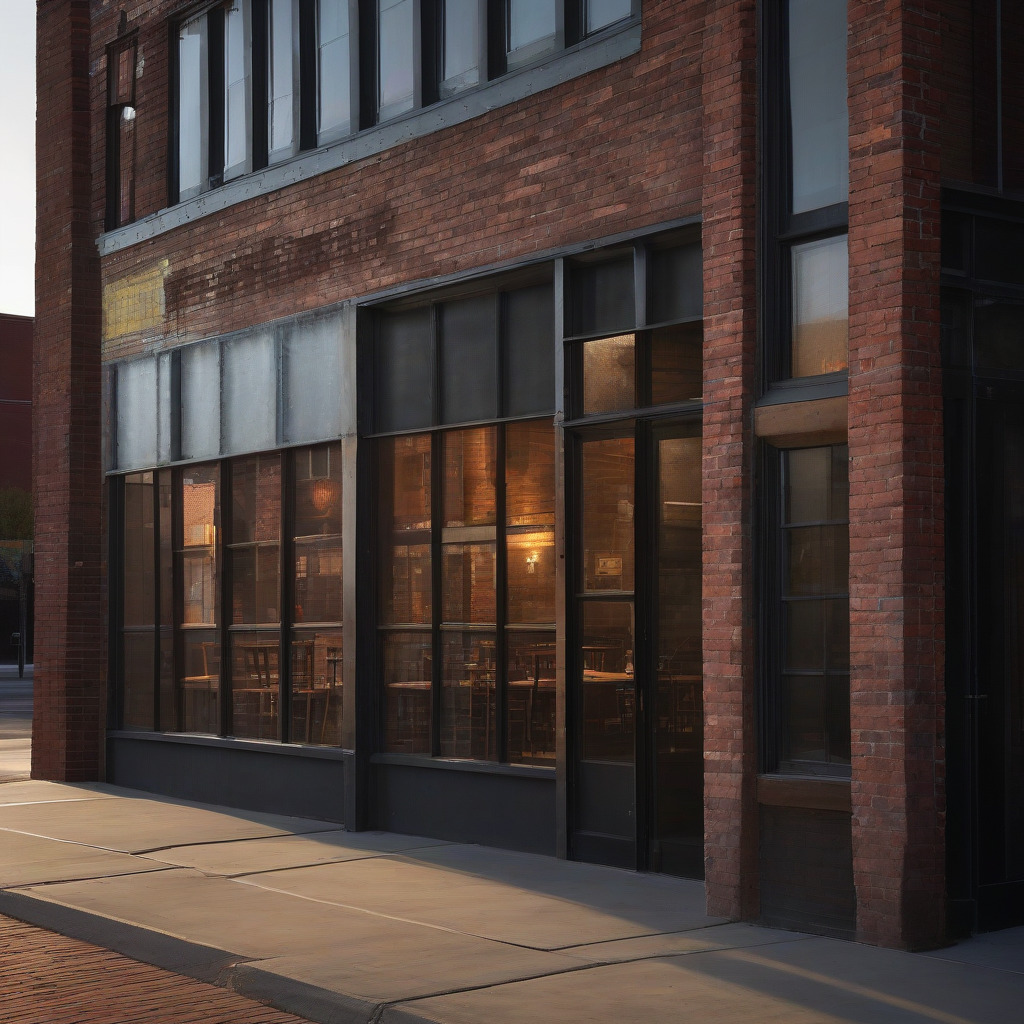
The dining rooms are dark now. Work & Class, the RiNo restaurant that Dana Rodriguez and Tony Maciag built over ten years, closed in early 2025. Linger, Justin Cucci’s Edible Beats flagship on West 32nd, went with it after a fourteen-year run. Stoic & Genuine, the Union Station seafood place, is gone.
Each closure got an announcement, a round of social media eulogies, a Westword item. What didn’t follow was any systematic account of what actually happened — financially, structurally, contractually. That gap is what this piece is trying to fill. The timing isn’t incidental: Colorado’s next minimum wage adjustment is approaching, and nobody has done the arithmetic on what the last four years of adjustments actually cost the restaurants that no longer exist to absorb the next one.
The owners are talking now in ways they weren’t before. When a restaurant is still operating, public candor about margin pressure is bad for investor confidence, landlord negotiations, and staff morale. When it’s over, there’s nothing left to protect.
The Owners, in Their Own Words
Dana Rodriguez ran Work & Class since 2015. Ten years of a format that was genuinely hard to replicate: cramped, loud, honest, serving Latin-inflected American food at prices that felt fair in 2015 and began feeling structurally impossible sometime around 2023. I don’t think Denver has fully reckoned with what it lost there.
The decision to close wasn’t made the week before the announcement. It was made over the better part of a year, as the gap between what the restaurant needed to generate and what it could realistically charge kept widening. In public statements after the closure, Rodriguez described the labor cost environment as “relentless” — not as an abstraction, but as a month-over-month line item that moved materially each year and did not move in the same direction as what the room could produce.
Justin Cucci’s situation at Linger was structurally different. Linger wasn’t a struggling restaurant by reputation. It stayed busy, got consistent coverage, and had become a Denver landmark over fourteen years. Cucci characterized the closure as a decision made from exhaustion and mathematical honesty rather than acute crisis. The building-specific costs, the labor structure required to run a full-service bar program at that volume, and the lease terms all converged at the same moment. He’s spoken publicly about the emotional arithmetic of continuing to operate at a margin deficit while the physical and psychological costs of running the place held constant. That phrase has stayed with me. Emotional arithmetic is exactly what it is.
Neither account names a single cause. The closures that got packaged as “post-pandemic casualties” or “victims of inflation” were in practice three or four simultaneous pressures that each moved against the restaurant in the same window. That simultaneity is the actual story, and it’s what gets flattened every time someone writes a tidy headline about why a restaurant closed.
What Colorado’s No-Tip-Credit Structure Actually Costs
Here’s the part of the Denver restaurant conversation that doesn’t appear in closure announcements but shows up in every serious operator’s P&L: Colorado does not use the federal tip credit.
Under federal law, states may allow employers to pay tipped employees a reduced base wage, on the assumption that tips will bring total compensation to the federal minimum or above. Colorado doesn’t allow this. Tipped employees here receive the full state minimum — $14.81 per hour in 2025, up from $13.65 in 2023 and $14.42 in 2024 — plus whatever tips they earn on top. That means a busy Saturday server at a mid-tier Denver restaurant is earning a real base wage before a single table sits down, and the employer carries that cost regardless of how the tip pool performs.
The 2026 minimum wage figure is set annually by the Colorado Department of Labor and Employment; this publication has requested confirmation and will update when that number is received. The direction isn’t in question.
Four servers per floor shift at the 2023 rate versus the 2025 rate is a difference of $1.16 per person per hour — $4.64 per hour in aggregate front-of-house base labor before overtime, taxes, or benefits. Over a six-day operating week with two shifts per day, that increase runs roughly $334 per week. Call it $1,450 per month. Over a year, before a single back-of-house wage is counted, that’s more than $17,000.
Back-of-house wages have moved in parallel, because kitchen workers compete in a tighter labor market and the minimum floor compresses wages upward through the whole kitchen hierarchy. Market rates for line cooks at competitive Denver kitchens are running $18 to $24 per hour. The industry target for labor as a percentage of revenue at a full-service restaurant is somewhere in the high 20s to low 30s. Denver operators have reported running well above that — some in the high 30s to low 40s. Combined with food cost holding at 28 to 30 percent of revenue, the arithmetic for a mid-tier independent gets very hard very fast. You don’t have to be bad at running a restaurant to end up in those numbers. You just have to be running one in Denver in 2025.
Sonia Riggs, CEO of the Colorado Restaurant Association, has noted that the no-tip-credit structure distinguishes Colorado’s labor environment from most of the country and that operators have limited options without raising menu prices or reducing covers. Broader context on Denver’s restaurant labor shortage and its effects on hours and menus shows how these staffing pressures have rippled through the industry well beyond wage floors alone.
The Lease Reset No One Warned Them About
The wave of Denver closures in 2025 and into 2026 lines up with lease cycles. Restaurants that signed five-year leases in RiNo, Highlands, and similar high-density neighborhoods during 2019 to 2021 — some of them negotiating during the soft market of 2020, when landlords were desperate for tenants who would open at all — are now at renewal. The market they’re renewing into is not the market they signed into.
Commercial brokers working the RiNo corridor have indicated that ground-floor restaurant space there currently trades at roughly $38 to $52 per square foot annually on a triple-net basis, compared to $28 to $35 in the pre-pandemic window. In the Highlands, comparable space is running $35 to $48. Capitol Hill, historically cheaper and increasingly a landing zone for operators priced out of RiNo, is seeing $22 to $32 — though that gap is narrowing.
In dollar terms: a restaurant in a 2,500-square-foot RiNo space that signed at $30 per square foot in 2020 has been paying $75,000 a year in base rent — $6,250 a month. Renewing at $43 per square foot costs $107,500 annually, or $8,958 a month. That’s $2,700 more per month in base rent before triple-net expenses, which in a full-service Denver restaurant typically add another 15 to 25 percent of base rent in taxes, insurance, and maintenance. The total occupancy cost increase from a single lease renewal, for a space that hasn’t changed in size or character, can be staggering.
Colorado commercial lease mechanics add pressure beyond the rate itself. Personal guarantees — standard in restaurant leases — mean the operator, not the LLC, is on the hook if the business fails after renewal. Holdover clauses can trigger month-to-month rents at 150 to 200 percent of the last lease rate if renewal negotiations drag past the expiration date. Restoration requirements can generate substantial exit costs that the operator bears entirely. And the negotiating dynamic is simply uneven: a landlord with multiple properties and national tenant interest can hold out; an owner-operator whose entire business is in one address cannot. Zeppelin Development and other large landlord entities control significant square footage in RiNo, and they know it. Anyone trying to understand what it costs to operate in RiNo right now and who has been priced out will find the numbers above look familiar.
Where the Denver Diner’s Dollar Went
The honest version of the consumer-spending picture is that Denver-specific, inflation-adjusted restaurant spending data is genuinely difficult to assemble. Anyone claiming a clean number is overstating their sourcing. OpenTable, Toast POS, and the Bank of America Institute all publish data relevant to restaurant spending trends, and this publication has sought Denver- and Colorado-specific figures from each. The consistent signal across those sources: check sizes have risen primarily because of menu price increases, while real per-guest ordering volume has been roughly flat. Operators raised prices to offset cost increases without capturing real revenue gains to match. That’s a margin compression story, not a demand collapse story. Denver’s restaurants didn’t fail because people stopped going out. They failed because the math stopped working while the dining rooms stayed full.
The local tax burden compounds this quietly. Denver’s combined sales tax on a restaurant meal runs approximately 8.91 percent, against roughly 8.5 percent in Aurora and 7.5 percent in Lakewood. For price-sensitive diners, the differential is a factor in where dining occasions happen, even when no one consciously articulates it. Probably not why you chose Lakewood last Friday. But it’s in there.
Is Denver Losing Ground?
No local outlet has published a clean, verified net figure on Denver restaurant openings versus closures over the past three years. This publication filed a public records request with Denver’s Department of Excise and Licenses for year-over-year active food service license counts from 2022 through 2025. That request is pending as of publication.
The gap is worth naming as a transparency problem independent of whatever answer it would produce. Denver’s city government tracks this data by necessity and has not made it accessible in aggregate form. The directional signal — that Colorado and Denver specifically appear to be losing independent full-service restaurants faster than they’re gaining them — is consistent with what anyone can verify by walking through RiNo or Highlands on a Tuesday night. The verified annual figures just don’t currently exist in the public record. That shouldn’t still be true.
What Closes With the Restaurant
This section is for anyone considering opening a restaurant in Denver right now, and for the staff of every restaurant that closed last year who were handed their final checks without severance.
A Denver liquor license is premises-tied. When a restaurant closes, the license doesn’t transfer — it reverts to DORA, the Department of Regulatory Agencies, and is effectively cancelled at the address. A new operator taking over the space must apply for a new license, pay new fees, and navigate the approval process from scratch, which takes months. This is why “reopening somewhere else” is more complicated than it sounds: the liquor license, which can represent years of compliance history and a meaningful share of bar revenue, simply ceases to exist. It dissolves.
Build-out investment is largely unrecoverable. The kitchen hood, the plumbing rough-in, the walk-in cooler — Colorado commercial leases generally don’t require landlords to compensate departing tenants for improvements. In some cases the landlord benefits directly: a well-configured kitchen left behind by a closed tenant becomes an amenity for the next lease. The departing operator gets nothing for it. Kitchen equipment goes to auction or negotiated sale if the incoming tenant wants it. Landlords may have claims against equipment left on premises if the tenant vacated without formal surrender — a lease mechanic that operators who signed without thorough legal representation sometimes discover at the worst possible moment.
Colorado is an at-will employment state. There’s no severance requirement for any category of restaurant employee when a business closes. A line cook with seven years at a restaurant gets the same separation as a server hired six months ago: their last paycheck, whatever PTO has accrued, and a COBRA notification. The back-of-house staff at Denver’s closed restaurants from the past year aren’t tracked anywhere. They dispersed into other kitchens, left the industry, or left the city. I find that genuinely hard to sit with — that there’s no record of where those people went, or how many of them there were.
The Structural Diagnosis
The closures described in this piece are not a random distribution of individual misfortunes. They’re targeting a specific category of operator with a precision that should worry anyone paying attention.
High-end Denver restaurants can absorb labor cost increases through per-cover revenue that supports check averages well above the market midpoint. When revenue per cover is high, a wage increase distributed across floor staff is a smaller share of what each cover generates. Fast-casual and QSR operations can engineer labor out of the model through kiosks, simplified menus, reduced table service, and delivery-optimized kitchens that cut labor intensity before the wage floor matters as much.
The mid-tier Denver independent sits in neither place. Seventy to 120 seats, full-service bar program, owner-operated with the owner on the floor most nights. The check average isn’t high enough to absorb annual wage increases across tipped and back-of-house staff without a menu price increase the market pushes back on. The labor model can’t be meaningfully automated without destroying the hospitality that justifies the price point. And the lease is in a neighborhood that was affordable when they signed and isn’t anymore.
From 2022 to 2026, every cost lever in this model moved against the operator at once: wages up four consecutive years, lease reset at renewal, food costs elevated by supply-chain inflation that hasn’t fully unwound. Any single one of those pressures was manageable. All three compounding wasn’t. That’s the story behind almost every closure announcement you read and nodded at before scrolling on.
The Coming Adjustment and Who’s Still Watching
For restaurants currently operating in Denver, the next Colorado minimum wage adjustment isn’t an abstract policy date. It’s a payroll date. Operators are revising their weekly labor budgets now, this month, deciding what to cut or what to raise.
Jenny Bellah operates Hornet in the Baker neighborhood. In a recent conversation, she said the annual adjustment has become part of the operating calendar in a way that consumes management bandwidth well beyond the dollar figure itself. “You spend real time every May and June rebuilding your projections,” she said. “It’s not just the raise. It’s what it does to compression across the whole kitchen. Your sous chef doesn’t stay at the same rate if the floor comes up.” Bellah said Hornet is watching the coming adjustment carefully and that the restaurant’s ability to absorb the increase depends partly on summer cover counts that aren’t yet knowable. That’s about as honest an answer as you’ll get from a working operator, and I appreciate that she gave it.
There’s no city or state policy response to the closure wave that comes close to matching the scale of the problem. Some city council members have floated small-business support mechanisms, but nothing that would materially affect the fixed-cost structure of an independent restaurant facing a lease reset and an annual wage adjustment simultaneously.
CityDesk Denver will file quarterly public records requests with the Department of Excise and Licenses for active food service license counts beginning with the 2022-to-2025 figures requested this week. When those numbers are available, we’ll publish them with year-over-year comparison. Denver either has fewer independent restaurants than it did three years ago or it doesn’t. That should be a number any resident can look up. It currently isn’t.
The room at Work & Class is dark. The building on West 32nd is looking for its next tenant. The story of how that happened — specifically, financially, contractually — is what this piece has tried to tell, and it sits squarely within our food & hospitality coverage of how Denver’s dining economy actually functions. It isn’t finished. The next wage adjustment is approaching, and the restaurants that survive it will be running the same math their predecessors ran, hoping the numbers finally work.
Reporting note: CityDesk Denver has requested comment from the Colorado Department of Labor and Employment on the final upcoming minimum wage figure, from the Colorado Restaurant Association on current closure-to-opening data, and from Denver’s Department of Excise and Licenses on active food service license counts from 2022 to 2025. The Excise and Licenses records request is pending as of publication. This article will be updated when those figures are received. Lease rate figures reflect broker conversations and are presented as ranges; individual lease terms vary and this publication is seeking on-record confirmation from commercial real estate sources. Public statements from Dana Rodriguez regarding Work & Class and from Justin Cucci regarding Linger are drawn from post-closure interviews and attributed accordingly.