Denver's Dry Summer Is a Dehydration Trap Most Cyclists and Hikers Never See Coming
Low humidity means your sweat vanishes before you feel it. Here's what that actually does to your body at 5,280 feet — and how to manage it.

Low humidity means your sweat vanishes before you feel it. Here’s what that actually does to your body at 5,280 feet — and how to manage it.
People get dehydrated in Denver even when it doesn’t feel that hot because the city’s low humidity — typically 15–25% on summer afternoons — evaporates sweat almost the instant it reaches your skin. You never feel wet. You never get the tactile warning your body normally uses to regulate fluid intake. By the time you notice something is wrong, you may already be in the early stages of heat exhaustion. At 5,280 feet, where you’re breathing harder and losing additional moisture with every exhaled breath, that process moves faster than most residents expect.
This is the dehydration paradox that defines Denver summers. It catches cyclists on the Cherry Creek path, hikers on Green Mountain, and construction workers framing houses in July — and it catches them because they feel fine right up until they don’t.
The Misconception That Makes Denver Summers Dangerous
Denver’s July average high runs around 88°F. Phoenix hits 106°F. Travelers flying in from Houston or Chicago feel the mountain air and call it pleasant. This is where the trouble starts.
Temperature is a crude measure of heat risk. Humidity is where the real information lives. When Phoenix residents suffer in 106-degree heat, their sweat at least functions — it evaporates, cools the skin, signals the body to keep drinking. Denver at 88°F with afternoon humidity in the 15–25% range creates a different physiological situation entirely, one that can fool you badly.
In Houston during July, afternoon relative humidity sits between 70 and 80 percent. Chicago runs 60 to 70 percent. In those conditions, sweat pools on skin, soaks through shirts, and creates persistent physical discomfort. That discomfort is a warning system. It prompts people to seek shade, drink water, slow down. The natural reflex works.
In Denver, sweat evaporates off skin in seconds. Your shirt stays dry. Your skin doesn’t feel clammy. Fluid loss continues at roughly the same rate — in dry heat, often faster — while the felt experience stays comfortable. That gap between actual fluid loss and perceived fluid loss is what puts people in emergency rooms every summer. The more efficiently Denver’s dry air cools you, the less aware you are that you’re in trouble. I keep coming back to how counterintuitive that is.
What Dry Heat Does Inside Your Body
In humid conditions, evaporative cooling is partially suppressed by moisture already in the air. Sweat builds up on skin. Your body signals thirst more reliably. The whole system, while uncomfortable, provides feedback.
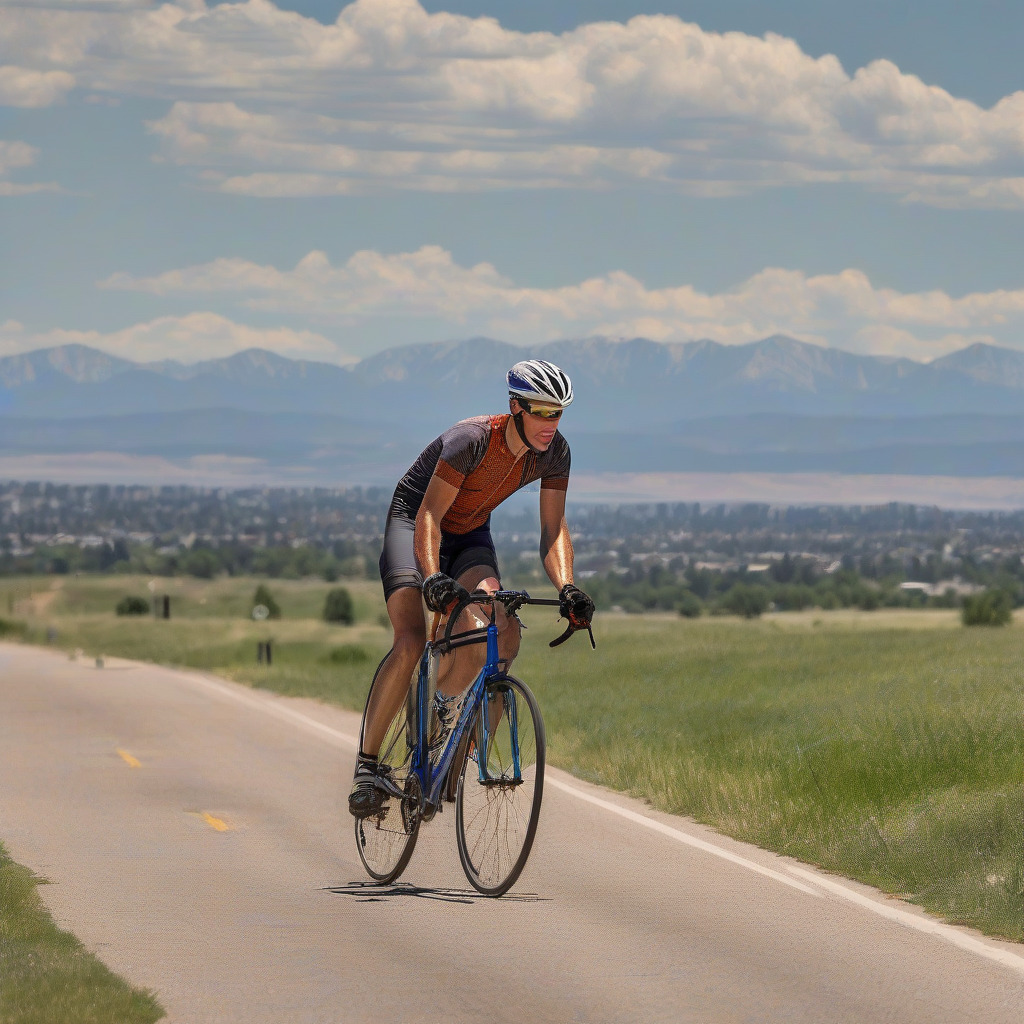
In Denver’s dry summer air, evaporation is nearly instantaneous. A cyclist riding the Cherry Creek Trail at 9 a.m. — temperature a comfortable 78°F, light breeze off the mountains — is losing sodium, potassium, and fluid volume with every mile. None of that registers as discomfort. No sticky skin. No soaked jersey. No sense of urgency.
The sodium loss matters as much as the water loss. When sweat evaporates before you notice it, the dissolved electrolytes go with it. After 60 to 90 minutes of moderate exercise, that sodium deficit starts affecting nerve and muscle function. Cramps and sudden fatigue aren’t warning signs at that point — they’re indicators you’ve been losing ground for the better part of an hour. By the time it hurts, you’re already behind.
Altitude Doubles the Problem
The elevation adds a second dehydration mechanism that operates independently of humidity: respiration. At 5,280 feet, your body delivers less oxygen per breath than at sea level, so your breathing rate during exercise increases by roughly 15 to 20 percent compared to the same effort on flat coastal terrain. Every exhaled breath carries water vapor out of your lungs, and in Denver’s dry air, that vapor disappears immediately.
During sustained aerobic exercise — a 25-mile bike ride, a five-hour hike — the cumulative respiratory moisture loss at altitude adds up. UV exposure compounds the problem separately. Denver receives approximately 25% more ultraviolet radiation than sea-level cities at comparable latitude, a consequence of the thinner atmosphere filtering less solar energy. More UV means more heat load on the skin’s surface, which drives greater thermoregulatory demand even when the air temperature feels mild.
Three mechanisms are draining fluid simultaneously: invisible sweat evaporation, respiratory water loss, and elevated UV load. None of them produce the sensations someone from a humid climate would recognize as a warning sign. That’s not a minor gap in feedback. That’s the entire feedback system gone.
Note: The respiratory rate increase figure and UV differential should be confirmed with a UCHealth altitude medicine specialist or verified against NOAA and EPA data before publication.
How Much More Water You Actually Need Here
The American College of Sports Medicine’s baseline guidance: 17 to 20 ounces of water in the two hours before exercise, then 7 to 10 ounces every 10 to 20 minutes during activity. For Denver summer conditions, exercise physiologists typically recommend adding 10 to 15 percent to that. Altitude medicine specialists suggest an additional half-liter per hour during peak summer heat above what you’d consume at sea level.
That’s not a small adjustment. For someone riding three hours in July, the difference compounds into liters of additional fluid. If you’ve been doing the same Cherry Creek ride since May without thinking much about water, Denver’s summer version of that route requires a genuinely different approach to what you carry.
Water alone becomes insufficient for any effort lasting past 60 to 90 minutes. The sodium and potassium being lost with sweat — even the sweat you can’t see or feel — need replacement. Electrolytes aren’t optional at that point; they’re the mechanism that lets your body absorb and retain the water you’re drinking. Consuming large volumes of plain water when already depleted can itself cause serious problems by diluting blood sodium concentration. More water isn’t always the answer. The right water is.
The practical gap on Denver trails is significant. Cyclists who ride Cherry Creek south from Confluence Park or take the C-470 trail west can cover 20 to 30 miles without passing a reliable water source if they haven’t planned ahead. The assumption that there will be somewhere to refill is wrong on long stretches of Denver’s trail system. You need to leave with enough to finish.
Recognizing Heat Exhaustion When Altitude Mimics the Symptoms
This is the diagnostic challenge that makes Denver summers genuinely dangerous for transplants and tourists — and, honestly, occasionally for acclimatized residents who push too hard on a bad day. Mild altitude exposure, even in people who’ve lived here for years, can produce baseline symptoms on demanding days: a dull headache, a slightly elevated resting heart rate, reduced appetite, occasional lightheadedness on exertion.
These are also the early signs of heat exhaustion. The overlap creates real uncertainty during a hard summer ride or a long mountain-adjacent hike, and there’s no clean way to resolve it without paying attention to multiple signals at once.
Check your skin. Heat exhaustion typically produces pale, cool skin as blood is redirected to the body’s core. In Denver’s dry conditions you won’t look clammy, but skin that feels hot and dry to the touch — despite the fact that your core is working hard to cool down — is itself a problem signal. Urine color is the most reliable field check: dark yellow means meaningful dehydration; pale yellow means you’re in range. Unglamorous information, but mid-trail it’s often the best you’ve got.
The line between heat exhaustion and heat stroke is the one you cannot afford to blur. Heat exhaustion is serious but manageable — move to shade, stop activity, drink slowly, cool the skin. Heat stroke is a medical emergency. Core body temperature above 104°F, confusion or disorientation, slurred speech, absence of sweating even when overheated: call 911 immediately and begin active cooling. Do not wait to see if the person improves.
Note: The symptom guidance in this section should be reviewed by a Denver Health emergency medicine physician or UCHealth altitude medicine specialist before publication.
The Afternoon Window That Closes Faster Than You Think
Denver’s summer outdoor exercise window is narrower than most residents plan for. The city’s monsoon-influenced weather pattern pushes afternoon thunderstorms into the Front Range and foothills typically between 2 and 4 p.m., June through August. A hiker who starts at 6 a.m. for a five-hour out-and-back is arriving back at the trailhead — or still descending — during peak lightning exposure and maximum afternoon heat. That’s also when dehydration from the morning’s effort is fully accumulated and the nearest water source may be miles behind them.
The guidance that actually holds up for Denver conditions: plan to be off exposed terrain by noon. On mountain-adjacent trails — Green Mountain, Bear Creek Lake Park, anywhere with significant elevation gain — noon is the outside edge. For city trail cycling, 1 p.m. leaves a reasonable buffer in most conditions. This isn’t arbitrary caution. It’s the difference between riding when your body can manage thermal stress and riding when it can’t.
The air quality layer adds a constraint many residents ignore. The Colorado Department of Public Health and Environment issues Code Orange and Code Red Air Action Days during the hottest stretches of summer, when ozone concentrations are elevated by heat and vehicle emissions. On Code Red days, strenuous outdoor exercise adds respiratory stress to heat stress in a way that impairs the body’s ability to manage fluid loss. CDPHE’s real-time air quality index is worth checking before any long outdoor workout during a heat stretch — not just for lung health, but because exercising in poor air quality on a hot day compounds every dehydration risk described in this piece.
Where to Find Water on Denver’s Major Trails and Parks
All locations listed here require verification with Denver Parks & Recreation and Jefferson County Open Space before publication. Fountain operating seasons and restroom hours can change.
Washington Park has multiple drinking fountains distributed throughout, and the boathouse area has restroom facilities that operate through the summer season. The fountain density makes Wash Park a reasonable choice for riders or runners who want to do multiple loops without carrying large volumes of water.
Cherry Creek Trail has reliable access points, but they’re not evenly distributed. Confluence Park at 15th Street and the Platte River is the most consistent northern anchor — fountains, restrooms, and vendor access. The Cherry Creek Marina area at approximately Mile 8 provides another option in the middle segment. The Cherry Creek State Park visitor center near the Havana Street entrance has water and restrooms, though getting to it means leaving the main trail. Between these points, particularly in the southern stretches, there is nothing. Cyclists doing the full run should plan accordingly — which means actually planning, not assuming something will turn up.
City Park has fountains distributed around the main paths and near the boathouse, generally reliable through the standard Denver Parks season. Sloan’s Lake has restroom and fountain access near the main parking area. The 2.6-mile loop is short enough that carrying your own supply is easy, but the fountain access makes it a reasonable mid-workout option for West Colfax-area residents.
Red Rocks Amphitheatre and Trading Post area have water at the main amphitheater facilities and the Trading Post building. Once you’re on the upper trail sections, there is nothing. This is where visitors in particular misjudge. Red Rocks sits meaningfully above Denver’s base elevation, which accelerates everything described in this piece — and people routinely underestimate it because the drive from Denver is only 20 minutes.
Green Mountain (Jefferson County Open Space) is one of the most-visited trails accessible from Denver’s western suburbs and one of the more common locations for dehydration-related emergencies. No reliable water source exists on the trail itself. You carry everything you need for the entire ascent and descent, in conditions where shade is minimal and the afternoon sun is direct. People regularly drive out expecting to find fountains and learn otherwise at the trailhead. That’s a bad moment to have that realization.
Denver Parks fountain season runs approximately May 1 through October 1. Residents who exercise in April or September during warm spells should assume fountains are off and carry a full supply.
What to Actually Carry
If you’re riding or hiking any route where mid-course water isn’t available — Green Mountain, the C-470 trail, the southern Cherry Creek section — a hydration pack is not optional equipment. CamelBak-style packs start around $40 for basic bladder models and run to $120 for packs with storage and better hose systems. The REI flagship store at Confluence Park stocks a full range, and the staff there can size a pack for your intended use.
For any ride or hike running past 90 minutes, carry electrolytes. Nuun tablets, Liquid IV, and similar hydration mixes are available at REI, Natural Grocers locations throughout Denver, and most King Soopers stores — $7 to $20 covers enough supply for multiple outings. If you’re doing back-to-back days of outdoor activity in our health & wellness coverage of Denver summer preparedness, don’t skip electrolytes on day two because you felt fine on day one. That’s often exactly when the cumulative deficit catches you.
The economic framing is worth stating plainly. An emergency department visit for heat exhaustion can run $500 to $3,000 or more depending on treatment and insurance. A hydration pack and a tube of electrolyte tablets cost less than a single urgent care copay. The gear also lasts for years. It’s not a complicated calculation.
What Denver Health’s Emergency Rooms Are Seeing
This section requires direct outreach to Denver Health Media Relations and should not be published without physician review and verified data. The following represents the reporting framework.
Denver Health’s emergency department — the city’s primary safety-net hospital and Level I trauma center — sees a consistent summer surge in heat-related illness from June through August. Statewide, the Colorado Department of Public Health and Environment’s heat illness surveillance system tracks emergency department and urgent care visits coded for heat exhaustion and heat stroke. The numbers rise as temperatures climb, but they spike during shoulder-season stretches when conditions feel deceptively mild and afternoon heat and low humidity create hazardous combinations.
A quote from a Denver Health emergency medicine physician or a UCHealth altitude medicine specialist is essential to this section. Key questions for that sourcing: What’s the most common mistake you see in heat-related illness patients — underestimating fluid needs, starting too late in the day, or something else? Do you see more tourists than locals, and does that ratio shift when temperatures are moderate rather than extreme? What do patients typically say when they come in — did they know something was wrong, or did it hit them suddenly? Are there specific trail names or neighborhoods where you see clusters of heat-related presentations?
This physician perspective is the differentiator that separates local reporting from generic hydration content. It’s also the clinical anchor that makes the symptom guidance above publishable with confidence. This section should be drafted only after that sourcing is complete.
The Real Risk
Denver’s summer dehydration risk is real and specific, and it’s consistently underestimated because the city’s climate removes the feedback cues that people in humid climates have spent their whole lives depending on. The sweat you can’t feel is still draining your fluid and electrolyte reserves. The elevation is still taxing your respiratory system. The UV load is still driving surface heat stress. And the window for safe outdoor exercise is narrower than it looks at 7 a.m. when the sky is blue and the temperature is 72°F.
That hour feels like permission. It isn’t.
Most people who end up in Denver Health’s emergency department in July weren’t doing something reckless. They were doing the same rides and hikes they did in May, without accounting for what changes when the humidity drops. Know your route’s water sources before you leave. Carry more than you think you need. Start drinking before you’re thirsty, add electrolytes for anything over an hour, and get off exposed terrain before noon. None of this is complicated. It just requires deciding in advance that Denver summer is different — because it is.