What Eating at Denver Farmers Markets Actually Does for Your Health
The nutrition case for Union Station and Wash Park is real — but it depends on what you buy, from whom, and what week of summer it is

The nutrition case for Union Station and Wash Park is real — but it depends on what you buy, from whom, and what week of summer it is
Sometimes yes. Sometimes no. The difference is worth explaining clearly.
The short answer to whether Denver farmers markets are genuinely better for your health than a King Soopers run is more complicated than any marketing slogan suggests. This isn’t a piece that will tell you farmers markets are a lifestyle upgrade. It will tell you which produce categories show a documentable freshness advantage, what that advantage is actually worth nutritionally, what Union Station and Wash Park are each good for, what Colorado has in the ground in June, and where the price premium disappears or reverses.
Editor’s note: A named Denver registered dietitian interview is required before this piece publishes. Contact the Colorado Academy of Nutrition and Dietetics (coloradoand.org) for a member referral, or reach the UCHealth Anschutz or Denver Health community nutrition teams. The dietitian section below is a placeholder.
The Nutrition Claim Needs an Asterisk
The premise behind “farmers markets are healthier” isn’t invented wellness marketing. Real science backs it. But the claim depends on a chain of specifics that most market boosters skip entirely.
The produce has to be genuinely local. It has to be recently harvested. Storage between harvest and sale has to be done correctly. You have to be buying something where nutrient degradation during transit is actually measurable. Pull out any one of those conditions and the premium can evaporate.
This piece won’t tell you that walking through the Union Station market on a Saturday morning is automatically a health decision. It will tell you when it is and when it isn’t.
What the Science Actually Says
Certain vitamins begin degrading the moment a plant is harvested. Vitamin C and folate go fastest. Heat, light, and time accelerate the process. None of that is controversial — it just doesn’t end up on the market’s Instagram account.
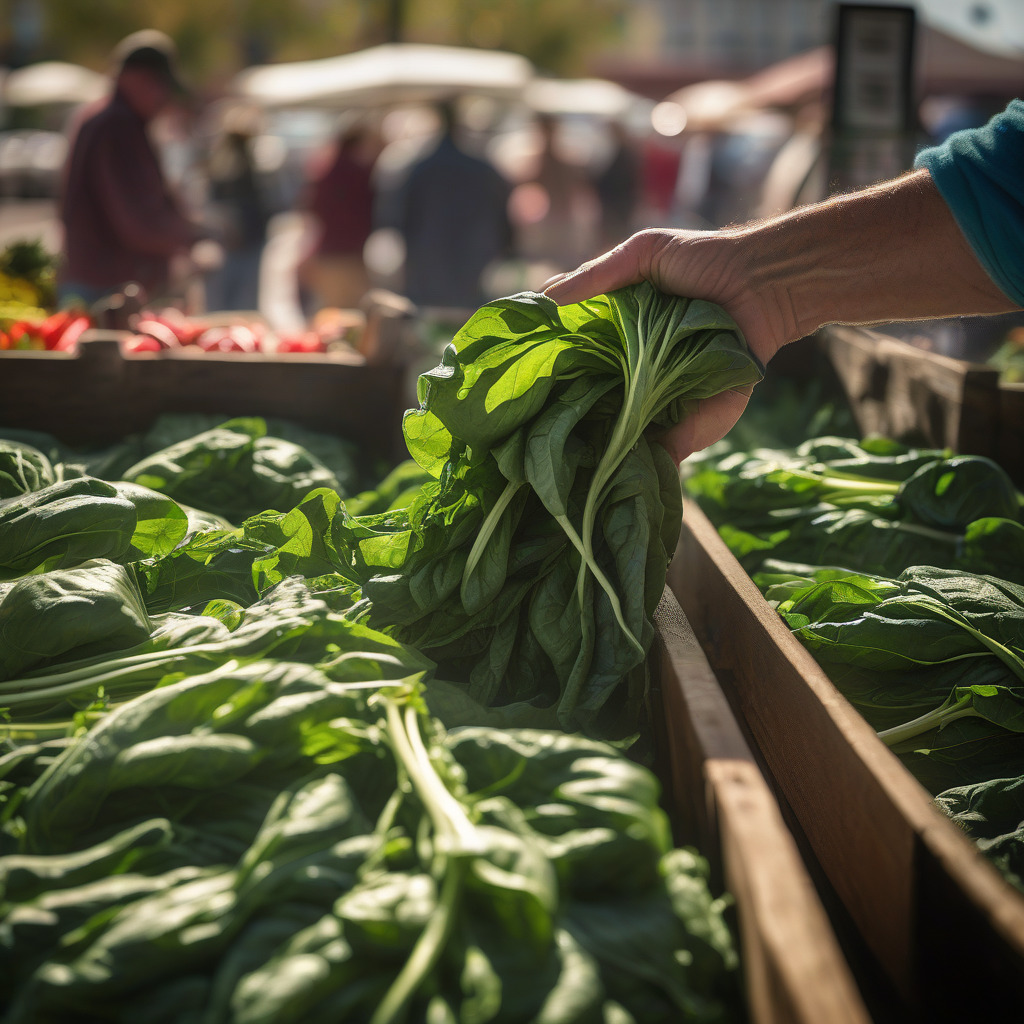
A spinach leaf sitting in a refrigerated trailer for days on its way from California to a Denver distribution center is not the same spinach leaf it was on day one. Vitamin C losses in spinach can reach 15 to 50 percent within a week of harvest, depending on storage temperature. That’s not marginal.
Most of what King Soopers carries outside peak Colorado season — spinach, greens, strawberries, herbs — has been in transit and cold storage for several days to over a week. A vendor at Union Station who farms in Brighton or Longmont and delivers overnight for Saturday morning sale is offering you something genuinely closer to harvest. Pre-washed, bagged supermarket salad greens are often seven to ten days post-harvest by retail date. Market greens bought loose are typically one to three days out. For vitamin C and folate, that gap is significant.
Where the science does not support a premium: starchy vegetables, root vegetables, alliums, and winter squash hold their nutritional value well over time. A Colorado potato and a King Soopers bin potato in June are not nutritionally different in any meaningful way. Cruciferous vegetables fall somewhere in the middle — some nutrient loss occurs, but storage method matters less than whether you’re eating them at all.
One thing most farmers market conversations skip: frozen produce. Flash-freezing happens at or near harvest, locking in nutrients close to peak. A bag of frozen peas from the King Soopers freezer aisle can be nutritionally superior to “fresh” produce that spent a week in transit. This isn’t an argument against farmers markets. It’s an argument for being honest about when the farmers market earns its premium and when it doesn’t. The frozen-peas-versus-limp-week-old-spinach comparison probably comes up too rarely in these conversations.
Market vendors also frequently grow heirloom or regional varieties bred for flavor and nutrition rather than shelf durability. Supermarket tomato varieties are typically bred for shipability. That difference is real across several produce categories — even if it’s invisible on a label.
Denver’s Three Main Markets Are Not the Same Place
Union Station Farmers Market runs Saturdays, generally 8 a.m. to 2 p.m., May through October, in the plaza along 17th Street in front of Denver Union Station. (Confirm 2025 hours and season dates at denverunionstation.org or bcfm.org before your visit.) It’s the city’s largest market, with somewhere between 50 and 70 vendors on a peak summer Saturday. The mix runs from produce and eggs to prepared food, coffee, flowers, and artisan goods.
Parking in LoDo on a Saturday morning is genuinely miserable. The market is accessible by light rail at Union Station, which solves the problem for anyone coming from the southeast or southwest corridors. Arrive early if you’re after strawberries or greens at peak season — they move fast, and by 11 a.m. some vendors are already sold out of the things worth buying.
Washington Park Farmers Market operates Sundays, typically June through October, at South Humboldt Street at East Louisiana Avenue, adjacent to the park. (Verify current season and hours before your visit.) Smaller than Union Station, with a vendor list oriented toward produce, eggs, honey, and locally made preserves. The crowd skews toward families and longtime South Denver residents who treat it as a weekly ritual rather than a destination visit.
Wash Park’s real strength is consistency. The same farm vendors show up weekly, and regulars develop the kind of informal relationships — a custom order held aside, advance notice when something specific is coming in — that simply don’t happen at King Soopers. That’s not a small thing if you’re serious about shopping this way.
Central Park Farmers Market, in the Central Park neighborhood near the Stanley Marketplace area, typically operates Sundays. (Confirm 2025 operator, hours, and whether the market is running this season before your visit — these details have not been independently verified for 2025.) It serves a younger family demographic with a stronger prepared-food component than the other two markets.
What Is Actually in Season in Denver in June
The Colorado Front Range sits in USDA hardiness zones 5b through 7a depending on elevation and microclimate. This matters because June is a genuinely different market experience than August, and showing up expecting tomatoes in early June is a reliable way to be disappointed.
What’s at or near peak in June: salad greens, radishes, snap peas, garlic scapes, fresh herbs, green onions, kale, chard, rhubarb. What isn’t: tomatoes won’t be worth buying from a Colorado farmer until late July at the earliest. Sweet corn is an August crop. Western Slope stone fruit doesn’t reach Front Range markets until later in summer.
The Colorado strawberry window deserves its own paragraph because it’s the clearest single case for the freshness argument. Colorado strawberries typically hit Front Range markets for a narrow three-to-five-week stretch beginning in late May or early June, depending on the year’s weather.
They’re not the large, shipped varieties engineered for shelf life and visual uniformity. They’re small, soft, intensely flavored, and they degrade within 48 to 72 hours of harvest. You cannot replicate the flavor or the nutrient density from a King Soopers clamshell. If you eat one Colorado strawberry from the Wash Park market at peak season and then eat an off-season supermarket strawberry, you’ll understand the freshness argument without reading a single study. It’s that obvious.
For June specifically: go for the greens, the snap peas, the herbs, and the strawberries. The people who leave disappointed in June are the ones who came for tomatoes.
A Price Comparison: Union Station vs. King Soopers vs. Whole Foods
Note: The following figures are estimated ranges and should be treated as general guidance, not verified field prices. A same-day basket comparison — reporter visiting Union Station, then King Soopers Capitol Hill (900 E. 11th Ave.), then a Whole Foods location the same morning — is required before these numbers are published as confirmed. Prices vary by vendor and week.
Salad greens (1/4 lb mixed): $4–5 at Union Station. $3.50 for a 5-oz conventional clamshell at King Soopers. $4–5 for organic at Whole Foods. Market pricing is roughly comparable to Whole Foods organic, but the freshness difference — cut one to three days ago versus seven to ten — is what actually matters here.
Colorado strawberries (1 pint): $5–7 at Union Station. King Soopers carries California strawberries in June at roughly $3.49–4.99. Whole Foods organic California runs $4.99–6.99. The market commands little or no premium over Whole Foods organic, but the product is different in kind. Local, recently harvested, a different variety entirely.
Snap peas (1/2 lb): $4–5 at Union Station, $3–4 conventional at King Soopers, $4–5 at Whole Foods. If the market vendor harvested within the past 24 to 48 hours, the freshness gap is real.
Garlic scapes (small bunch): $3–4 at Union Station. King Soopers doesn’t stock them. Whole Foods carries them sporadically at $4–5. If you’ve ever wanted garlic scapes and come up empty at a supermarket, you already know the market is often the only option.
Pasture-raised eggs (dozen): $7–9 at Union Station depending on vendor. $4.99–6.99 conventional at King Soopers. $8–9 at Whole Foods for their 365 line or equivalent. When you compare against a legitimate equivalent — Vital Farms pasture-raised at King Soopers runs $8–9 — the price difference disappears. You’re buying from the farmer rather than a brand intermediary.
Kale (bunch): $3–5 at Union Station, $1.99–2.99 conventional at King Soopers, $2.99–3.99 organic at Whole Foods.
The honest framing: a full June produce basket at Union Station will likely cost more than the equivalent conventional King Soopers basket. That gap narrows significantly when you compare against organic or specialty equivalents. For a family on a tight weekly budget, splitting the difference makes sense — market for greens, strawberries, eggs, and seasonal items; King Soopers for everything else. That’s what a lot of experienced market shoppers actually do, and it’s not a compromise. It’s rational.
How to Tell Whether a Vendor Is Actually a Colorado Farmer
Not every vendor at every Denver market is a producer. Some are resellers — they buy wholesale from a distributor and sell from a tent. A California tomato sold from a market stall has no freshness advantage over the same California tomato at King Soopers. None.
Denver-area markets are not uniformly producer-only. Boulder County Farmers Markets has stricter producer-only rules than some other local operators. Whether Union Station’s vendor verification requirements are current and enforceable should be confirmed directly with the market operator before citing them as a consumer guarantee.
The questions that get you real information: Where is your farm? What county? A vendor growing in Brighton, Berthoud, Longmont, Pueblo, or the San Luis Valley will tell you without hesitation — and often keep going. A reseller will deflect or give a vague regional answer. Most genuine small Front Range growers are proud of exactly where they are.
Asking directly — “do you grow everything you’re selling here?” — is more useful in the moment than any database lookup.
On certification: “Certified Naturally Grown” is a peer-review program used by small farms that follow organic practices but can’t afford or choose not to pursue USDA Organic, which costs over $1,000 annually and involves significant paperwork. Many Front Range farms that operate entirely without synthetic pesticides aren’t certified on paper. That doesn’t mean they’re using pesticides.
Asking “do you use synthetic pesticides?” directly is more informative than hunting for a USDA Organic label at a farmers market. The Colorado Department of Agriculture licenses direct-marketing farmers, and that information is publicly available if you want to verify a vendor later. But the conversation at the market stall is faster and usually more reliable.
A Denver Dietitian’s Honest Clinical Take
[PLACEHOLDER — DO NOT PUBLISH WITHOUT COMPLETING THIS SECTION]
A named, on-record interview with a Denver-based registered dietitian is required here. Contact the Colorado Academy of Nutrition and Dietetics for a member referral. Suggested interview angles: which produce categories show a clinically meaningful freshness advantage; how RDs advise budget-conscious patients on market vs. supermarket shopping; their take on Certified Naturally Grown vs. USDA Organic; and whether the prepared food presence at markets complicates the health narrative. All quotes must be on record with name, credential, and practice affiliation confirmed.
The Prepared Food Problem
The Union Station market on a peak summer Saturday includes vendors selling wood-fired pizza, kettle corn, crepes, empanadas, flavored lemonades, baked goods, and tamales. These are often excellent. Some are made with locally sourced ingredients. None of them are the reason to make a health argument for farmers markets.
The market as a social institution and the market as a health resource are two different things that happen to coexist in the same plaza. Buying a tamale and a cortado is a perfectly good Saturday morning — go for it. Buying salad greens cut 24 hours ago from a farm in Longmont is a nutritional decision with a documented basis. Conflating the two into a generic “farmers markets are healthy” frame is sloppy and ultimately does a disservice to both the food science and the people trying to make informed choices.
The vendor baking croissants at the market isn’t making them healthier because they’re doing it in a tent. A breakfast burrito with local eggs and local green chile is still a breakfast burrito. Enjoy it.
The Practical Verdict
Go to the market for Colorado strawberries during the June window. This is the clearest case where the product is genuinely superior and the price isn’t dramatically higher than a Whole Foods organic equivalent. If I had to stake the whole argument on one thing, it’s this.
Salad greens and fresh spinach from a local grower earn the trip when the freshness gap is real. Garlic scapes, fresh herbs, and items King Soopers doesn’t reliably stock become worth hunting for. Pasture-raised eggs from a named local farm stay price-competitive with legitimate comparable products at Whole Foods. Heirloom vegetable varieties that don’t exist in supermarket supply chains become accessible.
The freshness gap is real but modest for most peak-summer vegetables — zucchini, cucumbers, green beans, fresh onions. These are widely available locally in July and August, and the advantage narrows. Worth buying at the market if you’re already there; not worth a premium or a special trip if cost is a constraint.
Root vegetables, potatoes, winter squash, anything you’re cooking thoroughly — buy those at King Soopers or buy them frozen. Frozen vegetables offer better off-season nutrition than fresh-but-ancient supermarket counterparts, and that fact doesn’t get nearly enough credit in our food & nutrition coverage. That’s worth naming plainly.
Before you shop anywhere, verify vendor origins. A vendor reselling out-of-state produce at a Denver market has no freshness advantage over King Soopers. Ask where the farm is. If you don’t get a clear answer with a Colorado town attached to it, price matters more than principle.
Union Station has the widest vendor selection and the best shot at finding specific items, but arrive early during peak strawberry and greens season — some vendors sell out before noon. Wash Park rewards a consistent shopping pattern and the vendor relationships that come with it. Central Park makes sense if you live in Stapleton and want to skip the drive, but confirm it’s operating in 2025 before you go.
In June in Denver, with Colorado strawberries in your bag and salad greens cut within the last day, you’re getting something the King Soopers supply chain genuinely cannot replicate. That’s worth knowing. It’s also worth being specific about — because a lot of the farmers market conversation isn’t.
For more local coverage, explore our Health & Wellness section.