What Denver Health Actually Covers If You Have No Insurance
The sliding-scale program reaches more services than most residents realize. Here's how income thresholds translate into actual costs, whether specialty care is included, and what Denver Health can…

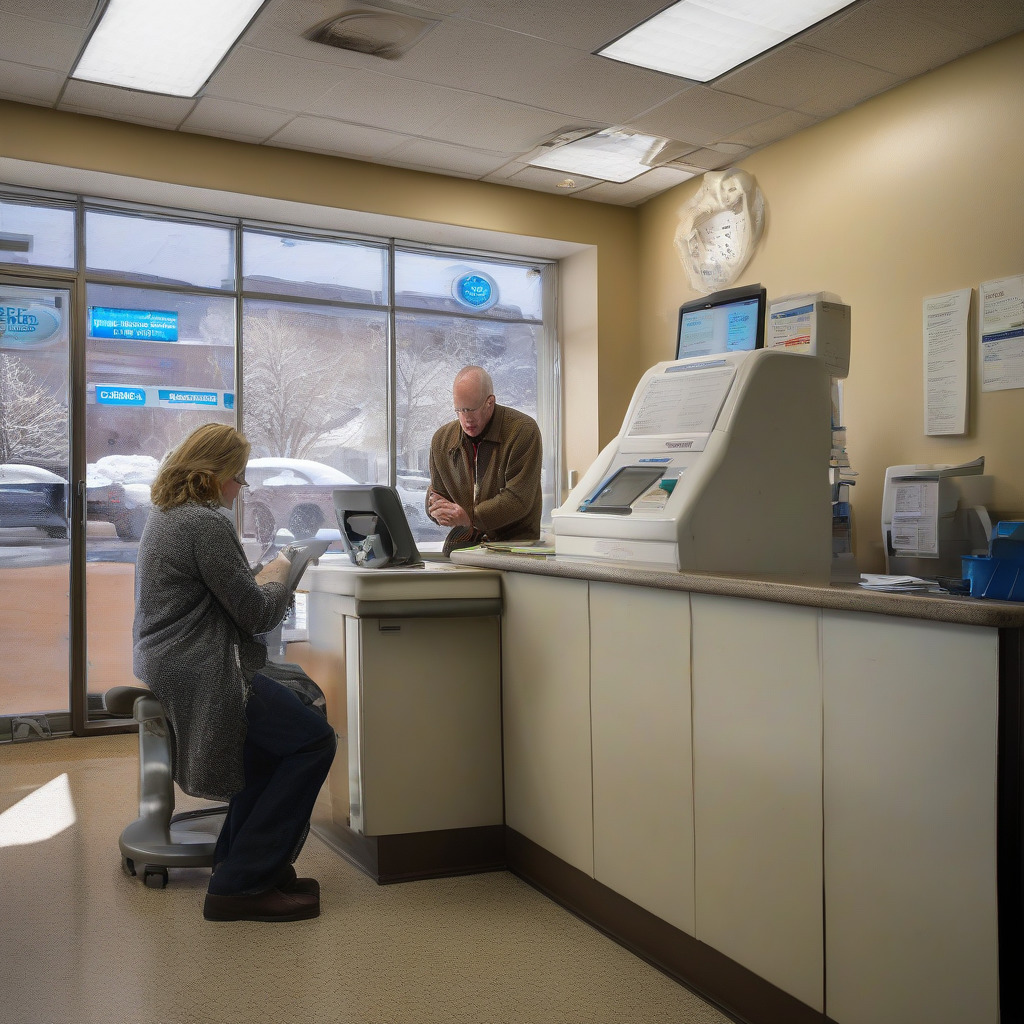
The sliding-scale program reaches more services than most residents realize. Here’s how income thresholds translate into actual costs, whether specialty care is included, and what Denver Health can and can’t do if you fall behind on a bill.
Editor’s note: Several figures in this article — including the 2026 FPL discount tier percentages, specialty care financial assistance terms, collections and credit reporting policy, and retroactive assistance lookback window — require direct confirmation with Denver Health before publication. Contact information for verification is noted throughout. All figures should be treated as directional until cleared.
Denver Health is a Level I trauma center, a network of community health centers spread across the city’s lowest-income ZIP codes, and the most consequential health system in Denver for uninsured residents. Most of them don’t know nearly enough about how it works.
This guide covers the real mechanics: income thresholds that determine what you pay, which services the financial assistance program actually reaches, how to apply before you’re already sick, and what the billing department can and can’t do when an account goes unpaid.
Who Qualifies for Denver Health’s Sliding-Scale Discount?
Denver Health’s financial assistance program — sometimes called charity care internally — adjusts your cost based on household income measured against the Federal Poverty Level. In 2026, the FPL sits at approximately $15,650 for a single adult and $32,150 for a family of four. These figures track the annual HHS poverty guideline update and should be confirmed with Denver Health Financial Counseling at 303-602-8451 before publication.
The discount works in tiers. Patients at or below 100% of the FPL receive care at no charge. The discount scales down as income rises. Historically, Denver Health’s program has covered patients at or below 200% FPL at discounted or zero-cost rates, though the upper threshold may have shifted.
Here’s why the exact tier percentages matter more than they sound: the precise income ceiling for each tier determines whether a patient owes nothing or several thousand dollars. That’s the difference between a manageable visit and a bill that follows someone for years. Approximations aren’t good enough here — confirm the real numbers directly with Denver Health Financial Counseling.
Does the Discount Apply to Specialty Care?
This is the question most residents don’t know to ask. It’s also the one that matters most.
Denver Health runs more than 12 specialty clinics — cardiology, orthopedics, oncology, OB/GYN among them — housed primarily at the main campus at 777 Bannock Street in Lincoln Park. The financial assistance program applies across the system, not just at community health centers or primary care sites. An uninsured patient referred to cardiology should qualify for the same sliding-scale discount as one seeing a primary care doctor.
Whether specialty care carries identical financial assistance terms to primary care, and whether uninsured patients can self-refer or need a PCP referral first, should be confirmed with Denver Health Patient Services before publication. That referral question matters: it determines whether someone with a cardiac symptom can walk into the specialty clinic or has to make two appointments first.
Behavioral health services, including outpatient mental health and substance use treatment, are integrated into Denver Health’s system under the same financial assistance framework. Dental care is available through Denver Health’s dental clinics; whether the sliding-scale program applies to dental in 2026 should be confirmed with the Denver Health Dental Clinic directly.
Prenatal and OB/GYN services deserve particular attention. For uninsured women who don’t qualify for Colorado Medicaid, Denver Health is often the only realistic path to obstetric care in Denver. Whether financial assistance applies to prenatal care, labor and delivery, and postpartum visits — and at which sites — should be confirmed with Denver Health Patient Services before publication.
What Services Are Always Available, Regardless of Insurance?
Federal law — EMTALA, the Emergency Medical Treatment and Labor Act — requires any hospital that accepts Medicare to provide a screening exam and stabilizing treatment to anyone who walks into an emergency department, regardless of ability to pay, insurance status, or citizenship. Denver Health cannot turn you away from its ER. That’s not a Denver Health policy choice. It’s federal law.
Denver Health is Denver’s only Level I trauma center, which means it handles the most severe cases in the region — the kinds of injuries and emergencies where patients don’t get to pick their hospital. Uninsured patients receive that care under the same EMTALA framework. The financial assistance application comes after stabilization, not before.
Beyond the ER, Denver Health’s community health centers provide primary and preventive care to uninsured patients across the neighborhoods where they’re most concentrated. Current sites include Westwood (West Denver), Montbello (far northeast), Globeville/Elyria-Swansea (north Denver near the I-70 corridor), Barnum/Villa Park (west-central), Capitol Hill, Sandoval/Sun Valley (near the former public housing site on West Colfax), and Cole/Whittier (northeast). Full current hours and service availability at each site should be confirmed with Denver Health’s main line before publication.
Financial counselors are embedded at these sites. You can apply for assistance at the same visit where you’re seen, which is worth knowing if you’ve been putting off an appointment because you weren’t sure you could afford it. Services available across the network include primary care, prenatal care, immunizations, and pharmacy — Denver Health runs its own pharmacy with lower-cost generics, which matters significantly for patients managing chronic conditions. The system also operates school-based health clinics at Denver Public Schools sites, behavioral health services, and substance use treatment.
How Do I Apply for Financial Assistance Before My First Visit?
You don’t have to wait until you’re sick and sitting in an exam room. Denver Health’s financial counseling team can start the application before your first appointment — and if you’re uninsured, starting early is worth it.
Call Denver Health Financial Counseling at 303-602-8451 or email financialcounseling@dhha.org. You can visit the main campus at 777 Bannock Street in person or ask at the front desk of any community health center. Counselors work on-site at most locations.
Documents that move the application faster: recent pay stubs (typically the last 30 days) and your most recent federal tax return. No documented income? Self-attestation is generally accepted — you sign a statement describing your situation. No pay stub required.
The Social Security number question comes up constantly and often goes unasked at the desk. Historically, Denver Health has not required a Social Security number to receive care or apply for financial assistance, but the specific documentation requirements for 2026 should be confirmed directly with the financial counseling office before publication.
Denver Health has historically accepted the matrícula consular — the consular ID issued by the Mexican consulate — as valid identification for patient registration. Given the current federal policy environment, this should be confirmed with Patient Services before publication. Whether a pre-visit online portal exists for the financial assistance application also needs verification; Denver Health has expanded its digital tools in recent years, but the current status of an online pre-application pathway should be confirmed at DenverHealth.org.
If you apply in the ER, Denver Health has financial counselors embedded in the emergency department. A counselor can often begin your application during your ED stay if you’re well enough to talk. If you’re admitted, the conversation typically happens before discharge or by phone shortly after.
One thing patients routinely don’t know: retroactive assistance — applying for help with a bill you’ve already received — is available. The lookback window needs to be confirmed with the billing department, but don’t assume a bill from several months ago is permanently outside the assistance window without making that phone call first.
Does Immigration Status Affect Eligibility?
Under Denver Health’s historical policy: no.
Denver is a declared sanctuary city, and Denver Health — as a public authority of the City and County of Denver — has maintained a policy of not asking about immigration status as a condition of care or financial assistance eligibility. This matters enormously given the demographics of the uninsured population Denver Health actually serves. Undocumented residents aren’t eligible for Colorado Medicaid under state and federal law, with a narrow emergency Medicaid exception. Denver Health’s charity care program is, practically speaking, the primary access point for uninsured undocumented patients in the city. A lot of people in Denver’s immigrant communities still don’t know that immigration status isn’t a barrier to applying.
Given the 2026 federal enforcement environment, the specific language of Denver Health’s current policy should be confirmed directly with the system before publication. This article does not provide legal advice and does not address ICE enforcement or individual legal risk.
What If Denver Health Enrolls Me in Medicaid Instead?
Before applying charity care, Denver Health’s financial counselors screen every uninsured patient for eligibility for public coverage: Colorado Medicaid, CHP+ (the state’s Children’s Health Insurance Program), and plans through Connect for Health Colorado, the ACA marketplace. If you qualify for Medicaid, the counselor will help you enroll and your Denver Health care gets billed to Medicaid rather than processed under the sliding-scale program.
This can feel disorienting if you came in expecting a charity care application and leave having enrolled in a health plan. That’s intentional. The system moves you into public coverage if you qualify — and that’s genuinely a better outcome for most patients, because ongoing Medicaid coverage does more than a one-time visit discount. If you don’t qualify for any of those programs — income above the Medicaid threshold, not purchasing marketplace coverage, or ineligible because of immigration status — you fall back to the sliding-scale program.
The two tracks are sequential. Medicaid screening comes first. If that doesn’t result in enrollment, financial assistance applies. Know that going in so a referral to the counselor doesn’t feel like a runaround.
What Happens If I Can’t Pay a Denver Health Bill?
Denver Health is not a private hospital. It’s the Denver Health and Hospital Authority, a public entity created by Denver City Council ordinance — legally separate from the city but still a public authority, and that shapes its collections behavior in ways that matter to patients who fall behind.
Payment plans are available regardless of income. The current terms — including whether plans are interest-free, minimum monthly payment thresholds, and duration — should be confirmed with the billing department before publication. If you get a bill you can’t pay, calling before it escalates is the right move. Waiting almost never improves the situation.
Colorado SB23-093, passed in 2023 and effective 2024, prohibits medical debt from being reported to consumer credit bureaus. Unpaid medical bills from Colorado providers cannot legally appear on your credit report. This applies to Denver Health bills. Colorado’s HELP Act — the Hospital Extraordinary Legal Processes law — adds further limits on aggressive collections practices by Colorado hospitals.
Whether Denver Health uses third-party debt collectors, and the specific collections process details, should be confirmed directly with the billing department. Falling behind on a Denver Health bill has consequences; the system follows up on unpaid accounts. But the combination of Denver Health’s public mission, the state credit reporting prohibition, and HELP Act protections means the exposure is meaningfully lower than it would be with a private system. Payment plans are available even after an account ages.
Why Denver Health Is Structurally Different from Other Denver Hospitals
Denver Health’s public authority structure means it receives city, state, and federal funding tied explicitly to its mission of serving low-income and uninsured patients. The system is also designated as a Federally Qualified Health Center look-alike — an FQHC-LA — which triggers federal cost-based reimbursement requirements and additional grant funding that private hospitals don’t receive. That funding exists so Denver Health can operate without charging commercial rates to patients who can’t pay them.
Something worth saying plainly, and it’s the kind of thing covered more broadly in our health & wellness coverage: Denver Health was created and funded to serve uninsured patients. It is not doing you a favor by seeing you without insurance. That is its defined public mission, funded accordingly. The sliding-scale program isn’t informal charity — it’s the reason the system exists.
For an uninsured Denver resident facing a cardiac event, a complicated pregnancy, a mental health crisis, or an injury requiring surgery, Denver Health isn’t a fallback. For most of those situations, it’s the right first call.
For financial assistance questions, contact Denver Health Financial Counseling at 303-602-8451 or financialcounseling@dhha.org, or visit the main campus at 777 Bannock Street. Community health center locations serve walk-in patients during posted hours. Call the main line to confirm hours at a specific site before traveling.
CityDesk Denver’s verification checklist for this article: 2026 FPL discount tier percentages; specialty care financial assistance terms and referral requirements; collections and credit reporting policy; payment plan terms; SSN and ID requirements; retroactive assistance lookback window; online pre-application portal status; dental sliding-scale confirmation; OB/GYN financial assistance terms; current immigration status policy. Readers who find discrepancies between these figures and what Denver Health’s billing or financial counseling offices tell them are encouraged to contact the editorial desk.