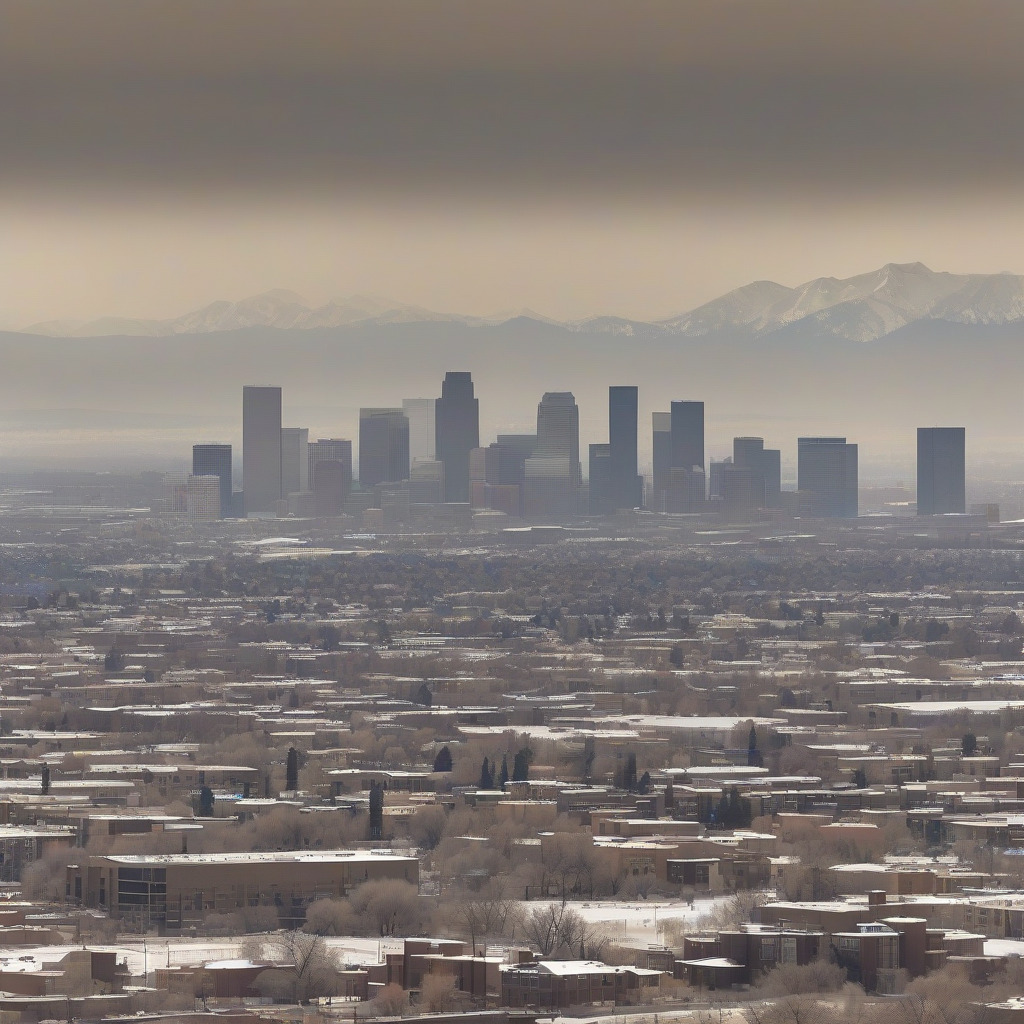
How to Run Denver's Summer Road Race Season Without Getting Wrecked by the Altitude
From the Colfax corridor to Cherry Creek, here's what new and returning runners need to know before the gun goes off.

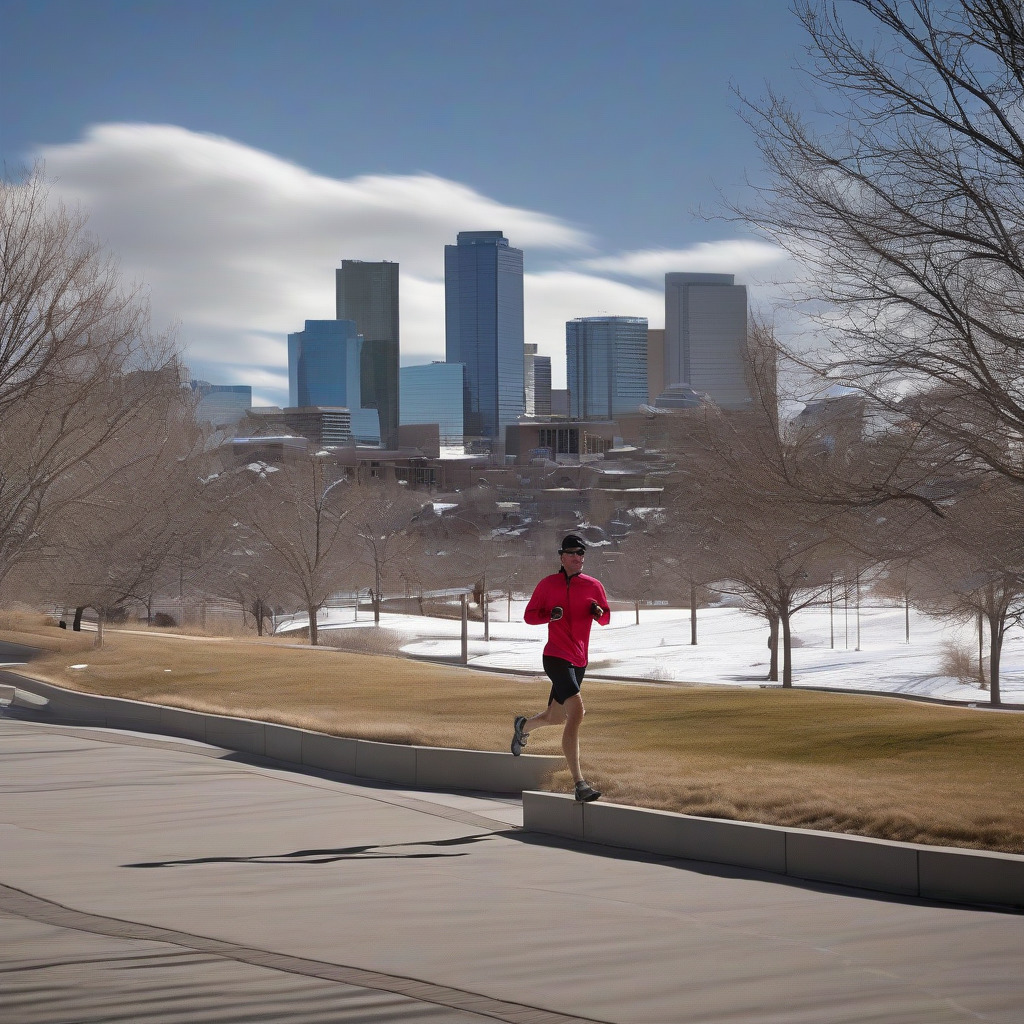
From the Colfax corridor to Cherry Creek, here’s what new and returning runners need to know before the gun goes off.
Denver’s summer race calendar is genuinely excellent. It’s also unforgiving if you arrive unprepared. The altitude will slow you down whether you believe it or not — and I mean that literally, not as a motivational warning. Popular races sell out before you’ve finished deliberating. Weather will hand you a 50°F start and an 88°F finish in the same morning. And if you’re new to running at 5,280 feet, your sea-level fitness won’t transfer the way you expect. It just won’t.
This guide covers the 2026 race calendar in practical terms: what’s on it, when registration opens, how fast slots disappear, how to adjust your pace and training for altitude, and how to use Denver’s run club network to get ready rather than showing up cold. Whether you’re a first-timer picking a race or a veteran deciding whether Colfax is your PR course this year, you’ll find information here specific enough to actually use.
What’s on the 2026 Denver Race Calendar
Denver’s race season clusters hard in late April and May, then thins out as summer heat and afternoon thunderstorms make large road races impractical. Three marquee events anchor the calendar, with a handful of lower-stakes options rounding out the rest of the season.
Cherry Creek Sneak runs in late April along the Cherry Creek corridor, offering 5K, 10K, and 15K distances. The course runs through one of Denver’s wealthiest and most commercially polished neighborhoods — paved paths, manicured greenways, enough crowd support to make a 5K feel like a real event. It’s flat and fast, staged out of the Cherry Creek Shopping District, and draws a wide range of ability levels because the distances accommodate everyone from serious age-groupers running the 15K down to walkers in the 5K. This is a genuine community event, which means you might spend the morning running alongside someone training for their first race and finishing near someone chasing an age-group place. That’s not a bug; it’s the whole point.
Colfax Marathon Weekend takes place in mid-May. The field runs through the East Colfax corridor — one of Denver’s most historically layered and authentically gritty stretches of urban terrain — ultimately finishing near or through Cheesman Park, one of the city’s oldest and most architecturally interesting public spaces. Distances include the full marathon, half marathon, 10K, and a relay option. The marathon course is legitimately competitive for trained runners who’ve prepared for the altitude; the half covers rolling terrain through Congress Park and Cheesman and rewards runners who’ve put in real work. The 10K is the right entry point for runners who want to experience the Colfax race energy without overcommitting. If you run the marathon, you’ll understand why veteran Denver runners treat this weekend the way other cities treat their signature events. The course is substantial. The field is deep. The start-line energy is genuine.
BolderBOULDER runs on Memorial Day (May 25, 2026) and is technically in Boulder, about 30 minutes up US-36 from Denver. But it belongs on every Denver runner’s radar — treat the commute as part of the ritual. The race is a 10K, drawing large fields across citizen waves and an elite field. It’s one of the most beginner-welcoming 10Ks in the country, partly because citizen waves are self-seeded by projected finish time and partly because the culture is unapologetically festive. The course climbs through Boulder’s neighborhoods and finishes on the University of Colorado’s Folsom Field, where runners file across the grass in their finishing wave while standing crowds cheer. Denver runners make the drive in large numbers. Treat it as part of the local calendar.
Rock ‘n’ Roll Denver’s 2026 status is uncertain. The Rock ‘n’ Roll series has had turbulent years of cancellations, format changes, and ownership transitions, and its Denver iteration has been inconsistent. Before building your race calendar around it, check runrocknroll.com to verify whether a Denver race appears on the 2026 schedule. Do not assume it will happen.
Beyond the marquee events, Denver Parks & Recreation and various run clubs organize informal race series at Washington Park and along the Cherry Creek Trail throughout summer. These are lower-key, typically free or low-cost, and a good way to stay race-sharp without the logistics of a large event.
Before registering for any race, verify 2026 dates and fees directly at runcolfax.org, cherrycreeksneak.com, and bolderboulder.com. Dates and pricing change year to year.
Registration Timelines — These Races Fill Faster Than You Think
Denver’s compressed race window means high demand concentrated into a short calendar span. The races that sell out move fast. Faster than most people expect, even people who’ve been warned.
The Colfax Half Marathon is historically the fastest-filling slot on the calendar. Registration typically opens in September or October for the following May race, and the half has sold out within 8 to 10 weeks of opening in recent years. If you’re eyeing the half, getting on the Colfax Marathon email list is not optional. It’s the only reliable way to know the exact moment registration opens, which matters when slots can be gone before December.
Cherry Creek Sneak’s 10K and 15K fill within 4 to 6 weeks of registration opening, which typically happens in January. The 5K moves more slowly and is more accessible for last-minute registrants, but if you want the 10K or 15K specifically, treat January 1 as a soft deadline for getting your registration in. People often approach these registrations with a “maybe I’ll do this” frame of mind and end up missing the window entirely because they didn’t commit to a decision. Sound familiar? It happens every year.
BolderBOULDER handles its citizen wave capacity differently. Waves fill and close without a formal public announcement, and there’s no centralized waitlist system that reliably reopens spots. The practical advice from runners who’ve navigated this: register when you’re ready, not when you think registration might close. Waiting for a sale or a firmer 2026 plan is how people miss it.
Each event uses price tiering. Early-bird pricing — historically the lowest available — ties to registration opening. Standard pricing kicks in after the first tier sells through. Late pricing, when it exists, typically adds meaningfully to the cost depending on the race and distance. The Colfax Marathon’s full marathon entry has historically run from roughly $115 at early-bird to $160 or more at late pricing; the half has tracked in a similar range. Cherry Creek Sneak fees have generally run from around $40 for the early-bird 5K to $75 or more for the 10K and 15K at later tiers. BolderBOULDER citizen wave pricing has historically ranged from around $60 to $75. These are historical reference points only — confirm 2026 fees at the respective event sites before registering.
Go to runcolfax.org, cherrycreeksneak.com, and bolderboulder.com and get on each organization’s email list today. Bookmark the registration pages directly. Set a calendar reminder for early September to check Colfax registration status, early January for Cherry Creek Sneak, and late fall for BolderBOULDER. These aren’t casual suggestions. They’re the difference between getting the race you want at early-bird pricing and finding out in March that you missed it.
What Altitude Actually Does to Your Body — And How to Adjust
This section matters most for anyone traveling from sea level or new to running in Denver. The altitude will not be invisible, and pretending it will be is how runners find themselves walking at mile 7 of a race they trained hard for.
At 5,280 feet, the air pressure is lower than at sea level. Each breath delivers roughly 17 percent less oxygen to your working muscles. Your VO2 max — the ceiling on how much oxygen your body can process — drops measurably within hours of arriving. Heart rate goes up at equivalent paces. Perceived exertion climbs even faster. The pace that felt like a comfortable long-run effort in Kansas City or Houston will feel like tempo effort here, at least for the first few days. Your legs will feel heavy in a way that has nothing to do with how much training you’ve done. It’s disorienting, honestly, because you’ve put in the work and your body just doesn’t respond the way it should.
The standard coaching benchmark for altitude pace adjustment at distances up to 10K is 10 to 20 seconds slower per mile at equivalent effort. For a first altitude exposure at a longer distance, a 5 percent pace addition is a widely used rule of thumb. That translates to roughly 9 additional minutes on a 3-hour marathon. These are starting points, not guarantees. Individual response to altitude varies more than most runners expect; some runners adapt faster, others hit a wall around mile 8 that they didn’t anticipate. Build the adjustment into your race-day plan rather than discovering it exists when you’re already on the course.
Note to editors: The brief calls for a named Denver coach on record for this section. Runners Roost Tennyson, Colorado Running Company, and Front Range Running Club are the suggested contacts. The altitude guidance above reflects standard coach-cited benchmarks, but this section should be updated with a direct quote and attribution before publication.
Most runners notice basic adjustment within 3 to 5 days. Breathing feels less labored and effort-pace relationships start to normalize. Real physiological adaptation — the body producing more red blood cells to compensate for lower oxygen availability — takes 2 to 3 weeks and requires consistent training at altitude to fully develop. If you’re planning to move to Denver and race here regularly, the first six weeks are when your times will lag furthest behind your sea-level fitness. By the eight-week mark, you’ll start seeing improvement.
There’s a counterintuitive worst window that catches many race-week travelers off guard — and here’s where I’d ask you to actually remember this, because it’s the one thing most visiting runners get wrong. Arriving 2 to 4 days before your race may actually be harder on performance than arriving race morning or arriving two weeks early. The reason is physiological. In that 2-to-4-day window, your body is in the early stages of altitude response but hasn’t adapted enough to compensate effectively. Blood plasma volume shifts. Erythropoietin production ramps up but red blood cell count hasn’t caught up. The physiological stress of adjustment peaks. If you’re flying in from sea level and you can’t arrive 2 to 3 weeks early, arrive as close to race morning as logistics allow. Land Thursday night for a Sunday race and you may feel worse than if you’d landed Saturday. It’s counterintuitive enough that most visiting runners get it wrong the first time — and then talk about it at length afterward.
For Denver-based runners training for these races, the altitude math works in your favor over time. Training at 5,280 feet and racing at 5,280 feet means your body is adapted. But that adaptation doesn’t arrive automatically. It requires consistent mileage and time. A Denver resident who starts marathon training in January will be significantly better adapted by May than someone who moves to the city in March.
Heat, Thunderstorms, and the UV Index — Denver’s Race-Day Climate
This is the piece of race-day preparation that outside guides consistently ignore. It matters more than most runners realize before their first summer race here.
Denver summer race starts cluster at 6:30 to 7:30 a.m. for specific reasons. By noon, temperatures on a typical June or July day in Denver are climbing past 85°F. By afternoon, they can hit 90°F or above. More urgently, Denver’s June through August thunderstorm window — driven by moisture from the southwest and the dynamics of the Front Range — typically produces storms between 2 and 4 p.m. These are not drizzles. They can include lightning, hail, and rapid temperature drops that feel almost personal. Race organizers cluster start times early to get fields through the course and off exposed terrain before the afternoon develops. If you’ve never experienced a Front Range summer thunderstorm, understand that they arrive fast enough that a clear sky can turn threatening within 30 minutes. I’ve watched it happen from a Washington Park bench — brilliant blue sky, then suddenly you’re looking for shelter.
Know each event’s weather protocol for lightning delays before race morning. The Colfax Marathon Weekend and BolderBOULDER both have delay procedures outlined in their race-day information packets, and runners who haven’t looked them up in advance are the ones who look confused when an announcement is made at mile 8. Check the race websites now, not the morning of.
Denver’s UV index at altitude is meaningfully higher than at sea level. The thinner atmosphere provides less protection. Local runners wear sunscreen as a default, including on cloudy days in May. If you’re not used to doing this, start now — a May morning that feels cool enough to skip sunscreen will have you burned by noon if you’re outside and exposed.
The dry air is the other variable that catches visitors off guard. Denver’s low humidity means sweat evaporates quickly. This feels efficient and comfortable. It also masks how much fluid you’re losing. Plan for 20 to 30 percent more fluid intake than you’d need at equivalent sea-level effort. Electrolyte replacement matters more here because you’re losing sodium and potassium at higher rates without the visual cue of visible sweat soaking your clothing. Arrive at race morning well-hydrated, not just adequately hydrated. The water stations on the course are designed for Denver runners who understand how much they need to drink; visiting runners often under-fuel significantly.
Race starts in late April and May can see temperatures in the 40s and low 50s. The same day’s finish can be 30 to 40 degrees warmer. Layers that can be tied around your waist or discarded at water stations are standard practice for local runners. Don’t show up in shorts and a singlet just because the forecast high is 85°F. The start might be cold enough to seize your legs, and you’ll spend the first mile burning energy trying to warm up. Watch a race-day livestream of an early start from Colfax or Cherry Creek if you need to see how seriously Denver runners dress for these conditions.
Which Race to Pick — First-Timers vs. Experienced Runners
If you’re new to road racing or new to racing at altitude, three events stand out as intelligent entry points.
The Cherry Creek Sneak 5K is the clearest starting point in Denver’s spring calendar. The course is flat. The field is large and mixed-ability. The neighborhood provides consistent crowd support. At 3.1 miles, you can focus on the altitude experience rather than managing a complicated race strategy. It’s a genuine community event, not a beginner consolation prize — you’ll be running alongside serious age-groupers and walkers finishing in 45 minutes, which means you’re not isolated in some sequestered “beginner” wave. You’re part of a real race.
The Colfax 10K works well for runners who want more than a 5K but aren’t ready for half-marathon commitment. The 10K slots into the marathon weekend energy — the start-line atmosphere, the aid station infrastructure, the crowd on East Colfax — without requiring the mileage base of the longer distances. It’s also a useful altitude test. Six point two miles is long enough that you’ll feel what the elevation does to your effort, but short enough that a conservative pace won’t cost you much time. Many Denver runners use the 10K as a spring race to gauge their fitness before committing to a half or full marathon later in the season.
BolderBOULDER’s citizen waves are explicitly designed for runners of all abilities. Self-seeding by projected finish time means you’re running with people at your level, not getting swamped by elites or blocking faster runners. The race’s reputation as a beginner-welcoming event is well-earned, and the finish-line experience on the University of Colorado’s football field is — I’ll just say it — genuinely memorable. You’ll remember it.
For experienced runners with serious race goals, the Colfax Marathon is the most interesting option on the calendar. It’s a legitimately competitive course. Not flat, but not technical. Runners who’ve done real altitude-adapted training can target aggressive age-group times. The depth of the age-group field at Colfax is real; this isn’t a race where you win your division by default. If you’re chasing a PR in your age group, this is where you do it.
The Colfax Half covers rolling terrain through Cheesman Park and Congress Park and rewards runners who’ve put in hill work. It’s a strong field with competitive age-group depth, and the course is interesting in a way that flat urban half marathons often aren’t. The hills make it slightly slower than a flat half would be, but the scenery and the field quality make up for it.
Trail runners who want to add elevation gain to altitude should look at the race calendars in Golden and Morrison, where Front Range trail races operate throughout spring and summer. Mount Falcon, Lair o’ the Bear, and the trails above Morrison offer technical courses that bear no resemblance to road racing and require a completely different training block. If trail racing is on your agenda, integrate it early. A trail 10K at elevation will teach you things about yourself that road racing won’t — some of them flattering, some of them not.
The Colfax relay deserves a specific mention because it solves a real logistical problem: it’s the right format for a group that includes both first-timers and veteran runners. Teams split the marathon distance into legs, which lets experienced runners handle the longer stretches while newer runners contribute without overextending. If you’re trying to get a group of friends into racing together, this is the format that actually works. You’re not forcing a first-time marathoner to run 26.2 miles, and your experienced runners get to do legitimate training work. Everyone benefits, and nobody has to pretend a half marathon is casual.
Where Denver Runners Train — The Routes That Matter
If you’re building a training base in Denver, these are the corridors locals actually use. They’re not the most scenic routes in the metro area. They’re the ones that work for volume and for learning how your body responds to altitude training.
Cherry Creek Trail is the primary training artery through central Denver. The segment from Confluence Park, where Cherry Creek meets the South Platte River, east to the Cherry Creek Reservoir forms the core training corridor. The central portion — running through the Country Club neighborhood and Cherry Creek proper — is heavily trafficked on weekend mornings and functions as Denver’s informal outdoor gym. It’s flat, well-maintained, and connects multiple neighborhoods, which makes it useful for building mileage without repeating the same loop. On a Saturday morning in May, you’ll see runners training at every pace from fast to recovery, which gives you a real sense of what different effort levels look like at altitude.
Washington Park perimeter loop measures 2.6 miles and is Denver’s most popular running loop. On weekend mornings it’s essentially a moving parade — which is either charming or annoying depending on where you are in marathon training. The loop is flat, which makes it useful for tempo work and for calibrating your effort-pace relationship at altitude among runners who know the course cold. If you want to find out what a comfortable pace feels like in Denver, Wash Park is where locals do it. You can circle the loop four times for a 10-miler, or run around it once as part of a longer route through surrounding neighborhoods. The park itself is architecturally worth the visit even if you’re not running.
City Park offers a roughly 3-mile loop that overlaps with Colfax Marathon course segments. This makes it useful for race-specific preparation. It also functions as a genuinely beautiful training environment, with views of the Rockies and the Denver Museum of Nature & Science as landmarks. If you’re preparing for Colfax specifically, running this loop multiple times in training means the terrain and the surroundings feel familiar on race day — which matters more than people expect when they’re trying to hold a pace at mile 20.
Sloan’s Lake circumference runs 2.7 miles around the reservoir in West Denver. It’s flat and exposed, with minimal shade, which makes it useful specifically for heat-acclimatization work. If you want to practice running in Denver’s late-morning heat, Sloan’s Lake on a summer weekday is the honest version of that test. It’s also where local runners do speed work when they want an out-and-back or loop format with consistent effort rather than a track session.
High Line Canal Trail is the choice for long-run volume. The trail runs 71 miles through suburban south Denver and the surrounding metro area, with a crushed gravel surface that’s easier on legs than pavement and enough distance to run 16 or 18 miles without a turnaround that feels repetitive. South Denver access points connect to segments that are leafy, quiet, and appropriate for the lower-intensity long runs that form the base of marathon training. A 15-mile run on High Line Canal feels completely different from a 15-miler on pavement — both in terms of impact and in terms of mental recovery. Your legs will thank you.
Denver’s Run Clubs — Your Fastest Route to Local Knowledge
Training alone in a new city is the slowest way to learn anything. Denver’s run club network is genuinely active and consistently welcoming to newcomers. As part of our fitness and active-lifestyle coverage, we track the local run and fitness community year-round — and the social intelligence about 2026 registration timing, course changes, and training conditions flows through these groups faster than it appears anywhere online.
Denver Run Crew meets Tuesday evenings in the RiNo/Five Points area. It’s road-focused, socially energetic, and draws a range of abilities. If you want to connect with runners who’ve been navigating Denver race season for years, this is one of the fastest routes in. Regular attendees include runners training for the same races you’re training for, which means you get real-time intelligence about altitude adaptation, training pacing, and race-day strategy. Show up twice and you’ll know people who’ve run Colfax multiple times — and have opinions about it.
Runners Roost runs free Wednesday group runs out of their Tennyson Street store in the Berkeley neighborhood. The store is one of Denver’s most established specialty running retailers, and the Wednesday runs are explicitly beginner-welcoming. Staff and regulars tend to have accurate, current knowledge about race registration timing — the store is embedded in the local race community in a way that big-box running gear retailers just aren’t. If you buy shoes there, the staff can talk you through altitude training and pace adjustments rather than just selling you footwear.
Colorado Running Company organizes Sunday long runs centered around the Wash Park area. Long runs are where training relationships form, and the Colorado Running Company group draws runners who are seriously preparing for spring races. If you’re building toward Colfax or BolderBOULDER, this is the group most likely to be running the same training block at the same time of year. The Sunday runs also function as a social hub — people stick around after to talk about race plans, training approaches, and what’s actually happening with registration for that season’s races.
Denver Trail Runners meets Saturday mornings for trail runs at Mount Falcon, Chautauqua in Boulder, Lair o’ the Bear, and other Front Range locations. This group is the right fit if you’re targeting trail races in addition to road events, or want to build elevation-gain tolerance that road-only training won’t provide. Trail running at altitude is a completely different stimulus than road running, and the group can teach you how to approach it so you don’t blow yourself up on a steep climb your first time out.
November Project Denver meets Wednesday mornings for free outdoor fitness workouts. It’s one of the most socially accessible entry points in the city. You don’t need to identify as a runner to show up, and the community is large enough that you’ll find people at every fitness level. For someone who’s new to Denver and wants a low-stakes introduction to the outdoor fitness community, November Project is the right first step — low pressure, genuinely welcoming, and a real way to meet people who care about staying active in this city.
Verify current schedules, meeting locations, and any membership requirements at each group’s website and Meetup page before showing up. Club details change.
Your Pre-Registration Checklist
Before you commit to a race, confirm the following.
Verify 2026 dates and fees at the official sites directly. Go to runcolfax.org, cherrycreeksneak.com, and bolderboulder.com and pull up the pages yourself. Don’t rely on third-party race calendars. They lag behind official updates and sometimes carry outdated pricing that may have shifted in the six months since you first checked.
Check Rock ‘n’ Roll Denver’s 2026 status at runrocknroll.com. If it appears on the calendar with an open registration link, it’s happening. If it doesn’t, plan around it being absent rather than banking on the chance that it materializes.
Get on email lists today for every race you’re considering. Registration opening announcements go to subscribers first. For the Colfax Half specifically, being on the list isn’t just convenient — it’s the practical difference between getting in and missing the window. Sign up even if you’re still deciding whether you’ll actually register; you can decide after you know what the cost and dates are.
Look up Denver Parks & Recreation’s programming calendar for the Washington Park and Cherry Creek Trail informal race series. These are low-cost, low-stakes race opportunities that don’t appear on major race aggregator sites but are genuinely useful for staying race-sharp between major events.
Set calendar reminders — September for Colfax, January for Cherry Creek Sneak, fall for BolderBOULDER. Put them in your phone now, not on a sticky note on your monitor. The runners who miss registration aren’t the ones who weren’t interested; they’re the ones who meant to check and didn’t get around to it until slots had closed.
Finally, and most importantly: whatever race you’ve chosen, your first week in Denver is not the week to discover what 5,280 feet does to your legs. The altitude will affect you. The pace adjustments are real. The hydration math is real. The thunderstorms are real. None of this is reason to skip the race — Denver’s summer race season is one of the genuinely better things about living here, and the calendar rewards runners who prepare for it honestly. Show up ready. Start slower than you think you need to. Drink more than you think you need to. Register before someone else takes your spot.