What Functional Medicine in Denver Actually Costs and Whether It's Worth It
From the initial consultation to year-end totals, here's the price breakdown Denver patients rarely see before they sign up.

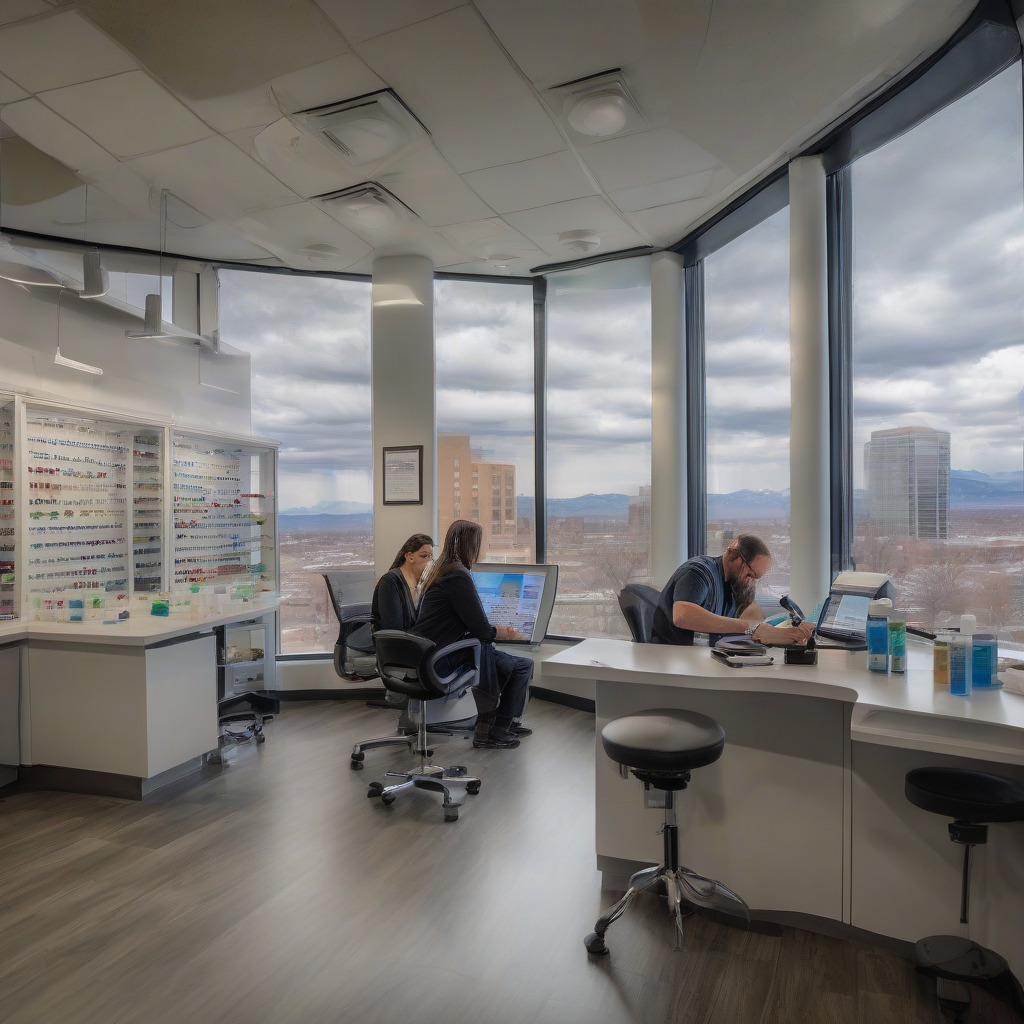
From the initial consultation to year-end totals, here’s the price breakdown Denver patients rarely see before they sign up.
A Denver resident with persistent fatigue and thyroid symptoms books an initial appointment at a Cherry Creek functional medicine practice. She expects something like a specialist visit — maybe $200, maybe a copay. What she finds out during the first call is something else. Once she pushes past the “pricing varies by patient needs” language, she learns her first year could run $3,000 to $8,000 out of pocket. She does it anyway, because years of standard primary care visits produced a TSH in “normal range” and no real answers.
That story isn’t unusual. It shows up on Denver-area wellness Facebook groups and the r/Denver subreddit with enough regularity that it deserves a direct answer. Clinic websites across Cherry Creek, Wash Park, and RiNo almost universally say “call for pricing” or bury costs behind a consultation booking form. This piece answers what those calls actually reveal: the full cost structure, what insurance realistically covers in Colorado, how functional medicine compares to other care models operating in the city right now, and who this model actually works for versus who should go somewhere else first.
What You’re Actually Paying For
The sticker-shock problem in functional medicine is structural, and it starts with the fact that the initial consultation fee is real but also the smallest item on the bill. Practices rarely show the full cost picture before patients commit.
Initial consultations with an MD or DO running a cash-pay functional medicine practice in Denver typically cost $300–$500 for a 60–90 minute intake. A Colorado-licensed naturopathic doctor (ND) usually charges $200–$350 for an equivalent session. Most practices will quote these numbers when pressed directly, though some stay evasive longer than they should.
Specialty labs are where the cost picture breaks open. A functional medicine diagnostic workup goes well beyond what a standard primary care panel covers, and depending on which tests are ordered and through which reference lab, expect $300–$1,200 — almost never covered by insurance when ordered through specialty labs. The extended reference ranges these labs use differ from commercial lab standards, which is sometimes clinically significant and sometimes a selling point dressed up as science. Both possibilities exist and the patient usually can’t tell which one applies to their situation.
After labs come back, supplement protocols accumulate quietly. Practitioner-grade products run $100–$400 per month depending on complexity. Over a year that’s $1,200–$4,800 in supplements alone. Follow-up visits add another $250–$1,100 for the year — typically two to four visits at $125–$275 each.
Run a mid-range scenario: $400 consultation, $700 in labs, $200 per month in supplements for ten months, two follow-ups at $250 each. You’re at $3,500 before any additional testing. At the high end — two or three lab panels and a more complex protocol — $8,000 is reachable without anyone doing anything unusual. This isn’t the practice being predatory. It’s the model operating as designed. Patients should know that going in, not after the first lab order arrives.
What Three Practice Types Actually Charge
Independent MD or DO, cash-pay: Cherry Creek and Wash Park practices in this category typically charge $300–$500 for initial consultations and don’t bill insurance for extended visits, though they may provide superbills for out-of-network reimbursement. Lab costs are separate. One Cherry Creek practice with publicly available pricing quotes $450 for an initial consultation and $200–$250 for follow-ups. Several practices in this corridor adjusted fees in 2023–2024, so call to confirm.
Colorado-licensed naturopathic doctor: Initial appointments run $200–$350, follow-ups $125–$200. The lower consultation fees reflect different overhead and educational credentials, not shorter or less attentive visits. Lab and supplement costs track closely with MD practices because they draw from the same specialty lab infrastructure. One distinction that actually matters for specific patients: Colorado NDs have limited prescribing authority. They can prescribe desiccated thyroid but not levothyroxine, and they can’t write for controlled substances. For many patients this scope covers what they need. For others it becomes a real problem mid-protocol.
Parsley Health: The Denver location operates on a membership structure that bundles an annual fee with a set number of visits. Publicly available pricing points to approximately $150–$175 per month, but verify this directly at enrollment because it has changed. Labs are additional. The membership model’s advantage is predictability — you know exactly what access costs before you commit. Total year-one cost including labs and supplements still represents a significant annual outlay, but there are no surprise visit charges.
Boulder-area practices run 10–15% higher on consultation fees than comparable Denver offices, which reflects commercial rent and the demographics that sustain those prices. Worth factoring in if you’re considering a specific Boulder practitioner.
Insurance Reality in Colorado
The honest answer is more useful than the usual non-answer of “check your benefits.”
An MD or DO practicing functional medicine can bill standard Evaluation and Management visit codes like any other physician — 99213 for a moderate-complexity visit, 99214 for higher complexity. If they’re in-network with your plan, your normal cost-sharing applies. The catch: most functional medicine MDs in Denver have deliberately opted out of insurance networks because insurance reimbursement for a 90-minute intake visit pays the same as a 20-minute one. The economics of running a functional medicine practice inside the insurance system don’t work. That’s why cash-pay is the default, not a quirk.
If you have a PPO plan — BCBS Colorado and Cigna both have substantial PPO enrollment in the Denver market — you can often submit a superbill from an out-of-network MD for partial reimbursement. Realistic recovery for BCBS Colorado PPO holders is 40–60% of the allowed amount after your out-of-network deductible. On a $450 consultation that might mean $150–$200 back. Request the superbill even if the practice doesn’t offer it automatically. HMO and EPO plans, which have grown as ACA marketplace options in Colorado, provide zero out-of-network coverage for non-emergency care. Many Colorado marketplace enrollees are on plans with no out-of-network benefit at all, which makes functional medicine costs fully unreimbursable regardless of how many premiums they’ve paid.
Specialty labs fall outside coverage in almost every scenario. Standard tests ordered through LabCorp or Quest — a basic metabolic panel, standard thyroid numbers — typically move through insurance normally. The specialty panels that form the diagnostic core of functional medicine operate in a different financial universe and are not covered.
HSA and FSA funds can cover MD and DO visits and typically ND visits too, as covered in our health & wellness coverage. Supplements require a Letter of Medical Necessity from an MD or DO to be eligible — you can’t claim them simply because you bought them at a functional medicine office. Health coach fees aren’t eligible. If you’re planning to use pre-tax health savings dollars, confirm your provider’s license type before you spend, and get the paperwork before the purchase, not after.
Functional Medicine vs. Direct Primary Care vs. Concierge
These models get conflated constantly in patient conversations, and the confusion costs money.
Direct Primary Care (DPC) is a care delivery model, not a clinical philosophy. For a flat monthly fee, a DPC practice gives you direct access to a primary care physician — no insurance billing for visits, often same-day appointments, extended visit times, sometimes in-house labs at wholesale cost. Nextera Healthcare operates several DPC locations in Denver including Highlands, Central Park, and Littleton, with adult memberships around $75–$95 per month. That’s roughly $900–$1,140 per year for unlimited primary care access. DPC does not include root-cause specialty testing or extended diagnostic protocols. Whether your DPC physician has any functional medicine training depends entirely on the individual doctor.
Functional medicine is a clinical philosophy, not a delivery model. It emphasizes identifying upstream causes of chronic illness through detailed history-taking and specialty testing rather than symptom management. It can be practiced by an MD in a cash-pay office, an ND in a naturopathic clinic, or a physician inside a DPC practice. The philosophy doesn’t determine the billing structure.
Concierge medicine is a delivery model — higher-cost than DPC, smaller patient panel, direct physician access, sometimes with retainer fees in the $1,500–$5,000 range annually. Some concierge physicians have functional medicine training; many don’t.
A DPC physician with functional medicine training represents real value for cost-conscious Denver patients. You get the diagnostic orientation at a fraction of the total cost. This combination exists in the Denver market, but finding it requires asking specific questions. When you’re evaluating a DPC practice, ask directly whether the physician has completed IFM coursework.
Who Is Legally Allowed to Do What in Colorado
This is the section that almost no functional medicine coverage addresses directly, and it’s probably the most important one.
The Colorado Medical Board licenses MDs and DOs with full prescribing authority and independent practice. “Functional medicine” is not a recognized specialty by the American Board of Medical Specialties. The Institute for Functional Medicine’s IFMCP credential — Certified Practitioner — is a private training certificate. It’s not a state license, not a board certification in the ABMS sense, and Colorado doesn’t require physicians to disclose how much IFM training they’ve actually completed. A physician who attended one IFM seminar and one who finished the full IFMCP curriculum carry the same underlying state license with no visible distinction to patients. Ask directly. A physician willing to specify whether they completed the full program or attended selected modules is giving you more than the minimum. One who deflects that question is telling you something too.
Colorado is one of roughly 20 states that licenses naturopathic doctors through DORA (the Department of Regulatory Agencies). Colorado NDs have a defined scope that includes limited prescribing authority — desiccated thyroid yes, levothyroxine no, controlled substances no. For many functional medicine patients this scope covers what they actually need. For others the limitation becomes a real obstacle.
Health coaches are the consumer protection gap that deserves the most attention. Some individuals operating in the Denver functional medicine market present themselves in functional medicine language, discuss causes of illness, recommend lab panels, suggest supplement protocols — and hold no clinical license whatsoever. Colorado requires no licensure for health coaches. They can’t diagnose, prescribe, or order labs independently. A health coach without direct physician oversight who is recommending specific supplement protocols or interpreting lab values is operating outside appropriate practice boundaries, regardless of what certifications they’ve collected from weekend workshops. This isn’t hypothetical — complaints about exactly this situation appear regularly in Denver wellness communities online.
Before working with anyone in a functional medicine context, confirm their Colorado license status through DORA’s license lookup tool. An MD, DO, or ND will appear there. A health coach will not. That’s the whole ballgame.
What Denver Patients Are Actually Showing Up For
Four presenting issues dominate the intake caseload at Denver functional medicine practices.
Thyroid disorders are the most common. There’s a legitimate local dimension: Denver’s altitude affects thyroid physiology in ways that sea-level reference ranges don’t fully capture. Hemoglobin, ferritin, and vitamin D metabolism differ from sea-level norms, and experienced Denver practitioners cite altitude-adjusted interpretation as a real clinical consideration. Many arriving patients have Hashimoto’s thyroiditis — an autoimmune condition — that conventional primary care treated as a TSH number rather than an immune system problem. A functional medicine workup might include TPO antibodies, reverse T3, and free T4, and might lead to desiccated thyroid or a combination protocol rather than synthetic T4 alone. That’s a genuinely different diagnostic footprint, not marketing language.
Long COVID has become the top presenting complaint at multiple Denver practices over the past 18 months, a shift practitioners describe as dramatic. The symptom cluster — post-exertional malaise, cognitive fog, sleep disruption, dysautonomia — maps onto functional medicine’s extended diagnostic model in ways that appeal to patients who’ve gotten little traction in standard primary care, where treatment algorithms for Long COVID remain thin. The evidence base for specific functional medicine interventions in Long COVID is uneven. Patients should understand that before committing significant money to a protocol.
Perimenopause and hormonal disorders account for a disproportionate share of functional medicine patients in the Cherry Creek and Wash Park corridors, driven largely by women in their late 30s through early 50s. The conventional medicine experience for perimenopause often involves a brief appointment and a prescription — full stop. Functional medicine’s extended workup on estrogen, progesterone, and cortisol dynamics appeals to patients who want more than that. Some of the additional testing is genuinely useful. Some of it involves markers that lack strong evidence for routine screening. The mix varies by practice and practitioner.
GI conditions — IBS, SIBO — round out the list. Denver practices order significant volumes of breath tests for small intestinal bacterial overgrowth and comprehensive stool panels. Both are cash-pay tests that standard GI specialists rarely use first-line. For patients with documented SIBO, the testing and protocol sometimes produce real improvement. For others, the investment produces expensive supplement recommendations without clear benefit. The outcomes vary more than any practice’s marketing will tell you.
Two Patient Experiences Worth Sitting With
The following reflects accounts documented in Denver-area online communities. This publication is actively seeking on-record sourcing from Denver patients with specific experiences — positive or skeptical — with named practices. Contact us.
The patient for whom functional medicine makes genuine financial and clinical sense has usually hit a wall in conventional medicine. Hashimoto’s that was treated as a single number. Long COVID dismissed as anxiety. Refractory GI symptoms with a colonoscopy that came back clean. Standard labs, multiple specialists, no change in condition. For that patient, a first-year investment in the $3,000–$6,000 range — when it produces a meaningful shift in clinical protocol — can represent better value than continued specialist cycling that’s going nowhere. A switch from T4 to desiccated thyroid that resolves years of fatigue, or the identification of a specific deficiency driving symptoms: these outcomes make the investment real. The physician’s training, the precision of the diagnosis, and honest expectations about which interventions have actual evidence behind them are the variables that determine whether any of it pays off.
The skeptical experience that keeps appearing in Denver online communities involves significant spending — often $3,000–$5,000 — on supplement protocols for fatigue or GI complaints that may have had simpler explanations. One patient spent $4,200 on a year-long protocol for fatigue, then realized that her dramatic improvement coincided with dropping from six glasses of wine a week to two and consistently getting seven hours of sleep. Did the supplements help? Maybe. Were the lifestyle changes sufficient on their own? Also maybe. That ambiguity is a structural problem with the model — concurrent lifestyle changes are baked into most functional medicine protocols, which makes it genuinely hard to isolate what worked. Patients on PPO plans who didn’t request superbills also frequently report realizing, after the fact, that they left substantial reimbursement on the table. The practical takeaway: always request a superbill from any MD or DO practice. Ask before your first visit, not after your last one.
The Bottom Line — Who Should Actually Do This
Functional medicine makes sense for a specific patient: someone with a documented chronic condition who has already worked through conventional medicine’s diagnostic toolkit and gotten nowhere. Hashimoto’s. Long COVID. Refractory SIBO. A hormonal disorder that’s been dismissed or undertreated. Someone who has enough cash reserves to absorb Year 1 costs without financial strain. Someone who understands the model requires active engagement — dietary changes, sustained protocols, follow-through — not a passive fix.
It’s a poor first-line option for someone who hasn’t yet seen a primary care physician and had standard labs run. Start there. It’s indefensible when the provider lacks a clinical license. No health coach should be your functional medicine practitioner regardless of what the practice’s marketing says.
It’s also worth being clear-eyed about the evidence. Functional medicine as a bundled system has limited controlled-trial support, as distinct from specific interventions within it. Desiccated thyroid has an evidence base. Certain probiotic strains have supportive research. The comprehensive “functional medicine protocol” as a whole is less studied than its practitioners typically communicate. Practitioners who are upfront about which parts of their approach rest on strong evidence and which rest on clinical experience and plausibility are worth more of your trust than practitioners who present the whole thing as settled science.
Before you book an initial appointment at any Denver functional medicine practice, ask these questions and expect direct answers:
What specific IFM training have you completed — the full IFMCP curriculum, or selected modules?
Can you give me a sample cost sheet for your standard first-year lab panels, including the reference lab you use and whether those tests are typically covered by insurance?
Do you provide superbills for insurance reimbursement?
Are you licensed by the Colorado Medical Board or DORA, and can I look you up independently?
What’s your protocol when a patient needs a referral or a prescription outside your scope?
Any practice worth working with will answer those questions before you hand over a credit card. Vague answers are an answer too.