How Outdoor and Trail Therapy Programs Work for Denver Adults Seeking Mental Health Support
Licensed therapists in Denver conduct sessions at Washington Park, along the South Platte River Trail, and at Sloan's Lake. Not as a wellness gimmick. As a clinically legitimate alternative to offi…
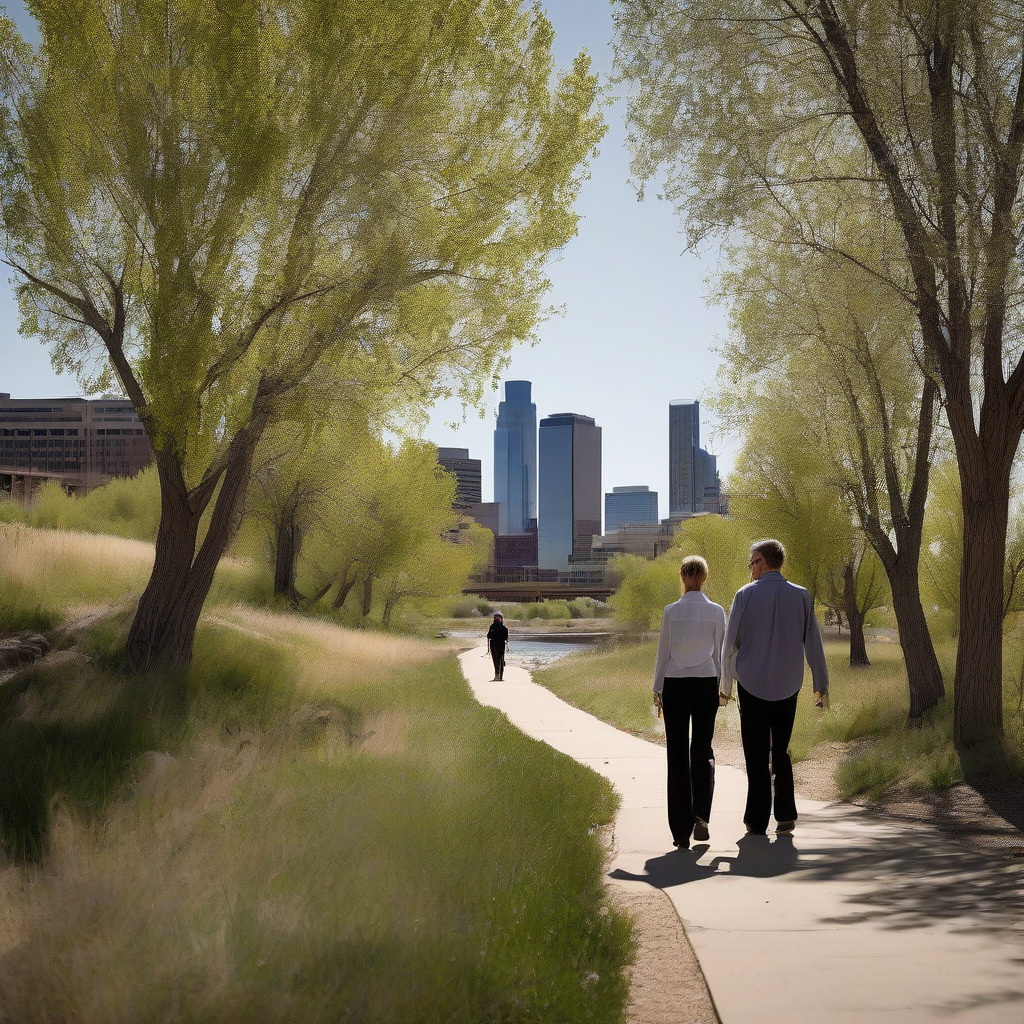
Licensed therapists in Denver conduct sessions at Washington Park, along the South Platte River Trail, and at Sloan’s Lake. Not as a wellness gimmick. As a clinically legitimate alternative to office-based psychotherapy. The format is called walk-and-talk therapy, and it’s been quietly growing in the city for several years. If you’ve wondered what it actually involves, what it costs, whether insurance will touch it, and whether it might be right for you, this piece covers all of it.
What Walk-and-Talk Therapy Is — and What It Isn’t
Walk-and-talk therapy is licensed clinical psychotherapy conducted outdoors, typically while the therapist and client walk together. Ecotherapy is the broader umbrella term that intentionally uses nature as a co-therapeutic element, not just a backdrop. Both are distinct from life coaching, wellness walks, guided hiking programs, and forest bathing events — even when those services are offered by people with mental health backgrounds. That last distinction matters more than it might seem, and we’ll come back to it.
The clinical relationship and modality are identical to what happens in an office. A therapist who uses cognitive behavioral therapy (CBT), acceptance and commitment therapy (ACT), or trauma-focused approaches indoors brings the same framework outside. The location changes. The licensure, the ethical obligations, the documentation requirements — none of that does. Denver has a meaningful number of licensed clinical social workers (LCSWs), licensed professional counselors (LPCs), and licensed psychologists offering outdoor sessions or running practices built primarily around this format. Finding them requires knowing what to search for, which is part of what this article covers.
How a Session Actually Works in Denver
A typical session runs 50–55 minutes. Client and therapist coordinate by text or email to meet at a park entrance or trailhead instead of a waiting room. No front desk, no parking validation, no couch.
There’s also no guaranteed privacy in the way a closed office door provides it — and that’s worth sitting with before you decide this format is for you.
Therapists handle this by choosing routes with enough distance from other park users to maintain conversational privacy and keeping their voices low. If someone comes within earshot, they pause or shift topics. Most experienced outdoor therapists develop that protocol explicitly and discuss it with clients upfront. It’s not foolproof. But it’s more considered than you might assume.
The parks Denver practitioners use most aren’t chosen randomly. Washington Park is popular for its wide, flat paved loop, predictable crowd patterns that allow for spacing, and walkability from multiple neighborhoods. Cheesman Park has quieter interior paths with less foot traffic than Wash Park — some therapists prefer it for clients who find crowds activating. Sloan’s Lake offers longer lakeside loops with good sightlines, which creates natural privacy and, for some clients, the calming effect of water nearby. The South Platte River Trail draws therapists working with clients who want a more purposeful, linear walk and need easy access from West Colfax or Sun Valley.
Some therapists will drive to a client’s preferred location in Jefferson County Open Space, especially for clients who specifically want to be somewhere that doesn’t feel like a city park. Therapists using Jefferson County land should hold the appropriate commercial activity permits. More on this below — it’s genuinely complicated and almost nobody addresses it directly.
What the Research Says
Therapists offering outdoor sessions in Denver tend to cite specific studies rather than vague claims about nature being good for you. There’s a meaningful difference between those two things, and it’s worth understanding what the research actually shows before you decide whether this format makes clinical sense for you.
The most frequently cited work is a 2015 Stanford study by Gregory Bratman and colleagues, published in the Proceedings of the National Academy of Sciences. Participants who walked 90 minutes in a natural setting showed reduced self-reported rumination and measurably lower activity in the subgenual prefrontal cortex — a brain region linked to the repetitive negative thought patterns that drive depression. The comparison group walked 90 minutes in high-traffic urban settings. The reduction wasn’t anecdotal. It showed up in brain scans.
The Kaplan Attention Restoration Theory, developed by Stephen and Rachel Kaplan at the University of Michigan, proposes that natural environments replenish directed-attention capacity — the focused, effortful kind that gets depleted by screen work, high-demand cognitive tasks, and urban sensory overload. For clients presenting with ADHD or occupational burnout, this gives therapists a research-grounded reason to believe a walk through green space might reduce cognitive fatigue before or during clinical work, not just as a pleasant addition.
A 2021 meta-analysis by Coventry and colleagues in Scientific Reports found consistent associations between nature-based interventions and reduced anxiety, depression, and blood pressure across multiple studies. Effect sizes were meaningful, though researchers flagged variation across study designs and called for more controlled trials in explicitly therapeutic contexts.
CU Anschutz Medical Campus and Colorado State University both have behavioral health research programs close enough to Denver’s practicing outdoor therapy community that researchers and clinicians actually talk to each other. That’s less common than you’d think, and it’s part of why Denver’s outdoor therapy scene feels more clinically grounded than what you’d find in most other cities doing this.
Which Conditions Are a Good Fit — and Where Caution Is Warranted
The evidence is strongest for anxiety disorders, major depressive disorder, ADHD, and occupational burnout. These are conditions where physical movement, nature exposure, and the reduced formality of a side-by-side walk all push in the same direction.
Social anxiety is more complicated. Some clients with social anxiety find the outdoor setting less triggering than an office — eye contact is incidental rather than sustained during a walk. Others find public spaces activating in ways that interfere with the work. This is a condition where fit needs to be evaluated individually, not assumed. That’s really true for anyone considering the format, regardless of diagnosis.
PTSD requires particular care. Trauma-focused therapies like EMDR or Prolonged Exposure are structured protocols with specific containment requirements. Some trauma presentations aren’t well-served by an environment that’s uncontrolled, where grounding cues shift from session to session, and where safety and predictability can be harder to establish. Some therapists are trained in trauma-informed outdoor approaches, and that training matters enormously. If you’re considering outdoor therapy and have a complex trauma history, raise it directly during an initial consultation. Ask specifically how they adapt their practice for trauma work. Don’t self-select out of the format without that conversation — but don’t assume any licensed outdoor therapist is equipped for all trauma presentations either.
What It Costs — and Whether Insurance Covers It in Colorado
Licensed Colorado therapists conducting outdoor sessions bill using the same CPT codes they’d use in an office — typically 90837 for a 60-minute individual session. Insurance reimbursement doesn’t hinge on whether the session happened in a building. What matters to an insurer is the therapist’s licensure, their in-network status, and the medical necessity documentation in their clinical notes.
If a therapist is in-network with your plan and sees you at Washington Park instead of a consulting room, the claim should process identically — same deductible, copay, and out-of-pocket maximum. Billing practices vary, though, and therapists need to be careful about place-of-service codes. Billing under “office” (code 11) when the session happened outdoors is an area requiring accurate documentation. Ask your therapist directly how they bill outdoor sessions. Then confirm with your insurer that the arrangement is covered. A good therapist won’t be put off by that question.
For self-pay or out-of-network situations, Denver-area outdoor therapists typically charge $150–$220 per 50-minute session, consistent with general Denver therapy rates. Some offer sliding scale fees that can bring costs down to $80–$130 for qualifying clients. Group ecotherapy sessions — less common in Denver than individual sessions, but they exist — typically run $40–$80. Some therapists add a modest travel fee, usually $10–$25, for driving to a trailhead rather than meeting near their practice.
If you’re uninsured, the Colorado Division of Insurance (doi.colorado.gov) and Connect for Health Colorado (connectforhealthco.com) are the right starting points. Colorado’s Medicaid program, Health First Colorado, does reimburse licensed mental health services. Whether outdoor-specific arrangements are covered should be confirmed with a Colorado insurance navigator — not assumed either way. Outdoor therapy isn’t inherently more expensive than traditional therapy, and it’s not categorically excluded from coverage. In our mental health and wellness coverage, we’ve addressed how in-network status is consistently what moves the needle on out-of-pocket costs.
Walk-and-Talk vs. Wilderness Therapy — A Distinction Denver Readers Need
Denver readers encounter both terms, and conflating them will send you in entirely the wrong direction.
Wilderness therapy programs — Open Sky Wilderness, which operates out of Durango, is a well-known Colorado example — are typically residential, multi-week programs serving adolescents and young adults in psychiatric or behavioral crisis. They involve licensed clinical staff alongside outdoor expedition staff, remote camping, and therapeutic models built around survival skills and group dynamics in backcountry settings. Costs run into the tens of thousands of dollars per program stay, and insurance coverage is limited, frequently requiring prior authorization fights or appeals.
Walk-and-talk therapy is outpatient, adult-accessible, billed by the session, and conducted in local parks. The two formats share an interest in nature as a healing environment and almost nothing else from a practical standpoint. If you’re a Denver adult looking for a therapist who’ll meet you at Cheesman Park on a Wednesday morning, wilderness programming isn’t what you’re looking for.
Denver’s Parks, Permits, and the Regulatory Gray Area
Almost no coverage of outdoor therapy addresses this directly, which is a genuine gap — one that both clients and practitioners deserve to have filled.
Denver City Parks and Jefferson County Open Space both have commercial activity permit requirements that technically apply to any paid professional service conducted on public land. A licensed therapist running paid sessions at Washington Park is, in a regulatory sense, operating a commercial activity in a city park. Denver Parks & Recreation issues commercial permits. Jefferson County Open Space has its own explicit permit structure.
Enforcement against individual therapists is inconsistent in practice. But the requirement exists. Therapists who are operating professionally should be aware of it, should have looked into whether their specific activity requires a permit, and should be able to speak to the question if asked. A reasonable thing to ask during an intake consultation is: “Have you looked into the commercial permit requirements for the parks where you conduct sessions?” A therapist who’s thought about this will have an answer. One who hasn’t should be prompted to — and how they respond will tell you something useful about how they run their practice in general.
For current requirements and fees, contact Denver Parks & Recreation at denvergov.org or call 311. For Jefferson County Open Space, go through jeffco.us. Policies change; don’t treat this article as the last word on current requirements.
What Denver’s Climate Actually Means for Year-Round Sessions
Denver averages more than 300 days of sunshine annually, which is a real advantage for year-round outdoor therapy compared to most U.S. cities. But “sunny” doesn’t mean uncomplicated, and any therapist who hasn’t thought through their weather policy probably hasn’t been doing this very long.
Winter sessions are practical down into the low 30s°F, particularly on the dry, sunny days that are genuinely common on the Front Range from October through February. Clients need to dress for it, and therapists should discuss that in advance. A clear January day at Washington Park is not a reason to cancel.
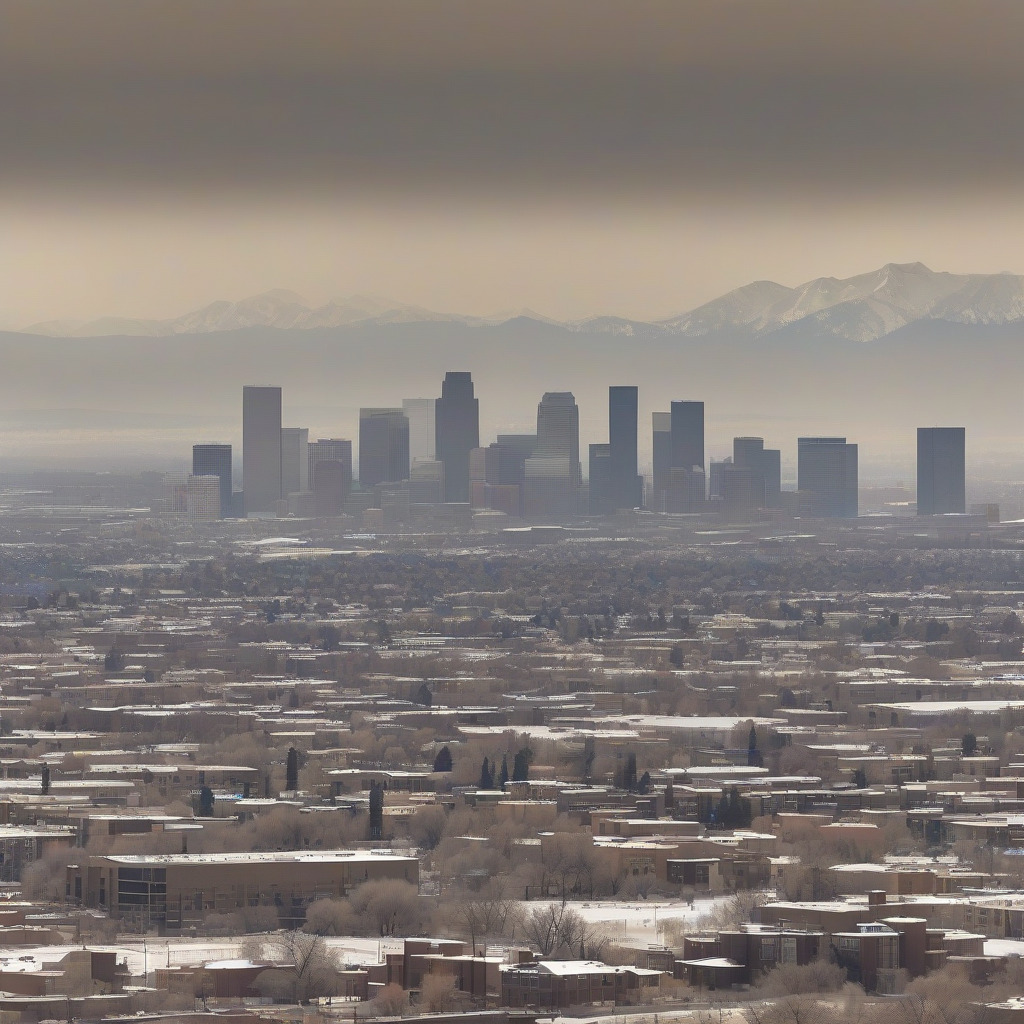
Wildfire smoke is a different issue — underappreciated by people who weren’t here in the summers of 2020 and 2021, when Denver saw Air Quality Index readings above 150 on multiple days. The mountains disappeared, the air smelled like a campfire, and spending 55 minutes walking outside stopped feeling therapeutic. Responsible outdoor therapists should have a written AQI threshold policy — something like “we move to telehealth or an office session if AQI exceeds 100” — and should communicate it at the start of treatment.
Mud season, roughly mid-March through April, makes dirt trails impractical. Therapists who use paved park paths are less affected than those who prefer natural-surface trails, and some adjust session locations seasonally. For sessions conducted above 7,000 feet — some foothills locations near Morrison approach 6,000 feet — altitude becomes a real variable for clients who are new to elevation or have cardiovascular conditions. Most Denver city sessions don’t approach that threshold, but therapists working in foothills locations should factor it in.
Why This Format Is Reaching Denver Men — and the June 2026 Hook
Walk-and-talk therapy has attracted particular attention from mental health advocates focused on men’s engagement with therapy. The reason is behavioral, not speculative, and it’s worth understanding on its own terms.
Many men who wouldn’t comfortably sit across a desk from a therapist and discuss their inner life find the side-by-side, forward-facing posture of a walk significantly less threatening. The conversation happens while both people are oriented toward the path rather than toward each other — consistent with how men often communicate in the relationships where they’re most honest. If the most candid conversation you’ve ever had with your father or your brother happened in a car or on a trail instead of at a kitchen table, that’s probably why.
Denver has specific populations for whom this resonates. The city’s proximity to Buckley Space Force Base in Aurora and the Anschutz Medical Campus — which serves a significant veteran population — means there’s a substantial local veteran community dealing with depression, anxiety, or subclinical PTSD who haven’t connected with traditional therapy. Several Denver practitioners are specifically trying to reach this population through outdoor formats.
June 2026 is Men’s Mental Health Month. NAMI Colorado (namicolorado.org) runs education and outreach throughout the year and frequently spotlights non-traditional formats. Mental Health Colorado (mentalhealthcolorado.org) has community engagement programming that sometimes connects to outdoor activity. Denver REI on Platte Street has historically hosted community events around outdoor wellness and occasionally mental health speakers — their June 2026 programming schedule is worth watching as a potential connection point between the outdoor retail community and the mental health sector.
How to Find a Qualified Outdoor Therapist in Denver
A licensed therapist who occasionally walks with a client outside isn’t the same as a therapist with formal training in ecotherapy. Both can be legitimate, but they represent different levels of integration, and knowing the difference helps you ask better questions.
Formal ecotherapy training includes credentials offered through the International Community for Ecopsychology (ecopsychology.org) and continuing education programs available to licensed practitioners. None of these replace state licensure. They supplement it with specific training in the outdoor-therapy framework.
When you contact a potential therapist, ask directly whether they offer outdoor or walk-and-talk sessions, and if so, how they structure them. Also ask:
What trails or parks do you typically use, and what’s your backup when conditions aren’t right?
What’s your AQI or weather threshold for switching to an indoor or telehealth session?
Have you looked into commercial permit requirements for conducting sessions in Denver City Parks or Jefferson County Open Space?
How do you bill outdoor sessions — what CPT code and place-of-service code, and have you confirmed coverage with insurers like mine?
What specific training do you have in outdoor or nature-based approaches?
Psychology Today (psychologytoday.com/us) lets you filter by Denver and search for therapists who list “ecotherapy” or “walk-and-talk” as a treatment approach. TherapyDen (therapyden.com) explicitly allows filtering by ecotherapy and nature-based therapy and tends to attract practitioners who identify strongly with the format. coloradotherapists.com is a Colorado-specific directory useful for confirming state licensure details.
The therapist who’s been running outdoor sessions for three years — who has thought through weather policies, permit questions, and billing codes, and can answer those questions without hesitation — is a materially different provider than one who mentioned walk-and-talk once in their profile bio. You’re entitled to know which one you’re talking to before the first session, not after.
For current permit requirements in Denver City Parks, contact Denver Parks & Recreation at denvergov.org or call 311. For insurance coverage questions specific to your plan, contact the Colorado Division of Insurance at doi.colorado.gov or a navigator through Connect for Health Colorado at connectforhealthco.com. Billing and coverage details should be confirmed directly with your therapist and insurer before beginning services.