Which Denver Urgent Care Clinics Are Worth Using and What They Actually Cost
We called the clinics, checked the wait times, and mapped the freestanding ER billing traps. Here's what Denver residents need to know before they walk out the door this summer.

We called the clinics, checked the wait times, and mapped the freestanding ER billing traps. Here’s what Denver residents need to know before they walk out the door this summer.
EDITOR’S NOTE: Prices, insurance acceptance, and clinic hours in urgent care are among the fastest-changing data in local health coverage. All pricing figures and insurance acceptance information in this article should be verified directly with the clinic before your visit. Call the specific location, not the national customer service line. A clinic that won’t quote a cash price over the phone is itself useful information — and we note those cases where we encountered them.
A Denver resident drives past a packed hospital, spots a clean walk-in clinic, and limps inside with a suspected sprained ankle. Waiting room. Chairs. A TV. She signs in, sees a provider, gets an X-ray, and is out in forty-five minutes. Then two bills arrive: a facility fee from a hospital billing department she’d never heard of, and a separate physician fee. Together, they land well above $1,000. Colorado’s own consumer data puts freestanding ER visits for complaints that urgent care handles for $125–$250.
She had walked into a freestanding emergency room. In Colorado, the distinction is not always visible from the parking lot — and that’s not an accident.
Summer is peak urgent care season along the Front Range: trail lacerations, heat illness, altitude-sick tourists arriving from sea level, recreational injuries. Residents actively look for alternatives to long ER waits, and the search results they find pull up directory aggregators and health-system homepages that aren’t designed to warn you about facility fees. Nobody publishes what a visit actually costs at specific named facilities along Colorado Boulevard or Hampden. This piece does.
What a Standard Urgent Care Visit Costs in Denver — Self-Pay Prices by Operator
Urgent care pricing in Denver is not standardized, not always posted, and varies by operator, location, and visit complexity. The prices below came from direct calls to individual Denver-area clinic locations for common visit types. Where a location declined to quote a price or routed every inquiry to a billing department, that’s noted — because that experience is data.
Calls went to individual clinic locations, not national call centers. Prices are for self-pay patients presenting without insurance. All figures should be confirmed with the specific location before your visit.
UCHealth Urgent Care
UCHealth runs multiple urgent care locations across Denver and the metro, including East Colfax and near the Anschutz Medical Campus in Aurora. A standard self-pay office visit runs around $125–$250 in the Denver market. An X-ray adds roughly $75–$200 depending on how many views are needed. UCHealth has a financial assistance program for uninsured patients that can cut costs substantially — but you have to ask for it. It will not be mentioned at check-in. The phrase that works: “Can you tell me about financial assistance for uninsured patients?”
UCHealth accepts most major commercial insurance and Health First Colorado at most, though not all, urgent care locations. Medicaid acceptance varies by site. Call the specific clinic, not the main UCHealth line.
AFC Urgent Care (American Family Care)
AFC operates Denver and Aurora area locations under a franchise model, which means pricing and policies vary by ownership group even within the same brand. That’s more annoying than it sounds — what’s true at one AFC isn’t necessarily true at the location two miles away. That said, AFC has been more upfront about cash pricing than most operators we contacted. Basic self-pay visit rates at some franchise locations are published around $150–$175. Staff here could generally quote prices without transferring the call, which is rarer than it should be and worth something when you’re making decisions from the parking lot.
Confirm insurance acceptance at the specific clinic you plan to use. Don’t assume network consistency across franchises.
NextCare Urgent Care
NextCare has Denver-area locations including one in the Colorado Boulevard corridor, where freestanding ER confusion is most acute. Before you walk in, take ten seconds to confirm you’re at NextCare specifically and not an adjacent facility. It sounds paranoid. It isn’t. NextCare accepts online check-in through Solv, which can hold a spot in the queue rather than just notify the clinic you’re coming — but confirm which system is running at your specific location when you arrive.
Intermountain Health Urgent Care (formerly Centura Health)
The most important branding change in the current Denver urgent care market. Centura Health completed its rebrand to Intermountain Health after Intermountain’s acquisition of the Centura network, which had itself previously absorbed SCL Health. If you had a Centura urgent care you trusted for years, that relationship is now in flux — and your insurance network status may not have kept up with the new name.
If your insurance card or network directory still lists Centura as in-network, that may or may not carry over to Intermountain depending on your specific plan. Call your insurer and the clinic before you show up.
Pricing here was the hardest to get by phone. Every location we reached routed pricing questions to a general billing line that wouldn’t provide per-service cash rates. For an uninsured patient trying to know what they’re walking into, Intermountain urgent care is the most opaque option in the Denver market. I don’t think that’s a coincidence, and you should factor it in when choosing between comparable options.
Denver Health Walk-In Care
Denver Health operates walk-in care at 777 Bannock Street, plus multiple federally qualified health center locations around the city. For uninsured patients and Medicaid enrollees, this is the essential option in Denver — and it’s consistently buried in search results behind private urgent care operators.
Denver Health uses a sliding-fee scale for uninsured patients based on income. Waits at Bannock run longer than at private urgent cares: 60 to 90 minutes on busy weekday mornings is realistic. But it’s the most affordable option in the city, and it connects patients to Denver Health’s primary care system for follow-up, which standalone urgent cares don’t do. That matters more than people realize until they need follow-up care and discover the urgent care just sent their records into a fax void.
CityMD
At time of reporting, CityMD’s Denver presence had not been confirmed. Readers who see this name in Denver search results should verify the address and confirm the location is actually operational before traveling to it. During research, directory listings for some operators surfaced in Denver searches without confirmed active locations — the kind of thing that shouldn’t surprise anyone who’s chased down a Google Maps listing only to find an empty storefront.
The Freestanding ER Trap
Freestanding emergency rooms are licensed EDs operating outside a hospital campus. They have board-certified emergency physicians, CT scanners, and the capacity to treat conditions that a true urgent care can’t touch. They’re also permitted — in Colorado and most other states — to charge facility fees identical to a full hospital-based ER.
That facility fee is the mechanism that turns what looks like a routine visit into a bill exceeding $1,000. Walk into a freestanding ER and two separate bills follow: one for the physician and one for use of the facility itself. Facility fees at freestanding ERs in the Denver area routinely run $500–$1,000 before any procedures. That fee applies if your complaint is a UTI. A visit that feels like urgent care can total $800–$2,500 once both bills arrive.
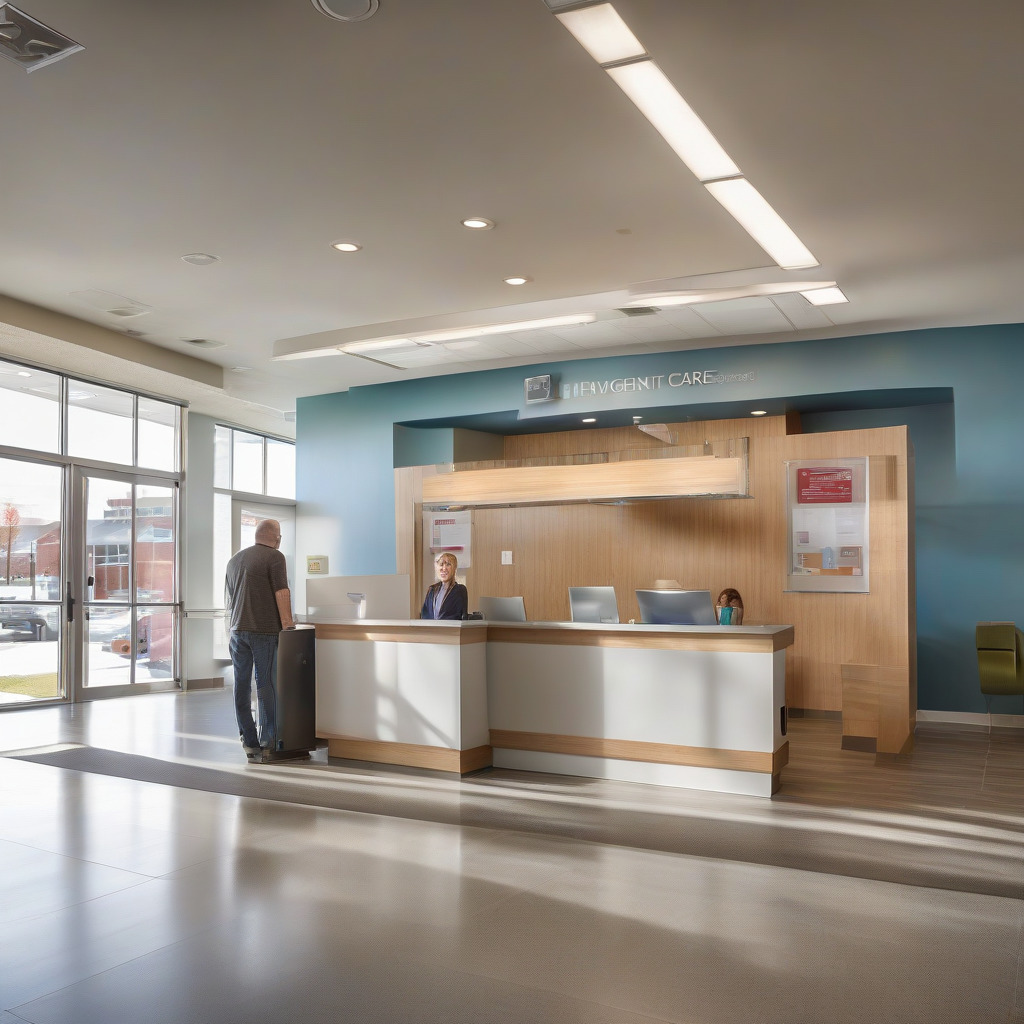
Colorado has no state law requiring freestanding ERs to post a prominent warning distinguishing them from urgent care clinics. Some do post one. Most don’t. The interiors look similar: clean, efficient, a waiting room that looks nothing like a trauma bay. You have to know what to check.
Before you sign in:
Look for the words “Emergency Room,” “Emergency Department,” or “ER” anywhere in the facility name, signage, or the paperwork you’re asked to sign. “Emergency Care” is used by some urgent care operators and is genuinely ambiguous. “Emergency Room” in the legal name is not.
Ask whether the facility charges a separate facility fee in addition to the physician fee. A legitimate urgent care will say no. A freestanding ER will say yes — or won’t be able to answer the question, which tells you the same thing.
Check the hours and whether CT imaging is on-site. Most Denver urgent cares operate roughly 8 a.m. to 8 p.m. without CT capability. A facility open at midnight with CT imaging on-site is almost certainly an ER.
Where freestanding ER confusion is worst in Denver:
The Colorado Boulevard corridor between Evans and Alameda has a density of both legitimate urgent cares and hospital-affiliated facilities close enough together that signage requires attention. Walk past the front of the building before you go in.
Hampden Avenue in Englewood has seen freestanding ER development that blends visually with strip-mall urgent care clusters. Same problem, same check.
The C-470 corridor in Douglas County — Lone Tree, Highlands Ranch, Parker — has significant freestanding ER presence because the development pattern there favors new construction in high-traffic retail corridors, the same spots urgent care operators target. In these areas, verifying before entering isn’t excessive caution. It’s basic due diligence.
The Colorado Division of Insurance tracks consumer complaints about surprise billing and facility fee disputes. If you believe you were misled about the nature of a facility before signing in, the DOI complaint process is at doi.colorado.gov. File a complaint. A record gets created. Enough records create regulatory attention. That’s how these things change.
Insurance Acceptance in Denver’s Urgent Care Network
Three things are currently complicating Denver’s urgent care insurance picture: the Centura-to-Intermountain rebrand, post-2024 fluctuations in Colorado Medicaid managed care networks, and the persistent gap between what a national insurance website shows as in-network and what a specific clinic actually confirms by phone. If you’ve trusted an insurer’s online directory and still gotten a surprise out-of-network bill, you already know how this goes.
Health First Colorado (Medicaid) and CHP+
Denver Health is the anchor provider here and accepts Health First Colorado and CHP+ at its walk-in and urgent care locations. Among private urgent care operators, Medicaid acceptance requires a phone call to the specific clinic — not the main line — and you should identify which managed care organization administers your specific plan, since some require prior authorization for certain services.
UCHealth urgent care accepts Health First Colorado at most locations. Not all. Call.
Intermountain urgent care locations present the highest uncertainty for Medicaid patients. The rebrand created a transitional period in which some managed care organizations hadn’t updated their network directories to reflect the new name. If you were told a specific clinic is in-network under the Centura name, confirm it under the Intermountain name before you present. Stale information can produce a bill.
Clinica Family Health
Not urgent care, but worth knowing about. Clinica Family Health operates as a federally qualified health center with locations across the Denver metro, including Adams County. Sliding-fee scale. Accepts Health First Colorado and CHP+. Appointment-based.
If you find yourself using urgent care repeatedly for cold follow-ups, medication refills, or a chronic condition that hasn’t resolved — that’s a primary care problem, not an urgent care problem, and Clinica will handle it cheaper with better continuity. A phone call to establish a relationship there is worth more in the long run than the next $175 urgent care visit. For more on which Denver health systems are actually taking new patients right now, our primary care coverage digs into the access gap across the metro.
Commercial Plans (Anthem, Cigna, Aetna, United, Kaiser)
Most major urgent care operators in Denver participate in Anthem, Cigna, Aetna, and United networks. Kaiser is the exception that matters: Kaiser operates its own urgent care clinics for members and does not cover out-of-network urgent care except in genuine emergencies. If you have Kaiser, use a Kaiser facility. Call the nurse line first if you’re unsure whether your complaint warrants an in-person visit — Kaiser’s phone triage can often resolve minor issues and saves the trip.
Wait Times by Location and Time of Day
The worst windows are consistent across operators. Weekend mornings from 9 a.m. to noon — overnight symptoms and Friday holdouts arriving at once. Weekday evenings after 5 p.m. — everyone who couldn’t leave work earlier. If you have any flexibility in your schedule, avoid these windows.
Solv Health’s real-time data for Denver locations, cross-referenced with Google Maps busyness patterns, gives the most actionable current wait information. Solv shows not just the current wait but historical patterns for that hour on that day of the week, which is genuinely useful in a way most healthcare data isn’t. Check it before leaving the house on a weekend.
Non-peak weekday windows — roughly 10 a.m. to 4 p.m. Tuesday through Thursday — consistently show the lowest reported waits: 15 to 45 minutes at Denver urgent cares. Weekend afternoons run 45 to 90 minutes or longer at most locations, and that gap widens in summer.
Several Denver operators offer check-in through Solv or their own portals. The distinction that matters: whether check-in holds a spot in the queue or merely notifies the clinic you’re on your way. These are different things. Ask when you check in. UCHealth’s online check-in through MyChart does hold your place ahead of walk-ins.
One note on Concentra: the South Broadway locations serve primarily occupational health and workers’ compensation patients. If your visit is work-related and your employer uses Concentra, it’s the right call. If you’re a resident with a weekend ankle sprain, it isn’t — waits will be longer and the service model doesn’t fit.
A Triage Framework for Denver
This reflects standard urgent care and emergency medicine triage criteria, with attention to Denver-specific factors. Starting point, not a substitute for clinical judgment about your specific situation. As part of our health & wellness coverage, we’ve also mapped where to exercise outside when summer air quality pushes the AQI into the unhealthy range.
Call 911 or go directly to an ER:
Chest pain with shortness of breath, sweating, or pain into the arm or jaw. Sudden severe headache unlike anything you’ve had before — the clinical phrase is “thunderclap,” and the practical threshold is: worst headache of your life, immediate onset. Facial drooping, arm weakness, speech difficulty. These are stroke symptoms and time is the treatment. Breathing difficulty that is getting worse, not stable. Loss of consciousness, seizure, or confusion. Severe abdominal pain with sudden onset. Deep laceration with bleeding that hasn’t slowed after five minutes of direct pressure.
Urgent care is appropriate:
Lacerations that have stopped bleeding but need closure. Suspected fractures with intact sensation and circulation — the limb isn’t cold or numb. UTI symptoms in an otherwise healthy adult. Strep throat, ear infection. Moderate respiratory illness in a patient who isn’t in acute distress. Skin infections, rashes, minor burns. High fever in adults without confusion or altered mental status.
Can wait for primary care — telehealth may be sufficient:
Stable sinus symptoms past 10 days. Follow-up for a chronic condition that hasn’t acutely changed. Mild cold symptoms without fever in an adult.
The altitude issue Denver visitors consistently miss:
At 5,280 feet, dehydration presents more severely than at sea level. A visitor feeling mildly dizzy may be meaningfully volume-depleted in a way that warrants evaluation rather than a bottle of water. Chest tightness from altitude-related exertion is common in new arrivals and can be genuinely hard to distinguish from cardiac symptoms without an EKG — and the newcomer standing in that waiting room has no way to make that call.
If you’re visiting from sea level and experiencing chest tightness, shortness of breath on minimal exertion, or a headache that won’t resolve after 24 hours in Denver: get evaluated. This is not a situation for waiting it out.
Clinic-by-Clinic Snapshot
UCHealth Urgent Care
Multiple Denver-area locations including East Colfax and Aurora near Anschutz. Accepts Anthem, Cigna, Aetna, United. Medicaid acceptance varies by location — call the specific clinic. Online check-in via MyChart holds your place in queue. Self-pay benchmark: $125–$250 for a standard visit; add-on services increase the total.
AFC Urgent Care (American Family Care)
Denver and Aurora locations. More transparent about cash pricing than most operators we contacted — basic visit rates around $150–$175 at some franchise locations, staff generally able to quote by phone without a transfer. Accepts major commercial plans. Confirm Medicaid acceptance at the specific site. Franchise structure means policies vary between locations in ways that shouldn’t be true but are.
NextCare Urgent Care
Denver-area locations including the Colorado Boulevard corridor. Accepts Medicaid — confirm your managed care organization is covered before presenting. Online check-in available through Solv. Before entering, confirm you’re at NextCare and not an adjacent freestanding ER facility.
Intermountain Health Urgent Care (formerly Centura/SCL Health)
Multiple metro locations. Pricing was the hardest to get by phone of any major operator we contacted — expect to be routed to a billing department that won’t quote cash rates. Insurance network is in active transition from the Centura name. Call your insurer to confirm the specific location is in-network under the Intermountain name before you present. Patients with stale Centura-based referrals should not assume that information is still accurate.
Denver Health Walk-In Care — 777 Bannock Street, Denver
The essential option for uninsured and Medicaid patients in this city. Sliding-fee scale based on income for uninsured patients — eligibility is determined at intake. Accepts Health First Colorado, CHP+, and most commercial plans. Waits run 60 to 90 minutes on busy weekday mornings; budget for that. Connects to Denver Health primary care for follow-up, which standalone urgent cares don’t — you build a record with an actual health system rather than completing a transaction that disappears into a fax.
Clinica Family Health
Not urgent care. The best FQHC option for ongoing or non-acute care in the Denver metro. Sliding-fee scale. Accepts Health First Colorado and CHP+. Appointment-based, with locations including Adams County. Right for the patient who’s been using urgent care to manage conditions — persistent sinusitis, medication refills, chronic condition follow-up — that a primary care relationship would handle better and cheaper over time.
Quick-Reference Decision Guide
Screenshot this. Use it on a Saturday night.
CALL 911 OR GO TO AN ER
Chest pain with sweating, arm or jaw pain, or shortness of breath. Sudden severe headache — worst of your life, instant onset. Stroke signs: face drooping, arm weakness, speech difficulty. Breathing getting worse, not stable. Uncontrolled bleeding after five minutes of pressure. Loss of consciousness or seizure.
URGENT CARE IS THE RIGHT CALL
Laceration needing stitches, bleeding controlled — self-pay typically $200–$400 depending on complexity. UTI without fever or flank pain — self-pay benchmark $100–$175. Suspected sprain or minor fracture with intact sensation — X-ray adds $75–$200. Ear infection, skin infection, moderate respiratory illness. Standard office visit: $125–$250 self-pay in the Denver market.
TELEHEALTH MAY BE SUFFICIENT
Stable sinus symptoms. Mild cold in an adult without fever. Chronic condition follow-up that hasn’t changed. Not appropriate for anything with fever, worsening symptoms, or real diagnostic uncertainty.
RED FLAGS YOU’RE AT A FREESTANDING ER
“Emergency Room,” “ER,” or “Emergency Department” appears in the facility name or on signage. The facility runs 24 hours and has CT imaging on-site. Intake paperwork includes a separate facility fee consent. Staff can’t tell you the visit generates only one bill.
If any of these apply, ask before you sign. You can leave.
IF YOU’RE UNINSURED OR ON MEDICAID
Denver Health Walk-In Care 777 Bannock Street, Denver, CO 80204 Sliding-fee scale for uninsured patients based on income Accepts Health First Colorado, CHP+, and most commercial plans Call ahead to confirm current walk-in hours
Prices in this article reflect direct reporting on individual clinic locations and published benchmark ranges. They are self-pay cash rates, not binding quotes, and are subject to change. Add-on services will increase the final amount. Call the specific location before your visit. Do not rely on a national customer service line for pricing at a specific Denver clinic.