How Wildfire Smoke Affects Denver Air Quality and When to Stay Indoors
Denver's chronic ozone problem and wildfire smoke require different responses. Here's how to tell them apart and protect yourself when both hit at once.

Denver’s chronic ozone problem and wildfire smoke require different responses. Here’s how to tell them apart and protect yourself when both hit at once.
Denver’s Air Quality Problem Is Actually Two Separate Problems
Most national air quality content treats AQI as a single number on a single spectrum. For Denver, that framing creates real practical problems.
The Front Range has two distinct air quality crises running on different chemistry, different timelines, and different biology. Each requires a different response. The first is the region’s chronic ground-level ozone problem — a gas formed when nitrogen oxides from vehicle exhaust and industrial emissions cook in summer heat and sunlight. The second is wildfire smoke: fine particulate matter called PM2.5, suspended in the air and drifting into the Denver metro from fires burning a thousand miles away in California, Oregon, or New Mexico.
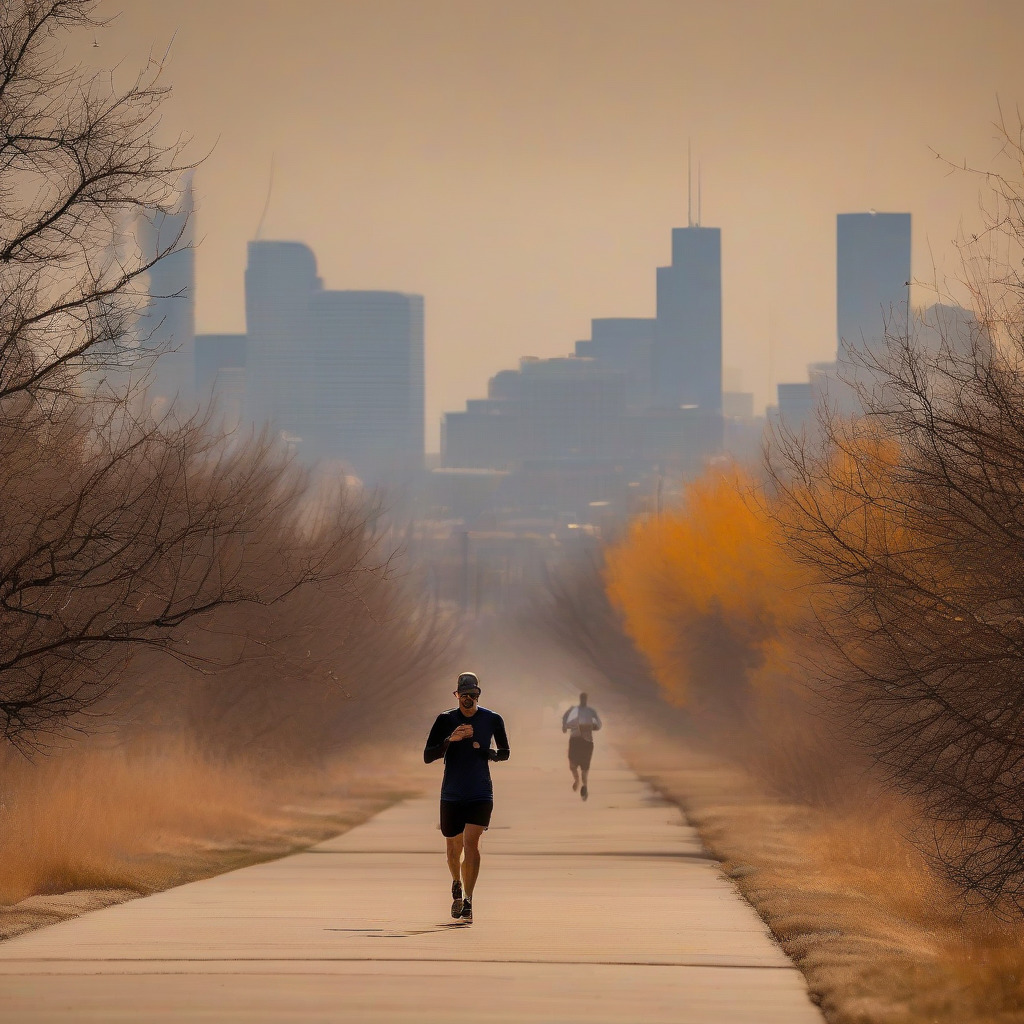
The Colorado Department of Public Health and Environment issues advisories for these two hazards under separate frameworks. An Ozone Action Day and a Smoke Advisory are different documents with different triggers and different behavioral guidance. Both can — and do — fire simultaneously during Denver’s summer months. Anyone deciding whether to run Cherry Creek Trail on a hazy Wednesday morning needs to understand which problem they’re actually facing, because the right answers aren’t the same.
What Wildfire Smoke Does Inside Your Body at 5,280 Feet
PM2.5 refers to particulate matter 2.5 microns or smaller — roughly one-thirtieth the width of a human hair. At that size, particles bypass the nose and throat’s filtration entirely. They travel deep into the bronchioles and reach the alveolar sacs where gas exchange happens. Once there, they trigger inflammatory responses that extend well beyond the lungs: elevated cardiovascular stress, increased clotting risk, worsening of existing cardiac and pulmonary conditions, cumulative oxidative damage with repeated exposure. It’s not just a lung problem. That part gets lost in the “stay inside if you have asthma” shorthand.
National Jewish Health, at 1400 Jackson Street in Denver, is consistently ranked the top pulmonary specialty hospital in the country. It’s here in Denver partly because altitude and respiratory disease have a long shared history in this region — and that history is directly relevant to how smoke hits people at 5,280 feet.
Denver residents are already operating at roughly 20 percent less available oxygen per breath compared to sea-level counterparts. Healthy residents adapt over time, but that physiological baseline matters when airways come under smoke stress. The margin for respiratory compensation is narrower. A Denver runner who feels manageable symptoms at AQI 140 may be working their cardiovascular system harder than a sea-level runner with an identical reading.
For people with asthma, COPD, cardiovascular disease, or reduced lung function, that narrowed margin compounds. Children face risk too — their lungs are still developing. Pregnant women face different risk; their oxygen demand is already elevated. National Jewish Health’s published guidance recommends that sensitive populations apply smoke thresholds more conservatively than the general-adult numbers suggest.
How to Actually Read an AQI Number During a Smoke Event
The standard AQI color chart — green through maroon — is a composite index. During a smoke event, the number that matters is the PM2.5-specific AQI, which may differ from the composite if ozone is also elevated. A composite AQI of 110 driven primarily by ozone tells you something very different from a PM2.5-specific AQI of 110 during heavy smoke. Most weather apps present them as interchangeable. They’re not.
Get the right number from the right source. CDPHE’s AirCare Colorado alert system at aircarecolorado.org lets residents sign up for direct advisory notifications. AirNow, operated by the EPA, provides real-time hourly readings broken out by pollutant. Use those on the day you’re making decisions. This article can’t substitute for checking current conditions.
CDPHE’s smoke advisory thresholds:
AQI 0–100 (Green/Yellow): No smoke advisory in effect.
AQI 101–150 (Orange — Unhealthy for Sensitive Groups): CDPHE typically issues a Smoke Advisory at this level when PM2.5 is the driver. The “sensitive groups” label is doing a lot of work here. This is not a safe-to-ignore category. It means children, elderly residents, anyone with respiratory or cardiovascular conditions should limit prolonged outdoor exertion. Healthy adults can still exercise outdoors, but extended high-intensity sessions warrant shortening.
AQI 151–200 (Red — Unhealthy): Everyone should limit prolonged outdoor exertion. Sensitive populations should stay indoors with windows closed.
AQI 201+ (Purple/Maroon — Very Unhealthy to Hazardous): All residents should avoid outdoor exertion. At these levels, even short outdoor exposures carry measurable health consequences for otherwise healthy adults.
The Outdoor Exercise Guide by Trail and AQI
Here’s the guidance Denver runners, cyclists, and walkers are actually looking for, mapped to routes they actually use.
Cherry Creek Trail and the South Platte River Trail run through low-lying corridors where air pools. Washington Park, Sloan’s Lake, and City Park sit at slightly higher relative elevation with more wind exposure. None of this dramatically changes the AQI reading you should be using — but air in riparian corridors can trap particulate during inversion conditions. Worth keeping in mind on still mornings.
AQI 101–150 (Smoke Advisory, Sensitive Groups)
Healthy adults can exercise on Cherry Creek, the South Platte corridor, Washington Park, or any standard Denver route. Shorten duration, reduce intensity. A 90-minute tempo run becomes a 45-minute easy effort. Cyclists grinding out to Chatfield or along the High Line Canal should pull back on sustained hard efforts.
Sensitive populations — asthma, COPD, heart disease, children, elderly, pregnant — should move workouts indoors or limit outdoor time to light activity under 30 minutes. The definition is intentionally broad. If your baseline air quality experience already includes some form of respiratory or cardiovascular stress, treat yourself as sensitive.
AQI 151–200 (Unhealthy)
Healthy adults: outdoor exercise is not recommended for extended sessions. A brisk walk is different from a long run. Brief, moderate outdoor activity carries lower risk than a two-hour ride. At this level, the physiological benefit of outdoor exercise is being undercut by the cardiovascular stress of smoke inhalation, and that holds true even for healthy people. Move the workout inside if you have that option. Sensitive populations should stay indoors.
AQI 201+ (Very Unhealthy to Hazardous)
All outdoor exercise stops. Denver exceeded these readings during the October 2020 Cameron Peak and East Troublesome fire complex — the city’s worst recorded modern PM2.5 episode. The Canadian smoke intrusion of June 2023 pushed the metro above AQI 150 for multiple consecutive days. At hazardous levels, sustained outdoor exposure causes measurable acute harm. This is not the time to test your fitness.
One counterintuitive finding on timing: On ozone days, morning is the safe window. Ozone forms with sunlight and heat, so early-morning air is relatively clean. On smoke days, the opposite is often true. Overnight temperature inversions trap PM2.5 in the Denver metro basin. Smoke particles that drifted in during the evening accumulate in the surface layer overnight and don’t mix out until mid-morning heating breaks the inversion. The runner heading out at 6 a.m. to beat the ozone on a smoke day may be stepping into the worst air of the day. Check AirNow’s hourly readings the morning of — not the night before.
What N95 Masks Actually Do and Don’t Do
N95 masks genuinely help during smoke events when properly fitted. They do nothing during ozone events. A lot of air quality content blurs this distinction, so it’s worth stating plainly.
N95 respirators filter at least 95 percent of airborne particles 0.3 microns and larger when the seal is intact against the face. PM2.5 particles fall within that range. A well-fitted N95 meaningfully reduces the dose of wildfire smoke reaching the alveoli — not a subtle effect, which is why N95s are standard in occupational environments with particulate hazards.
The caveats are real. KN95 masks meet the Chinese standard for 95 percent filtration but are not NIOSH-approved. Surgical masks are loose-fitting and not designed to seal. They reduce large-droplet exposure but provide limited protection against fine PM2.5. A surgical mask on a smoky day is better than nothing, but not by much. For ozone days, no consumer mask provides any meaningful protection. Ozone is a gas that passes through every mask material available to the public. If you’re seeing content suggesting masks help on ozone days, that content is wrong.
Altitude and exertion complicate mask use substantially. During high-intensity running, breathing mechanics shift, the mask moves, facial sweat compromises fit, and breathing resistance increases. At Denver’s elevation, that added resistance during hard efforts isn’t trivial. N95s work better for lower-intensity outdoor activity — a walk, a commute, moderate cycling — than for hard running or racing. If you’re doing intervals during an AQI 130 smoke event with an N95 on, you’re probably not getting the protection you think you are. At high AQI during hard workouts, moving the workout indoors is the better answer.
When CDPHE Issues Both an Ozone Alert and a Smoke Advisory
This scenario happens in Denver. Most online air quality content ignores it, which is frustrating, because it’s also when the stakes are highest.
CDPHE’s forecast page publishes separate forecasts for ozone and PM2.5. On a dual-advisory day, you’ll see both flagged. The physiological exposure is additive: ozone irritates and inflames the airways while PM2.5 penetrates deeply and drives systemic cardiovascular effects. Both mechanisms fire at once.
The timing gap matters on these days. Ozone builds with sunlight and heat, peaking roughly between noon and 6 p.m. on hot, clear days. Wildfire smoke PM2.5 can be elevated at any hour — early morning from overnight inversions, midday as smoke layers descend, evening as new smoke flows in with shifting winds. On a genuine dual-advisory day, there may be no clean window. Early morning carries inversion-trapped PM2.5; afternoon carries peak ozone plus whatever smoke is present; evening may hold residual ozone and incoming smoke.
The honest answer for a dual-advisory day: stay indoors. If outdoor activity is genuinely unavoidable — work, commuting, caregiving — minimize duration and intensity. No mask strategy compensates for the ozone component. An N95 reduces your PM2.5 dose and does nothing for ozone.
Who Faces the Highest Risk and Why Baseline Matters
Sensitive populations as defined by CDPHE: people with asthma, COPD, cardiovascular disease, diabetes, and compromised immune systems; children and adolescents; elderly adults; pregnant women. These groups should apply smoke thresholds more conservatively than the general-adult guidance. That means the AQI numbers in every chart you’ll find online are already the generous version for most readers in this category.
There’s a local dimension that a Denver-specific guide shouldn’t skip. Residents of Globeville and Elyria-Swansea in North Denver — the neighborhoods bracketed by the I-70 and I-25 interchange corridor — don’t begin a smoke event at a clean baseline. Proximity to heavy freight and highway traffic imposes chronic elevated PM2.5 and nitrogen oxide exposure year-round. CDPHE monitoring data have documented this disparity consistently. When a smoke event layers additional PM2.5 onto that existing burden, the physiological impact compounds differently than it does for a resident in Washington Park who starts from genuinely cleaner air. Any honest risk guide needs to acknowledge that.
Choosing an Air Purifier for Denver Homes During Smoke Season
The metric that matters is CADR — Clean Air Delivery Rate, measured in cubic feet per minute. CADR tells you how quickly a unit can filter particles from a given volume of air. For a 400-square-foot room, look for a smoke CADR of at least 200 CFM.
Denver housing stock has some common profiles. A Capitol Hill one-bedroom apartment might run 600 to 800 square feet in the main living area. A Highlands bungalow or Congress Park craftsman living-dining combined space might be 300 to 500 square feet. A larger Stapleton or Green Valley Ranch home might have an open main floor running 1,000 square feet or more. Scale CADR accordingly, or run multiple units in larger open spaces.
Portable HEPA units appropriate for typical Denver apartment living rooms: the Coway AP-1512HH (around $100–$120, covering roughly 360 square feet), the Winix 5500-2 (around $150–$180, similar coverage), and the Blueair Blue Pure 211+ (around $250–$300, up to 550 square feet). All available at the Home Depot on Federal Boulevard, Best Buy, and REI. Prices fluctuate — confirm before you buy.
Denver’s semi-arid climate means smoke particles stay airborne longer than in humid cities, and filters work harder during sustained smoke events. Don’t assume filters last their maximum stated interval if you’re running a unit heavily through a multi-week smoke event.
The DIY Corsi-Rosenthal Box — a cube of four MERV-13 furnace filters secured around a box fan — has been documented as a meaningful budget option. At $30–$50 in materials, it doesn’t match a purpose-built HEPA unit, but it provides real improvement over unfiltered indoor air and is a reasonable choice for additional rooms or for residents who can’t absorb commercial unit prices.
On HVAC filters: upgrading to a MERV-13 filter in a forced-air system will improve whole-home PM2.5 filtration during smoke events. The catch is that MERV-13’s denser media restricts airflow significantly. Many older Denver homes — substantial portions of Capitol Hill, Potter-Highlands, and Congress Park stock built in the early-to-mid 20th century — have HVAC systems with motors and ductwork not designed for that resistance. Running a MERV-13 in an undersized system can strain the blower motor or cause the system to run inefficiently. Check with an HVAC technician before upgrading blindly. MERV-11 may be the practical ceiling for your system while still providing meaningful improvement over MERV-8.
When Smoke Season Starts and Where the Smoke Comes From
Denver’s primary wildfire smoke season runs July through October, peaking in August and September when Western fire activity is highest and jet stream patterns most reliably carry smoke across the interior West. But treating that calendar as sufficient preparation is a mistake the past few years have demonstrated repeatedly.
Canadian wildfire smoke can arrive as early as May and June. The June 2023 event that blanketed much of the eastern United States pushed Denver’s AQI above 150 for multiple days from Canadian fire smoke — months before the traditional Colorado smoke season was underway. Residents watching local conditions saw no nearby fires to explain what they were breathing. Hazy skies, burning eyes, nothing obvious in the news. Disorienting, and more common now.
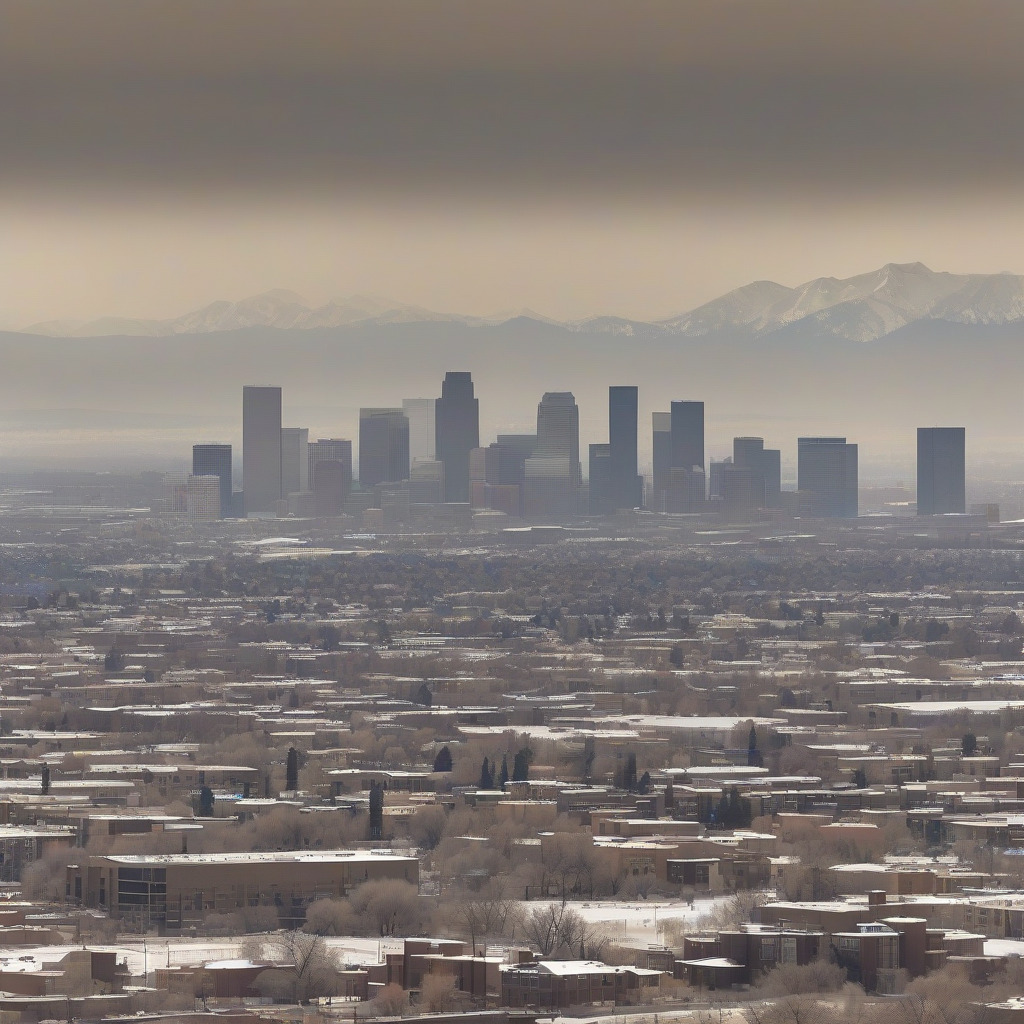
The historical benchmark for Denver’s worst smoke remains the October 2020 Cameron Peak and East Troublesome fire complex in northern Colorado. Those fires drove PM2.5 AQI readings above 200 across the metro, with visible smoke and ash accumulation over multiple days. A lot of longtime Denver residents still remember what those days felt like — the orange light, the smell that got into everything, the sensation of breathing through cloth even outdoors. That’s the top of the range we’re preparing for.
Monitor CDPHE’s AirCare alerts and AirNow throughout the warm-weather calendar — not just when you see a nearby fire in the news. A clear-sky morning can become an AQI 160 afternoon when smoke from a fire complex in southern Oregon descends through upper atmospheric circulation. Local conditions are one signal among several. For broader context on this topic, our health & wellness coverage tracks environmental and physical health issues specific to Denver residents.
The Direct Answer
If Denver’s PM2.5-specific AQI is above 150, move your outdoor workout indoors regardless of your health status. Between 101 and 150, healthy adults can still exercise outdoors with reduced duration and intensity. Anyone with asthma, heart disease, COPD, or other respiratory conditions, anyone who is pregnant or elderly, and all children should be inside. Below 100, smoke isn’t a meaningful concern for typical outdoor exercise.
Check the PM2.5-specific reading on AirNow or sign up for CDPHE’s AirCare alerts — not the composite AQI, not a weather app’s air quality icon. On smoke days, check conditions after mid-morning rather than at first light. On days when both an Ozone Action Day and a Smoke Advisory are active, there may be no safe outdoor window. The indoors answer applies to everyone.
For real-time Denver air quality readings, use AirNow (airnow.gov) or sign up for CDPHE’s AirCare Colorado alerts at aircarecolorado.org. For clinical guidance specific to your respiratory or cardiovascular conditions, National Jewish Health offers patient resources and can be reached at 1400 Jackson Street, Denver.