How Central Air Conditioning Costs and Rebates Work in Denver
Real price ranges, current Xcel Energy rebate math, and a clear-eyed look at whether your swamp cooler still makes sense.

Real price ranges, current Xcel Energy rebate math, and a clear-eyed look at whether your swamp cooler still makes sense.
Adding central air conditioning to a Denver home in 2026 costs somewhere between $5,500 and $18,000-plus. That wide spread comes down to one question that matters more than almost anything else: do you already have the ductwork, or not? Everything else—equipment brand, efficiency tier, labor rates, rebates—plays a secondary role. Here’s what Denver homeowners actually need to know, including what contractors are quoting right now, how Xcel Energy’s rebates interact with federal tax credits, and a frank assessment of whether central AC even beats a swamp cooler for your specific situation.
What You’ll Pay in Denver in 2026
The installed cost breaks cleanly into two scenarios that cover most Denver homes.
Scenario 1: Adding AC to an existing forced-air system with usable ductwork. Your furnace already has a blower, and the ducts are sized for forced air. A contractor adds the outdoor condensing unit, indoor evaporator coil, refrigerant lines, and electrical connection. For a 1,600 square-foot ranch in Denver, the typical installed range is $5,500 to $9,500, depending on equipment efficiency tier and site complexity.
Scenario 2: Full system installation in an older home without compatible ductwork. This is the Capitol Hill bungalow, the Highlands Victorian, the Congress Park craftsman—houses built before central air was standard, or ones cooled for decades with evaporative coolers attached to their own incompatible duct system. Here the range is $10,000 to $18,000 or more. The ductwork is where most of that money goes.
The mechanical permit required for either scenario runs $75 to $200 depending on project scope. Budget for it upfront and don’t let a contractor treat it as optional. Denver’s HVAC labor market is running above national averages due to tight skilled trades supply across the metro—a real cost factor, though specific hourly rates vary by contractor and should be confirmed when soliciting bids.
Before signing any contract, get at minimum two bids from licensed Denver contractors. Applewood Plumbing, Heating & Electric and Bell Plumbing and Heating are large enough operations that scheduling is usually reliable, even during peak season—which matters when you’re sweating through a May heat wave. Blue Sky Plumbing & Heating and Altitude Comfort are also worth calling for comparison. Ask each for a specific quote based on your square footage, existing system, and ductwork situation. “How much for central AC” is not a specific enough question to get a useful answer.
What Drives the Final Number in Denver
Several cost factors are specific to Denver, or at least weighted differently here than in a generic national guide.
Altitude derating. At 5,280 feet, air is less dense. An air conditioner delivers less actual cooling capacity than its sea-level rating suggests. Equipment manufacturers publish altitude derating tables; the adjustment runs approximately 3% per 1,000 feet above sea level. Denver homes are typically sized one tier up compared to equivalent square footage at lower elevation. A 1,500 to 2,000 square-foot Denver home usually lands at 2.5 to 3.5 tons, not the smaller unit a lower-elevation installer might specify for the same floor plan. Larger equipment costs more in unit price and potentially in electrical work.
Any contractor who quotes a system without performing a Manual J load calculation is guessing. Don’t let them. This calculation accounts for altitude, local climate data, insulation levels, window orientation, and house geometry. Skip it and you end up with an undersized system that can’t handle July heat, or an oversized one that short-cycles and doesn’t dehumidify properly. Neither is cheap to fix after the fact.
The ductwork problem in older Denver homes. This deserves particular emphasis for anyone in Capitol Hill, the Highlands, Berkeley, West Colfax, Baker, or any of Denver’s pre-war bungalow neighborhoods. Many of these homes were retrofitted with evaporative cooling, which uses a separate, low-static duct system—typically oversized metal ducts designed for high-volume, low-pressure airflow. Those ducts are fundamentally incompatible with forced-air central AC, which requires a tighter, higher-static system to properly distribute conditioned air and return it.
Connecting a central AC system to swamp cooler ducts doesn’t work well. It can actually make performance worse. New ductwork throughout the home is often necessary, which is where Scenario 2’s costs come from. If a contractor looks at your swamp cooler ducts and says they’ll work fine for central AC, get a second opinion immediately. That is not a credible claim.
Home age and mechanical space. Denver’s 1920s and 1930s bungalows often have shallow basement crawlspaces or utility areas that make routing refrigerant lines and installing air handlers significantly more complex. Limited clearance adds labor hours and sometimes requires creative solutions for condensate drainage. Budget for contingency if you’re working with a pre-war home—these jobs have a way of revealing surprises once the walls are open.
Efficiency tiers and SEER2 ratings. The federal government’s updated efficiency standards, now measured in SEER2, took effect in 2023. High-efficiency units (SEER2 16 or higher) cost more upfront but qualify for better rebates and lower ongoing operating costs. That efficiency threshold is exactly where Xcel’s rebates kick in. As part of our home & property coverage, we track how these efficiency upgrades play out across Denver’s varied housing stock.
Xcel Energy Rebates and Federal Tax Credits
This is where a lot of homeowners leave money on the table.
Xcel Energy’s Home Energy Savings rebates for central air conditioning have historically offered $75 to $150 per ton for qualifying central AC units at SEER2 16 or higher, installed by a participating contractor. On a 3-ton system, that’s $225 to $450. To claim the rebate, you must use a contractor enrolled in Xcel’s program, and the specific equipment must qualify under the current rebate schedule. Xcel updates this periodically—don’t assume last year’s numbers still apply. Before you sign any contract, verify the equipment model number at xcelenergy.com/rebates and confirm your contractor is a participating Xcel trade ally. Some contractors handle the rebate paperwork on your behalf; others require you to submit it. Ask explicitly which applies. You can also call Xcel directly at 1-800-895-4999.
Federal tax credits under IRA Section 25C allow homeowners to claim 30% of the installed cost, up to $600, for a high-efficiency central AC unit. This is a tax credit, not a deduction—it reduces your tax bill dollar for dollar. It’s non-refundable, meaning it won’t generate a refund beyond your tax liability, but for most homeowners it’s real money.
Heat pumps get significantly more. Qualifying heat pumps receive 30% up to $2,000—more than three times the ceiling for straight cooling equipment. That differential matters and is covered in the heat pump section below.
Worked example—realistic net cost after incentives:
A 1,600 sq ft ranch in Stapleton gets a central AC add-on to existing ductwork. Equipment: a 3-ton, SEER2 17 system. Total installed cost before incentives: $7,500.
Xcel rebate (3 tons × $125/ton): –$375
IRA 25C tax credit (30% of ~$3,500 equipment cost, capped at $600): –$600
Net cost: $6,525
That’s roughly $975 back on a $7,500 job—but it requires the right equipment, the right contractor, and actually filing for both. Both the rebate and the tax credit apply simultaneously. People skip this more often than you’d expect.
Colorado Energy Office programs exist as well. The state periodically runs additional weatherization and efficiency programs, sometimes stackable on top of Xcel rebates. The IRA also funded High-Efficiency Electric Home Rebate Act programs administered at the state level. Colorado’s rollout has moved slower than originally advertised—verify current availability and income-eligibility requirements directly with the Colorado Energy Office before assuming anything is accessible.
Swamp Cooler vs. Central AC—The Honest Denver Answer
This question is specific to Denver and the Front Range in a way it simply isn’t in most American cities.
Denver averages roughly 700 to 800 cooling degree days per year. Kansas City runs about 1,400 to 1,500; Dallas runs 2,800 to 3,000. Denver’s relatively mild summer load historically made evaporative cooling a rational, efficient, lower-cost choice. In the right conditions—low relative humidity, ideally below 60%—swamp coolers work well and use a fraction of the electricity a central AC system requires. Denver’s late spring and early summer, May through early July, typically delivers exactly that. A swamp cooler on a dry 90°F Denver afternoon in June works genuinely well.
Where evaporative cooling falls apart is Denver’s monsoon season, mid-July through September. Afternoon relative humidity regularly pushes into the 50 to 70 percent RH range. Evaporative coolers lose real effectiveness above roughly 60% RH and become nearly useless at 70%. When humidity climbs and temperatures are still in the upper 80s or low 90s—which describes a significant portion of Denver’s August afternoons—a swamp cooler often makes things feel muggier than outside. If you’ve ever sat in a Capitol Hill bungalow on a humid August evening with the swamp cooler blasting and still been miserable, you know exactly what I’m describing.
Recent climate data sharpens this further. Denver has seen a measurable increase in days above 95°F over the past decade. The 2021 heat dome pushed Denver to 101°F. The 2022 and 2023 summers each featured multiple consecutive days above 95°F with elevated humidity. That pattern—hotter peaks, more frequent extreme days, combined with monsoon humidity—has eroded the practical case for relying on evaporative cooling alone. The old “Denver doesn’t need real AC” conventional wisdom doesn’t hold anymore. The summers have changed.
If your swamp cooler handles June comfortably and you primarily need to cool a home for six to eight weeks in late spring and early summer, it may still be adequate—especially if replacing it means running entirely new ductwork. But if you regularly suffer through August monsoon afternoons with a swamp cooler running at full capacity and minimal effect, central air has a clear functional case. Not a luxury preference. A performance gap a swamp cooler cannot close regardless of how well it’s maintained.
One middle path: dual-system setups, where a swamp cooler handles the dry early summer and a window or portable unit covers peak humidity days. These exist in Denver but are logistically awkward and don’t suit larger homes or anyone who values consistent comfort.
The Heat Pump Option
Installed cost for a ducted heat pump in Denver runs $8,000 to $15,000 for a residential system. That’s higher upfront than a straight AC add-on, but the comparison isn’t apples-to-apples. A heat pump replaces both your air conditioner and a portion of your heating load.
Denver’s climate is actually favorable for heat pump performance—more so than most people assume. The main concern with heat pumps in cold-climate markets is efficiency loss at very low temperatures. Denver’s mild shoulder seasons—March, April, October, November—keep overnight lows well within the efficient operating range of modern cold-climate heat pumps. In those months, a heat pump displaces substantial gas heating load at much better efficiency than a furnace.
The rebate picture for heat pumps is considerably richer. Xcel Energy has historically offered $200 to $400 or more for qualifying cold-climate models—verify current amounts at xcelenergy.com/rebates before purchasing. Under IRA Section 25C, heat pumps get 30% up to $2,000 versus $600 for AC. That $1,400 ceiling difference is worth running actual numbers on before you default to a straight AC add-on.
A heat pump makes less sense when your existing gas furnace is relatively new—under five years old—your gas costs are low, and you’d be replacing functioning heating equipment before its useful life is up. In that case, a straight AC add-on often pencils better in the short to medium term. But if your furnace is aging and you’re already budgeting for eventual replacement, pricing a heat pump at the same time is worth doing. You may find the combined rebates close most of the gap.
Permits, Inspections, and the Process
A mechanical permit from Denver Community Planning and Development is required for any new central AC installation in the city. This is not contractor-discretion territory. Installing central AC without a permit creates real problems: at minimum, you’ll need to retroactively permit and potentially open walls for inspection at resale. At worst, unpermitted work can complicate homeowners insurance claims.
Current permit fees run $75 to $200 for a standard residential mechanical permit, depending on project valuation. Denver CPD accepts electronic applications through its online portal at denvergov.org/permits. Typical approval turnaround is two to five business days for standard residential HVAC work.
After installation, a city mechanical inspector verifies that equipment is properly installed, refrigerant lines are correctly routed and insulated, electrical connections meet code, and the system is set up for safe operation. The inspection typically takes an hour or less and adds one to three days to the overall timeline.
In Denver, the permit must be pulled by a licensed mechanical contractor. Homeowners cannot self-permit HVAC work. Some contractors—particularly smaller operations—will offer to skip the permit to reduce cost and paperwork. That’s a red flag. A legitimate contractor pulls the permit as a standard part of the job. Before signing a contract, ask for the contractor’s license number and verify it through the Colorado Department of Regulatory Agencies license lookup tool. Two minutes. Do it.
Timeline—When to Book and What to Expect
Denver’s HVAC market gets genuinely constrained in late spring—more than most homeowners realize until they’re already sweating.
Add-on installations using existing ductwork typically take one to two days. Full systems with new ductwork run three to seven days. The permit inspection after completion adds one to three days.
Denver HVAC contractors are heavily booked from late May through June, which is exactly when most homeowners call after the first hot week. During a late-May heat wave, you may face three to six week waits. That’s entirely avoidable. Booking in March, April, September, or October typically means shorter lead times—sometimes same-week availability—and some contractors offer off-season pricing in the shoulder months. You also get the system installed and tested before you need it, which is how this should work.
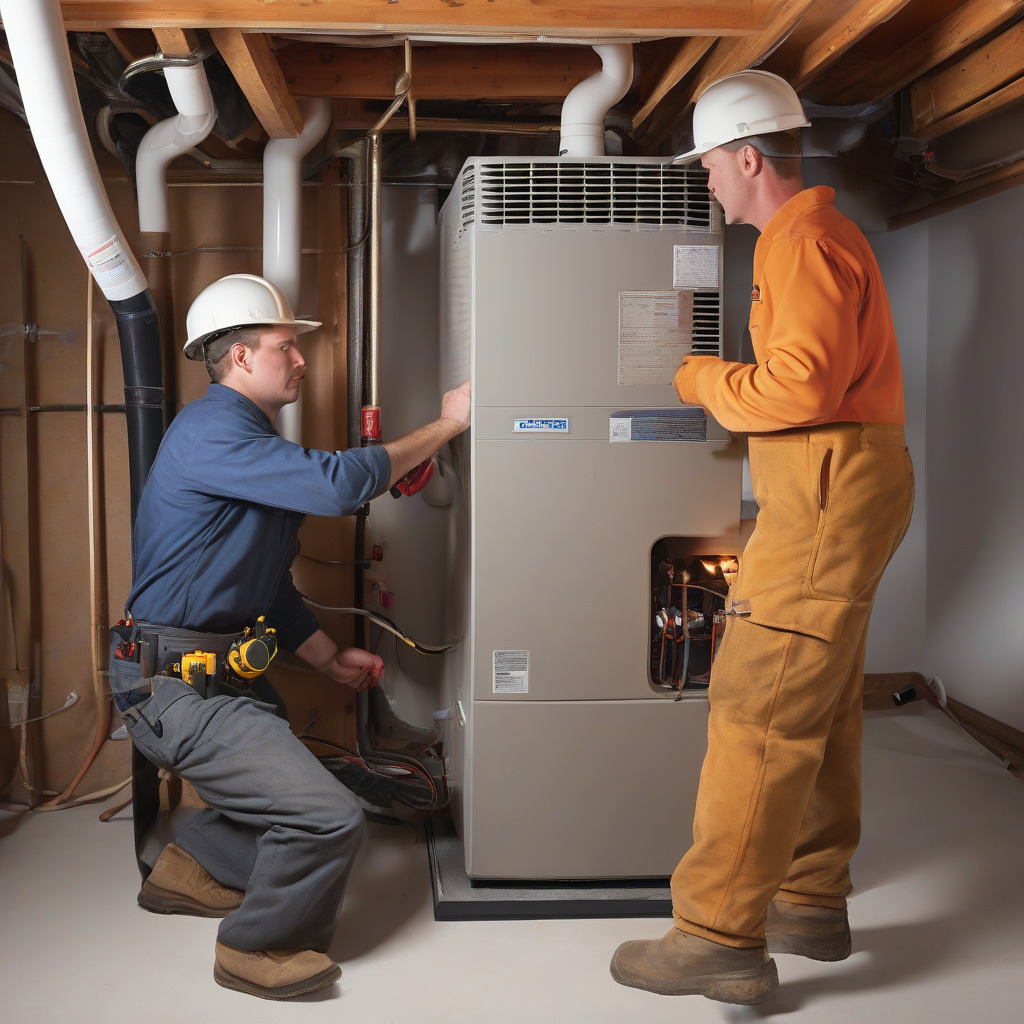
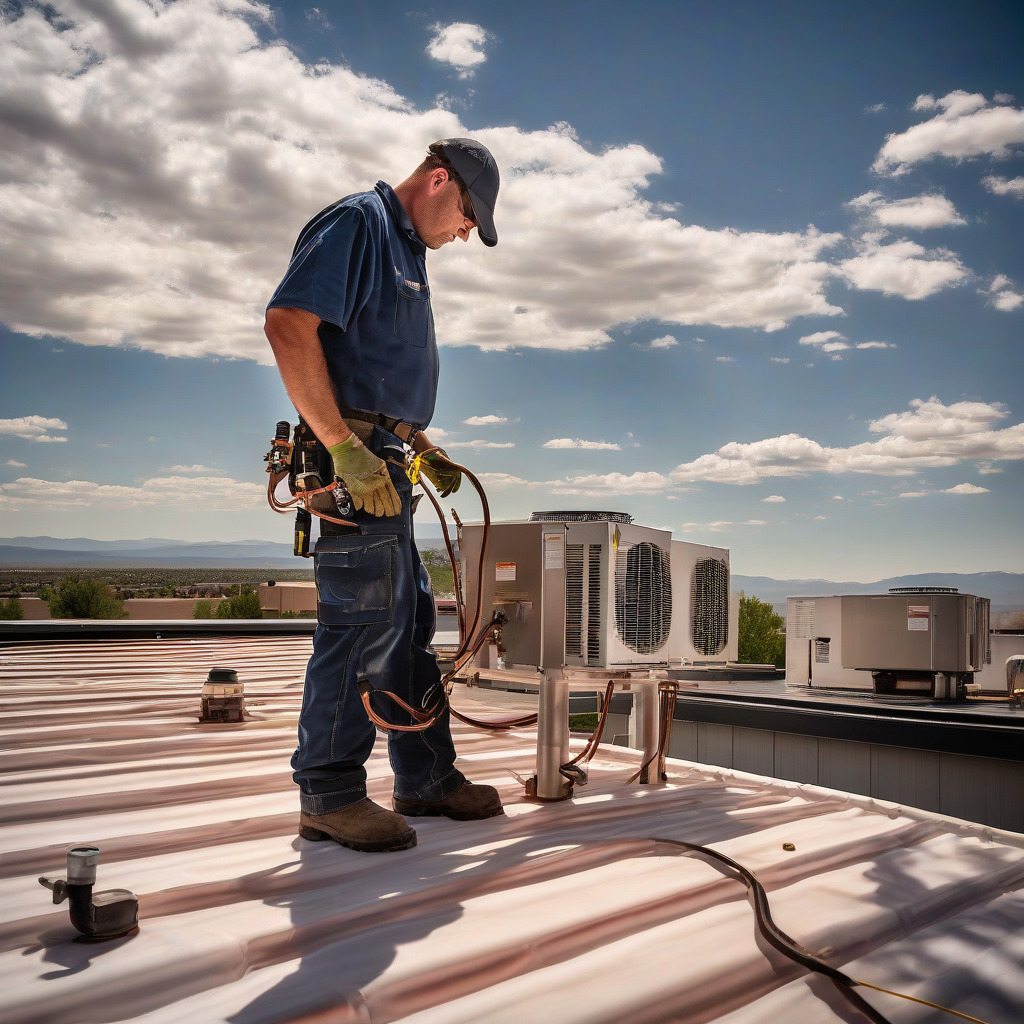
What installation day actually looks like: the outdoor condensing unit is placed on a pad—typically poured concrete or composite—refrigerant lines are run from the outdoor unit through the wall to the indoor evaporator coil, electrical connections are made to a dedicated 240V circuit at the panel, the condensate drain line is routed to a floor drain or outside, and the thermostat is configured and tested. If you’re getting a smart thermostat as part of the installation, which may itself qualify for Xcel rebates, that wiring happens the same day. Expect the work area to be dusty. Expect some interior access to the furnace and air handler area. The installer should do a final system startup and walkthrough before leaving.
Bottom Line by Home Type
Older inner-city home—Capitol Hill, Highlands, Congress Park, Baker, West Colfax.
Pre-war bungalows and two-stories with evaporative cooling, possibly a forced-air furnace but ductwork that may or may not be compatible with central AC. Budget $10,000 to $18,000 installed. The range is that wide because it hinges almost entirely on whether your existing ductwork can be salvaged. A high-efficiency unit nets roughly $800 to $1,050 back between Xcel rebates and the IRA tax credit—real savings, but they don’t move the needle much if you’re staring down a full duct replacement.
Get at minimum two bids with explicit ductwork assessments. If both contractors say the existing ducts are incompatible, believe them. And if your furnace is more than 10 years old, price a heat pump at the same time before committing to a straight AC add-on—the combined rebate stack sometimes makes it the better overall investment.
Newer suburban or infill construction—Stapleton/Central Park, Sloan’s Lake infill, Lowry, Green Valley Ranch, or post-2000 construction in Aurora or Lakewood.
These homes typically have compatible forced-air ductwork already in place. Budget $5,500 to $9,500 installed. Same rebate stack applies: $225 to $450 from Xcel plus up to $600 IRA credit on a qualifying high-efficiency unit.
Prioritize a SEER2 16+ unit to hit both thresholds. Book in March or April if you want reasonable scheduling and any shot at off-season pricing.
Three Questions to Ask Every Contractor Before Signing
-
What does your Manual J load calculation show? If they can’t produce it or say they don’t do one, walk away.
-
Is this specific equipment model eligible for Xcel Energy rebates? Get the model number and verify it yourself at xcelenergy.com/rebates before signing anything.
-
Will you pull the mechanical permit? The correct answer is yes.
Permit fees and rebate amounts are current as of mid-2025. Verify Xcel rebates at xcelenergy.com/rebates or by calling 1-800-895-4999. Confirm IRA tax credit eligibility with a tax professional before installation.