Denver's Aging Bathtubs Don't Need to Go — But the Contractor You Hire Matters Enormously
Denver's older housing stock is full of bathtubs that don't owe anybody anything. Cast iron, built sometime between the Truman administration and the first moon landing, still structurally solid af…

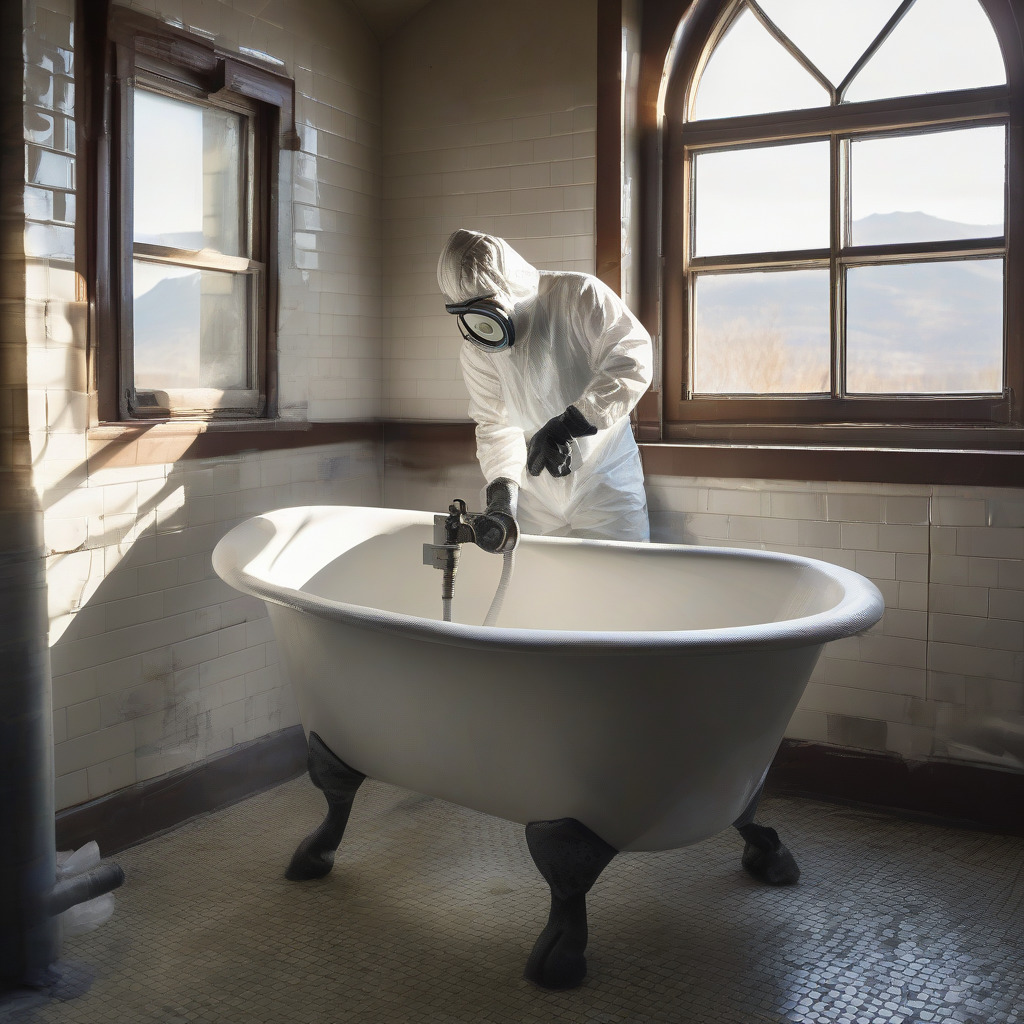
Denver’s older housing stock is full of bathtubs that don’t owe anybody anything. Cast iron, built sometime between the Truman administration and the first moon landing, still structurally solid after sixty or seventy years but stained, chipped, and ugly enough that new tenants balk and new buyers wince. The question facing landlords in Five Points and homeowners in Baker isn’t whether the tub needs attention. It’s whether a full replacement pencils out, or whether refinishing is the smarter call.
Renew-It Refinishing, a Denver-area operation serving the metro, has built its business on the premise that most of those tubs don’t need to go anywhere. Here’s what that premise actually costs, how it holds up, and what Denver residents should know before calling anyone in this trade.
Denver’s Tubs Have a Problem Worth Solving
Capitol Hill, Baker, Curtis Park, Whittier, Sunnyside. The neighborhoods that define Denver’s housing character also tend to have the oldest bathrooms. Pre-1950 construction dominates much of the city’s inner ring, and the plumbing fixtures from that era were built to genuinely last — not in the modern appliance-lifespan sense of the phrase. The cast-iron tubs in those buildings typically have decades of structural life remaining. What they don’t have is a finish that looks like anything but hard use.
Full bathtub replacement in Denver runs well over a thousand dollars once you account for demolition, the unit itself, and labor — and in a historic home or a multi-unit building with original tile surrounds, that number climbs fast. You’re not just swapping a tub; you’re potentially opening walls and refinishing floors. For a landlord cycling through bathroom renovations on multiple units, that math gets uncomfortable quickly. For a homeowner in a Capitol Hill Victorian who wants a functional renovation without gutting a bathroom that still has good bones, replacement often doesn’t make sense.
The gap between a tub that works and a tub that looks acceptable is the market Renew-It operates in. It’s a real gap, and it’s bigger than most people realize until they start getting replacement bids. It’s also the kind of decision we cover in our home & property coverage, where the question is usually whether a repair makes more sense than a full replacement.
Who Is Renew-It Refinishing?
Renew-It Refinishing operates across the Denver metro. One thing worth knowing before you book: whether a company in this trade is locally owned or running as a franchise matters more than contractors usually let on. A local owner-operator is accountable to the Denver market in a direct way. A franchise may offer standardized materials and service guarantees — which has genuine value if the standards are actually enforced. But franchises vary enormously in how much autonomy local operators have, and “standardized” doesn’t always mean “better.” Ask explicitly which one you’re dealing with. Don’t assume.
The company works across a wide range of housing types and ages, from early-century bungalows in the inner neighborhoods to postwar apartment complexes in the suburbs. Tub materials vary too — and they require meaningfully different prep approaches. Verify the specific service area, what they do and don’t handle, and how long they’ve been working in Denver when you call.
Reglazing, Resurfacing, Refinishing — What’s the Difference?
The terminology in this trade is genuinely confusing, and the confusion is mostly marketing noise. Reglazing, resurfacing, and refinishing all describe the same essential process: cleaning and preparing the existing surface, applying a bonding primer, and spraying a new topcoat that bonds to the original material.
“Refinishing” is probably the most accurate plain-language description. When you’re comparing quotes or reading reviews, don’t let different terminology throw you — it doesn’t mean contractors are offering meaningfully different services. Ask specifically about the product they’re applying, the prep process, and the warranty.
What the process doesn’t involve is adding a new layer of ceramic or enamel the way the tub was originally manufactured. The topcoat is a polymer coating, typically a two-part polyurethane or acrylic urethane, applied in the field. It looks like the original finish and, properly maintained, performs like it. But it is not identical to a factory finish, which matters for durability expectations over the long run. Not a reason to avoid refinishing — just a reason to be clear-eyed about what you’re buying.
What It Costs in Denver — and What You Get for the Money
National industry sources put standard bathtub refinishing somewhere in the $300–$600 range. Denver’s labor costs run above the national average, so expect local pricing to be higher. Get a direct quote; don’t trust any number you read online, including that one, as a reliable local price.
Against replacement costs that can easily hit $3,000 or more in Denver once walls and floors are involved, refinishing carries a clear cost advantage for a tub that’s structurally sound but cosmetically worn. Before making the call on a renovation of this scale, it’s also worth understanding what Denver home inspectors flag most often — a compromised tub surround or failing caulk line can signal water intrusion that refinishing alone won’t fix. The durability question deserves serious consideration rather than a wave of the hand and optimistic warranty language. More on that below.
The Landlord Angle
Denver’s renter-occupied housing rate sits at roughly 50 percent citywide, according to Census American Community Survey data. Rental unit turnover drives a significant share of refinishing work. A tub that was acceptable when a tenant moved in two years ago may be stained, scratched, or visibly worn when they leave. Landlords have a narrow window between tenants to make a unit marketable, and replacement costs have gotten more expensive every year.
Turnaround time matters as much as price here. A bathroom out of commission for a week costs real money against the lease calendar. A refinishing job is typically complete in a day — a few hours of application, then a curing period before the bathroom can be used again. Standard guidance is 24 to 48 hours before light use, though Denver’s altitude and seasonal humidity affect curing conditions. Confirm the specific guidance with whoever you hire.
For landlords managing multiple units, have an explicit conversation about what a regular service relationship looks like. Don’t treat each job as a one-off transaction. The contractors worth keeping around are the ones who’ll have that conversation without you having to drag it out of them.
Denver’s Climate and Altitude — Do They Actually Matter?
Yes, and any contractor who doesn’t know why hasn’t been paying attention.
At 5,280 feet, lower atmospheric pressure means solvents in coatings evaporate faster than at sea level. This affects how a topcoat lays out during application and how it cures afterward. An experienced local applicator knows this and adjusts technique accordingly. A contractor who learned their trade at lower elevation and hasn’t adapted may see more application defects: orange peel texture, bubbling, uneven sheen. Ask any contractor how they account for Denver’s altitude in their application process. If they look at you blankly, that’s your answer.
Denver’s low relative humidity — around 40 to 50 percent year-round, considerably lower in winter — affects curing too. Some coatings cure faster in dry conditions; others require a minimum humidity level for proper cross-linking. Ask what humidity range the specific topcoat is rated for and how they handle a dry January day.
The winter ventilation problem is the most practical challenge. Refinishing requires adequate airflow to exhaust solvent fumes during and after application. In a Denver winter, opening bathroom windows when it’s 15 degrees outside creates its own problems — it can affect cure temperature and is disruptive for anyone in the building. Professional contractors address this with forced-air exhaust equipment, not open windows. An industrial fan venting to the exterior provides controlled airflow without flooding the bathroom with cold air. If a contractor’s winter ventilation plan is “we’ll crack the window,” probe that hard before booking.
Fumes, Safety, and What Colorado Regulations Actually Require
The chemicals involved in bathtub refinishing are not trivial. The topcoats most professional refinishers use are isocyanate-based two-part coatings, typically aromatic or aliphatic polyurethanes. Isocyanates are potent respiratory sensitizers. Repeated exposure can trigger occupational asthma even in people who’ve tolerated them for years without obvious symptoms. This is why professional applicators are required under Colorado OSHA standards to use proper respiratory protection and ventilation — not consumer dust masks.
Methylene chloride, previously a common stripper used in prep work, has been largely phased out following EPA restrictions on commercial applications. If you encounter a contractor still advertising methylene chloride strippers as part of their process, find a different contractor.
Colorado’s CDPHE governs VOC emissions from architectural and industrial coatings under the Air Quality Control Commission regulations. Refinishing contractors working in the Denver metro are subject to these rules. Ask any contractor you’re considering: what specific product are you applying, and is it CDPHE-compliant for Colorado?
For residents, the practical guidance is simple. Stay out of the bathroom for a minimum of 24 hours, ideally 48, with ventilation running continuously during that period. If you’re still smelling strong solvent fumes after two days in a well-ventilated bathroom, something went wrong — with the application, the ventilation, or both.
Older Homes, Lead Paint, and the EPA Certification Question
The EPA’s Renovate, Repair and Paint rule requires that contractors working in pre-1978 housing and disturbing lead-based paint be certified under the EPA’s RRP program and follow specific containment and cleanup practices.
Pre-1978 housing is the majority of the refinishing market in Capitol Hill, Baker, Congress Park, Whittier, Curtis Park, and Sunnyside. Cast-iron tubs in those homes are often surrounded by original tile, and the walls behind that tile may have been painted with lead paint before the tile went in. Surface preparation for refinishing — sanding, etching, abrading the existing finish — can disturb those layers.
Whether refinishing a bathtub specifically triggers RRP requirements depends on the scope of work and what surfaces are disturbed. But it’s a serious question, and the right answer from a contractor is not a dismissive one. Ask directly: are you EPA RRP certified? What’s your protocol for pre-1978 homes? If they hold RRP certification, they’ve completed the EPA’s training and are required to follow documented work practices. If they don’t, and they’re working in a home built before 1978, you’re relying entirely on their judgment about what constitutes a lead hazard. For Capitol Hill and Baker homeowners especially, this is a credibility question, not a bureaucratic one. Don’t let anyone wave it off.
How Long Does It Last — and What Voids the Warranty?
What kills a refinished finish: abrasive cleaners. Comet, Ajax, powder cleansers — they’ll scratch and dull a refinished surface faster than almost anything else. Same for abrasive scrub pads. The coating is durable, but it’s not as hard as original fired enamel or porcelain. Bleach-based cleaners in high concentrations degrade it over time. Suction-cup bath mats, applied and removed repeatedly, can pull at the surface layer — particularly if adhesion was imperfect during application.
Care for a refinished tub is straightforward: mild liquid cleaners, soft cloths, no abrasives. The constraint is behavioral, not technical, which sounds simple until you’re a landlord whose tenants didn’t read the instruction sheet you left. That’s probably the most common source of warranty disputes in this trade — not bad workmanship, but a cleaning product someone grabbed without thinking.
Ask any refinisher what their warranty covers, for how long, and what voids it. Get it in writing. Understand the distinction between workmanship defects — adhesion failures, peeling, crazing from the application itself — and wear from improper maintenance before you sign anything.
How to Vet Any Refinisher Before You Book
Whether you hire Renew-It or someone else, these questions separate professional operations from marginal work in this trade.
Start with the product. A professional can name the specific topcoat — brand and product line — and tell you whether it’s a one-part or two-part system. If a contractor can’t or won’t name what they’re spraying in your bathroom, walk away. In winter especially, ask about their ventilation plan for your specific job. Do they bring their own exhaust equipment, or are they relying on your windows?
EPA RRP certification matters if your home was built before 1978. No exceptions. Request to see the documentation.
Ask about their experience with your specific tub material. Cast iron with original porcelain enamel is the most common material in Denver’s older housing. Fiberglass and acrylic are prevalent in post-1970s buildings. The prep work differs significantly, and a contractor who treats every tub the same is telling you something.
Get the warranty in writing before work begins — what it covers, what voids it, how long it lasts. Then ask for references from jobs that are at least two years old. A two-year-old refinish tells you how the work actually holds up. Anyone can make a bathroom look good for 30 days.
Finally, ask about cure time and re-occupancy guidance specific to Denver’s altitude and seasonal conditions. The answer should be specific, not “a few hours.” An experienced local contractor has a direct answer. One who doesn’t may be applying techniques calibrated for a different market — and at this point, Denver’s altitude is not a secret anyone in the trade gets to be surprised by.
The refinishing trade has real value in a city with Denver’s housing stock. It also has enough variation in operator quality that the difference between a job that holds up for years and one that starts peeling in months comes down almost entirely to how carefully you vetted the contractor before handing over the keys. A structurally sound tub that looks like sixty years of hard use is a solvable problem. Just make sure you’re hiring someone who actually knows how to solve it.