What Denver's Snow Removal Ordinance Actually Requires — and Who's Liable If Someone Falls
Most property owners know they have 24 hours to shovel. The clock doesn't start when you think it does. "Clear" doesn't mean what you'd guess. And a city citation tells you almost nothing about whe…

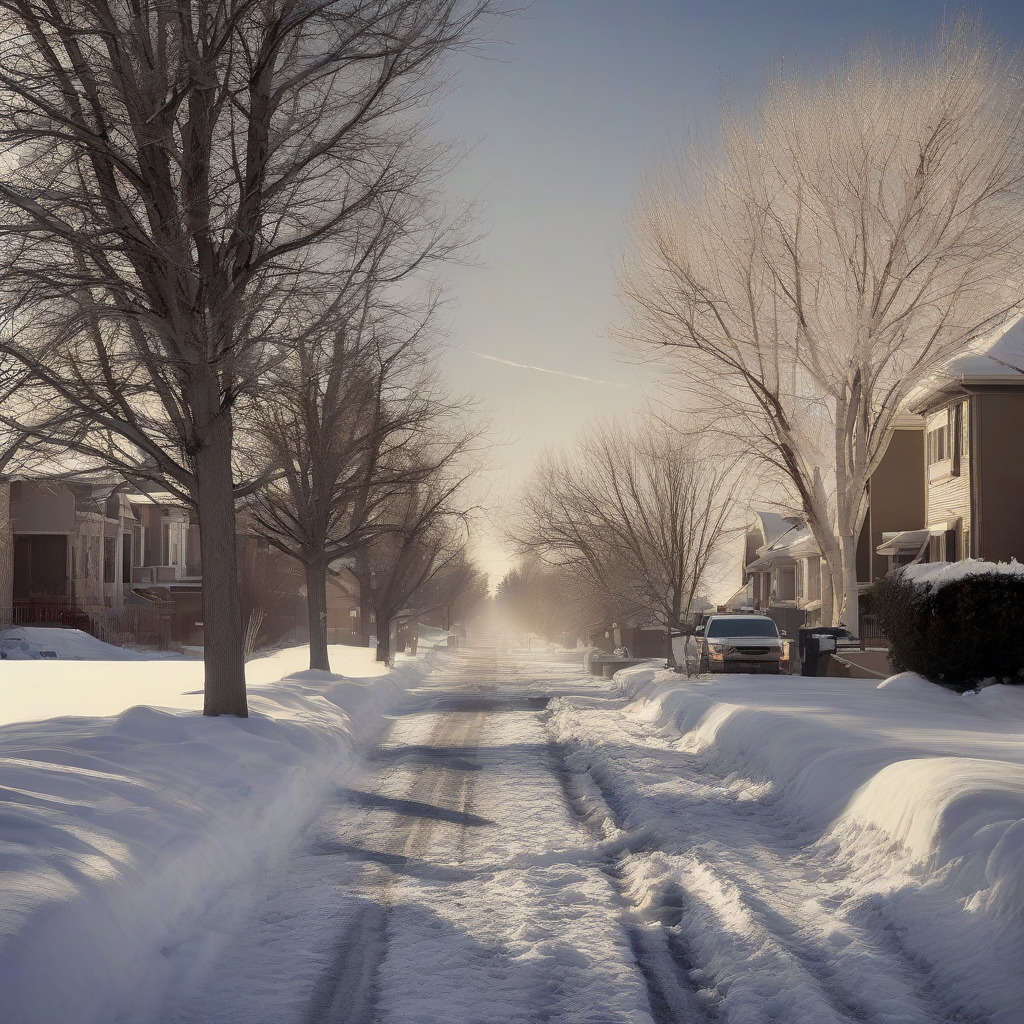
Most property owners know they have 24 hours to shovel. The clock doesn’t start when you think it does. “Clear” doesn’t mean what you’d guess. And a city citation tells you almost nothing about whether you can be sued in district court.
Every year, a share of Denver property owners get through the first storm with an incomplete or outright wrong understanding of what the city requires and what their exposure looks like if someone goes down on ice in front of their building.
Denver’s snow removal ordinance, DRMC § 49-246, is written in bureaucratic language most residents can’t parse on a quick read. The city’s snow information page handles basic questions but doesn’t touch the premises liability gap. Local coverage tends to stop at “you have 24 hours to shovel” — technically true and almost entirely useless.
Here’s what the ordinance actually says, how enforcement works, and what Colorado premises liability law adds on top of it.
When the 24-Hour Clock Starts
The most consequential detail in § 49-246 is also the most commonly misunderstood: your 24-hour window opens at the end of snowfall — not when snow starts accumulating.
This matters most during long overnight storms, which Denver gets regularly. If snow starts at 10 p.m. Sunday and stops at 8 a.m. Monday, your deadline is 8 a.m. Tuesday. You’re not in violation at 10 a.m. Monday because you haven’t shoveled yet. But you’re also not in the clear just because you cleared the walk Monday at noon — if the sidewalk refreezes overnight and you haven’t addressed it, the compliance question reopens.
The trickier situation is multi-day events with pauses between rounds of snowfall. Denver Public Works posts storm updates at snow.denver.gov, and that’s the reference to use when you’re calibrating your window. Checking it after a storm isn’t being paranoid. It’s the difference between knowing your deadline is Tuesday morning and incorrectly assuming it was Monday afternoon.
What “Clear” Means
The ordinance doesn’t require bare pavement. It requires a passable path — specifically, a cleared path at least 36 inches wide along the full length of the abutting sidewalk.
That distinction has real consequences in Denver, where bone-dry concrete one hour can become a sheet of black ice a few hours later. Chinook winds push afternoon temperatures high enough to melt surface snow, then overnight temps drop and refreeze everything that was left wet. Clearing your walk in the afternoon doesn’t mean the job is done. If the sidewalk refreezes by morning, you’re back to non-compliant — even if you shoveled the day before. This catches people every winter.
For ice that genuinely can’t be removed — shaded stretches of sidewalk that don’t see sun until late morning are common culprits — the ordinance allows a specific alternative: sand or approved ice-melt applied to the surface satisfies the requirement. You’re not required to chip through an inch of bonded ice. What you can’t do is ignore a hazardous icy sidewalk because removal seems too hard. The 36-inch path has to be maintained, not just cleared once and left.
Fines, Enforcement, and How Complaints Work
The base residential fine has been widely reported at $150 per violation. Denver doesn’t prominently publish its current fine schedule online, so verify the current amount before you need it: call Denver 311 at 3-1-1 or Denver Public Works directly at 720-913-1311.
Denver doesn’t run proactive sweeps looking for unshoveled sidewalks. Enforcement is complaint-driven through 311. Anyone — a neighbor, a pedestrian, a passerby — can file at 311.denver.gov or by phone, and a Denver Public Works inspector will follow up. Without a complaint, your odds of getting cited for a snow removal violation are genuinely low.
If an inspector finds the sidewalk still out of compliance on arrival, a notice is issued. Ignore that, and a fine follows. The city also has authority to clear the walk itself and bill the cost to the property owner, with the option to lien the property for unpaid remediation costs. That mechanism is used less often than citations, but a lien is considerably more painful than $150.
The honest version of the risk: if your neighbors are cooperative and your sidewalk is only marginally non-compliant, citation exposure is low. If you’re in a high-density neighborhood, in a dispute with the people next door, or on a block that’s had 311 complaints before, it’s meaningfully higher.
Renters, Landlords, and Who Gets Cited
Denver is about half renters, and a lot of those renters live in duplexes, triplexes, or small apartment buildings where sidewalk responsibility is genuinely unclear.
Under § 49-246, the answer isn’t ambiguous: the city cites the property owner of record. A landlord cannot transfer that obligation to a tenant through a lease clause. If a citation gets issued, it goes to whoever owns the building. Denver doesn’t inspect leases. It inspects sidewalks.
The civil liability question is more complicated. For multi-unit buildings, the landlord controls the abutting sidewalk and carries both the ordinance obligation and the tort exposure — that’s fairly clean. For single-family rentals, a lease clause that clearly assigns snow removal to the tenant carries some weight in a civil analysis, since it can factor into whether the landlord exercised reasonable care in maintaining the property. But a landlord who relies on a tenant to shovel, has nothing in writing about it, and is carrying the wrong insurance policy is exposed in ways they probably haven’t considered. Denver renters should also understand their own obligations and rights in our home & property coverage.
The Gap Between a Citation and a Lawsuit
Most local coverage stops here, and that’s exactly where it shouldn’t.
Paying a Denver citation for a snow removal violation does not protect you from a personal injury lawsuit in Colorado district court. These are separate proceedings. The city fine is an administrative penalty. A civil lawsuit is a claim for compensatory damages — hospital bills, lost income, pain and suffering — brought by an injured person under state tort law.
Colorado’s Premises Liability Act, C.R.S. § 13-21-115, governs slip-and-fall claims. Members of the public using a sidewalk that abuts your property are almost certainly classified as invitees — the highest duty of care under the statute. That means you owe them reasonable care, including reasonable inspection and maintenance.
Here’s where it gets important: “reasonable care” is not the same thing as technical ordinance compliance. A property owner who cleared their walk once on Monday and never rechecked it may have satisfied § 49-246 while failing the reasonable care standard a jury applies. Their cleared sidewalk was a sheet of black ice when someone fell Tuesday morning. Ordinance compliance is evidence in your favor — it’s not a complete defense. Ordinance non-compliance is evidence going the other direction that a plaintiff’s attorney will use. Your floor is the city ordinance. Your ceiling of exposure is Colorado tort law. Most property owners are only thinking about the floor.
Cleared Sidewalks Still Create Liability
The question many homeowners want answered: I shoveled. I did what the city asked. Can someone still sue me?
Yes. And softening that answer would be a disservice.
The scenario where it happens most often in Colorado is the cleared walk that refreezes. Denver’s climate is unusually prone to this. Chinook events melt surface snow in the afternoon, water soaks into the concrete surface, temperatures fall after sunset, and by morning commute you have ice that’s harder, smoother, and less visible than packed snow — the worst kind. A property owner who cleared the walk at 3 p.m. and considered it done faces a real problem at 7 a.m.
Colorado courts have examined premises liability cases involving post-clearance conditions. The analysis typically turns on what the property owner knew or should have known about the risk, and what steps they took to address it. An owner who cleared the walk, sanded or salted it, and checked for refreeze the next morning is in a much stronger position than one who cleared it once and walked away.
The natural accumulation doctrine — the principle that a property owner isn’t liable for conditions caused by natural snow and ice accumulation — has a genuinely contested status in Colorado. Courts have interpreted it inconsistently since legislative changes to the Premises Liability Act. Do not assume it functions as a blanket defense in residential cases. Talk to a Colorado premises liability attorney about the current state of the law before you need one.
Colorado also applies modified comparative negligence under C.R.S. § 13-21-111. A plaintiff who’s partly responsible for their own fall — sprinting on ice, wearing street shoes in a storm — has their recovery reduced proportionally. A plaintiff found more than 50 percent at fault recovers nothing. This matters because not every slip ends in judgment against the property owner. But partial fault on the owner’s part still means proportional liability.
The Neighborhoods With Elevated Exposure
Capitol Hill combines high pedestrian density, a transit-dependent population, steep grades on several blocks, and older multi-unit buildings where landlord-tenant snow removal responsibility is frequently unresolved. A non-compliant sidewalk on Colfax or 13th Avenue during a morning commute storm is not going unnoticed.
Washington Park is a different profile. The residential blocks immediately adjacent to the park draw heavy pedestrian and cycling traffic year-round. A lot of those properties are single-family owner-occupied homes with large lot frontages and long sidewalk runs that take real time to clear properly. Half-shoveled wide lots are common after storms on those blocks — you’ve seen them.
Potter-Highlands has commercial corridors on steep grades where a cleared-but-untreated sidewalk is a genuine hazard and falls tend to be worse because of the incline.
RiNo deserves specific mention. Older commercial buildings with aging sidewalk infrastructure, high foot traffic from restaurants and venues, and significant out-of-area ownership — investors who check in remotely and assume someone else handled the sidewalk — is a real pattern, and it’s the one that worries me most. A building owned by someone who doesn’t know what the sidewalk looks like after a storm is a building that doesn’t get shoveled until it’s a problem. If you’re a commercial tenant or building owner in that district, what it costs to operate in RiNo right now gives useful context on the ownership and leasing dynamics that shape who’s actually responsible for a given property.
Denver’s most common storm pattern — overnight accumulation that stops before the morning commute — compresses the practical window considerably. An 8 a.m. storm cessation gives you until 8 a.m. the following morning under the ordinance. But the real pedestrian risk peaks during the morning commute that same day. Property owners in Curtis Park and Cole, both heavily used by transit commuters, who wait until midday to assess their sidewalks are leaving a gap with real consequences.
Check Your Insurance Now
Standard HO-3 homeowners policies typically include premises liability coverage somewhere between $100,000 and $300,000 — but the actual number varies, and you should pull your declarations page and read it before the first storm, not after someone falls.
Landlords need to pay close attention here. An HO-3 policy on a rental property may not perform the way they expect when a claim comes in. Landlord policies — typically DP-3 structures — are built for non-owner-occupied properties and carry their own liability provisions. If you’re renting out a house or a unit in a duplex and you’re carrying a standard homeowners policy, call your agent before the season starts and ask directly whether you have the right product for what you’re doing.
The one that surprises people most: renters insurance covers the tenant’s personal property and personal liability. It does not cover the landlord’s liability for a slip on the abutting sidewalk. A landlord who assumes the tenant’s renters policy creates some buffer is wrong about how that policy works. There is no buffer. None.
When Snow Starts Falling
Before the season starts: review your insurance coverage type and limits. Landlords, confirm you have a landlord policy, not a homeowners policy, and that liability limits are adequate. If you’ve assigned snow removal to a tenant by lease, make sure that clause is in writing.
When snow starts: don’t start your 24-hour clock. Monitor snow.denver.gov to track when the city considers the storm over. That’s when your window opens.
Within 24 hours of storm cessation: clear a 36-inch path the full length of your abutting sidewalk. Ice that can’t be fully removed gets sand or ice-melt treatment.
Right after clearing: photograph the sidewalk with a timestamp. Thirty seconds. Do it every single time. It can matter significantly in a liability dispute.
In the days after: check for refreeze, especially overnight and early morning. Denver’s melt-refreeze cycle is predictable. It is not a surprise. A cleared sidewalk that refreezes is not a safe sidewalk.
For complaints and fine verification: Denver 311 at 311.denver.gov or 3-1-1 by phone. Denver Public Works at 720-913-1311 for the current fine schedule.
“I shoveled” and “I’m protected” are not the same thing. A lot of Denver property owners treat them as equivalent, and that’s the gap where the actual exposure lives.