Refinish or Replace That Old Denver Bathtub? Here's What You Need to Know Before You Decide
Renovation costs are still ugly. Vintage housing stock is everywhere. And bathtub refinishing quality varies more than most people realize before they've already paid.

Renovation costs are still ugly. Vintage housing stock is everywhere. And bathtub refinishing quality varies more than most people realize before they’ve already paid.
Denver is a city full of old bathtubs. The bungalows of Washington Park, the mid-century ranches in Harvey Park and Barnum, the converted apartment buildings climbing the Capitol Hill blocks — they’re packed with original cast-iron and porcelain fixtures that have been scrubbed, soaked in, and slowly etched by Denver’s mineral-heavy municipal water for fifty, sixty, sometimes eighty years. Many are still structurally sound. Most look worn.
The question of what to do with them — refinish, replace, or just live with the stains — has become a recurring calculation for Denver homeowners and landlords. Renovation costs have stayed stubbornly high since 2021. Anyone who’s gotten a tile and plumbing estimate recently knows that ripping out a cast-iron tub and starting over is a serious financial commitment. That reality has pushed people toward refinishing, and the market has responded. Skilled craftspeople now compete with fly-by-night applicators who show up with a spray gun and a cargo van.
Here’s what you actually need to know.
What Refinishing and Replacement Actually Cost in Denver Right Now
The financial case for refinishing is straightforward. A professional job on a standard 5-foot cast-iron or steel tub runs roughly $400 to $700 in the Denver metro as of mid-2025, depending on the tub’s condition, the contractor’s coating system, and whether chip repair or drain work is included. Full tub replacement is a different conversation entirely.
The fixture itself might run $300 for a basic alcove tub or $1,500 and up for freestanding cast iron. But the fixture is rarely the real cost. Disconnecting plumbing, hauling out the old tub, resetting the drain and faucet, retiling the surround — in Denver’s current labor market, a full replacement with tile work typically lands between $3,000 and $10,000, sometimes higher depending on access and scope. Get current bids from at least two local operators before committing to anything; pricing moves with material costs and contractor availability.
| Refinishing | Full Replacement | |
|---|---|---|
| Typical cost | $400–$700 | $3,000–$10,000+ |
| Time out of service | 24–48 hours | 3–7 days minimum |
| Disruption to tile | None | Often significant |
| Lifespan (quality job) | 10–15 years on cast iron | 20–30+ years |
| Best suited for | Sound tubs, rentals, vintage fixtures | Damaged substrate, full remodel |
For landlords managing high-turnover units, the breakeven on a refinishing job can arrive within a single lease cycle.
What the Process Actually Involves
A legitimate refinishing job is more involved than most homeowners expect. The gap between a good job and a bad one almost always comes down to how seriously the contractor takes the steps that happen before a single drop of coating goes on.
Surface preparation is where most bad jobs fail. A professional applicant cleans the tub, then applies an acid etch — typically phosphoric or hydrofluoric acid — to open the porcelain’s pores and give the new coating something to grip. After etching and rinsing, the surface is sanded, chips and cracks are filled with epoxy compound and sanded smooth. This prep phase alone should take 45 minutes to an hour on a straightforward job. Contractors who skip directly to spraying are skipping the steps that determine longevity. Full stop.
After prep, a bonding primer goes on, followed by two or more topcoats. Most operators use polyurethane or acrylic urethane. High-end operators use two-part epoxy systems that are more durable and more demanding to apply correctly. Each coat needs flash time before the next goes on. The finished job then requires 24 to 48 hours minimum before water contact, and some systems need a full week before the surface reaches rated hardness.
A correctly finished job feels smooth and hard, with consistent gloss. Inspect the drain, the faucet holes, and the caulk lines — that’s where poor craftsmanship shows up first. Runs, thin coverage, rough texture in those areas are tells. Jobs that peel within two years almost always trace back to inadequate etching, insufficient dry time before coating, or a product applied outside its specified temperature and humidity window. That last variable matters in Denver in ways most contractors won’t volunteer to mention.
Denver’s Altitude and Dry Air Create Real Variables
At 5,280 feet, atmospheric pressure is meaningfully lower than at sea level. VOC-based coatings behave differently under those conditions. Solvents flash off faster, which affects how coatings level before they cure. Bubbling, orange-peel texture, and adhesion failures can all result from an applicator using products or techniques calibrated for lower-altitude markets without adjustment. This isn’t theoretical — it’s a real source of failures that some contractors are upfront about and others apparently haven’t considered.
Denver’s humidity is its own complication. The metro averages relative humidity in the 20 to 30 percent range during winter, well below the 40 to 50 percent most coating systems consider ideal. Adhesion can suffer when humidity drops below certain thresholds, particularly during application and in the first hours of cure. A contractor working in a Capitol Hill apartment in January with windows cracked for ventilation may genuinely need a different product than they’d reach for in July. Operators like Renew-It Refinishing, which works across the Denver metro, are the kind of contractors worth asking directly about altitude and seasonal adjustments — if a refinisher can’t explain how they account for those variables, that’s information too.
Denver’s municipal water carries minerals that deposit on porcelain over time — calcium and magnesium scale that gradually etches into the surface, creating a compromised substrate that requires more aggressive prep before any coating will bond reliably. If your tub has those familiar white buildup rings, you already know what I’m describing.
None of this makes refinishing inadvisable in Denver. Operators across the city do excellent work despite these conditions. But a contractor who can speak clearly about how they adjust for Denver’s climate is demonstrating competence worth paying attention to. One who looks at you blankly when you raise it? That tells you something too.
Material Matters: What Can Actually Be Refinished
Denver’s housing stock presents a fairly predictable range of tub materials, and they don’t all refinish equally well.
Cast iron with porcelain enamel — the fixture type most common in pre-1970 homes — is the best candidate. The substrate is rigid, dimensionally stable, and doesn’t flex under load. When properly prepped, a cast-iron tub holds a refinishing coating as well as any surface on the market. These are also the tubs most worth preserving. Original cast iron is heavier and more durable than most modern replacements, and removing one from a small bathroom typically requires cutting a doorway or pulling a wall section. Replacing them isn’t just expensive — it’s a construction project.
Steel tubs with porcelain enamel, common in mid-century tract housing, are also good candidates, though with limitations. They’re lighter and more prone to flexing. Chips are more common, and the substrate can move slightly under foot pressure, eventually cracking a refinishing coating along stress lines if the contractor doesn’t use a flexible topcoat.
Fiberglass and acrylic inserts — the material of choice in 1980s and 1990s construction, common in Capitol Hill condo conversions — can be refinished, but with caveats. Fiberglass flexes more than porcelain and can’t be etched the same way. Results are generally good when the contractor uses products formulated for fiberglass, but the lifespan runs shorter: closer to seven to ten years under normal use rather than ten to fifteen on cast iron.
Vintage colored porcelain deserves specific mention because it’s everywhere in Denver’s older stock. The avocado green and harvest gold tubs in Athmar Park ranches and Berkeley bungalows are fully refinishable — and honestly, part of me thinks some of those colors should be preserved on principle, but that’s a separate argument. Refinishing them in their original color is possible, though color-matching aged porcelain takes real skill. More commonly, owners elect to refinish in white. The underlying colored porcelain is structurally identical to white; the color was applied during manufacturing and doesn’t affect the substrate’s suitability for refinishing.
One thing refinishing can’t fix: a tub with cracks that flex, rust-through on a steel tub, or a fiberglass shell with impact damage severe enough to compromise its rigidity. A coating applied over a structurally compromised surface will reveal that damage within months. No exceptions.
The Landlord Angle: Why Property Managers Are Repeat Customers
Denver’s concentration of older multi-family housing — Capitol Hill walkups, the duplexes of Congress Park, converted rooming houses along Colfax — means property managers are doing a lot of tub math, probably more than they’d like.
For a landlord turning over a unit between tenants, the economics of refinishing are particularly compelling. A job that makes a tired tub presentable and extends its life by a decade is a straightforward spend. The alternative is pulling the tub and retiling the surround in a building where the fixture sits against load-bearing walls or original tile that can’t be matched. That can delay a unit’s availability by a week or more and cost several times as much.
Many Denver refinishing operators offer commercial accounts for property management companies — volume pricing, priority scheduling, a dedicated contact for coordinating work across multiple units. For a company overseeing a dozen older Capitol Hill buildings, that kind of relationship has real practical value beyond the per-unit savings. Landlords thinking through larger renovation decisions may also want to review what Denver home inspectors flag most often, since bathtub condition is one of the first things inspectors note in older buildings.
The caveat is the same as for homeowners: a poorly done job that peels within eighteen months isn’t a cost savings. It’s a tenant complaint waiting to happen. The economics only work when the job holds.
Safety and Ventilation: What Older Homes and Multi-Family Buildings Need to Know
Bathtub refinishing involves chemicals that require honest discussion. Some contractors are better at having it than others.
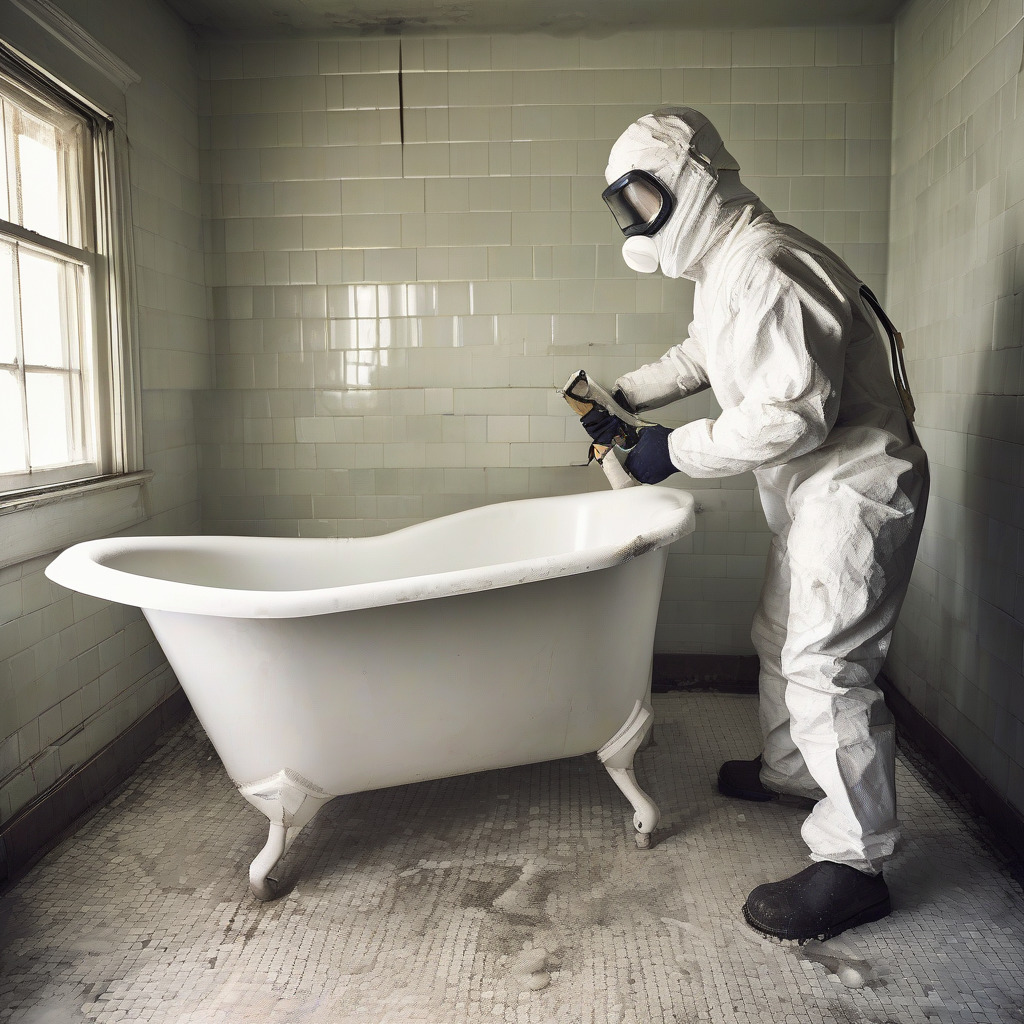
The coatings used in professional refinishing are VOC-heavy during application. Spray application in an enclosed bathroom generates fumes that require a supplied-air respirator — not a basic dust mask — for the applicator, and real ventilation for the space during and after. Isocyanate-based coatings, used in some two-part polyurethane systems, are particularly hazardous without proper protection.
In a standalone house, ventilation is manageable: a window fan, exterior exhaust, closed interior doors. In multi-family buildings, the calculation is more complicated. Shared HVAC systems and hallway air circulation mean fumes can migrate in ways that single-family protocols don’t account for. Colorado’s CDPHE regulates VOC emissions for commercial applicators, and professional operators should be able to demonstrate compliance.
Before scheduling work in a multi-family building, ask contractors directly about their containment protocol. How do they seal the work area? How do they handle exhaust? How long should the unit remain unoccupied? Notifying adjacent unit residents before the work starts is a professional courtesy most experienced contractors will recommend anyway — and a smart way to avoid an awkward conversation with the neighbor in 3B.
Households with respiratory sensitivities, small children, or pets should take the 24- to 48-hour ventilation window seriously. The fumes that linger after application aren’t trivial.
How to Vet a Refinisher Before You Hire
Ask about the coating system by name. A legitimate contractor can name the product they’re using. Two-part epoxy and catalyzed polyurethane systems are generally more durable than single-component acrylics. Follow up by asking whether the product is formulated or adjusted for Denver’s altitude and humidity.
Walk through the prep protocol. Acid etching, surface dry time, chip repair — if they can’t describe the process in detail, that’s a flag. Ask specifically about wash-out procedure and drying time before primer goes on. A contractor who gets impatient with these questions is telling you something useful.
Understand the warranty before signing anything. What’s covered, for how long, and what voids it? A warranty that excludes adhesion failure is useless. Get it in writing before work begins — not after.
Verify licensing and insurance. Ask for a certificate of insurance. Refinishing typically doesn’t require a building permit in Denver, but confirm this for your specific situation.
Get the cure protocol in detail. What do they recommend before first water contact? Before full use? A contractor who says “24 hours and you’re good” may be using a faster-cure product that’s not optimized for Denver conditions. This question tends to sort the contractors who know what they’re doing from those who don’t.
Ask whether they adjust their process for Denver’s altitude, humidity, and hard water. If a contractor looks blank at this question, they may be applying the same protocol they’d use in Houston. Denver is not Houston.
Ask for references from Denver-area jobs completed within the past year or so — not just a Google rating. Personnel and product lines change; recent references are more informative than older ones.
What Reviews Actually Reveal About Denver-Area Operators
A survey of Google and Yelp reviews for Denver-area refinishing contractors reveals consistent patterns worth understanding before you start clicking stars.
The most common complaints cluster around premature peeling, usually appearing six to eighteen months out; lingering odor beyond what was disclosed; and poor finish at the edges and drain — signs of rushed prep or inadequate masking. Reviews mentioning peeling frequently also mention that the contractor went quiet when warranty claims were raised. Weight that pattern heavily. A job failing is one thing. A contractor who stops returning calls when you try to do something about it is another problem entirely.
The most common praise centers on cost savings versus replacement, turnaround speed, and the visual transformation on heavily stained tubs. Customers who asked the right questions upfront tend to report better outcomes. That’s not a coincidence — the vetting conversation itself filters out the contractors who aren’t worth hiring.
Recency matters more than volume. A contractor with hundreds of reviews averaging four-plus stars but a cluster of one-star peeling complaints from the past year deserves more scrutiny than one with fewer reviews and consistent recent praise. Look for specificity — reviews that describe what the contractor actually did are more credible than generic five-star entries. And be skeptical of operators whose reviews are uniformly glowing with no negative feedback at all. That pattern sometimes indicates managed reviews more than earned ones.
When Refinishing Makes Sense and When It Doesn’t
Refinishing works when the substrate is structurally sound — no cracks that flex, no rust-through, no compromised fiberglass. It makes sense when full replacement isn’t in the budget, when you’re dealing with a rental where per-unit cost control matters, or when you’re preserving a vintage cast-iron fixture worth keeping. It’s the obvious call when you need a fast turnaround without construction. For broader context on renovation decisions facing Denver property owners, this kind of repair-versus-replace math comes up regularly in our home & property coverage.
Replacement makes more sense when the substrate is damaged in ways a coating can’t address: structural cracks, rust-through on steel, fiberglass with compromised rigidity. If you’re already doing a full bathroom renovation, the incremental cost of replacing the tub shrinks relative to the overall project. If the tub’s configuration no longer works for you, refinishing just preserves a fixture you don’t want. And if you’ve already had one refinishing job fail on a tub in poor shape, a second coating isn’t going to solve the underlying problem.
A quality job on a cast-iron tub, done with the right materials and proper prep, should deliver ten to fifteen years of normal use. Fiberglass runs shorter — seven to ten years under the same conditions. Both timelines shorten with heavy use, harsh cleaners (abrasive scrubbers and bleach are the enemies of refinished surfaces), or poor bathroom ventilation.
The contractors who tell you their coating is indestructible are the ones to walk away from. The ones who are straightforward about limitations, specific about their materials, and willing to discuss how they work in Denver’s climate specifically — those are the ones worth calling back.