Is a Swamp Cooler Good Enough for Denver Summers or Do You Need Central AC?
August is when Denver's evaporative cooling myth meets reality. A cost-benefit breakdown built on local data, with a decision framework tied to your specific home.

August is when Denver’s evaporative cooling myth meets reality. A cost-benefit breakdown built on local data, with a decision framework tied to your specific home.
For most Denver homeowners, a properly maintained swamp cooler handles most of the summer just fine. HVAC contractors won’t lead with that, but it’s true. Denver’s climate is built for evaporative cooling. The problem is “most of the summer” and “just fine” are doing a lot of work in that sentence, and the weeks when those qualifiers collapse are exactly the weeks we’re in right now.
If you’re reading this in late July or August, you’ve probably already had at least one stretch where your evaporative cooler ran all night and your house never got below 78 degrees. That’s not a broken cooler. That’s the monsoon — a real, recurring feature of Front Range summers — and whether that problem is bad enough to justify refrigerated air, and which system, at what cost, before which rebate deadline, is what this piece is going to answer.
The August Problem Is Real, but It’s Narrower Than You Think
Denver homeowners tend to overcorrect in two directions. One camp insists evaporative cooling works perfectly and anyone who disagrees just doesn’t clean their pads. The other — usually someone who just survived a brutal August week — wants refrigerated air installed immediately regardless of cost. Both miss the actual data.
The Front Range’s typical summer is not humid. Denver sits at the western edge of the Great Plains, where prevailing winds have already dropped most of their moisture crossing the Rockies. Evaporative cooling works here because dry air absorbs evaporated water readily, and the phase change from liquid to vapor pulls heat out of the air moving through your house.
The complication is the North American Monsoon. This seasonal shift in atmospheric circulation draws moisture northward from the Gulf of California and Gulf of Mexico, typically arriving in Denver in mid-July and persisting through mid-August, sometimes into September. Afternoon thunderstorms become common. Relative humidity climbs. Dew points spike. Swamp cooler performance collapses, and this is the period driving the entire debate.
The Number You Actually Need Is Dew Point, Not Relative Humidity
This is the single most useful technical correction in this piece: relative humidity is the wrong metric if you’re trying to understand swamp cooler performance. “Swamp coolers stop working above 60% relative humidity” appears in approximately every HVAC contractor blog on the internet. It’s not exactly wrong, but it’s context-dependent in ways that make it nearly useless as a real-time guide.
Relative humidity is a ratio. Warm air holds more water vapor than cool air, so the same absolute amount of moisture will show as lower relative humidity on a hot afternoon than on a cool morning. A 60% RH reading means something completely different at 95°F than it does at 65°F.
Dew point measures the actual amount of water vapor in the air, independent of temperature — expressed as the temperature at which that air would reach saturation. For evaporative cooling, dew point tells you directly how much additional moisture the air can absorb. That’s the entire mechanism your swamp cooler depends on.
The engineering threshold is roughly 55°F dew point. At that level, a standard single-stage evaporative cooler loses meaningful cooling capacity. At 60°F and above, the air moving through your wet pads may already be close to saturation, so the cooler adds humidity to your living space rather than removing heat from it. On the worst monsoon days, when Denver dew points hit 65°F, a swamp cooler actively makes your house more uncomfortable.
Denver’s typical July dew point runs between 45°F and 52°F on most days. At those levels, a well-maintained swamp cooler performs close to its rated capacity. The failure window — when dew points spike above 55°F for multiple hours — accounts for roughly 15 to 20 days per summer, concentrated in the late July through mid-August monsoon window. That’s an estimate based on historical Front Range climate patterns; verify against NWS Boulder historical data for your specific planning purposes.
You can track this in real time. Go to weather.gov and search for your ZIP code. Under the hourly forecast table, dew point appears as a separate field. Below 50°F: full capacity. Above 55°F and climbing: open windows at sunset and manage expectations. Above 60°F: start thinking seriously about whether anyone in your household needs to be somewhere with refrigerated air.
Those 15 to 20 failure days are what this entire decision turns on. Everything else is noise.
What Central AC Actually Costs in Denver
National cost estimates for central air installation are nearly useless for Denver homeowners because they average across wildly different situations. The cost difference between a home that already has a gas furnace and functional ductwork and a home with neither is not marginal — it can be the difference between a $5,000 project and a $20,000-plus project. The figures below are benchmark estimates; get at least two local contractor quotes for your specific home before making any decisions.
Existing gas furnace and functional ductwork
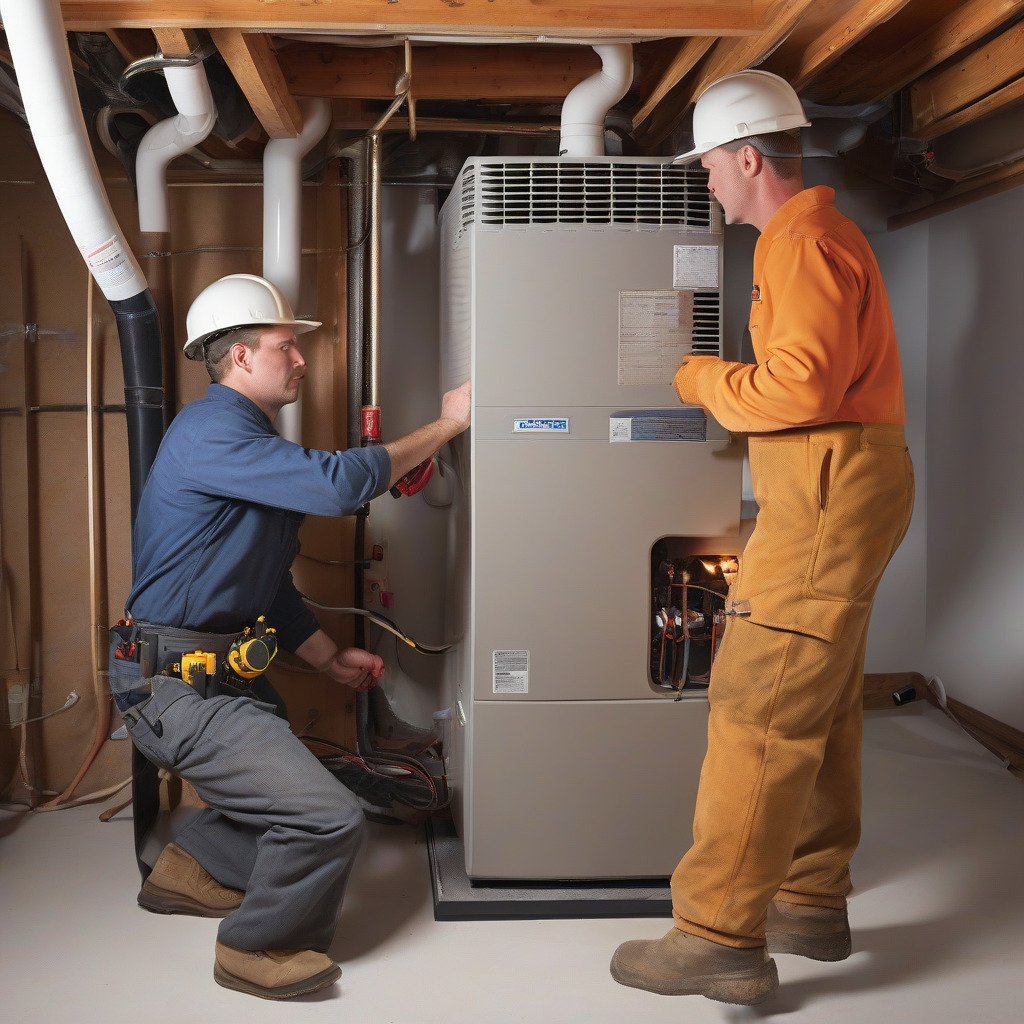
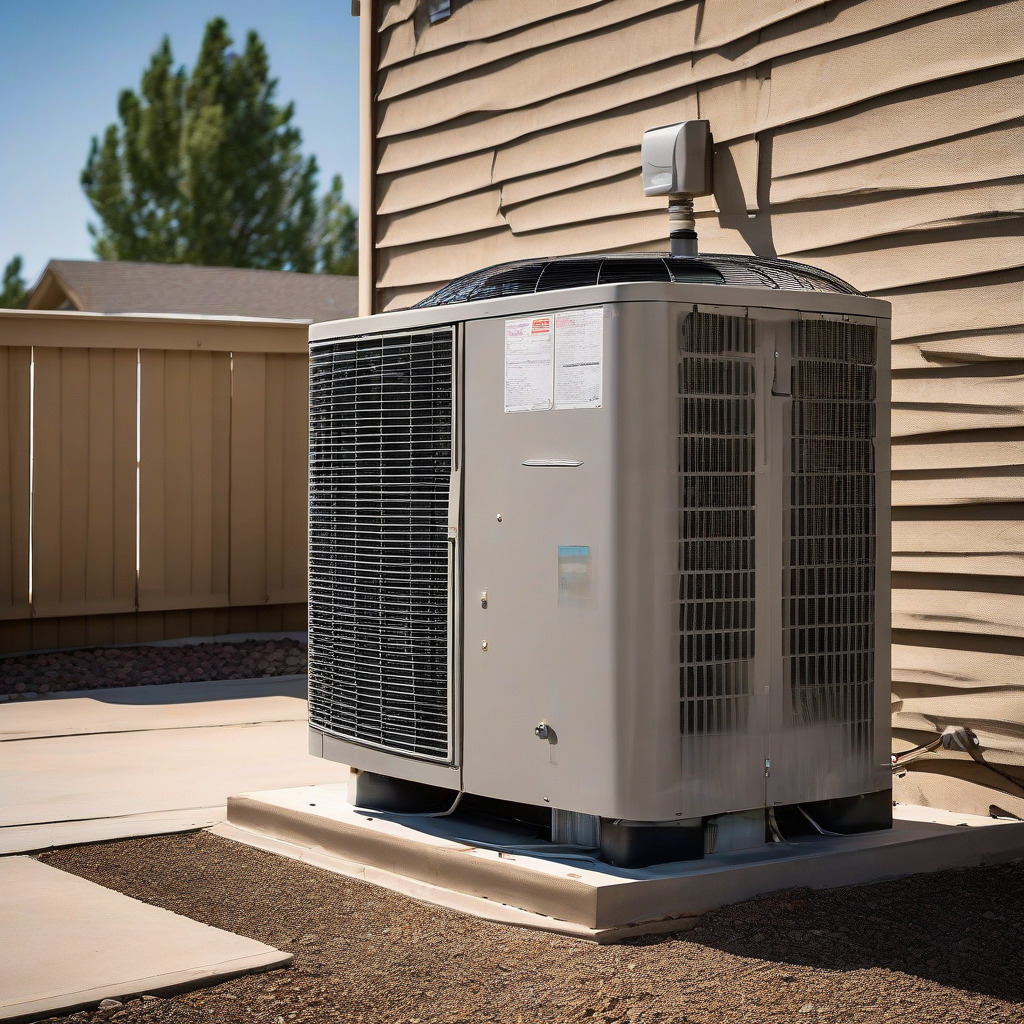
This is the common situation in Denver’s postwar neighborhoods — Harvey Park, Barnum, University Hills, Hampden, the ranches of Wheat Ridge and Lakewood that make up the metro’s practical middle. A home built between 1950 and 1980 with a gas furnace almost always has ductwork. The same ducts that distribute heated air in winter carry cooled air in summer. Installing central AC means adding a condensing unit outside, an evaporator coil on the existing air handler, refrigerant line sets, and the associated electrical work and city mechanical permit.
Denver requires a mechanical permit for this work; fees run roughly $150 to $300, typically pulled by the contractor. Installed cost for a properly sized system with existing ductwork runs in the range of $4,500 to $8,500, including equipment, labor, refrigerant, and permit. That range reflects equipment tier, duct condition (older ducts sometimes need sealing before refrigerated air distributes evenly), and electrical panel capacity. These are benchmarks. Get quotes.
No existing ductwork
This is a categorically different problem. A Capitol Hill Victorian, a Denver Square on Congress Park’s back streets, a home that was heated by boiler and radiators — these have no duct infrastructure. Full duct installation followed by AC equipment commonly runs $12,000 to $22,000 or more depending on layout and routing difficulty. In a multi-story Victorian with plaster walls and limited attic access, costs go higher. Sometimes significantly higher.
The realistic alternative for most homes in this category is a ductless mini-split system — one or more outdoor compressor units paired with wall-mounted or ceiling-cassette indoor air handlers. Mini-splits also provide heat in winter, which changes the operating cost calculation. Get specific quotes for your home’s square footage and zone count before comparing this option to ducted installation.
One thing homeowners in Denver’s historic districts need to know before signing anything: the Denver Landmark Preservation Commission has jurisdiction over exterior modifications in designated historic districts and over individually landmarked properties. Placing a condensing unit or mini-split compressor on a street-facing façade, or routing refrigerant lines visibly across a historic exterior, may require Commission review. Homes in Capitol Hill, Potter-Lawson, Curtis Park, and similar districts are potentially subject to this. Confirm the requirements before signing a contract — not after, when it’s too late to change the installation plan.
The Altitude Problem That Heat Pump Ratings Don’t Mention
If you’ve been researching heat pumps, you’ve encountered SEER2 and HSPF2 efficiency ratings. Here’s what those ratings don’t tell you: they’re established at sea level. Denver is at 5,280 feet.
At altitude, air is less dense — roughly 17% less dense than at sea level. A heat pump moves heat between indoor and outdoor air using a refrigerant cycle, and lower air density means the system moves less heat per unit of time than its rated capacity suggests. The practical derating for heating capacity at Denver’s altitude is approximately 10 to 15% compared to rated specifications.
This matters for sizing. A contractor who looks at your square footage, pulls a SEER2 rating off a spec sheet, and writes a proposal without adjusting for altitude is not doing the job correctly. Ask directly: “Are you sizing this system using altitude-corrected Manual J load calculations?” Manual J is the industry-standard residential load calculation methodology; altitude correction is a required input when the installation site is at elevation. A contractor who doesn’t know what you’re talking about is a red flag. Walk away.
Denver’s winters also aren’t Houston’s winters — January lows can drop to single digits. A heat pump installed as a year-round system here should be rated for meaningful capacity at 5°F outdoor temperature. Look for units carrying a “cold-climate heat pump” designation. Then mentally reduce that rated capacity by 10 to 15% for altitude.
The reason heat pumps are worth this additional complexity is the rebate and operating cost math. A properly sized cold-climate heat pump does two things: replaces your central AC and offsets natural gas heating in winter with electricity. For homes already committing to AC installation, the question of whether to step up to a heat pump rather than an AC-only unit is worth running through the rebate math below. The difference in upfront cost may be smaller than you’d expect once rebates enter the picture.
Xcel Energy Rebates: What’s Available and Why Timing Matters
Xcel Energy runs residential efficiency rebate programs funded on a calendar-year basis, and late summer is when delay carries real financial cost. Programs can exhaust funding before December 31. Waiting until spring means a new program year with potentially lower funding or changed terms. This is how the program has historically worked.
Verify current amounts and qualifying equipment at xcelenergy.com/savings before installation — program terms can change mid-year. As a general guide based on recent program years:
Central air conditioning systems meeting minimum efficiency thresholds have historically qualified for $100 to $400 depending on efficiency tier. Ducted cold-climate heat pumps have historically qualified for $200 to $1,200 depending on system type and rated efficiency. Your contractor must install a qualifying unit and submit the required documentation — model number, rated efficiency, proof of installation — for the rebate application.
Denver households meeting income eligibility thresholds may qualify for higher rebate amounts or direct installation support through Colorado ENERGY STAR Homes and Affordable Comfort programs. Terms are at xcelenergy.com/savings.
These rebates stack with federal incentives. The Inflation Reduction Act’s Section 25C tax credit offers 30% of installed cost, up to $2,000, for qualifying heat pump installations. This is a tax credit — it reduces your federal income tax liability for the year of installation, claimed on IRS Form 5695. It’s independent of the Xcel rebate and can be combined with it. Confirm current credit terms with a tax professional; federal program details are subject to legislative change.
The Option Almost Nobody Talks About: Two-Stage Evaporative Cooling
Before the decision framework, there’s a genuine third option that gets almost no coverage locally: the two-stage indirect/direct evaporative cooler. This is not a slightly upgraded swamp cooler. It’s a different technology that extends the operational range of evaporative cooling meaningfully, though not completely.
A standard single-stage evaporative cooler pulls outdoor air through water-saturated pads and pushes cooler, more-humid air into your home. Its limitation: it raises indoor humidity while lowering temperature, and when outdoor humidity is already high, there’s nowhere for the added moisture to go.
A two-stage unit adds a first stage: a heat exchanger that pre-cools incoming air without adding moisture to it. A separate airstream evaporates water across one side of the heat exchanger, cooling the other side through thermal transfer rather than direct contact. That pre-cooled, dry air then passes through a conventional wet media stage. Because the air entering the wet stage is already cooler, the system delivers effective cooling at dew points up to roughly 65°F, versus 55°F for single-stage.
Coolerado, a Colorado-based company, pioneered this category for Front Range applications. Verify their current product availability and dealer network before purchasing — the company has changed form over the years. Two-stage evaporative technology is available through other manufacturers as well; ask local HVAC suppliers about current options.
Installed cost runs roughly $2,500 to $5,000. That’s more than the $500 to $1,500 a standard evaporative cooler replacement costs, but substantially less than central AC. For a home with a working swamp cooler that’s hitting its limits on monsoon days, this upgrade path is worth pricing out. It narrows the summer failure window from roughly 15 to 20 days to perhaps 5 to 8. It doesn’t solve the problem — on Denver’s worst monsoon days, when afternoon dew points hit 65°F and evenings stay above 75, a two-stage unit still struggles. But it reduces the problem considerably, uses less water than single-stage units, and costs a fraction of full refrigerated air.
Check with Denver Water and Xcel about whether either utility currently offers rebates for two-stage evaporative upgrades. Program terms change annually.
Operating Costs: The Water-Versus-Electricity Trade-off
This comparison rarely gets made honestly because the two costs appear on different bills.
A whole-house evaporative cooler running continuously uses roughly 3 to 7 gallons of water per hour, depending on unit size, outdoor conditions, and whether the unit has a bleed-off valve (required to prevent mineral buildup, but it continuously drains a portion of the recirculating water). Running 8 hours a day over a 90-day cooling season, that’s 2,160 to 5,040 gallons per season.
Denver Water’s summer tiered rate structure means water use above your household’s base tier is billed at a higher marginal rate — so the real marginal cost of swamp cooler operation is higher than your base rate suggests. Verify current rate tiers at denverwater.org. Also check current drought restriction status there; Denver Water’s restrictions have historically focused on outdoor irrigation, but don’t assume evaporative cooling is exempt without confirming the specific terms in effect. For more on how Denver’s summer water bills work in practice, our home & property coverage goes deeper on utility costs and homeowner decisions across the metro.
Central AC uses no water but adds meaningful electrical load. The exact monthly addition depends on your home’s square footage, insulation quality, thermostat settings, and how many days are actually hot enough to require cooling. Pull your Xcel bill from last August as a baseline, then ask any contractor you talk to for an estimated annual runtime for a properly sized system in your home. That’s a more reliable number than any general estimate — and it’s a question any competent contractor should be able to answer on the spot.
Neither option is dramatically cheaper to operate per season. The comfort and reliability difference is the primary driver of this decision.
Four Realistic Paths for Denver Homeowners
The decision depends on four things specific to you: whether you have existing ductwork, your home’s age and type, how many uncomfortable days per summer you can tolerate, and whether this is a long-term hold.
Path 1: Maintain and optimize your existing swamp cooler.
If you haven’t maintained your unit properly, you haven’t actually tested its ceiling. New pads, a new pump, and corrected water distribution can recover real capacity. For a well-insulated home where you’re away during peak afternoon hours and your failure window runs on the lower end, optimizing the existing system and banking the installation cost is a legitimate choice. Some swamp cooler problems really are just dirty pads. Cost: $200 to $800.
Path 2: Upgrade to a two-stage evaporative cooler.
Right for homeowners with functional evaporative infrastructure who want improved performance without the cost of refrigerated air. A postwar Denver ranch where the family can tolerate an occasional brutal August week but isn’t ready to commit to full AC installation is a candidate. The upgrade costs $2,500 to $5,000 installed, reduces the failure window from 15 to 20 days to perhaps 5 to 8, and keeps operating costs lower than refrigerated air. It does not eliminate the monsoon problem.
Path 3: Add central AC to existing ductwork.
The most accessible path for Denver’s postwar stock with gas furnaces. Installed cost in the $4,500 to $8,500 range is a real investment, but Xcel rebates plus the federal tax credit reduce the net cost substantially — potentially into the $2,000 to $4,000 range after incentives for a qualifying heat pump installation. For any household with members who are medically vulnerable to heat — elderly, young children, anyone with cardiac or respiratory conditions — repeated cycles of inadequate cooling aren’t an abstract discomfort. They’re a health issue. This path solves the monsoon problem completely. For a family planning to hold the home for many years, this is almost always the right answer. The math supports it; the rebate window makes doing it now rather than later financially rational. If you’re already evaluating your home’s major systems before a purchase decision, what Denver home inspectors flag most often is useful context for understanding what else may be lurking.
Path 4: Full AC or heat pump installation without existing ductwork.
This is the genuinely hard case. A Capitol Hill Victorian or a boiler-heated home without ductwork is looking at $12,000 to $22,000 or more for a ducted central system, or a separately quoted amount for a whole-home mini-split solution. At those numbers, this stops being a cooling question and becomes a home investment question. If the home is a short-term hold before sale, the installation cost is unlikely to be fully recovered. If it’s a long-term hold with a family that needs reliable summer comfort, the math may still support it — particularly with a heat pump stacking federal IRA credits and Xcel rebates. For this scenario: get three quotes, ask specifically about mini-split multi-zone systems versus full duct installation, and have an honest conversation about which approach actually suits your home’s structure. For historically significant homes where exterior modifications trigger landmark review, mini-splits often make more sense on paper and in practice.
What You Should Actually Do
Here’s the honest editorial position: most Denver homeowners reading this in August who have a gas furnace and existing ductwork should seriously price out adding a refrigerated coil. Not necessarily do it — but price it. The gap between what you assume it costs and what a contractor actually quotes you, after rebates and the federal tax credit, tends to be smaller than people expect. The 15 to 20 failure days concentrated in your worst summer weeks are also the days when the people in your house are the most miserable. That’s not nothing.
For homeowners without ductwork, the math is harder and requires real quotes before any decision makes sense. For homeowners who genuinely tolerate the monsoon weeks fine and have well-maintained units, Path 1 is not a rationalization — it’s a defensible choice.
What this decision does not require is a contractor’s sales pitch. It requires the dew point reading on weather.gov this afternoon, an honest look at your ductwork situation, and calls to at least two local Denver contractors. Applewood Plumbing Heating & Electric, Blue Sky Plumbing & Heating, Save Home Heat, Bell Plumbing and Heating, and Altitude Comfort Heating and Air are among the established firms operating in the metro. Get quotes before Xcel’s rebate window closes.
Cost figures represent estimated ranges based on industry benchmarks for the Denver metro; your specific home, ductwork condition, and equipment selection will affect actual quotes. Obtain at least two contractor quotes before committing. Xcel Energy rebate amounts and terms are subject to change; verify at xcelenergy.com/savings before installation. Federal IRA Section 25C credit terms should be confirmed with a tax professional.