What Denver Condo Buyers Need to Know About HOA Reserve Funds Before Closing
Colorado's SB 206 took effect January 1, 2025, and it's already exposing underfunded buildings in the neighborhoods where first-time buyers are most active. Here's how to read what it reveals befor…


Colorado’s SB 206 took effect January 1, 2025, and it’s already exposing underfunded buildings in the neighborhoods where first-time buyers are most active. Here’s how to read what it reveals before you sign anything.
Closing season is active, and a meaningful number of Denver condo buyers are about to sign contracts on buildings that have been quietly spending down their savings accounts for years.
Most of them have never heard of Senate Bill 206.
That’s the 2024 Colorado statute that took effect January 1, 2025, imposing the most substantive reserve study requirements Colorado condo HOAs have ever faced. It won’t prevent a special assessment from landing on your doorstep six months after you close. What it will do — if you know how to use it — is give you enough information to see that assessment coming before you’re already on the hook for the mortgage.
This guide translates the statute into terms a buyer can act on: the specific documents to request, the numbers that matter, the mortgage complications nobody explains at open houses, and the insurance dynamic currently eroding reserve balances in Denver buildings right now.
What a Reserve Fund Actually Is, and What SB 206 Now Requires
A reserve fund is the HOA’s savings account for capital replacement. Roofs wear out. Boilers fail. Parking structures crack and spall. In a well-run building, the HOA collects a portion of every owner’s monthly dues — above operating expenses — and parks that money in a reserve account. When the roof needs replacing, owners don’t get a $15,000 surprise bill. When the savings account has been depleted or never properly funded, the surprise bill is how the work gets paid for. That bill is a special assessment.
A reserve study is the engineering and financial analysis that tells a building what its capital components are worth, how long before they need replacement, and how much money needs to be in the account right now to cover that future cost on schedule. Think of it as the actuarial table for your building’s physical infrastructure. Not bedtime reading, but worth understanding before you hand over your earnest money.
Before SB 206, Colorado didn’t require HOAs to conduct reserve studies on any particular schedule or use credentialed professionals. Some buildings had studies; many didn’t. Some were conducted by the property management company with no engineering credentials attached. The quality and frequency were largely voluntary — which is a polite way of saying some buildings made it up as they went.
SB 206 changed that. The law requires Colorado condo HOAs to hire a qualified reserve specialist — a professional with recognized credentials in reserve study methodology, referencing designations from the Community Associations Institute such as Reserve Specialist (RS) and Professional Reserve Analyst (PRA). HOAs must update their studies on a defined cycle: at minimum every three years with a site visit. The law also requires HOAs to disclose the reserve study, the current balance, and a funded reserve plan if the building falls below the target threshold.
One note on specifics: the percentage floor for “adequate” reserve funding — sometimes cited in early SB 206 summaries as 70% — and the exact exemptions for small associations are provisions worth verifying against the current statutory text or with a Colorado HOA attorney, since the bill moved through multiple amendments. The 70% figure is consistent with CAI guidance and industry benchmarks. What is unambiguous: HOAs operating below adequate reserve levels must have a documented remediation plan, and buyers are entitled to see it.
How to Get the Reserve Study and HOA Financials Before You’re Under Contract
Under the Colorado Common Interest Ownership Act, sellers must provide a resale disclosure package after a contract is executed. The buyer has 14 calendar days from receipt to review and, if unsatisfied, terminate and recover earnest money. The package must include the HOA’s current budget, financial statements, reserve fund balance, reserve study, and governing documents.
Do not waive the HOA document review contingency in the Colorado Contract to Buy and Sell Real Estate. In competitive markets, buyers get pressured to waive contingencies. Don’t do it with this one. It is the only formal mechanism protecting you from buying into a financial disaster without recourse.
That said, waiting until you’re under contract is already too late for clear-headed decision-making. By the time you’ve submitted an offer, you’re emotionally and financially invested. Request the reserve study and financials before you make an offer. Sellers and their agents aren’t legally required to provide them pre-offer, but many will — especially if the documents look solid. If the seller’s agent is evasive, if you’re told the reserve study is “being updated” and will be available after closing, pay attention to that. HOAs that know their numbers are bad don’t rush to share them early.
Third-party review services — HOA Café, CondoTek, and similar — can quickly summarize key financial metrics from a dense disclosure package. A Denver real estate attorney can do the same with legal interpretation included. Given that some HOA packages run to 200 or 300 pages, the cost is trivial relative to what you’re buying.
Read the disclosure package itself carefully, not just the summary. A reserve study that hasn’t been updated in more than three years is a flag. So are gaps in board meeting minutes, deferred study updates, missing financial statements, or any language suggesting a special assessment has been “discussed” but not formally levied. Under SB 206, a study more than three years old without a site-visit update is a material disclosure deficiency. For a broader look at what else Denver’s disclosure process surfaces, see what Denver home inspectors flag most often and why it matters here.
Reading the Numbers
When you receive the reserve study, the single most important figure is the percent-funded number. It represents the ratio of the HOA’s current reserve balance to what that balance should be, based on the age and condition of all capital components. It reduces complex engineering projections to a single indicator a non-expert can use.
Reserve studies can also use a cash-flow method, which projects the minimum annual contribution needed to avoid a zero balance over a multi-decade period. Cash-flow studies can show a “passing” result even when the reserve is currently low, because they model future contributions rather than the present balance. If the study you receive uses only the cash-flow method, ask specifically for the percent-funded figure. A credentialed specialist can provide both.
The benchmarks: above 70% funded means the building has most of what it needs banked. At 50–70%, moderate risk — dues adjustments are likely but a major assessment isn’t imminent if the building keeps contributing. Below 50%, you’re in elevated risk territory. Below 30%, the question isn’t whether an assessment is coming. It’s when and how large.
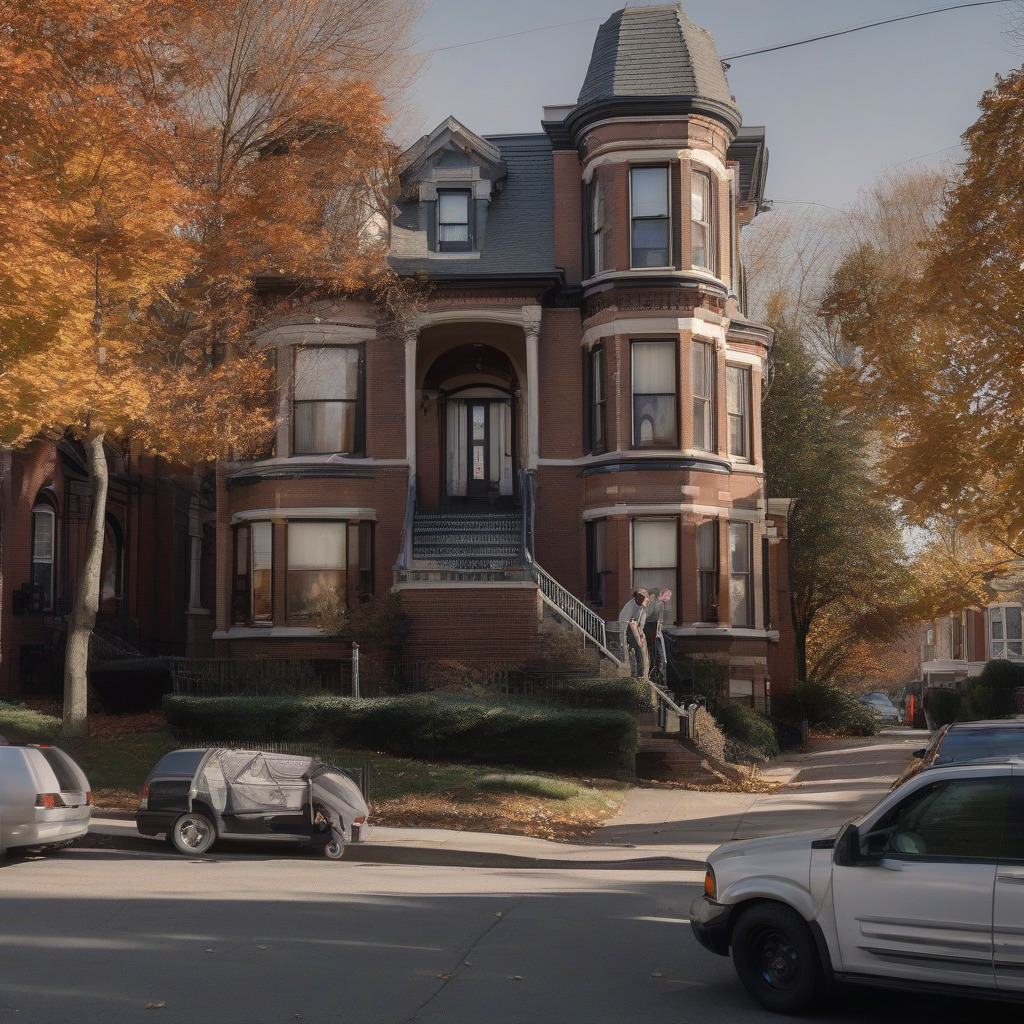
These numbers are not abstract in Denver’s market. Capitol Hill and Cheesman Park are full of brick mid-rises built in the 1960s and 1970s, with roofs, masonry, boiler systems, and elevator equipment now 50 to 60 years old. These are also the neighborhoods with entry-level price points that attract first-time buyers and FHA borrowers — and they’re the buildings most likely to carry reserve funding ratios in the 20–40% range, because dues were kept artificially low for decades while capital replacement was deferred. The low dues were the selling point. They were also the problem, and the bill is coming due now.
LoDo warehouse conversions carry a different profile. Some have resolved construction defect litigation, with settlement proceeds going toward building envelope and structural repairs. That’s a one-time capital event. Ask the seller whether the current reserve level reflects a post-litigation period or whether the fund has been rebuilt since. These are not the same thing.
Finally, pay attention to what kind of study you’re looking at. A Level III update — the most limited type — refreshes numbers from a prior study without a physical inspection. Level II adds a visual site visit. Level I is the most thorough: full inspection plus complete financial analysis. In aging buildings where visible deterioration can accelerate quickly, a Level III update that’s two or three years old may be systematically underestimating what current owners will need to fund.
The Special Assessment Question
SB 206 does not eliminate special assessments. A special assessment is a one-time charge levied against all unit owners to cover a capital expense the reserve can’t absorb. In most Colorado HOAs, the board can levy assessments up to a certain threshold without a full owner vote; your specific HOA’s CC&Rs determine where that line sits.
Post-Surfside, many Colorado HOAs accelerated deferred structural and envelope inspections. In some cases, findings moved projects from “future planning” to “immediate necessity,” compressing timelines that owners had assumed were years away. Buyers most exposed: those purchasing in buildings where the reserve study is outdated, the percent-funded number is below 40%, and major capital components are visibly aging.
If you see a building with a membrane roof installed in 2003, original 1968 boilers, and a reserve study showing 22% funding, you’re looking at near-term assessment exposure regardless of what the listing agent says about the block. During the HOA document review period, a buyer who finds elevated reserve risk can negotiate a price reduction, ask the seller to contribute a lump sum to the reserve at closing, or terminate the contract. Those tools only work if you’re actually reading the documents. Understanding what closing costs actually look like for Colorado home buyers in 2026 is useful context for how seller contributions at closing typically get structured.
How Reserve Health Affects Your Mortgage
This is the part almost no buyer hears about at the offer stage.
The FHA requires that at least 10% of an HOA’s annual budget be allocated to reserves for a condo project to be FHA-approved. If a board has cut reserve contributions to offset rising insurance premiums — which is happening in some Denver buildings right now — the project can lose or fail to renew FHA approval. Buyers planning to use FHA financing can’t get a loan on an FHA-disapproved project. This is how buyers end up scrambling for conventional financing at the last minute, or losing the deal entirely.
A reserve fund below roughly 50% funded can also trigger FHA project rejection under the agency’s risk thresholds. That restriction doesn’t just affect the buyer trying to purchase today — it affects the owner trying to sell in five years. Denver’s sub-$400,000 condo market, where FHA financing is the primary vehicle for first-time buyers, is the segment most exposed. A smaller eligible buyer pool means downward pressure on resale prices. Buying into a building where FHA approval is at risk or already lost constrains your future equity position in a way that won’t show up until you’re trying to get out.
Fannie Mae and VA loans carry their own project approval requirements, including standards around reserve funding and pending litigation. Fannie Mae’s Condo Project Manager tool, accessible through lenders, flags HOAs with reserve funding below 10% of budget or with pending special assessments.
Before going under contract on any Denver condo, ask your lender to run a project eligibility check. For FHA, the condo approval lookup is publicly searchable on HUD’s website. For Fannie Mae, it’s through the Condo Project Manager tool. This check takes a few minutes and can tell you whether the building is currently approved. Do it before you write the offer.
The Insurance Factor Squeezing Reserve Contributions
Colorado’s HB 22-1137, effective 2023, changed requirements for HOA master insurance policies, including replacement cost coverage and minimum coverage levels. The intent was to ensure buildings carry adequate insurance for full replacement after a catastrophic loss. What it did to premiums in practice caught a lot of HOA boards flat-footed.
Colorado’s commercial property insurance market has seen sharp premium increases since 2020 — driven by hail and weather loss history along the Front Range, reinsurance market tightening, and higher replacement cost valuations. When HB 22-1137 raised minimum coverage requirements, buildings that had been underinsured saw premiums jump substantially when they came into compliance.
The connection to reserve funds is direct. HOA budgets aren’t elastic. When insurance premiums increase, that money comes from somewhere. For boards reluctant to raise dues sharply, the source is often the reserve contribution line. A board that quietly reduces the monthly reserve contribution to offset a premium increase may not flag that choice prominently in meeting minutes. Over three or four years, those reductions compound into a materially lower balance than the prior study projected.
When reviewing the HOA disclosure package, check the budget trend over the past three years. Has the reserve contribution as a percentage of total budget held steady, increased, or declined? A shrinking reserve contribution in a building with rising insurance costs is exactly what SB 206 was designed to surface.
For your own coverage: HO-6 loss assessment coverage matters more than it used to. Standard HO-6 policies include some loss assessment coverage, but the default limit — often $1,000 or $5,000 — is inadequate for Denver’s current environment. Buyers in Capitol Hill, LoHi, and similar neighborhoods should carry loss assessment coverage of at least $50,000, and $100,000 is not overkill. It’s cheap to add and pays out if the HOA levies a special assessment exceeding the master policy deductible. Also check the master policy deductible itself when the HOA insurance certificate arrives — it’s been rising in Denver’s market, and a large per-occurrence deductible means a meaningful portion of any casualty claim gets passed through to owners.
Eight Questions to Ask Before You Sign Anything
1. Request the reserve study and confirm it includes a physical site visit.
Ask when it was conducted, who did it (RS or PRA designation from CAI), and whether it was a Level I or Level II inspection. Under SB 206, a study more than three years old without a site-visit update is a material red flag and a required disclosure.
2. Ask what percent-funded the reserve currently is.
The figure should be in the study. If it’s below 50%, ask for the board’s written remediation plan. Under SB 206, HOAs below threshold are supposed to have one. If none exists, that’s a disclosure problem.
3. Check the last 24 months of board meeting minutes for any special assessment discussion.
Boards often talk about the need for an assessment months before formally levying one. The word “assessment” in minutes from the past 18 months warrants a direct question — not a shrug.
4. Ask whether a special assessment has been formally levied or approved.
An assessment that’s been voted on but not yet collected is a known liability you’re about to inherit. The seller is required to disclose it. If you find evidence of one in the minutes that doesn’t appear in the seller’s property disclosure, that’s a serious problem.
5. Confirm FHA and VA approval status before you go under contract.
Run the FHA condo approval check on HUD’s website, or have your lender do it. If you’re using conventional financing, ask your lender to run the Fannie Mae Condo Project Manager eligibility check. Don’t wait until underwriting to find out the project is ineligible.
6. Review the HOA insurance certificate and check your HO-6 loss assessment coverage.
Look at the master policy deductible and total coverage. Make sure your HO-6 loss assessment limit at minimum matches the master policy deductible, with room for assessments outside the insurance context.
7. Ask your buyer’s agent whether recent sales in the building fell through during HOA document review.
Agents active in a neighborhood know this. A building where contracts regularly die during document review is a building where informed buyers keep finding something they don’t like. Informal, but often the most useful intelligence available.
8. If the reserve study is more than three years old, treat it as a standalone problem.
Not just because SB 206 requires more frequent updates, but because in aging buildings, three years is long enough for a capital component to move from “near end of useful life” to “failed.” An outdated study may be systematically underestimating what current owners will need to pay.
Who to Call in Denver
Orten Caleman & Holmes is a Denver firm that focuses specifically on community association law in Colorado. Their attorneys can interpret reserve studies, advise on SB 206 compliance, and clarify what an HOA’s disclosure obligations actually require. If you find concerning numbers in a disclosure package and aren’t sure whether what you’re seeing is a legal deficiency, this is the right call.
Altitude Community Law is another Colorado HOA firm with deep experience in common interest community statute, including SB 206 and the CCIOA disclosure framework. They advise both associations and individual owners; buyers with specific questions about rights under the resale disclosure process can seek a consultation.
The CAI Rocky Mountain Chapter can refer you to credentialed reserve specialists — RS and PRA designees — who conduct studies and can provide independent interpretation of a study you’ve already received. If the study in your disclosure package raises questions, a second opinion from a credentialed specialist runs a few hundred dollars against a six-figure purchase. That’s a reasonable trade.
The Colorado Division of Real Estate maintains the HOA Information and Resource Center, which tracks HOA registrations and handles consumer complaints related to HOA disclosure obligations. If you believe a seller has withheld required SB 206 documents, the Division is the relevant regulatory contact. Their website has plain-language summaries of buyer rights under CCIOA.
Denver Metro Association of Realtors (DMAR) can refer you to agents with specific experience in HOA-intensive neighborhoods. If your current agent doesn’t routinely request reserve documents before an offer or can’t read a percent-funded figure, that’s worth addressing before you’re under contract.
For mortgage project eligibility checks, ask your lender whether they regularly work Denver’s older condo stock. Lenders active in Capitol Hill and LoHi will have faster working knowledge of which buildings carry FHA or VA complications than lenders primarily oriented toward single-family transactions.
Denver’s condo market isn’t going to pause while buyers catch up on HOA finance. The buildings that look most attractive to first-time buyers on price often got there by not saving enough money. SB 206 created a legal obligation to show buyers that picture.
Whether buyers know to look at it is a different question. You do now.
For more local coverage, explore our Moving & Real Estate section.