What Denver Car Buyers Actually Need to Know Before Going Electric
From the Eisenhower Tunnel to hail alley, Colorado throws problems at EV owners that a California-written buyer's guide won't warn you about.

From the Eisenhower Tunnel to hail alley, Colorado throws problems at EV owners that a California-written buyer’s guide won’t warn you about.
Denver is, by nearly every measure, a logical place to buy an electric vehicle. Xcel Energy’s overnight EV rate runs around 10 cents per kilowatt-hour. Colorado’s state income tax credit ranks among the most generous in the country. The metro has an educated, outdoors-oriented buyer base that takes range planning seriously. The air quality argument is also more concrete here than in most markets: cutting tailpipe emissions at altitude, where ozone and particulates concentrate along the Front Range on bad-air days, is a tangible win. Summer smog days still happen in Denver. That matters.
And yet two realities make buying an EV here materially different from buying one in Austin or Phoenix or suburban New Jersey. Neither one shows up in the glossy comparison guides national auto publications push every January.
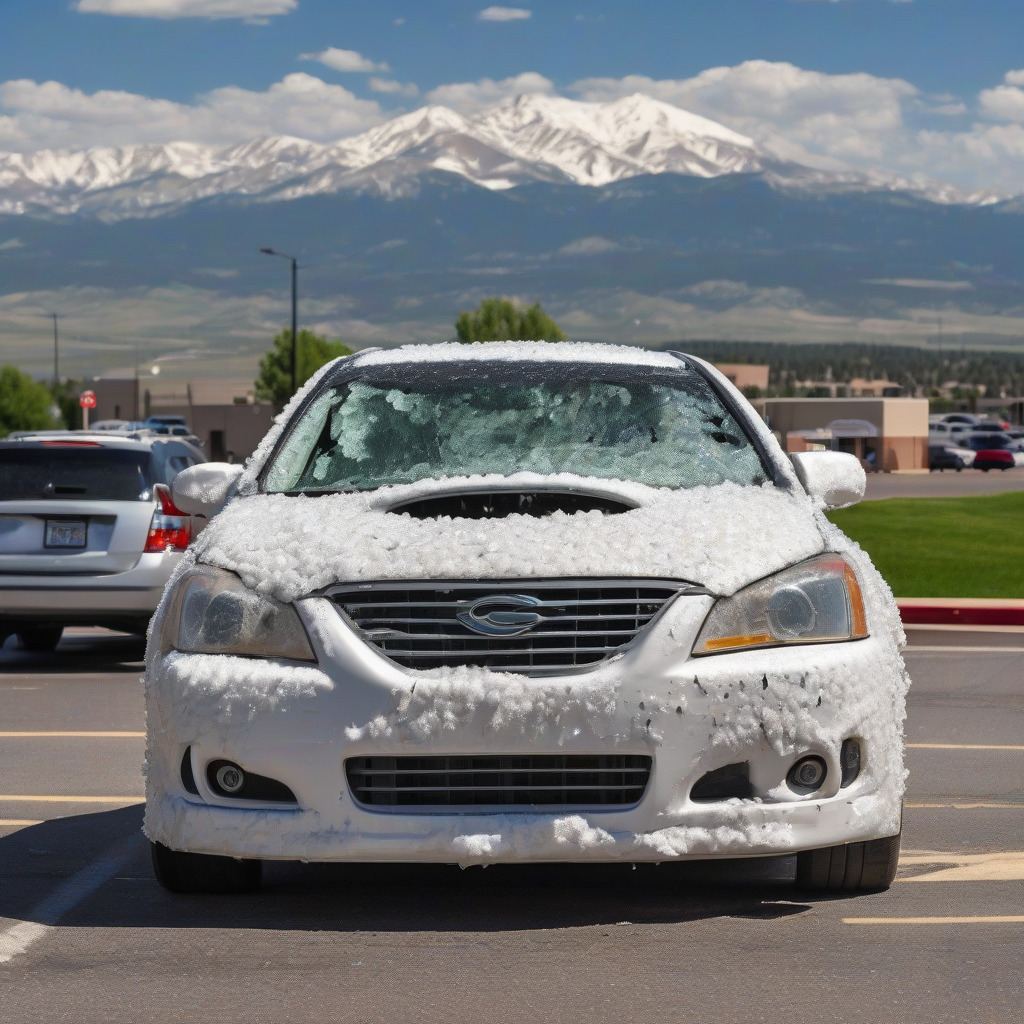
The first: Colorado ranks in the top three states for hail insurance losses. The second: the single most popular EV road trip from the Denver metro involves climbing from 5,280 feet to more than 11,000 feet in roughly 80 miles, often in sub-freezing temperatures, while every other driver is doing the same thing with the same charging stops in mind. Head up I-70 to Summit County, and you’re squarely in that problem corridor.
Everything below is built around those two facts. The questions are the ones Denver buyers are actually asking.
Does Hail Damage Void My EV’s Battery Warranty, or Create a Safety Problem?
The short answer: cosmetic hail damage to body panels does not void the federally mandated battery warranty. U.S. federal law requires manufacturers to provide at least an 8-year/100,000-mile warranty on the battery pack and electric drive components. A dented hood or dimpled roof doesn’t touch that protection. The battery sits under the floor.
The distinction that actually matters is between cosmetic damage and structural or undercarriage damage. The battery floor pan and thermal management systems sit low in the chassis, which makes them resistant to topside hail strikes. Severe storms — the ones that loft baseball-sized hail or kick road debris across highways — can cause undercarriage damage that reaches the battery protection. That’s a different situation.
Here’s the warranty complication that almost no local coverage has addressed. If a body shop performs structural repairs after a hail event — disturbing a rocker panel, the floor pan framing, or cooling line routing — the manufacturer’s position on subsequent battery or thermal system warranty claims becomes genuinely unclear. Tesla, GM, and Rivian all maintain certified collision repair networks, and their warranty language generally conditions claims on repairs meeting OEM specifications. Before you authorize any structural bodywork on an EV after a hail event, get written confirmation from the manufacturer’s warranty department — not the body shop, not the insurance adjuster — about which repair standards apply. This isn’t optional if the damage goes beyond pure cosmetic surface dents.
What Does Comprehensive Insurance Actually Cost on an EV in Denver?
This is the number people want before they sign. The gap between EV and gas-car premiums is real, and it’s specific to this market.
Colorado already ranks among the ten most expensive states for auto insurance. Hail exposure is the headline driver, but the state also has above-average vehicle theft rates, elevated rates of uninsured motorists, and high repair labor costs in the metro. EVs add another layer: higher replacement value, bodywork that requires specialized training and in some cases OEM certification, and parts lead times for certain models that have historically stretched to 16 weeks or more. The insurer carries rental car costs for that entire period. That gets priced into your premium.
Get a side-by-side quote from a Denver independent broker before you commit. Same driver profile, same ZIP code, your target EV against a comparable gas vehicle. The gap in comprehensive coverage alone is worth knowing before you’ve signed anything.
For buyers in higher hail-risk ZIP codes — Arvada (80003), Golden (80401), Lakewood, Ken Caryl (80128) — the picture is worse. These communities sit in the western-arc storm corridor where convective cells coming off the Front Range tend to stall. The premium gap may run wider than metro averages suggest.
One tool some Colorado insurers offer, underused by EV buyers: a hail-specific endorsement that separates the hail deductible from the standard comprehensive deductible. If your standard comprehensive deductible is $1,000 but your hail endorsement sets a lower separate deductible for hail events only, that structure can save real money on a vehicle where even moderate hail repair runs expensive. Ask your broker explicitly whether this endorsement is available on your policy and whether your EV qualifies. Not every broker volunteers it.
If you’re financing a $55,000 vehicle and parking it uncovered in Arvada, run the insurance comparison before you commit to the vehicle. Not after.
Does Altitude Reduce Real-World EV Range — and How Bad Is Denver to Breckenridge in January?
Denver buyers consistently get the wrong framing on this. The altitude itself is not the enemy. Unlike a gasoline engine, which loses volumetric efficiency as the air thins — that’s why carbureted engines sputtered at the Eisenhower Tunnel — an electric motor doesn’t breathe. It doesn’t care about air density. EVs actually have a small efficiency advantage over internal combustion at elevation.
What eats range on the Denver-to-Breckenridge corridor is grade and cold hitting simultaneously. The climb from metro Denver at 5,280 feet to the Eisenhower Tunnel at 11,158 feet — roughly 5,900 feet of elevation gain over about 60 miles of I-70 — draws hard and continuously on the battery in a way flat-highway driving never does. You’re lifting several thousand pounds of vehicle up a sustained grade. Real-world energy consumption on this corridor in winter can run 30 to 40 percent higher than flat-road driving over the same distance. Owners who track detailed trip data on this specific route are the right source for confirming that number, but the directional reality isn’t in dispute.
Then there’s the cold. Lithium-ion cells lose usable capacity in low temperatures. AAA testing has documented reductions of 20 to 40 percent in 20°F conditions, which describes a typical Denver January night. If you’re leaving at dawn when overnight lows hit the teens and the battery hasn’t fully preconditioned, you may be starting with 70 to 80 percent of nominal capacity before you’ve merged onto I-70. That math adds up fast.
The regenerative braking recovery on the descent back toward Denver is real — you recover energy on the way down that partially offsets the cost of the climb. But it doesn’t cancel out the climb, and it helps less if you’ve already built your charging stops around one-way consumption. Buy the trip-planning software as seriously as you buy the battery size. Vehicles with navigation-integrated energy management — Tesla’s being the strongest current example — account for elevation change in their range projections and route charging accordingly. Older EVs with static range estimates have produced genuinely stressful situations at the Silverthorne Supercharger on February afternoons. Model-year matters on this corridor.
Which EV Models Hold Up Best After Hail, and Who in Denver Will Actually Fix One?
Body panel material matters more here than marketing language about “aerospace aluminum” would suggest. Aluminum panels dent differently from steel. They require different tooling, and paintless dent repair (PDR) — the cost-effective industry standard for moderate hail — works less reliably on aluminum than on steel. Several high-volume EVs use aluminum extensively in hoods, roofs, and door skins. Vehicles with more steel in their body structure, including several GM EV models, tend to be more PDR-friendly, which can dramatically lower the out-of-pocket cost of a hail event. Ask your body shop about the panel material on any vehicle you’re considering. Do it before hail season.
Frunk geometry also affects repairability in a practical way. Vehicles with large, complex front trunk assemblies have more components under the hood skin that can complicate dent repair on the hood structure. Simpler hood geometry means lower repair costs. It’s not the most exciting thing to research when you’re test-driving a truck you’re excited about. It’s worth five minutes anyway.
In the Denver metro, the shops EV owners actually use are a short list. Tesla’s Aurora service center on Havana Street handles Tesla-specific warranty work and certified collision repairs — this matters because Tesla requires OEM-specification repairs to preserve warranty coverage. For non-Tesla EVs, Crash Champions and Caliber Collision both have locations with OEM EV certification programs for select manufacturers. Call ahead and ask specifically whether a given location holds certification for your make. Certification status varies by location, not by brand. A shop that’s Hyundai EV-certified may not be GM EV-certified.
The parts lead-time issue is a real cost that doesn’t appear in any insurance comparison table. For some EV models, body panel lead times from manufacturer suppliers have historically run into months. Your insurer covers a rental during that period — but some insurers cap rental coverage at 30 days. Your vehicle sits in a lot the rest of the time. Denver-area body shop operators report the parts scarcity problem has been worst for less-common models. Before you buy the car, ask a local certified shop what their typical parts wait looks like for that model. It’s an awkward question to ask a dealer. Ask it anyway.
What Does the I-70 Charging Picture Actually Look Like?
The theoretical coverage looks fine on a map. A Sunday afternoon in February is a different story.
Starting in metro Denver, there are functional fast-charging options at Cherry Creek Mall, Park Meadows, and along the C-470/I-25 corridor. Moving west on I-70, Idaho Springs has charger access. Silverthorne, at the base of Summit County, has Electrify America infrastructure and Tesla Superchargers that serve as the primary hub for the ski resort corridor. Vail has Electrify America stations. On paper, it looks complete.
The documented frustration — well-documented on PlugShare, which crowdsources real-time charger reliability data — centers on uptime during high-demand weekends. Electrify America has faced reliability criticism nationally, and the I-70 corridor concentrates that problem: high traffic volume, weather stress on equipment, and much higher stakes when something fails. A malfunctioning charger at an urban mall is an inconvenience. A malfunctioning charger in Silverthorne when you’re arriving with 15 percent battery after a ski day is a different situation. It has stranded drivers on busy weekends. Check PlugShare comments from any major February storm weekend — this isn’t hypothetical.
The practical approach Denver EV drivers on this corridor have settled on: always arrive at your planned charger with more margin than the route planner suggests, because it assumes full charger availability. Build in one backup charging location per leg. Check PlugShare real-time status within an hour of departure. If you’re driving a Tesla, the Supercharger network on this corridor has historically had better uptime than third-party networks. If you’re not, know your specific backup locations cold. No exceptions.
The flat-land routes are essentially non-issues. Denver to Colorado Springs, Denver to Fort Collins — any modern long-range EV handles these without charging concerns. The mountain corridor is where the planning actually matters.
What Are the Actual Colorado Incentives, and What’s the Fine Print?
Incentive figures go stale faster than most buyers expect. The best approach is knowing where to look rather than trusting numbers from a buyer’s guide published months ago.
Colorado maintains a state income tax credit for EV purchases. Verify the current amount at the Colorado Energy Office before you sign anything. The legislature has adjusted it multiple times, and the amount varies by vehicle type and tax year.
The federal IRA credit, up to $7,500 for new vehicles, comes with MSRP caps and income limits that disqualify several popular models and buyer profiles. Confirm your specific vehicle against current IRS guidance — not a guide from six months ago. Xcel Energy customers have access to an EV time-of-use rate that enables overnight charging at around 10 cents per kilowatt-hour during off-peak windows. They also offer a rebate for home charger installation, reported at $500 in recent program periods. Confirm current amounts and eligibility on Xcel’s EV program page before purchasing equipment.
One structural wrinkle specific to Colorado: the state credit has historically required the purchase to go through a licensed Colorado dealer. Tesla’s direct-sales model has created eligibility questions that have been resolved differently at different points in the program’s history. If you’re buying a Tesla in Colorado, get explicit written confirmation from the Colorado Energy Office or a tax professional about current eligibility before assuming the state credit applies. I’ve heard from buyers who assumed, filed, and got an unpleasant surprise. The five-minute call is worth it.
When Is the Right Time to Buy?
The structural sweet spot for a Denver EV purchase is September through October. Hail season — Colorado’s most active window runs roughly May through August, with June historically the peak month for damaging events — is behind you. The deep cold of December through February, when battery performance degrades most on the mountain corridor, is still weeks away. September and October also align with model-year-end inventory movement, when dealers are most motivated on outgoing units.
If you buy in spring, which plenty of people do, have comprehensive coverage active before you take delivery. Colorado’s hail events don’t announce themselves. A May buyer who takes delivery on a Friday and plans to sort insurance paperwork Monday has driven an uninsured vehicle through a weekend that falls squarely in peak hail season. It sounds like an edge case until it’s your car sitting in a lot full of dimples.
The covered parking question deserves a direct answer. Whether it makes financial sense depends on your deductible structure and your ZIP code. The 2023 storm season hit Lakewood, Arvada, and Westminster hard. Bad storm years happen here with real frequency — that’s the local weather record, not catastrophizing.
Before you drive an EV off a Denver lot, five things should be confirmed: comprehensive coverage is active and you understand the hail deductible structure; the battery warranty terms are documented and you know what repair standards preserve them; you know which OEM-certified shop in the metro handles your vehicle; your planned mountain charging route has been tested in the app with real-time charger status; and your Colorado state credit eligibility is confirmed in writing if you’re claiming it. The dealers won’t walk you through most of this. That’s what this guide is for.
Figures cited here — including insurance premiums, incentive amounts, and energy rates — should be confirmed with a local insurance broker, the Colorado Energy Office, and Xcel Energy before any purchase decision. Incentive programs change; charger infrastructure evolves. The Colorado Energy Office at energyoffice.colorado.gov is the authoritative current source for state credit amounts and eligibility.